


The Best 10 App to Buy Crypto 2026
As global cryptocurrency adoption continues to accelerate, the cryptocurrency payment app market is experiencing significant growth. In 2026, the cryptocurrency payment app market is estimated at $718.26 million . With a compound annual growth rate (CAGR) of 16.8% from 2026 to 2035, the market is expected to reach an impressive $2.95 billion by 2035 . This surge in demand is driven by the growing adoption of digital currencies for transactions and the need for secure and efficient trading platforms. The Asia-Pacific region, in particular, is expected to grow fastest during this period, reflecting the region’s growing interest in cryptocurrencies and blockchain technology, while North America currently leads the market with a significant revenue share of 36.2% . As more people seek to enter the crypto space, finding the best app for purchasing cryptocurrency is becoming crucial to ensuring a smooth and secure experience. In this article, we’ll look at cryptocurrencies, how they work, and highlight the best apps for buying cryptocurrency in the last years.
Updated: February 2026.
What is Cryptocurrency?
Cryptocurrency is a digital or virtual currency that uses cryptography for security. Unlike traditional currencies, cryptocurrencies operate on decentralized networks based on blockchain technology. This decentralization ensures that cryptocurrencies are not controlled by any central authority, making them immune to government interference and manipulation.
Cryptocurrencies, such as Bitcoin and Ethereum, can be used for various purposes, including online transactions and investments, and as a medium of exchange within various digital ecosystems. You’ll need a secure crypto trading app to easily manage your cryptocurrency portfolio to buy, sell, or trade these digital assets.
How Cryptocurrency Works
Cryptocurrencies operate on a technology called blockchain, a distributed ledger that records all transactions across a network of computers. Each block in the blockchain contains some transactions, and once a block is completed, it is added to the chain in a linear, chronological order.
The security and transparency of blockchain technology are what make cryptocurrencies reliable. Network participants verify transactions through a process known as mining, where powerful computers solve complex mathematical problems. This process ensures the integrity of the blockchain and prevents fraudulent activities.
Cryptocurrencies are stored in digital wallets, software-based (mobile or desktop apps) or hardware devices. A mobile app for cryptocurrency is one of the most convenient ways to manage and access your digital assets.
Top 5 Ways to Buy Cryptocurrency
There are several methods to purchase cryptocurrency, each with its advantages:
- Crypto exchanges. These platforms allow users to buy, sell, and trade cryptocurrencies using fiat currencies or other digital assets. Many exchanges also offer a crypto wallet integration to store your assets securely.
- Brokerage platforms. These services simplify buying by allowing users to purchase cryptocurrencies directly from the platform, often with a buy crypto with credit card option.
- Peer-to-peer (P2P) platforms. P2P platforms connect buyers and sellers directly, enabling transactions without a central authority. These platforms often support fiat-to-crypto conversion and offer more flexibility in payment methods.
- Crypto ATMs. These physical machines allow users to purchase cryptocurrencies using cash or a card. Crypto ATMs are becoming more common in urban areas.
- Cryptocurrency apps. Dedicated apps offer the convenience of buying, selling, and managing cryptocurrencies from your mobile device. The best app for buying Bitcoin will also support a range of altcoins, offer real-time crypto prices, and provide a secure crypto transaction environment.
Quick Look - Best Cryptocurrency Apps
- Walletverse – A leading user-friendly cryptocurrency app with multi-currency support. Walletverse allows instant crypto purchases and provides secure crypto trading with low-fee crypto exchange options.
- Coinbase – A popular app with a secure crypto trading environment, offering beginners a wide range of cryptocurrencies and educational resources.
- Binance – Known for its extensive selection of cryptocurrencies and advanced trading features, Binance also offers a mobile app for cryptocurrency with real-time crypto prices.
- Kraken – A reliable app with strong security measures and fiat-to-crypto conversion options. Both new and experienced traders favor Kraken.
- Bitget Wallet – a feature-rich multi-chain wallet supporting over 90 mainnets and thousands of dApps, offering seamless crypto purchases, cross-chain swaps, and integrated access to Bitget exchange features.
- Guarda Wallet – a versatile non-custodial wallet available on web, desktop, and mobile, supporting 50+ blockchains with built-in exchange, staking, and fiat purchase options – all without KYC requirements.
- Atomic Wallet – a decentralized multi-currency wallet supporting over 500 cryptocurrencies, featuring built-in atomic swaps, staking, and an intuitive interface for both beginners and advanced users.
- Coinomi – a secure, privacy-focused multi-asset wallet supporting over 1,700 cryptocurrencies, with built-in exchange capabilities and no registration or KYC required for basic use.
- Edge Wallet – prioritizes security with client-side encryption, giving users full control over their private keys while supporting multiple cryptocurrencies and offering integrated fiat purchase and exchange features.
- SafePal – offers both software and hardware wallet solutions, supporting 100+ blockchains and thousands of tokens, with built-in exchange, staking, and optional hardware wallet integration for maximum security.
Top Best 10 Wallets to Buy Cryptocurrency in 2025-2026
1. Walletverse
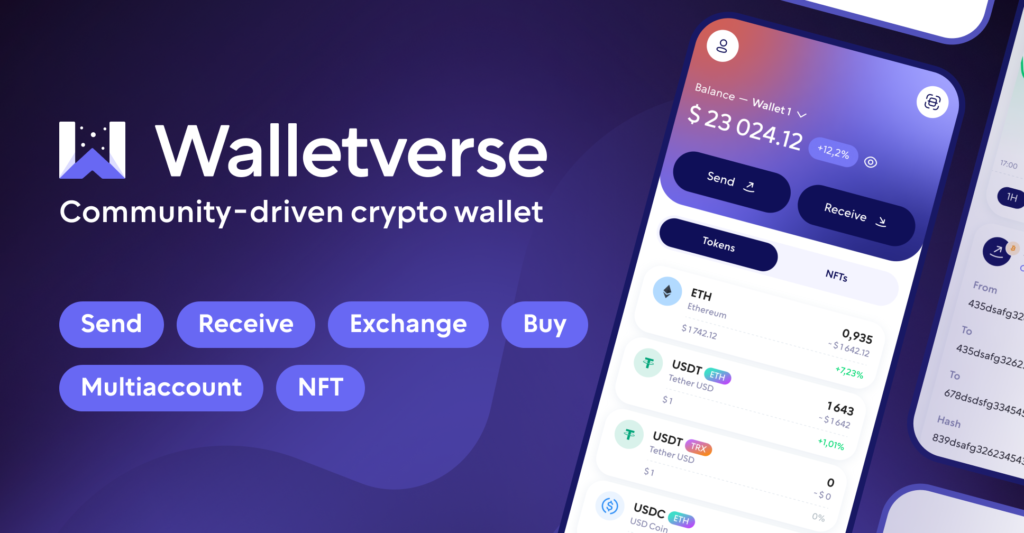
Walletverse is an all-in-one secure crypto trading app that has quickly become a favorite among novice and experienced cryptocurrency users. It supports over 600 different cryptocurrencies, making it a versatile choice for those who want to manage multiple assets in one place. The app is particularly well-regarded for its user-friendly interface, simplifying digital asset buying, selling, and storing. In addition to multi-currency support, Walletverse offers instant crypto purchases through various payment methods, including credit cards, Apple Pay, and Google Pay. Security is a top priority, with pass-code and biometric authentication ensuring your funds are always protected. Walletverse also features low-fee crypto exchange options, allowing users to trade their assets with minimal costs. While staking features are still being developed, the app remains a strong contender for those seeking a secure crypto trading app.
Pros:
- Low-fee crypto exchange.
- Multi-currency support app (BTC, ETH, TRX, USDT, TON, LTC, DOGE, POLYGON and many others).
- Secure crypto transactions.
- Fast and intuitive interface.
- Wide range of payment options (Apple Pay, Google Pay, Credit, Debit card).
- Staking.
Cons:
- Only mobile.


2. Coinbase

Coinbase is one of the most popular cryptocurrency apps in the world, known for its secure crypto trading environment and user-friendly design. It is particularly suited for beginners, offering a straightforward interface that makes buying and selling cryptocurrencies easy. Coinbase supports many digital assets, including Bitcoin, Ethereum, and altcoins. The app also integrates a crypto wallet where users can securely store their purchased assets. One of Coinbase’s standout features is its educational content, which helps new users understand the intricacies of cryptocurrency. The platform also offers real-time crypto prices and market data, making it easier for users to make informed decisions. Coinbase’s high level of security, including insurance for stored assets, makes it a trusted choice for many users. However, its fees are generally higher compared to other platforms.
Pros:
- User-friendly interface.
- Secure crypto trading.
- Educational resources for beginners.
- Insured storage for digital assets.
Cons:
- Higher fees compared to other platforms.
- Limited advanced trading features.
3. Binance

Binance is renowned for its comprehensive features and low-fee crypto exchange app. It supports many cryptocurrencies, making it ideal for trading a wide range of assets. Binance offers basic and advanced trading views, catering to beginners and experienced traders. The app provides access to spot trading, futures, margin trading, and staking, all within a secure crypto trading environment. Binance’s mobile app is compelling, offering real-time crypto prices, charting tools, and multiple order types. The platform also supports fiat-to-crypto conversion in multiple currencies, allowing users to buy crypto using their local currency. Binance’s global reach and extensive features make it one of the top choices of severe traders, though its complexity might be overwhelming for newcomers.
Pros:
- Low-fee crypto exchange.
- Extensive selection of cryptocurrencies.
- Advanced trading features.
- Real-time crypto prices and market data.
Cons:
- Complex interface for beginners.
- Customer support can be slow.
4. Kraken

Kraken is a well-established cryptocurrency exchange that offers a robust and secure crypto transaction environment. Known for its high level of security, Kraken employs strict measures such as two-factor authentication (2FA) and encrypted cold storage for users’ assets. The platform supports cryptocurrencies and offers various trading options: spot trading, margin trading, and futures. Kraken is also one of the few exchanges that offer fiat-to-crypto conversion in multiple currencies, making it easy for users to buy crypto with their local currency. The Kraken app is designed to provide a seamless user experience with tools catering to beginners and advanced traders. However, Kraken’s verification process can be slower than other platforms, which might be a drawback for users looking to start trading immediately.
Pros:
High-security standards.
Wide range of supported cryptocurrencies.
Multiple trading options.
Fiat-to-crypto conversion available.
Cons:
Slower verification process.
The interface might be less intuitive for beginners.
5. Bitget Wallet

Bitget Wallet is a feature-rich, non-custodial multi-chain wallet that has gained significant popularity, especially in Asia. It supports over 90 mainnets and thousands of dApps, allowing users to buy crypto with fiat via built-in gateways, swap across chains, and participate in NFT markets. The wallet is deeply integrated with the Bitget exchange, offering easy access to spot and futures trading while maintaining self-custody of assets. Its swap aggregator finds the best rates across multiple DEXs, and the interface is designed for both beginners and power users.
Pros:
Supports 90+ blockchains and a vast range of tokens
Integrated fiat purchase options
Powerful cross-chain swap aggregator
Direct access to Bitget exchange features (optional)
Active development and community
Cons:
Relatively newer compared to some competitors
Some users may find the feature set overwhelming
Certain advanced tools are still maturing
6. Guarda Wallet

Guarda is a non-custodial wallet available on Android, iOS, web, and desktop. It supports dozens of blockchains and thousands of tokens, allowing you to buy crypto with fiat, exchange assets, and participate in staking. All operations are secure, and private keys are stored only on your device. Guarda is ideal for those who want to manage all their assets in one app without relying on an exchange.
Pros:
Supports many blockchains (Bitcoin, Ethereum, Binance Smart Chain, etc.)
Built-in services: fiat purchase, exchange, staking
Available on all major platforms with synchronization
Ability to create multiple wallets in one app
Regular updates and active support
Cons:
Some features may require KYC from partners
Fees are dynamic, sometimes higher than average
Interface might feel cluttered for beginners
7. Atomic Wallet

Atomic Wallet is a non-custodial solution that combines wallet functions, a built-in exchange, and staking platform. It supports over 300 cryptocurrencies, including all major coins and tokens. A unique feature is atomic swaps – direct exchange between different blockchains without intermediaries. You can also buy crypto with fiat through partners.
Pros:
Wide selection of coins and tokens
Built-in exchange with best rate aggregation
Staking of popular assets directly in the wallet
24/7 customer support
Available on mobile and desktop
Cons:
Closed-source code
Occasional delays in balance display after updates
Spreads during exchange may not be transparent
8. Coinomi
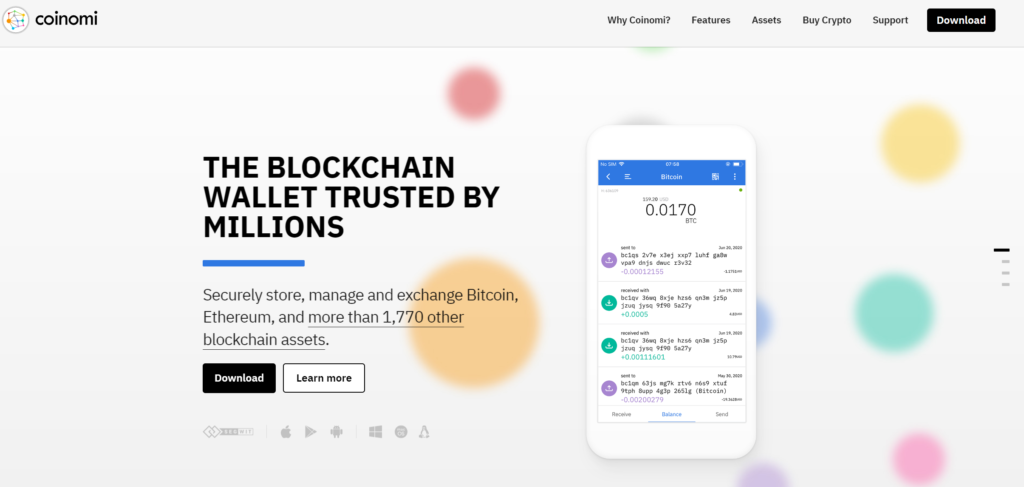
Coinomi has been around since 2014 and is a reliable multi-currency wallet focused on privacy. It supports a huge number of blockchains and tokens (including rare ones), allows in-app crypto exchange, and requires no registration or KYC. All private keys are stored locally and never leave your device.
Pros:
Supports over 1,700 assets
Complete anonymity (no registration)
Built-in exchange with best rate selection from multiple providers
SegWit support and multi-currency
Multilingual interface
Cons:
Interface visually a bit outdated
Fees depend on the chosen exchange partner
Closed-source code
9.Edge Wallet

Edge is a multi-currency wallet with a unique security architecture: all data is encrypted on your device, and even Edge’s servers have no access to your funds or passwords. It supports Bitcoin, Ethereum, many altcoins and tokens, and integrates fiat gateways for purchasing crypto. The simple and intuitive interface makes it a great choice for beginners.
Pros:
End-to-end encryption of all data
Support for several popular blockchains
Built-in fiat purchase and exchange
Simple and clear interface
Regular security audits and updates
Cons:
Smaller coin selection compared to competitors
Some features region-restricted
Exchange fees may be higher than average
10. SafePal

SafePal is a comprehensive cryptocurrency wallet solution that offers both software (mobile app) and hardware wallet options. The mobile app is non-custodial and supports an extensive range of blockchains, including Bitcoin, Ethereum, BNB Chain, Solana, and many others, covering thousands of tokens and NFTs. It features a built-in exchange, fiat purchase gateways (via MoonPay and Binance Connect), and a dApp browser for interacting with DeFi and Web3 applications. SafePal is known for its strong security features, including hardware-grade key encryption, biometric authentication, and optional integration with the SafePal hardware wallet for cold storage. The app is user-friendly and available in multiple languages.
Pros:
Supports 100+ blockchains and thousands of assets
Integrated fiat on-ramps and in-app exchange
Built-in dApp browser for Web3 access
Optional hardware wallet integration for maximum security
Regular security audits and active development
Available on both mobile and desktop (browser extension)
Cons:
Some advanced features require the hardware device
Exchange fees may include spreads
Relatively newer compared to some legacy wallets
Where You Can Use Cryptocurrency
Cryptocurrencies are increasingly becoming integrated into various aspects of our daily lives, offering diverse opportunities beyond just investment. Here are some of the key areas where you can use your cryptocurrency:
- Online purchases. Cryptocurrencies are being accepted by a growing number of online retailers, ranging from tech giants to niche marketplaces. You can use your digital assets to buy electronics, clothing, gift cards, and even book travel accommodations. Major companies like Microsoft, Overstock, and Expedia are examples of businesses that accept cryptocurrencies like Bitcoin, offering you a secure crypto transaction method that bypasses traditional banking systems.
- Physical stores. Besides online shopping, many physical stores now accept cryptocurrency as payment. Restaurants, cafes, and even car dealerships in certain regions adopt this payment method, often through secure crypto trading apps or QR code systems. This trend is especially prevalent in tech-savvy cities and areas where digital currencies are widely recognized.
- Investment and trading. One of the most popular uses of cryptocurrency is as an investment vehicle. Many individuals buy cryptocurrencies as a long-term investment, hoping to benefit from their potential value appreciation. Cryptocurrencies can also be actively traded on various exchanges using low-fee crypto exchange apps that allow you to capitalize on market volatility.
- Decentralized finance (DeFi). Cryptocurrencies play a central role in the DeFi ecosystem, which allows users to engage in financial activities like lending, borrowing, and earning interest without the need for traditional banks. Participating in DeFi platforms will enable you to use your cryptocurrencies to provide liquidity, earn rewards, or access loans. These platforms often integrate with crypto wallet apps, enabling seamless management of your assets.
- International money transfers. Cryptocurrencies offer a fast and cost-effective solution for sending money across borders. Unlike traditional remittance services that charge high fees and take several days to process, crypto transactions are almost instant and come with minimal fees. This makes them an attractive option for international payments, especially in regions with limited access to traditional banking.
- Staking and yield farming. By staking your cryptocurrencies in a blockchain network, you can earn rewards through additional tokens. This process helps secure the network and is often supported by crypto wallet integration within various staking platforms. Yield farming, a more advanced DeFi strategy, allows you to earn interest by lending your cryptocurrencies in liquidity pools.
- Gaming and virtual worlds. Cryptocurrencies are increasingly used in the gaming industry and virtual worlds. Many games now have their native tokens or accept popular cryptocurrencies for in-game purchases, rewards, and trading of virtual goods. Platforms like Decentraland and The Sandbox allow users to buy, sell, and trade virtual real estate and assets using digital currencies.
- Donations and charitable giving. Many non-profit organizations and charitable foundations have started accepting cryptocurrency donations. This gives donors a tax-efficient way to contribute to causes they care about while supporting the adoption of digital currencies. Platforms like The Giving Block facilitate these transactions, enabling seamless crypto donations.
- Education and online services. Several educational platforms and online service providers now accept cryptocurrencies for course fees, software subscriptions, and digital products. This includes platforms offering online learning, digital marketing services, and content creation tools, allowing you to use your digital assets for personal and professional development.
- Real estate transactions. Real estate can now be purchased using cryptocurrency in certain parts of the world. This option is growing in popularity among buyers and sellers who prefer the speed and security of blockchain-based transactions over traditional methods. Some real estate platforms and agents specialize in cryptocurrency transactions, offering a new way to invest in property.
As the use of cryptocurrency expands, these digital assets are becoming more integrated into everyday financial activities, offering a flexible, secure, and decentralized alternative to traditional money. Whether you’re looking to invest, shop, or participate in cutting-edge financial systems, cryptocurrencies offer a wide range of applications that continue growing each year.
What Are the 4 Types of Crypto Wallets?
When it comes to storing and managing your cryptocurrency, choosing the right type of wallet is crucial for ensuring the security and accessibility of your digital assets.
- Hardware wallets. Physical devices that store your private keys offline, making them highly secure against online threats. It is ideal for long-term storage but less convenient for frequent transactions. Popular options include Ledger and Trezor.
- Software wallets. Applications installed on your desktop or mobile device. These wallets balance security and convenience, offering easy access to your crypto while supporting crypto wallet integration with exchanges for trading directly within the app.
- Mobile wallets. Mobile wallets are designed for smartphones and tablets, providing on-the-go crypto access. They are user-friendly and often feature QR code scanning for quick transactions. Mobile wallets are great for everyday use but should be secured with robust authentication methods.
- Paper wallets. A physical document that contains your private and public keys. Paper wallets are completely offline, offering high security but vulnerable to physical damage or loss. It is best suited for long-term storage in a secure location.
Statistics from sphericalinsights.com
FAQ
Most frequent questions and answers
You can buy crypto through exchanges, brokerage platforms, P2P services, crypto ATMs, or mobile apps for cryptocurrency like Walletverse.
Walletverse is one of the best apps for buying crypto, offering a secure crypto trading app experience with multi-currency support and low-fee crypto exchange options.
Walletverse is an excellent choice for buying Bitcoin. It offers instant crypto purchases, secure crypto transactions, and real-time crypto prices, making it one of the most user-friendly cryptocurrency apps available.
The legality of buying crypto varies by country. Buying crypto is legal and regulated in the United States, the European Union, and many other regions. However, some countries like China and India have stricter regulations, and in certain places, the use of cryptocurrency may be restricted or banned. Always check the legal status in your country before purchasing.
You must choose a reliable cryptocurrency exchange or app, such as Walletverse, to buy cryptocurrency. First, sign up and complete any required identity verification. Next, fund your account using a bank transfer, credit card, or other payment method supported by the platform. Once your account is funded, you can select the cryptocurrency you want and complete the purchase. The crypto will be stored in your wallet within the app.
The safest wallets for storing crypto are hardware wallets like Ledger or Trezor. These devices store your private keys offline, making them highly secure against online threats like hacking and malware. For those who prefer software solutions, a reputable app with solid security features, like Walletverse, is also a good option, mainly if it includes features like encrypted storage and biometric authentication.
Many cryptocurrency apps and exchanges allow you to buy cryptocurrency with a credit card. Walletverse, for example, supports credit card purchases along with other payment methods like Apple Pay and Google Pay. Remember that buying crypto with a credit card may involve higher fees than other payment methods, and some credit card issuers may treat the purchase as a cash advance, which could incur additional charges.


