


What Happens If You Send Crypto to the Wrong Wallet Type?
Sending crypto to the wrong wallet type is one of the most common and most stressful mistakes in crypto. The good news: it doesn’t always mean your money is gone. What happens next depends on which network the transaction went through, whether the receiving address exists on that network, and who controls the private key behind it.
Short answer:
- Same address, wrong EVM network (for example, BEP-20 instead of ERC-20): usually recoverable if you control the private key.
- Sent to an exchange on an unsupported network or without a memo/tag: often recoverable through the exchange’s support team, sometimes for a fee.
- Sent to the wrong address (someone else’s or a mistyped one) or to a smart contract: usually lost.
- A confirmed blockchain transaction can’t be reversed: not by your wallet, not by the network and not by a “recovery service”.
What "Wrong Wallet Type" Actually Means
Every coin and token lives on a specific blockchain, and each blockchain has its own address format. A wallet address only works on the networks that use its format. That’s why wallets and exchanges ask you to choose a network, not just a coin.
In practice, a “wrong wallet type” mistake falls into one of three groups:
- Wrong network, same address format. All EVM networks use the same 0x addresses. The transfer goes through, but the funds land on a network the recipient may not be watching.
- Wrong network, different address format. For example, sending TRC-20 USDT to a 0x address or BTC to an Ethereum address. Most wallets and exchanges reject such an address outright, so the transfer usually never happens. The “invalid address” error is there to protect you.
- Right network, wrong destination. A typo, an address copied from the wrong place, a smart-contract address, or an exchange deposit without the required memo.
First Step: Check the Transaction in a Block Explorer
Before doing anything else, find out what actually happened on-chain.
- Copy the transaction hash (TxID) from your wallet’s history.
- Open the block explorer for the network the transaction was sent on, for example Etherscan for Ethereum, BscScan for BNB Smart Chain or Tronscan for Tron.
- Check the status, the network and the recipient address.
What the status tells you:
- Failed: the funds never left your wallet; only the network fee was spent.
- Pending: some wallets let you speed up or cancel a transaction that hasn’t been confirmed yet. Act quickly.
- Confirmed: the transfer is final. Note the network and the recipient address, and find your scenario below.
Save the TxID, amount, time and both addresses. You’ll need them if you contact support.
Can You Get Your Crypto Back? Common Scenarios
| Scenario | Example | Recoverable? | What to do |
|---|---|---|---|
| Same address, different EVM network | USDT sent on BNB Smart Chain to your own Ethereum address | Usually yes | Open a wallet with the same keys and add that network |
| Exchange deposit on an unsupported network | USDC sent to an exchange via Arbitrum when it only accepts Ethereum | Often, through support | Open a ticket with the TxID; a fee may apply |
| Missing or wrong memo / destination tag | XRP sent to an exchange without a destination tag | Usually, through support | Contact the exchange with the TxID |
| Coin from a forked chain, same address format | BCH sent to a legacy Bitcoin address (starting with 1 or 3) | Yes, if you hold the private key | Import the key into a wallet that supports that coin |
| Tokens sent to a smart contract | USDT sent to the USDT token contract address | Rarely | Contact the project team; most contracts can’t return funds |
| Typo or someone else’s address | One wrong character, or a look-alike address from your history | Almost never | Contact the owner if you know who it is |
| Burn address | 0x000…dead | No | Nothing can be done |
Same Address, Wrong EVM Network (ERC-20, BEP-20, Polygon, Arbitrum)
On EVM networks, the same private key produces the same address, so your 0x address is identical on Ethereum, BNB Smart Chain, Polygon, Arbitrum, Base and other EVM chains. If you sent tokens to your own self-custody address on the wrong network, the funds aren’t lost. They’re sitting on another network.
To get them back, open a wallet that holds the same recovery phrase and add or enable the network the transaction went through. The balance will appear. To move the tokens, you’ll need a little of that network’s native coin for gas: BNB on BNB Smart Chain, POL on Polygon, ETH on Arbitrum or Base. After that, you can use the tokens on that network, swap them or bridge them back.
One exception: smart-contract wallets, such as multisig accounts, exist only on the networks where they were deployed. The same address on another network may not be under your control.
Sent USDT on the Wrong Network
USDT is issued on several blockchains, including Ethereum (ERC-20), Tron (TRC-20), BNB Smart Chain (BEP-20), TON and Solana. These versions aren’t interchangeable, even though the ticker is the same.
- ERC-20 ↔ BEP-20. Both use 0x addresses, so the transfer goes through. If the address is yours, follow the EVM steps above. If it belongs to an exchange, see the next section.
- ERC-20 or BEP-20 ↔ TRC-20. Tron addresses start with T, so wallets and exchanges normally block this transfer before it’s sent.
- To an exchange. The exchange must support deposits on the exact network you used. If it doesn’t, contact support.
Sent to an Exchange on the Wrong Network or Without a Memo
Exchanges hold customer funds in shared wallets. For coins such as XRP, XLM, TON, ATOM, EOS and HBAR, the memo or destination tag tells the exchange which account to credit. If it’s missing, the coins arrive at the exchange but not in your account. If you deposit on a network the exchange doesn’t support, it may control the address but not track incoming transfers on that network.
In both cases, contact the exchange’s support as soon as possible and provide:
- the TxID and the network you used;
- the amount, date and time;
- the deposit address and the memo or tag you should have used;
- screenshots of the transaction.
Many large exchanges have a recovery form for such deposits. It can take days or weeks, a fee may apply, and not every network or token is supported. Only reach out through the official website or app. For the correct way to withdraw funds, see how to transfer crypto from an exchange to a wallet.
Sent Bitcoin to an Ethereum Address
On their native networks, this usually can’t happen. Bitcoin addresses start with 1, 3 or bc1, Ethereum addresses start with 0x, and wallets reject the mismatch. The real risk is with Bitcoin-pegged tokens on EVM networks, such as WBTC on Ethereum or BTCB on BNB Smart Chain. These are regular EVM tokens, so the EVM rules above apply.
Another case is coins from Bitcoin forks. Bitcoin Cash can use the same legacy address format as Bitcoin, so BCH sent to a legacy Bitcoin address does arrive, but on the Bitcoin Cash network. If you control that address, import its private key or recovery phrase into a wallet that supports BCH.
Sent to the Wrong Address or a Smart Contract
Tokens sent to a smart-contract address, such as a token’s own contract, are usually stuck unless the contract has a function for withdrawing them. You can contact the project team, but most can’t help.
If you sent crypto to the wrong address on the right network, and that address belongs to someone else, only its owner can send it back. If you know who it is (a friend, a company or a service), ask them directly. If the address came from a typo, it most likely has no owner, and the funds are lost. The same applies to burn addresses.
How to Recover Crypto Sent to the Wrong Network: Step by Step
- Confirm the transaction in a block explorer: status, network and recipient.
- Figure out who controls the receiving address: you, an exchange or service, or a third party.
- If it’s your address, restore your wallet with the recovery phrase in an app that supports that network (here’s how to recover a crypto wallet), add the network, top up the gas coin and move or swap the funds.
- If it’s an exchange, open a support ticket with all the transaction details.
- If it’s a third party, contact them if you know who they are. If not, the funds are most likely lost. Don’t pay anyone who promises otherwise.
Never type your recovery phrase into a website or share it with anyone who offers to help.
Beware of "Crypto Recovery" Scams
People who have just lost funds are a favorite target for scammers. If you post about your mistake online, expect messages from “recovery experts” and fake “support agents”.
Warning signs:
- a promise to reverse a confirmed transaction or “hack back” the funds;
- an upfront fee before any work is done;
- a request for your recovery phrase, private key or remote access to your device;
- contact through DMs, comments or messengers instead of an official support channel.
No legitimate wallet, exchange or support team will ever ask for your recovery phrase. And no one can undo a confirmed blockchain transaction.
How to Avoid Sending Crypto to the Wrong Wallet Type
- Match the network on both sides. The network you withdraw on must be the same one the recipient accepts deposits on.
- Send a small test transaction first, especially for large amounts or new addresses.
- Copy and paste or scan a QR code. Never type an address by hand.
- Check the whole address, not just the first and last characters. Scammers use “address poisoning”: they send tiny transactions from look-alike addresses so you copy the wrong one from your history.
- Don’t copy addresses from your transaction history. Use the recipient’s receive screen or your saved contacts instead.
- Watch out for clipboard malware. After pasting, make sure the address matches the one you copied.
- Always add the memo or tag when the recipient, usually an exchange, requires it.
- Whitelist addresses you use often in your exchange account.
How Walletverse Helps You Avoid Costly Mistakes
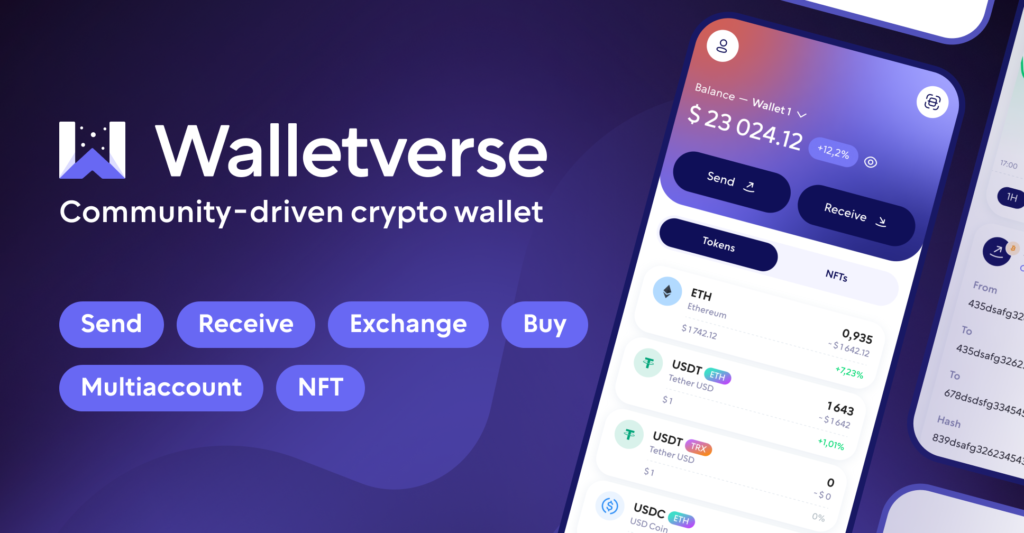
Walletverse is a self-custody wallet that makes sending crypto simpler and safer:
- You hold the keys. Your recovery phrase stays with you, so if funds land on your address on another network, you still control them.
- Network selection and QR codes. When you receive crypto, Walletverse shows your address and QR code for the network you choose, which leaves less room for copy-paste errors.
- 700+ coins in one app. Fewer transfers between different wallets means fewer chances to pick the wrong network.
- GasFree USDT on TRON. Pay the fee for supported USDT transfers in USDT, without buying TRX first.
- In-app swap. Exchange one asset for another without sending it to an exchange and back.
- Passcode and biometric protection for everyday security.


FAQ
Most frequent questions and answers
If you’ve sent crypto to the wrong wallet, check if the wallet provider has any recovery options. Contact customer support for assistance, and be prepared to provide transaction details.
In many cases, funds sent to an incompatible wallet cannot be recovered due to the nature of blockchain technology. However, some wallets may have recovery options, so it’s worth checking.
To avoid sending crypto to the wrong wallet, always double-check the wallet address and ensure that it matches the currency you are sending. Familiarize yourself with different wallet types and use reputable wallets.
Yes, common transaction errors include:
- Sending it to the wrong address.
- Sending the wrong currency to a compatible wallet.
- Network congestion.
Always verify details before completing a transaction.
If you send Bitcoin to an Ethereum wallet, the transaction may fail, or your funds may become irretrievable, as these cryptocurrencies operate on different blockchains.


