


Buy SSV Network (SSV) with USD, EUR and Other Fiat Currencies
Buying SSV Network (SSV) with fiat currencies is usually simple once you choose the right wallet or on-ramp. In practice, most users buy crypto with a bank card, Apple Pay, Google Pay, or bank transfer, then either purchase SSV directly if it is supported or swap into it afterward. Because SSV is tied to Ethereum staking infrastructure, many buyers discover it through staking and validator research rather than through general retail crypto searches.
This article was prepared by ilink, a FinTech and Web3 software developer with 13 years of experience and completed projects worldwide.
What Is SSV Network (SSV)?
SSV Network is decentralized infrastructure for Ethereum staking built around Distributed Validator Technology, often shortened to DVT. The project explains that its infrastructure distributes validator duties across independent operators to improve resilience, uptime, and security, and its earlier explainer described SSV as a way to split an Ethereum validator key between non-trusting operators.
That design matters because Ethereum validators normally rely on a smaller set of operational dependencies. SSV’s approach is to reduce single points of failure by splitting responsibility across multiple operators. The project says its QBFT consensus setup can tolerate one malfunctioning node in a four-operator validator cluster, which is one reason the network is positioned as professional staking infrastructure rather than as a simple consumer token project.
In plain language, SSV Network is trying to make Ethereum staking more resilient and modular. Instead of running a validator in a more centralized or fragile setup, validators can be operated through a distributed framework designed to improve fault tolerance. That is why SSV is frequently discussed in the context of staking infrastructure, validator tooling, and institutional-grade Ethereum participation.
The SSV token is the network’s native asset and is tied to usage and participation in the broader ecosystem. Market references and project descriptions consistently treat it as the token behind SSV’s staking infrastructure rather than as a meme or payment coin.
Those numbers make SSV more established than many micro-cap tokens, but still much riskier than major assets like BTC or ETH. The value case for SSV depends much more on continued demand for Ethereum staking infrastructure, validator resilience, and DVT adoption than on broad retail narratives.
Where Can I Buy SSV Network (SSV) with Cash? 10 Best Crypto Wallets
1. Walletverse
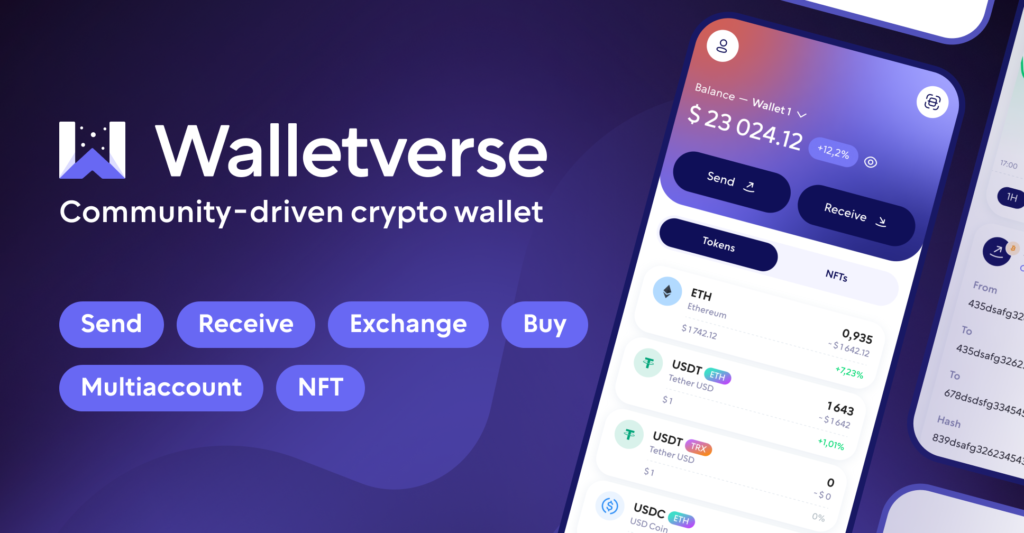
Walletverse is a mobile self-custody crypto wallet built for users who want to buy, store, swap, and manage crypto in one app. Its Google Play listing says it is a self-custodial wallet where only the user has access to private keys, and Walletverse’s own published materials describe support for 700+ cryptocurrencies, Apple Pay, Google Pay, cards, and multiple fiat currencies. That makes it a convenient option for users who want a fast mobile route into SSV and other assets.
Pros
- Mobile-first and easy to use;
- Supports Apple Pay, Google Pay, cards, and many fiat currencies;
- Self-custodial with passcode and biometric protection;
- Suitable for users who also want Web3, dApps, and multi-account support.
Cons
- Mobile-only format may not suit desktop-first users;
- Direct SSV support can depend on the integrated provider;
- Self-custody means wallet backup remains the user’s responsibility.



2. MetaMask

MetaMask is one of the most widely used wallets for Ethereum and EVM ecosystems. Its official buy-crypto page says users can buy crypto with Apple Pay, Google Pay, cards, bank transfers, PayPal, and regional payment methods. That makes it especially relevant for SSV buyers who want a wallet already centered on Ethereum-compatible assets and on-chain tools.
Pros
- Strong fit for Ethereum-related assets;
- Supports Apple Pay and Google Pay;
- Good for DeFi and advanced Web3 usage.
Cons
- Less beginner-friendly than simpler wallets;
- Pricing and token availability depend on provider and region;
- Better for users comfortable with on-chain interfaces.
3. Trust Wallet

Trust Wallet is a large self-custody wallet with broad blockchain coverage. Its official buy pages say users can top up with Apple Pay, Google Pay, debit and credit card, or bank transfer, and it supports 100+ fiat currencies through partner integrations. That makes it a solid mainstream choice for buying crypto and then moving into SSV.
Pros
- Broad asset and chain support;
- Easy mobile experience;
- Apple Pay and Google Pay support in supported regions.
Cons
- Fees vary by third-party provider;
- Direct SSV buying may not always be the cheapest path;
- Advanced staking or validator research still requires external tools.
4. Ledger Nano X

Ledger is best suited to users who prioritize stronger long-term asset protection. Ledger’s official app pages describe it as an all-in-one ecosystem where users can buy, sell, swap, stake, send, and receive crypto while combining that with Ledger hardware-based security. For SSV, Ledger is especially useful as a long-term storage option after purchase.
Pros
- Strong security model for long-term holding;
- Good for broader portfolio management;
- Supports buying, swapping, and staking through the Ledger ecosystem.
Cons
- Hardware purchase adds cost;
- Less convenient for very casual first-time buyers;
- Better as secure storage than as the simplest first-buy wallet.
5. Trezor Model T
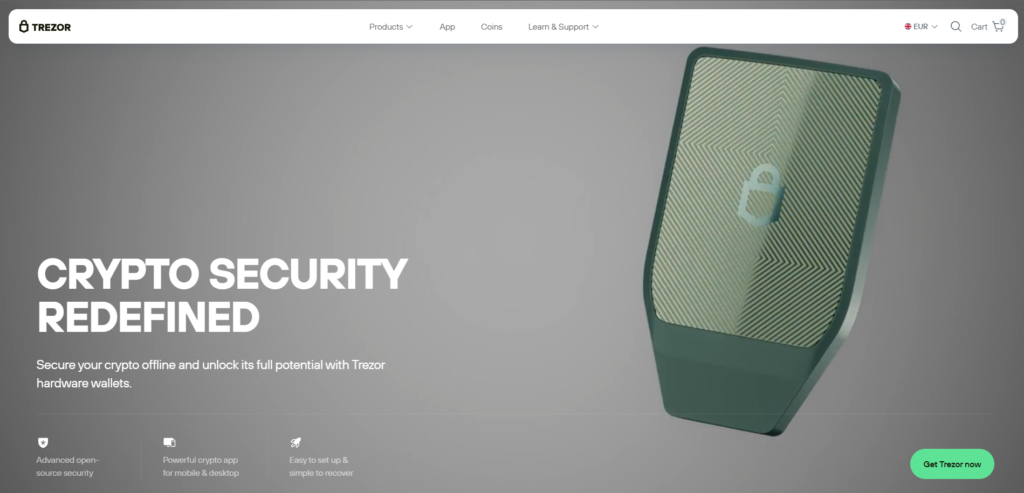
Trezor is another major hardware-wallet brand focused on stronger self-custody. Trezor says users can buy, sell, and swap crypto in Trezor Suite, and its official pages emphasize support for thousands of coins and tokens plus dApp access. For SSV buyers, Trezor is most attractive if the goal is secure long-term storage rather than a quick mobile purchase experience.
Pros
- Strong reputation in hardware security;
- Good for long-term SSV storage;
- Trezor Suite adds buy and swap convenience.
Cons
- Less convenient than mobile software wallets;
- Requires hardware setup;
- Better for holding than for quick everyday buying.
6. Coinbase Wallet

Coinbase Wallet is a self-custody wallet designed for users who want more direct asset control without moving immediately into a highly technical interface. Coinbase’s SSV page provides price tracking and market data, and Coinbase Wallet is generally used as a storage and transfer wallet for Ethereum-based and compatible assets.
Pros
- Familiar interface for many users;
- Good for storing and managing SSV after purchase;
- Fits users are already comfortable with Coinbase products.
Cons
- Direct fiat-to-SSV buying may be less straightforward;
- Less specialized for advanced Ethereum workflows than MetaMask;
- Some users may prefer broader native Web3 tooling.
7. Exodus

Exodus is popular with users who want both desktop and mobile support. Exodus says users can buy crypto directly using credit cards, debit cards, bank transfers, Apple Pay, and Google Pay, with purchased assets delivered into the wallet. That makes it a practical option for funding a wallet with fiat and later converting into SSV if needed.
Pros
- Clean and beginner-friendly interface;
- Desktop and mobile support;
- Supports Apple Pay and Google Pay.
Cons
- Direct SSV availability may vary by provider;
- Less Ethereum-native than MetaMask;
- Purchase costs depend on third-party partner pricing.
8. Guarda

Guarda is a multi-platform wallet that supports buying, exchanging, and storing a wide range of assets. Guarda says users can buy crypto directly with debit or credit card in-wallet, and its main wallet pages emphasize buying, staking, and exchanging thousands of assets.
Pros
- Broad asset support across devices;
- Direct in-wallet buying;
- Useful middle ground between simplicity and flexibility.
Cons
- Fees depend on integrated providers;
- Less specialized for Ethereum-native workflows;
- Direct SSV support may still depend on swap routes.
9. Atomic Wallet

Atomic Wallet positions itself as a wallet for managing, swapping, buying, and staking 1,000+ coins and tokens. Its official site emphasizes all-in-one portfolio handling and instant swaps. For SSV buyers, it is a reasonable choice if you want one wallet for many assets rather than a wallet focused on one ecosystem.
Pros
- Broad asset coverage;
- Buy, swap, and stake features in one place;
- Suitable for multi-asset portfolios.
Cons
- Software-wallet security is weaker than hardware isolation;
- Some services rely on third-party providers;
- Not always the lowest-cost route for smaller purchases.
10. Coinomi
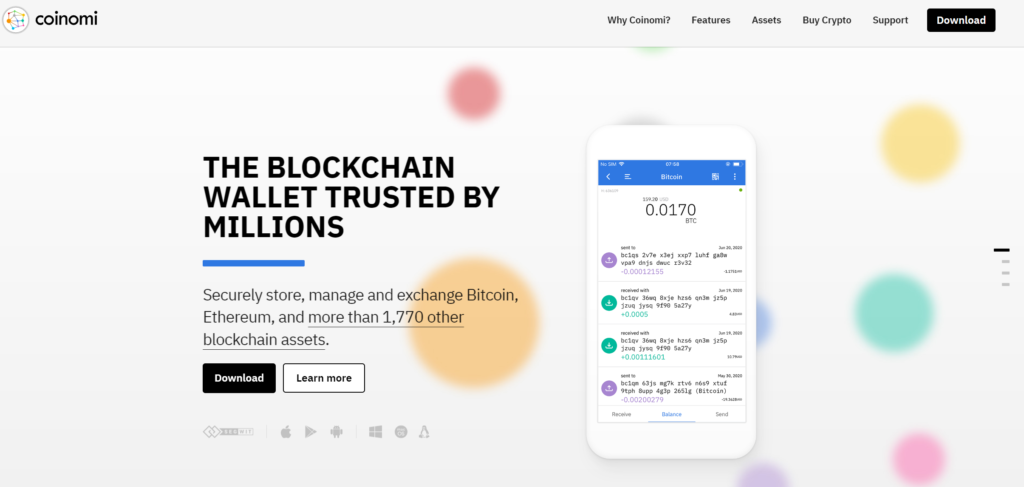
Coinomi is a long-running all-in-one wallet for Bitcoin, Ethereum, Solana, and thousands of other blockchain assets. Its official buy pages say users can purchase crypto using credit or debit cards, bank transfers, Apple Pay, and Google Pay, with assets delivered to the Coinomi wallet.
Pros
- Wide asset and chain support;
- Apple Pay and Google Pay support through partners;
- Good for users who want one wallet for many tokens.
Cons
- Interface feels less modern than some newer wallets;
- Costs vary by partner;
- Not the strongest choice for deep Ethereum-specific workflows.
Buy SSV with Apple Pay
Buying SSV with Apple Pay is often one of the easiest routes for mobile users. MetaMask, Trust Wallet, Exodus, and Coinomi all describe Apple Pay support either directly or through integrated buy-crypto partners. In practice, that means you may be able to buy SSV directly if the provider lists it, or buy ETH first and then swap into SSV.
Walletverse is especially convenient here because it is built around a mobile-first, self-custody flow and supports Apple Pay alongside cards and multiple fiat currencies through its published wallet materials. That makes it suitable for users who want a fast mobile entry into SSV without moving funds through several separate apps.
Before buying, check whether SSV itself is available through the on-ramp, what the full fee is, and whether buying a larger asset first and swapping later would be cheaper. Apple Pay is only the payment method; the total cost still depends on provider spreads and later swap costs.
Buy SSV with Google Pay
The logic for Google Pay is similar. MetaMask’s official buy flow lists Google Pay among supported payment methods, Trust Wallet announced support for Google Pay purchases, and Exodus also says users can buy crypto with Google Pay. Coinomi’s purchase flow also references Google Pay as a supported mobile-payment option.
Walletverse is a strong option for Android users because it combines self-custody, multi-currency support, and a simple mobile experience. That reduces friction for buyers who want one place for fiat funding, storage, and portfolio management.
As with Apple Pay, the cheapest option is not always the one-click option. Compare the on-ramp fee, the exchange rate, and any later swap or network costs before confirming the purchase.
How to Buy SSV Network (SSV) with Fiat?
Buying SSV with fiat such as USD, EUR, GBP, CAD, AUD, or INR is usually straightforward once you choose the right wallet and payment route.
Step 1. Choose a wallet
Pick a wallet that matches your goals. Walletverse is useful if you want a mobile self-custody wallet with broad fiat support. MetaMask is stronger for users already comfortable with Ethereum and Web3. Exodus is a good fit if you want a clean interface across desktop and mobile.
Step 2. Complete verification if required
Most regulated fiat on-ramp providers require identity verification before allowing purchases through card, Apple Pay, Google Pay, or bank transfer. The exact process depends on the provider and jurisdiction.
Step 3. Check whether direct SSV purchase is available
Some services may support SSV directly. If they do not, buy a liquid asset first, usually ETH or a major supported asset, then convert it into SSV. That is a common route for altcoins that are not listed on every fiat provider.
Step 4. Fund the wallet with fiat
Common payment methods include:
- Credit or debit card;
- Apple Pay;
- Google Pay;
- Bank transfer;
- Local payment methods where supported.
Step 5. Buy or swap into SSV
If direct SSV buying is supported, complete the purchase. If not, use the wallet’s swap feature or move the purchased asset to a service that supports SSV trading.
Step 6. Store SSV in a wallet you control
After buying, many users prefer keeping SSV in a self-custody wallet rather than leaving it on an exchange. Walletverse, MetaMask, Trust Wallet, Exodus, Ledger, and Trezor all fit different needs depending on whether you care most about mobile convenience, Ethereum tooling, or stronger long-term storage.
Step 7. Review the total cost
Always compare the total fee, including the provider spread, card or mobile-pay cost, and any swap fees. The most convenient route is not always the cheapest one.
FAQ
Most frequent questions and answers
SSV has a stronger infrastructure story than many altcoins because it is tied to Ethereum staking and DVT rather than to hype-driven narratives. Still, it remains a volatile mid-cap token and trades far below prior highs, so it should be treated as a higher-risk asset rather than as a low-risk core holding.
The simplest route is to choose a wallet with fiat support, fund it with USD, and either buy SSV directly or buy another major asset first and swap into SSV. Walletverse is useful here because it supports mobile-first self-custody and broad fiat purchase options.
Good options include Walletverse, MetaMask, Trust Wallet, Coinbase Wallet, Exodus, Ledger, Trezor, Guarda, Atomic Wallet, and Coinomi. The best one depends on whether you want simple mobile buying, Ethereum-focused Web3 access, or stronger hardware-based storage.
You can buy SSV through exchanges and through wallets connected to fiat on-ramp providers and swap services, for example Walletverse. In many cases, users buy a major asset first and then convert it into SSV if direct fiat support is unavailable.
Yes. Walletverse is suitable for managing SSV as part of a broader self-custody portfolio, especially if you want a mobile wallet with fiat support, multi-asset management, and Web3 features.


