


Buy Status (SNT) with USD, EUR and Other Fiat Currencies
Buying Status (SNT) with fiat currencies such as USD, EUR, GBP, CAD, or AUD is usually straightforward once you choose the right wallet and payment method. In many cases, the process starts with buying crypto through a card, Apple Pay, Google Pay, or bank transfer, and then either purchasing SNT directly if the provider supports it or swapping into it afterward. Because SNT is an ERC-20 token on Ethereum, Ethereum-compatible wallets are especially useful for storing, sending, and managing it.
This guide was prepared by ilink, a FinTech and Web3 software developer with 13 years of experience and completed projects worldwide.
What Is Status (SNT)?
Status is an open-source, privacy-focused product ecosystem that combines a secure messenger, crypto wallet, and Web3 browser. The official Status site describes it as “the open-source, decentralised wallet and messenger,” while Binance Research describes Status as an “open-source, privacy-focused operating system for the Ethereum ecosystem.”
The SNT token is the native token of the Status ecosystem. According to Status, SNT is a fixed-supply ERC-20 token that helps govern, access, and power decentralized Status applications, services, and peer-to-peer networks. Status also notes that SNT is used in community-related functions and that the community continues to consider new uses for the token, including staking-related ideas.
Coinbase gives a concise description that is useful for buyers: “SNT is an Ethereum token that powers Status Network, a secure messaging app, crypto wallet, and web3 browser.” Coinbase also notes that SNT is used for actions such as registering user names and voting on the future of the network.
Historically, Status became known during the earlier Ethereum growth cycle as a project trying to make decentralized communication and Ethereum access easier on mobile and desktop. Binance Research highlighted privacy and peer-to-peer encrypted communication as core parts of the project’s identity. That makes Status different from many utility tokens that focus only on payments or DeFi. It has always been tied to communication, wallet access, and Ethereum-native user experience.
Recent ecosystem development also matters. In February 2026, Status introduced FIRM, described as the native stablecoin of Status Network, and framed Status Network as a reputation-based Layer 2 designed for gasless transactions at scale. That signals that the ecosystem is still evolving rather than being a purely legacy token project.
That background matters for buyers. Status has a recognizable product identity, a long project history, and current ecosystem activity. At the same time, SNT remains a volatile crypto asset, and any buying decision should reflect both its utility story and its market risk.
Where Can I Buy Status (SNT) with Cash? 10 Best Crypto Wallets
1. Walletverse
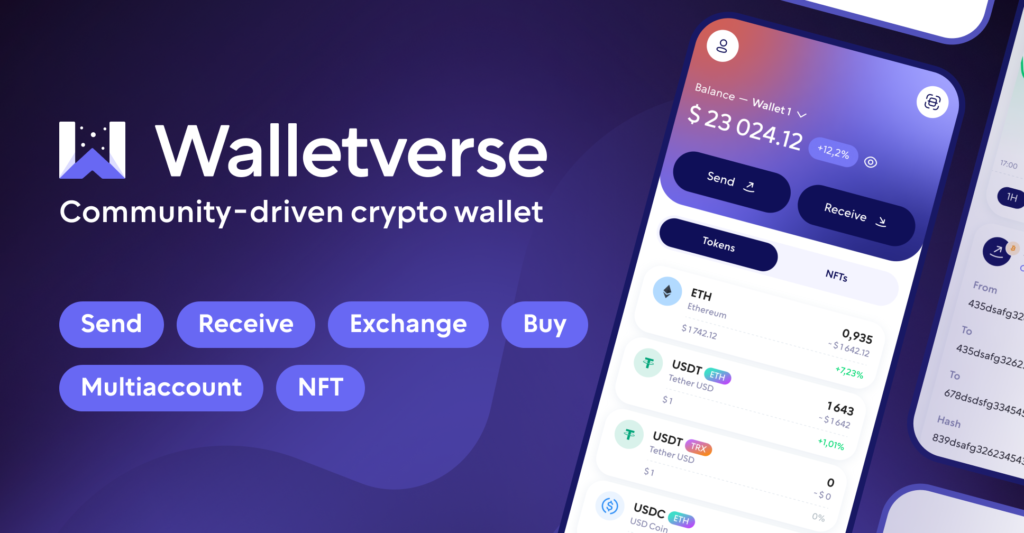
Walletverse is a mobile self-custody crypto wallet designed for users who want to buy, store, send, and swap crypto in one app. Based on its published product positioning, it supports 700+ cryptocurrencies, Web3 and dApp access, multi-account use, and purchases through Apple Pay, Google Pay, cards, and multiple fiat currencies. For SNT buyers, its biggest strength is convenience: it works well as a mobile-first entry point for funding a wallet and managing Ethereum-based assets in self-custody.
Pros
- Mobile-first and easy for both beginners and experienced users;
- Supports Apple Pay, Google Pay, cards, and many fiat currencies;
- Non-custodial with passcode and biometric protection;
- Good fit for users who also want Web3, dApps, and broader portfolio management.
Cons
- Mobile-only format may not suit desktop-first users;
- Direct SNT purchase availability can depend on the provider path;
- Self-custody means the user is responsible for wallet backup.



2. MetaMask

MetaMask is one of the best-known wallets for Ethereum and EVM ecosystems. Its official buy page says users can buy crypto with Apple Pay, Google Pay, cards, bank transfers, and other regional methods. For SNT buyers, MetaMask is a natural option because Status is an Ethereum-based ecosystem and SNT is an ERC-20 token.
Pros
- Strong fit for Ethereum-based tokens like SNT;
- Supports Apple Pay and Google Pay through integrated providers;
- Good for users who may also want DeFi or Web3 access.
Cons
- Less beginner-friendly than simpler wallets;
- Fees and token support depend on provider and location;
- Better suited to users comfortable with on-chain tools.
3. Trust Wallet

Trust Wallet is a popular self-custody wallet with broad multi-chain coverage and easy fiat purchase flows. It supports card-based buying and mobile-friendly crypto management, which makes it a good all-round option for users who want a straightforward route into SNT and other assets.
Pros
- Broad asset support;
- Easy mobile experience;
- Useful for users who want one wallet for multiple chains and tokens.
Cons
- Fees vary by third-party provider;
- Direct SNT support may not always be the cheapest route;
- Less Ethereum-focused than MetaMask.
4. Ledger Nano X

Ledger is best suited to users who care most about stronger long-term asset protection. For SNT, Ledger makes the most sense after purchase, especially for holders who prefer hardware-backed security for ERC-20 assets.
Pros
- Strong security for long-term holding;
- Good for broader multi-asset portfolios;
- Suitable for users who want hardware-backed self-custody.
Cons
- Hardware purchase adds cost;
- Less convenient for first-time casual buyers;
- Better as storage than as the simplest buying route.
5. Trezor Model T
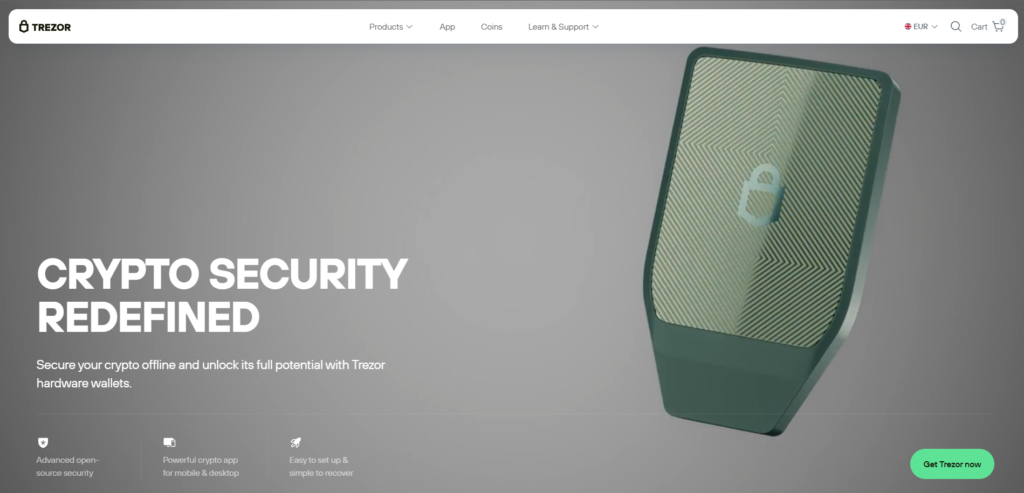
Trezor is another major hardware wallet brand focused on secure self-custody. It is a good option for SNT holders who want long-term storage and more separation between daily transactions and their core holdings.
Pros
- Strong hardware-wallet reputation;
- Good for long-term ERC-20 storage;
- Useful for users building a larger portfolio.
Cons
- Less convenient than software wallets;
- Requires hardware setup;
- Better for storage than for quick everyday buying.
6. Coinbase Wallet

Coinbase Wallet is a self-custody wallet designed for users who want direct control of their crypto in a relatively familiar interface. Coinbase’s Status page provides live market data and a simple explanation of SNT’s utility, which makes it useful both as a wallet choice and as a source of token context.
Pros
- Familiar interface for many users;
- Good for storing and managing ERC-20 assets;
- Useful for users already comfortable with Coinbase products.
Cons
- Direct fiat-to-SNT buying may be less straightforward;
- Less specialized for advanced Ethereum usage than MetaMask;
- Some users may want broader Web3 tooling.
7. Exodus

Exodus is a user-friendly wallet with both desktop and mobile versions. It is often chosen by users who want a simpler interface and the option to buy crypto directly in-wallet, then swap into smaller assets if needed.
Pros
- Clean and beginner-friendly design;
- Desktop and mobile support;
- Good for users who prefer a straightforward portfolio view.
Cons
- Direct SNT availability may vary;
- Less Ethereum-native than MetaMask;
- Pricing depends on integrated third-party providers.
8. Guarda

Guarda is a multi-platform wallet that supports buying, exchanging, and storing many assets. It is often chosen by users who want one wallet across web, desktop, and mobile.
Pros
- Multi-platform access;
- Broad asset support;
- Useful middle ground between simplicity and flexibility.
Cons
- Fees depend on integrated providers;
- Less specialized for Ethereum-native workflows;
- Direct SNT buying may still require a swap route.
9. Atomic Wallet

Atomic Wallet is an all-in-one wallet centered around buying, swapping, staking, and portfolio management. It is a reasonable option for users who want one place to manage several smaller assets.
Pros
- Broad asset coverage;
- Buy and swap tools in one interface;
- Helpful for multi-asset portfolios.
Cons
- Software-wallet security is weaker than hardware isolation;
- Availability and fees depend on third-party providers;
- Not always the lowest-cost route.
10. Coinomi
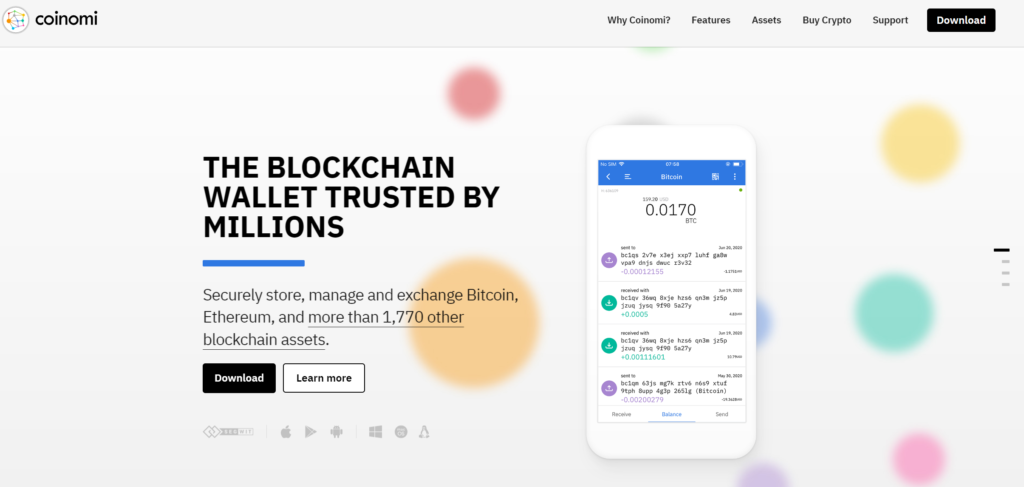
Coinomi is a long-running multi-chain wallet that supports buying crypto through integrated partners and is known for broad asset coverage. It is a practical all-purpose option for users who want one wallet for many token types.
Pros
- Broad asset and chain support;
- Good for general crypto management;
- Useful for users who prefer one wallet for many tokens.
Cons
- Interface feels older than some newer wallets;
- Costs vary by provider;
- Not the strongest choice for deep Ethereum-specific usage.
Buy SNT with Apple Pay
Buying SNT with Apple Pay is often one of the easiest routes for mobile users. The exact experience depends on the wallet and the integrated payment provider. In some cases, you may be able to buy SNT directly. In others, you may need to buy ETH or another supported asset first and then swap into SNT. Since SNT is an ERC-20 token, that second route is often practical.
Walletverse is especially convenient here because it is built around a mobile-first self-custody flow and supports Apple Pay alongside cards and multiple fiat currencies. That can simplify the process for users who want to move from fiat to SNT without juggling several separate apps.
Before confirming the purchase, it is worth checking three things:
- Whether SNT itself is available directly through the provider;
- What the full fee and spread look like;
- Whether buying a major asset first and swapping later would be cheaper.
That matters because one-click purchases are not always the lowest-cost route.
Buy SNT with Google Pay
The process for buying SNT with Google Pay is very similar. Many wallets that support mobile payment rails allow users to buy a supported crypto asset with Google Pay and then either receive SNT directly or convert into it afterward. Since SNT is Ethereum-based, buying ETH first and then swapping can be a practical fallback if direct support is unavailable.
Walletverse is a strong option for Android users because it combines Google Pay support, self-custody, and broad multi-asset functionality in one mobile app. That helps reduce friction for buyers who want one place for fiat funding, storage, and token management.
As with Apple Pay, compare the total cost carefully. Google Pay is only the payment method. Your real cost depends on the wallet, provider spread, and any later swap or network fee.
How to Buy The Status (SNT) with Fiat?
Buying Status (SNT) with fiat such as USD, EUR, GBP, CAD, or AUD is usually straightforward once you choose the right wallet and funding method.
Step 1. Choose a wallet
Pick a wallet that matches your goals. Walletverse is useful if you want a mobile self-custody wallet with broad fiat support. MetaMask is better for users already comfortable with Ethereum and Web3. Exodus is a strong option if you want a simpler interface across desktop and mobile.
Step 2. Complete verification if required
Most regulated fiat on-ramp providers require identity verification before allowing purchases by card, Apple Pay, Google Pay, or bank transfer. The exact KYC process depends on the provider and the country.
Step 3. Check whether direct SNT purchase is available
Some providers may support SNT directly. If they do not, buy a more liquid asset first, usually ETH, and then swap into SNT. Since SNT is an ERC-20 token and part of the Ethereum ecosystem, Ethereum-compatible routes are the most practical.
Step 4. Fund the wallet with fiat
Common payment methods include:
- Credit or debit card;
- Apple Pay;
- Google Pay;
- Bank transfer;
- Local payment methods where supported.
Step 5. Buy or swap into SNT
If direct SNT purchase is supported, complete the order. If not, use the wallet’s swap function or send the purchased asset to a service that supports SNT and exchange it there. Binance’s buying guide notes that on Binance, Status can be bought through the Binance Web3 Wallet and a DEX, not directly through Binance CEX, which is a good reminder that availability can differ a lot between platforms.
Step 6. Store SNT in a wallet you control
After purchase, many users prefer to keep SNT in a self-custody wallet instead of leaving it on an exchange. Walletverse, MetaMask, Trust Wallet, Exodus, Ledger, and Trezor all suit different types of users depending on whether you value mobile convenience, Ethereum tooling, or stronger long-term storage.
Step 7. Review the full cost
Always compare the total fee, including the provider spread, card or payment fee, and any later swap or network cost. The fastest route is not always the cheapest one.
FAQ
Most frequent questions and answers
SNT has a clearer product identity than many altcoins because it is tied to a real ecosystem built around messaging, wallet access, and Web3 browsing. It also has a long history and ongoing ecosystem development. At the same time, it remains a volatile crypto asset and still trades far below earlier cycle highs, so it should be treated as a higher-risk altcoin rather than as a low-risk core holding.
The simplest route is to choose a wallet with fiat support, fund it with USD, and either buy SNT directly or buy ETH first and swap into SNT. Walletverse is practical here because it supports USD and other fiat currencies in a mobile self-custody format.
Good options include Walletverse, MetaMask, Trust Wallet, Coinbase Wallet, Exodus, Ledger, Trezor, Guarda, Atomic Wallet, and Coinomi. Since SNT is an ERC-20 token, Ethereum-compatible wallets are especially suitable.
You can buy SNT through exchanges and through wallets connected to fiat on-ramp providers and swap services, like Walletverse. In many real-world cases, users buy a major asset first and then convert it into SNT if direct fiat support is not available.
For many beginners, Walletverse, Trust Wallet, and Exodus are easier starting points because they simplify funding and storage. More advanced users often prefer MetaMask because of its stronger Ethereum and Web3 integration.
Yes. Walletverse is suitable for managing SNT as part of a broader self-custody portfolio, especially if you want a mobile wallet with fiat support, multi-asset management, and Web3 access.


