


Buy EDU Coin (EDU) with USD, EUR and Other Fiat Currencies
Buying EDU Coin (EDU) with USD, EUR, and other fiat currencies is relatively straightforward today through self-custody wallets and integrated fiat on-ramp services. Depending on the wallet and your region, users can pay with bank cards, Apple Pay, Google Pay, bank transfer, and other local methods, then either buy EDU directly or purchase a major asset first and swap into EDU. MetaMask, Trust Wallet, and Exodus all publicly describe support for fiat purchases through third-party providers, although token availability still varies by country and payment partner.
This guide was prepared by ilink, a FinTech and Web3 software developer with 13 years of experience and completed projects worldwide.
What Is EDU Coin (EDU)
EDU Coin is the native token of Open Campus, a blockchain-based education ecosystem. In its official documentation, Open Campus describes itself as a decentralized platform that connects learners, educators, content creators, and educational institutions, enabling new forms of collaboration and value creation through blockchain technology. The main Open Campus site presents the project as “the blockchain-powered financial layer for education.”
In practical terms, EDU is tied to a specific sector rather than to a generic payment narrative or meme-driven ecosystem. Open Campus positions the token within a broader education infrastructure that includes creator incentives, educational content, and credential-related use cases. Its documentation for the EDU Chain platform also points to features such as decentralized identity, verifiable credentials, and academic records, which gives the token a more concrete long-term narrative than many small-cap altcoins.
The project also has a clearer institutional storyline than many newer tokens. Open Campus has publicly tied EDU to education-focused initiatives, including a global educators fund, and states that grants may be disbursed in EDU and traded for fiat or other cryptocurrencies. That reinforces the idea that the token is meant to circulate within a broader education ecosystem rather than exist only as a speculative asset.
Where Can I Buy EDU Coin (EDU) with Cash? 10 Best Crypto Wallets
1. Walletverse
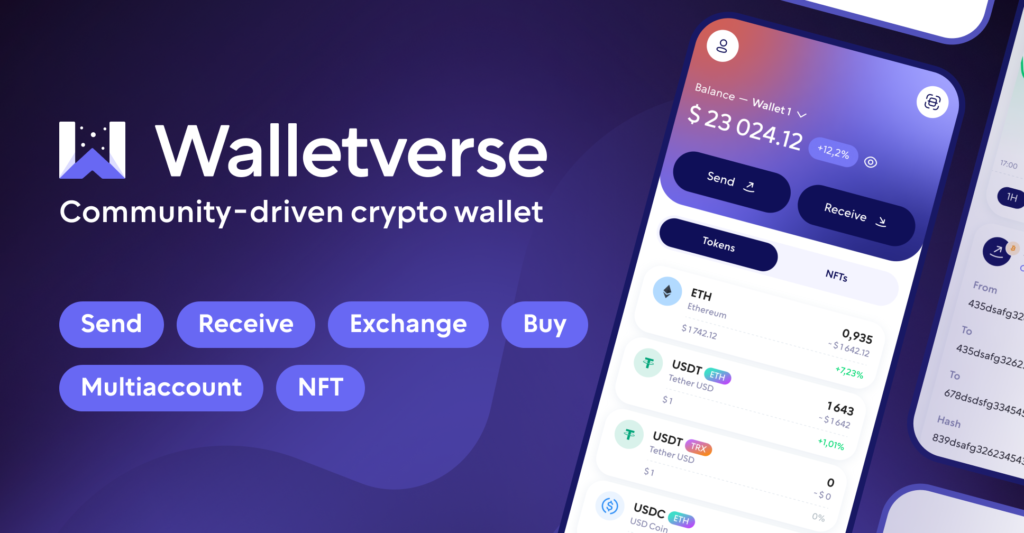
Walletverse is a mobile-first, non-custodial crypto wallet built for users who want to buy, store, send, and exchange crypto in one app. Based on your product details and its Google Play listing, it supports a wide set of assets and blockchains and is positioned as a self-custody DeFi wallet for everyday mobile use. The Google Play listing describes it as a free self-custodial DeFi crypto wallet and mentions support for more than 600 cryptocurrencies, tokens, and blockchains, while your product description states 700+ supported assets.
Walletverse is especially practical for users who prefer a mobile-only experience. According to the information you provided, it supports Apple Pay, Google Pay, credit and debit cards, and fiat currencies including USD, EUR, GBP, JPY, KZT, INR, CAD, and AUD. It also includes dApps, multi-account support, staking for assets such as Solana, ETH, and TRX, plus passcode and biometric protection. That makes it a strong fit for both beginners and more advanced users who still want a simple mobile workflow.
pros:
- non-custodial mobile wallet;
- broad asset support;
- apple pay, google pay, cards, and multiple fiat currencies;
- dApp access, multi-account support, and staking;
- passcode and biometric security;
- suitable for both beginners and advanced users.
cons:
- mobile-only format may not suit desktop-first users;
- direct EDU purchase availability can depend on region and provider;
- self-custody means users must manage their own recovery details.



2. MetaMask

MetaMask is one of the most widely used self-custody wallets, especially for Ethereum-compatible assets and Web3 access. Its official buy-crypto pages say users can purchase crypto with credit cards, debit cards, bank transfers, Apple Pay, Google Pay, PayPal, and other local methods depending on region. That makes it a strong option for users who may want to buy a supported asset and swap into EDU if direct purchase is unavailable.
pros:
- strong Ethereum and Web3 ecosystem support;
- self-custodial on mobile and browser;
- supports apple pay and google pay through providers;
- useful for swaps into EDU if direct purchase is unavailable.
cons:
- can feel technical for complete beginners;
- gas fees can add friction on some networks;
- direct EDU purchase is not guaranteed everywhere.
3. Trust Wallet

Trust Wallet is a large self-custody wallet with broad multi-chain coverage. Its official buy pages say users can fund wallets with Apple Pay, Google Pay, debit cards, credit cards, and bank transfer in supported regions, and the company describes it as a secure multi-chain self-custody wallet with access to millions of digital assets and Web3 apps.
pros:
- broad multi-chain support;
- simple mobile-first experience;
- integrated buy and swap flows;
- strong fit for users exploring Web3.
cons:
- feature breadth can feel overwhelming to some new users;
- direct EDU support depends on provider coverage;
- less ideal for users who prefer desktop-only workflows.
4. Ledger

Ledger combines hardware wallet security with the Ledger Wallet app. Ledger says its devices are powered by a Secure Element chip and proprietary OS, while its buy pages explain that users can purchase crypto through multiple providers and keep assets under self-custody. Ledger also states that its buy feature covers more than 80 coins through integrated providers.
pros:
- stronger security when paired with Ledger hardware;
- good for long-term holders;
- buy, swap, and grow features in one ecosystem;
- trusted hardware-wallet brand.
cons:
- hardware purchase adds cost;
- less convenient than mobile-only wallets for quick use;
- direct fiat-to-EDU availability may be limited.
5. Zengo

Zengo is a mobile wallet known for its MPC-based security model. Its official site says it is a self-custodial wallet with no private key vulnerability, and its buy pages state that users can purchase crypto with Apple Pay, Google Pay, bank transfer, credit cards, and debit cards in many regions. Zengo also says it has over 1.5 million customers and “0 wallets hacked.”
pros:
- alternative security model without traditional seed phrase exposure;
- supports apple pay and google pay;
- strong mobile experience for new users;
- security-focused positioning.
cons:
- some experienced users prefer traditional seed-based control;
- direct EDU availability depends on region and provider;
- less flexible for certain power-user Web3 workflows.
6. Coinbase Wallet

Coinbase Wallet is a self-custody wallet, separate from the hosted Coinbase exchange account. Coinbase says it gives users complete control of their crypto, and its educational materials describe self-custody wallets as tools that put users in charge of their own assets and recovery phrases.
pros:
- recognizable brand with self-custody control;
- beginner-friendly interface;
- useful for Ethereum assets, NFTs, and dApps;
- good fit for users already familiar with Coinbase.
cons:
- often confused with Coinbase exchange storage;
- regional on-ramp availability varies;
- direct EDU purchase may not always be listed.
7. Exodus

Exodus is a long-running wallet available on mobile and desktop. Exodus says users can buy crypto directly in the wallet using credit cards, debit cards, bank transfers, Apple Pay, Google Pay, and sometimes PayPal, depending on location and provider. Its main site also emphasizes built-in swap and staking tools.
pros:
- polished interface across desktop and mobile;
- built-in buy, swap, and staking features;
- supports apple pay and google pay through partners;
- good for users managing multiple assets.
cons:
- some advanced DeFi users may want more customization;
- direct EDU support should be checked before purchase;
- fees and spreads depend on third-party providers.
8. Guarda

Guarda is a non-custodial wallet available on web, desktop, and mobile. Its official site says users can buy, exchange, stake, and manage thousands of assets, and its purchase pages highlight debit card, credit card, and SEPA-enabled buying flows conducted directly inside the wallet.
pros:
- multi-platform access across devices;
- non-custodial setup;
- useful mix of buy, exchange, and staking tools;
- good for users who want web access alongside mobile.
cons:
- interface is broader than some minimalist wallets;
- direct EDU support must be verified first;
- some functions depend on external providers.
9. Atomic Wallet

Atomic Wallet positions itself as an all-in-one wallet for buying, swapping, and staking crypto. Its official pages say users can manage 1000+ assets, while its buy page states that crypto purchases can be made with Visa, Mastercard, Apple Pay, and Android Pay.
pros:
- all-in-one portfolio management experience;
- supports many assets;
- apple pay and android pay mentioned in official buy flow;
- available on desktop and mobile.
cons:
- software-wallet security still depends on device safety;
- not every asset is directly available via fiat on-ramp;
- interface is more utility-focused than premium.
10. Tangem
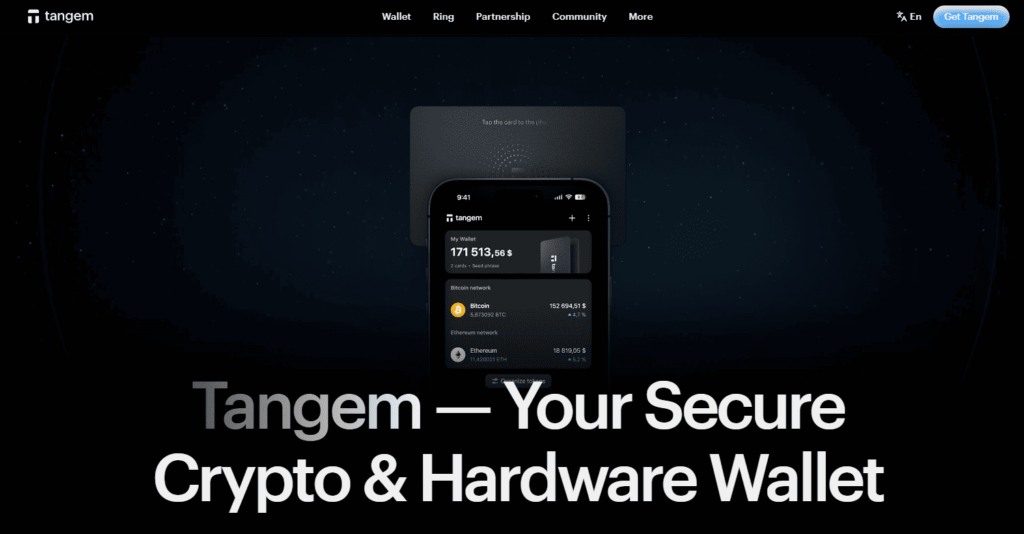
Tangem is a hardware-style wallet built around NFC cards and a mobile app. Its official site says users can store, buy, earn, send, swap, and spend thousands of tokens while keeping crypto safe and offline, and it states that zero out of 6,000,000 cards have been hacked since launch in 2017. Tangem’s buy pages also say users can buy crypto inside the app using bank cards, Apple Pay, Google Pay, and other payment methods.
pros:
- hardware-style security with a simpler setup;
- supports in-app buying and swapping;
- good for users who want offline-style protection;
- portable and easy to carry.
cons:
- requires buying hardware cards;
- not as smooth for heavy DeFi usage as browser wallets;
- EDU availability should be confirmed before purchase.
Buy EDU with Apple Pay
Buying EDU with Apple Pay usually means using a wallet that integrates a licensed payment provider rather than buying directly from the token issuer. MetaMask, Trust Wallet, Exodus, Zengo, Atomic Wallet, and Tangem all publicly mention Apple Pay in their buy flows or support materials. That gives users several ways to enter crypto with fiat before buying or swapping into EDU.
In practice, the process is simple. You open the wallet, choose the buy function, select Apple Pay, enter the fiat amount in USD, EUR, or another supported currency, and check whether EDU is available directly. If it is not, you can usually buy a more liquid asset first and swap into EDU afterward. Since EDU is an actively traded token on major data platforms, that route is often workable even when direct fiat availability differs by region.
For users who want a mobile-first self-custody app, Walletverse is a strong example because it combines Apple Pay purchases, broad token support, dApps, and passcode or biometric security in one place, based on the product information you provided and its public app listing.
Buy EDU with Google Pay
Google Pay is another convenient route for buying EDU with fiat. MetaMask, Trust Wallet, Exodus, Zengo, and Tangem all publicly reference Google Pay support, and your Walletverse product information also includes Google Pay as a supported payment method.
Google Pay is especially useful for Android users because it reduces checkout friction during first-time crypto purchases. The main point to remember is that payment convenience does not guarantee direct token availability, so users should still compare quotes, spreads, and whether EDU is offered directly or via a swap path. Exodus explicitly notes that available payment methods depend on location and not every payment method is available through every provider or jurisdiction.
Walletverse fits this use case well because it is built around mobile self-custody, supports multiple fiat currencies, and is designed for both new and experienced users who want a fast in-app buying experience.
How to Buy the EDU Coin (EDU) with Fiat?
To buy EDU Coin with fiat, follow these steps:
- Choose a self-custody wallet with fiat on-ramp support, such as Walletverse, MetaMask, Trust Wallet, Exodus, or another wallet from the list above.
- Set up the wallet and safely back up your recovery phrase or other security credentials. Coinbase’s wallet education materials stress that self-custody means you are responsible for safeguarding access.
- Open the buy section and select your payment method, such as Apple Pay, Google Pay, credit card, debit card, or bank transfer.
- Enter the amount in USD, EUR, or another supported fiat currency.
- Check whether EDU is available directly in your region. Since providers differ, availability is not always the same across wallets.
- If direct purchase is unavailable, buy a more liquid supported asset first.
- Swap that asset into EDU inside the wallet or through a connected exchange feature.
- Review the final quote, fees, and network costs before confirming. Exodus specifically advises that payment methods and provider conditions vary by location.
- Store your EDU in the wallet and enable every available security feature, including biometrics or device locks when supported.
For a smoother mobile route, Walletverse is especially suitable because it combines self-custody, in-app buying, broad token support, and mobile security features in one environment. For users who prioritize stronger offline protection, Ledger or Tangem may be better suited for storage after purchase.
FAQ
Most frequent questions and answers
EDU has a more specific real-world narrative than many small-cap tokens because it is tied to Open Campus and the education sector. That does not remove investment risk, though. Like most altcoins, it is volatile, and its long-term value depends on adoption, ecosystem development, and broader crypto-market conditions.
The usual path is to open a wallet with fiat purchase support, fund the purchase in USD using a card, Apple Pay, Google Pay, or bank transfer, and check whether EDU is directly available. If it is not, buy a more liquid asset first and then swap into EDU. Walletverse is an example of a mobile self-custody wallet that supports fiat purchases and broad token management.
You can use several types of wallets depending on your needs. Walletverse is a strong option for mobile-first users who want self-custody, Apple Pay or Google Pay support, and broad token coverage. Other commonly used choices include MetaMask, Trust Wallet, Coinbase Wallet, Exodus, Guarda, Atomic Wallet, Zengo, Ledger, and Tangem.
You can buy EDU through wallets and exchanges that support it directly or through a swap path. The simplest approach is usually a wallet with an integrated fiat on-ramp, for example Walletverse.


