


Buy Radio Caca (RACA) with USD, EUR and Other Fiat Currencies
Radio Caca (RACA) is a Web3 token connected to the USM Metaverse, NFT assets, blockchain gaming, and DAO governance. It belongs to the metaverse and GameFi category, where tokens can be used for in-game assets, virtual land, marketplaces, and community participation.
This article was prepared by ilink, a FinTech and Web3 software developer with 14 years of experience and completed projects worldwide. It explains what Radio Caca is, how RACA works, and how users can buy RACA with USD, EUR, Apple Pay, Google Pay, credit or debit cards, and other fiat payment methods.
The broader blockchain gaming market gives useful context for RACA. Grand View Research estimated the global blockchain gaming market at USD 13.0 billion in 2024 and projected it to reach USD 301.53 billion by 2030, with a 69.4% CAGR from 2025 to 2030. The same report connects this growth to demand for secure, transparent, decentralized gaming ecosystems.
For users, this means tokens like RACA are part of a wider shift toward player-owned assets, NFT marketplaces, virtual worlds, and on-chain game economies.
What is Radio Caca (RACA)?
Radio Caca is a Web3 ecosystem built around the USM Metaverse, NFT marketplace activity, GameFi mechanics, and DAO participation. Its ecosystem includes virtual land, Metamon, branded NFT assets, and marketplace functionality for buying and selling digital items. The official RACA site states that more than $1 billion worth of NFTs have been traded through its marketplace since inception.
RACA is the native utility token of the USM Metaverse and the governance token of RACA DAO. According to the official RACA documentation, players can use RACA to buy and trade USM Land and other NFT assets, and they can also earn RACA through gameplay and mining.
The token is deployed across several chains. The official documentation lists RACA contract addresses for BNB Chain, Ethereum, and OKT Chain, while CoinGecko also identifies RACA contracts across these networks. This multi-chain structure can make RACA more flexible, but it also means users must carefully choose the correct network before sending or receiving tokens.
Radio Caca’s tokenomics also show that RACA was designed with a large supply. The official documentation lists an initial total supply of 500 billion RACA and provides a supply breakdown across BNB Chain, Ethereum, and OKT Chain. CoinGecko currently lists RACA’s max supply as 500 billion and total supply at about 415.6 billion tokens.
RACA’s role is mainly ecosystem-based. It can be used in connection with virtual land, NFT marketplace transactions, gaming activity, and DAO-related governance. This makes it different from tokens that are built only for payments or trading.
A useful quote from the official RACA documentation is: “$RACA is the native utility token of the USM Metaverse and the governance token of RACA DAO.” This directly reflects the token’s two main functions: ecosystem utility and community governance.
For users researching RACA, the key point is that it belongs to the metaverse, NFT, and GameFi sector. Its potential depends on ecosystem activity, marketplace usage, game adoption, liquidity, community development, and the broader demand for blockchain-based virtual assets.
Where Can I Buy Radio Caca (RACA) with Cash? 10 Best Crypto Wallets
1. Walletverse
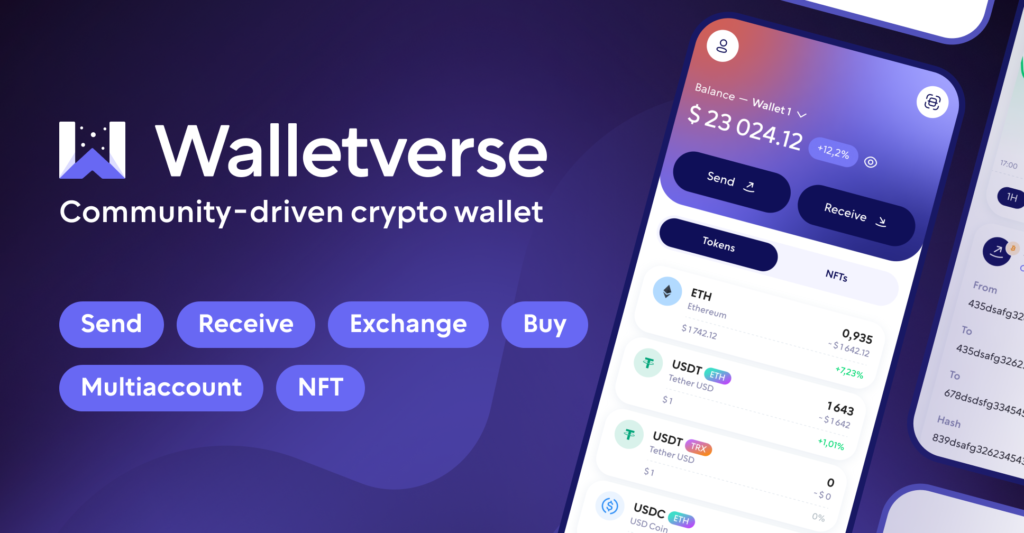
Walletverse is a mobile crypto wallet created for users who want to buy, store, send, exchange, and manage digital assets from one app. It supports more than 700 cryptocurrencies, Web3 tools, DeFi access, dApps, multi-account management, and fiat purchases through Apple Pay, Google Pay, credit and debit cards, and currencies such as USD, EUR, GBP, JPY, KZT, INR, CAD, AUD, and others.
For RACA users, Walletverse can be useful because it combines fiat access with self-custody. Users can buy crypto with fiat, manage assets from a mobile wallet, and protect access with passcode and biometric authentication. Since RACA is available on several networks, users should always check current token support, network compatibility, and swap routes before transferring funds.
Pros:
- Supports 700+ cryptocurrencies;
- Allows crypto purchases with Apple Pay, Google Pay, cards, and multiple fiat currencies;
- Provides non-custodial storage where users control access to their funds;
- Includes passcode and biometric authentication;
- Supports Web3, DeFi, dApps, staking, and multi-account management.
Cons:
- Available as a mobile crypto app only;
- Direct RACA availability may depend on provider support, token support, and liquidity routes.



2. MetaMask

MetaMask is one of the most widely used wallets for Ethereum and EVM-compatible networks. Since RACA has Ethereum and BNB Chain contract support, MetaMask can be useful for users who want to manage RACA across compatible networks.
MetaMask is better suited for users who understand custom networks, token imports, gas fees, and decentralized exchange transactions. Beginners can use it, but they should be careful when adding RACA manually or switching between chains.
Pros:
- Supports Ethereum and EVM-compatible networks;
- Works with many decentralized exchanges and Web3 apps;
- Available as a browser extension and mobile app;
- Allows manual token imports and custom network settings.
Cons:
- Can be confusing for beginners;
- Users must manage gas fees, token contracts, and network selection carefully.
3. Trust Wallet

Trust Wallet is a non-custodial mobile wallet that supports many crypto assets, blockchain networks, and dApps. It is often used by people who want simple mobile access to Web3 without relying only on centralized exchanges.
For RACA buyers, Trust Wallet may be useful for storing compatible tokens and accessing swap routes. If RACA does not appear automatically, users may need to import the token manually with the correct contract and network.
Pros:
- Supports many tokens and blockchain networks;
- Provides non-custodial asset control;
- Includes mobile dApp access;
- Suitable for users who prefer mobile crypto management.
Cons:
- RACA may require manual token import;
- Fiat purchase and swap availability depend on third-party providers.
4. Crypto.com DeFi Wallet

Crypto.com DeFi Wallet is a self-custody wallet that supports token storage, DeFi access, and multi-chain asset management. It is separate from the main Crypto.com exchange app, although some users use both products together.
For RACA, this wallet may be useful for users who want mobile self-custody and access to decentralized routes. Direct purchase availability can vary, so users may still need to buy another crypto asset first and exchange it for RACA.
Pros:
- Self-custody wallet model;
- Supports DeFi and token management;
- Available as a mobile wallet;
- Useful for users familiar with Crypto.com products.
Cons:
- RACA may not be directly available;
- Users may need to move assets between services or platforms.
5. Bitget Wallet

Bitget Wallet is a multi-chain crypto wallet focused on swaps, dApps, and Web3 asset management. It is often used by active crypto users who want mobile access to tokens, DeFi tools, GameFi projects, and decentralized applications.
For RACA, Bitget Wallet may be useful if supported swap routes are available. Users should check the correct RACA token version, liquidity, network fees, and final receiving wallet before confirming any transaction.
Pros:
- Supports many chains and tokens;
- Includes swap and dApp functionality;
- Useful for active Web3 users;
- Mobile-first design.
Cons:
- Token availability may vary by route and liquidity;
- Some features may be too advanced for new users.
6. Binance Web3 Wallet

Binance Web3 Wallet is designed for users who want to move between centralized exchange services and self-custody Web3 access. It can be practical for people who first buy major cryptocurrencies with fiat and then use decentralized routes.
For RACA, users may buy BNB, USDT, USDC, ETH, or another supported asset first, then exchange it where RACA liquidity is available. Since RACA has strong BNB Chain relevance, users should pay close attention to the selected network.
Pros:
- Useful for Binance ecosystem users;
- Connects fiat access with Web3 functionality;
- Supports dApps and decentralized routes;
- Suitable for users who buy major crypto assets first.
Cons:
- Regional availability may vary;
- Users still need to understand self-custody and Web3 transaction risks.
7. Exodus

Exodus is a beginner-friendly wallet known for its clean interface, portfolio view, and desktop plus mobile availability. It is often chosen by users who want simple asset management without a complex trading interface.
For RACA, Exodus may be more useful as a general storage and portfolio wallet than as a direct buying route. Users should check whether RACA is supported in the app before sending funds to avoid compatibility issues.
Pros:
- Simple and readable interface;
- Available on desktop and mobile;
- Good for portfolio tracking;
- Suitable for users managing multiple assets.
Cons:
- RACA may not be directly supported;
- Advanced Web3 users may prefer wallets with deeper dApp access.
8. Guarda

Guarda is a multi-currency wallet available on mobile, web, and desktop. It is designed for users who want flexible access across different devices and broad asset support.
For RACA users, Guarda may be useful for storing compatible tokens and managing crypto purchased through integrated providers. Before sending RACA, users should confirm current token support, network compatibility, and contract details.
Pros:
- Available on mobile, desktop, and web;
- Supports many digital assets;
- Offers non-custodial wallet control;
- Suitable for users who prefer multi-platform access.
Cons:
- Purchase and swap services depend on external partners;
- RACA support should be checked before transfer.
9. OKX Wallet

OKX Wallet is a multi-chain Web3 wallet connected to a broader exchange and DeFi ecosystem. It supports swaps, dApps, NFTs, and asset management across several blockchain networks.
For RACA, OKX Wallet may be useful for users who want access to multi-chain trading routes and decentralized tools. It is better suited for people who already understand swap paths, transaction approvals, and network fees.
Pros:
- Strong multi-chain functionality;
- Includes swaps, dApps, NFT tools, and DeFi access;
- Useful for active crypto users;
- Connected to a large exchange ecosystem.
Cons:
- The interface may feel complex for beginners;
- RACA availability depends on supported routes and liquidity.
10. Coinbase Wallet

Coinbase Wallet is a self-custody wallet separate from the Coinbase exchange. It allows users to store Ethereum-compatible tokens, manage private keys, and connect to Web3 applications.
For RACA users, Coinbase Wallet can be useful for holding compatible token versions and interacting with decentralized routes. However, direct RACA buying may not always be available, so users may need to buy ETH, USDC, or another major asset first.
Pros:
- Self-custody wallet structure;
- Familiar interface for Coinbase users;
- Supports Ethereum-compatible tokens and dApps;
- Available on mobile and browser.
Cons:
- RACA may not be available as a direct fiat purchase;
- Some swaps may require external liquidity providers.
Buy RACA with Apple Pay
Buying RACA with Apple Pay usually starts with a wallet or fiat on-ramp that supports Apple Pay for crypto purchases. Since RACA may not always be available as a direct fiat purchase, many users buy a widely supported asset first, such as USDT, USDC, ETH, BNB, or BTC, and then swap it for RACA through a supported route.
Walletverse supports buying crypto with Apple Pay, which can make the first step easier for mobile users. After purchasing crypto, users can manage assets in the wallet and use available exchange or transfer routes depending on RACA support.
Apple Pay is convenient because it reduces manual card entry and creates a familiar checkout experience. Users should still compare provider fees, exchange spreads, blockchain network fees, and swap slippage before confirming the transaction.
Buy RACA with Google Pay
Buying RACA with Google Pay follows a similar process. Users choose a wallet or crypto platform that supports Google Pay, buy a major crypto asset with fiat, and then exchange that asset for RACA through a supported route.
Walletverse supports Google Pay, which can be useful for Android users who want a mobile-first crypto purchase flow. This is especially helpful for users who prefer buying crypto inside a wallet instead of creating accounts across several platforms.
Before buying, users should check whether RACA is supported directly or whether they need an intermediate asset. They should also verify the token version, network, fees, slippage, and final receiving address before sending funds.
How to Buy The Radio Caca (RACA) with Fiat?
The exact process depends on your country, wallet, payment provider, exchange availability, and current RACA liquidity. In many cases, users follow a fiat-to-crypto-to-RACA route.
- Choose a crypto wallet with fiat support. Select a wallet that allows purchases with USD, EUR, bank cards, Apple Pay, Google Pay, or other local payment methods. Walletverse is one example because it supports mobile crypto purchases with cards, Apple Pay, Google Pay, and several fiat currencies.
- Create or import your wallet. Set up a new wallet or import an existing wallet if you already have one. Enable passcode protection, biometric authentication, and secure backup storage before adding funds.
- Buy a widely supported crypto asset. If RACA is not available for direct fiat purchase, buy an intermediate asset such as USDT, USDC, ETH, BNB, or BTC. The best choice depends on the exchange or swap route you plan to use.
- Check the RACA token details. RACA exists across BNB Chain, Ethereum, and OKT Chain, according to the official token documentation. Users should confirm the correct chain and contract before importing, transferring, or swapping the token.
- Exchange your crypto for RACA. Use a supported exchange, swap service, or decentralized route where RACA liquidity is available. CoinGecko lists RACA token information, contracts, supply data, and trading access details, while availability can change across platforms.
- Move RACA to a secure wallet. If you bought RACA outside your main wallet, transfer it only to a wallet that supports the correct network and token version. Start with a small test transaction if you are moving RACA for the first time.
- Monitor security and costs. Review network fees, wallet address, token contract, exchange fees, and slippage. Crypto transactions are usually irreversible, so even a small mistake can lead to lost funds.
Why Wallet Choice Matters When Buying RACA
Wallet choice is especially important for RACA because it is connected to a multi-chain metaverse and NFT ecosystem. Users may need a wallet that supports fiat purchases, BNB Chain or Ethereum assets, token imports, swaps, dApps, and secure self-custody.
RACA’s official documentation shows that the token is spread across several networks, with the largest documented share on BNB Chain and a significant share on Ethereum. This makes network selection important because sending tokens to an unsupported chain or wrong address can result in permanent loss.
For beginners, fiat access and simple mobile onboarding are important. For experienced users, custom token support, dApp access, decentralized exchange compatibility, and contract verification may matter more.
Walletverse can be a practical option for users who want to start with fiat and manage crypto in a mobile wallet. Its non-custodial structure, biometric authentication, multi-currency support, and support for 700+ cryptocurrencies make it suitable for users who want both simplicity and asset control.
Conclusion
Radio Caca (RACA) is a Web3 token connected to the USM Metaverse, RACA DAO, NFT marketplace activity, virtual land, gaming, and metaverse-based digital assets. Its role is mainly tied to ecosystem utility, NFT transactions, gameplay, mining, and governance.
For users who want to buy RACA with USD, EUR, Apple Pay, Google Pay, or bank cards, the most practical route is often to buy USDT, USDC, ETH, BNB, BTC, or another major asset first and then exchange it for RACA through a supported route. Walletverse can help with the fiat-to-crypto step by offering mobile purchases, non-custodial storage, biometric protection, Web3 functionality, and support for more than 700 cryptocurrencies.
Data current as of May 12, 2026.
FAQ
Most frequent questions and answers
RACA may be interesting for users who follow metaverse projects, NFT marketplaces, GameFi, virtual land, and DAO-based ecosystems. However, it is still a high-risk crypto asset, so users should research token utility, ecosystem activity, liquidity, supported networks, and personal risk tolerance before buying.
To buy RACA with USD, choose a wallet or exchange that supports fiat purchases, buy a major cryptocurrency such as USDT, USDC, ETH, BNB, or BTC, and then exchange it for RACA through a supported route. Walletverse can help with the first step because it supports crypto purchases with USD, bank cards, Apple Pay, and Google Pay.
You can use a wallet that supports the network and token version you plan to use for RACA. Walletverse is one option for users who want a mobile, non-custodial crypto wallet with fiat purchases, 700+ supported assets, Web3 access, passcode protection, and biometric authentication.
RACA can be bought through supported centralized or decentralized exchange routes where liquidity is available. Users should always check current availability, trading pairs, fees, liquidity, withdrawal networks, and the correct RACA contract before buying.
The cheapest way to buy RACA depends on provider fees, exchange spreads, blockchain network costs, withdrawal fees, and swap slippage. Many users compare the total cost of buying USDT, USDC, ETH, BNB, or BTC first, then swapping into RACA through the route with the lowest combined fees.
Yes, users can usually start with EUR by choosing a wallet or exchange that supports euro payments. Walletverse supports EUR and other fiat currencies, so users can buy crypto first and then use available routes to access RACA.
Yes, this may be possible through a wallet, exchange, or payment provider that supports card purchases. If RACA is not available directly by card, users can buy another cryptocurrency first and then exchange it for RACA.
Walletverse supports more than 700 cryptocurrencies and is designed for buying, storing, sending, and exchanging crypto in a non-custodial mobile wallet. Before transferring RACA, users should check current token support inside the app and confirm that they are using the correct RACA network and contract details.


