


Buy Fei USD (FEI) with USD, EUR and Other Fiat Currencies
Fei USD (FEI) is a decentralized stablecoin created for the DeFi market and originally designed to maintain a value close to the U.S. dollar. Unlike many popular fiat-backed stablecoins, FEI became known for its experimental approach to stability, protocol-controlled liquidity, and decentralized governance.
This article explains what Fei USD is, how it worked, why it became an important case study in stablecoin design, and how users can buy or manage FEI with USD, EUR, and other fiat currencies through crypto wallets and supported payment methods.
This article was prepared by ilink, a FinTech and Web3 software developer with 14 years of experience and completed projects worldwide.
What is Fei USD (FEI)?
Fei USD (FEI) is an Ethereum-based stablecoin launched by Fei Protocol in April 2021. The project used a dual-token model: FEI served as the stablecoin, while TRIBE was used for governance decisions in the protocol ecosystem. Messari describes Fei Protocol as a DeFi platform built around the FEI stablecoin and notes that the project is no longer under active development.
FEI was designed to track the U.S. dollar, but it did not follow the same model as centralized stablecoins backed by bank-held cash or treasury reserves. Instead, Fei Protocol introduced mechanisms such as direct incentives and Protocol Controlled Value, also known as PCV, to support market liquidity and help FEI trade near its intended peg.
OpenZeppelin described FEI as a stablecoin that used “direct incentives” to encourage trading behavior that could bring the token back toward its target value. The same audit overview explains that FEI was not fully collateralized in the traditional sense and relied on mint and burn incentives connected to decentralized exchange activity.
This made FEI one of the more experimental stablecoin projects of the 2021 DeFi cycle. It aimed to reduce reliance on centralized collateral and create a more decentralized liquidity model, which made it relevant for traders, DeFi users, and researchers studying stablecoin mechanics.
However, FEI should also be viewed as a legacy stablecoin. CoinGecko reported that Fei USD was wound down in August 2022, with the project citing technical, financial, and future regulatory risks. FEI holders were directed to redeem their FEI for DAI, which means users should always check current liquidity, wallet support, and exchange availability before buying or storing FEI.
Despite this, FEI remains visible on-chain as an ERC-20 token. Etherscan lists the FEI token contract on Ethereum, with 18 decimals, several thousand holders, and a limited remaining supply visible on-chain.
The broader stablecoin market remains highly active. Chainalysis reported that stablecoins processed $28 trillion in adjusted real economic volume in 2025 and projected that this figure could reach $719 trillion by 2035 under organic growth assumptions. This shows why older projects like FEI are still useful for understanding how stablecoin infrastructure has evolved.
Where Can I Buy Fei USD (FEI) with Cash? 10 Best Crypto Wallets
1. Walletverse
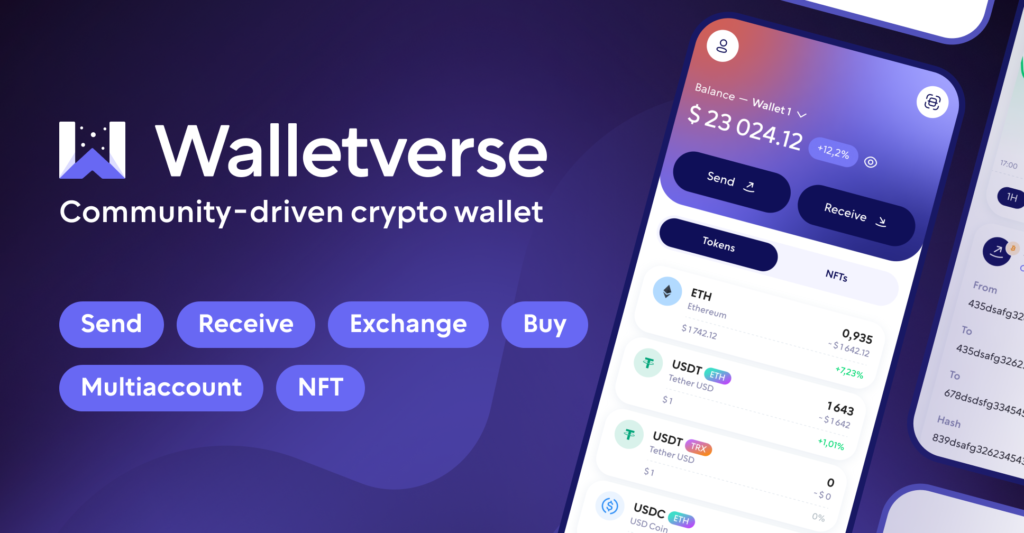
Walletverse is a mobile crypto wallet built for users who want to buy, store, send, and exchange digital assets in a self-custody environment. It supports more than 700 cryptocurrencies, multi-account management, Web3 access, DeFi functionality, and fiat purchase options through Apple Pay, Google Pay, credit/debit cards, and currencies such as USD, EUR, GBP, JPY, KZT, INR, CAD, and AUD.
For FEI users, Walletverse can be useful as a mobile-first wallet for managing Ethereum-based assets and handling fiat-to-crypto entry points. If direct FEI purchase is not available, users can buy a supported asset first and then check available swap routes.
Pros:
- Supports 700+ cryptocurrencies;
- Offers Apple Pay, Google Pay, and bank card purchase options;
- Uses passcode and biometric authentication;
- Provides a non-custodial wallet model;
- Includes Web3, DeFi, dApp, and multi-account features;
- Has Google Play rating 4.8 and App Store rating 5.0.
Cons:
- FEI availability should be checked inside the app before purchase;
- Mobile-only format may not suit users who prefer desktop wallets;
- Some swaps may depend on third-party liquidity providers.



2. MetaMask

MetaMask is one of the most widely used Ethereum and EVM-compatible wallets. Since FEI is an ERC-20 token, MetaMask can be used to store FEI if the token contract is added correctly.
Users can also connect MetaMask to decentralized exchanges, which may be helpful when FEI is not available through direct card purchase. However, this approach requires more manual control and a better understanding of gas fees, token contracts, and DEX liquidity.
Pros:
- Strong Ethereum and ERC-20 support;
- Works with many decentralized exchanges;
- Available as browser extension and mobile app;
- Allows users to add custom tokens.
Cons:
- Less beginner-friendly than simple mobile wallets;
- Users must manage gas fees and token addresses carefully;
- Fiat purchase options depend on third-party providers.
3. Trust Wallet

Trust Wallet is a popular self-custody wallet that supports many blockchains and tokens. It can be useful for users who want to manage Ethereum-based assets and access decentralized applications from a mobile wallet.
For FEI, users should first verify whether the token is visible by default or whether it must be added manually. If direct purchase is unavailable, buying ETH or a major stablecoin and swapping may be the more practical route.
Pros:
- Supports many assets and networks;
- Includes mobile dApp access;
- Suitable for self-custody users;
- Allows custom token management.
Cons:
- Direct FEI purchase may not be available;
- Swap routes depend on liquidity;
- Users need to understand network fees.
4. Crypto.com DeFi Wallet

Crypto.com DeFi Wallet is a non-custodial wallet that supports multiple crypto assets and DeFi features. It is built for users who want more control over their assets while still using a recognizable crypto product.
For FEI, users should verify ERC-20 token support and available swap options. Since FEI is no longer a major active stablecoin, direct fiat purchase may be limited.
Pros:
- Non-custodial wallet structure;
- Supports DeFi use cases;
- Recognizable brand ecosystem;
- Mobile-friendly experience.
Cons:
- Direct FEI buying may be unavailable;
- Swap availability depends on liquidity partners;
- Ethereum fees can affect small purchases.
5. Atomic Wallet

Atomic Wallet is a multi-asset wallet available on desktop and mobile. It is often used by people who want a single interface for storing and exchanging different cryptocurrencies.
For FEI, users should confirm current token support and liquidity. Since FEI is not as actively traded as major stablecoins, purchase and swap routes may be more limited.
Pros:
- Supports many cryptocurrencies;
- Available on desktop and mobile;
- Offers built-in exchange features;
- Useful for multi-asset portfolio storage.
Cons:
- FEI may not be available directly;
- Swap availability depends on providers;
- Users should review fees before purchasing.
6. Binance Web3 Wallet

Binance Web3 Wallet is designed for users who want to access self-custody features while staying connected to the Binance ecosystem. It supports DeFi access, swaps, and multi-chain crypto management.
FEI may not be directly available through fiat purchase, so users should check asset support before making a transaction. If FEI is not listed, users may need another Ethereum-compatible wallet and DEX route.
Pros:
- Integrated with Binance ecosystem;
- Supports Web3 and DeFi access;
- Useful for users who already trade on Binance;
- Offers simplified wallet setup.
Cons:
- FEI support is not guaranteed;
- Availability depends on region and product settings;
- Users still need to review gas and swap costs.
7. Exodus

Exodus is known for its clean interface and beginner-friendly asset management. It supports many cryptocurrencies and is available on desktop and mobile, which can be useful for users who prefer managing assets across devices.
For FEI, users should confirm whether the asset is supported or whether it can be added and managed through supported Ethereum functionality. Exodus may be easier for storage than for finding niche swap liquidity.
Pros:
- Easy-to-use interface;
- Available on desktop and mobile;
- Good for portfolio tracking;
- Suitable for beginners.
Cons:
- Niche ERC-20 support may vary;
- Direct FEI purchase may not be available;
- Advanced DeFi access is more limited than in Web3-native wallets.
8. Guarda

Guarda is a multi-currency wallet that supports many assets and offers web, desktop, and mobile access. It can be useful for users who want a flexible wallet with several platform options.
For FEI, users should check whether the token is supported directly or through custom ERC-20 functionality. As with other wallets, buying a liquid crypto asset first and swapping may be necessary.
Pros:
- Available on several platforms;
- Supports many digital assets;
- Offers non-custodial asset management;
- Suitable for users who prefer wallet flexibility.
Cons:
- FEI support should be verified before use;
- Swap fees and routes may vary;
- Interface may feel less simple than mobile-first wallets.
9. OKX Wallet

OKX Wallet is a Web3 wallet that supports multiple chains, decentralized applications, and token swaps. It can be useful for users who already use OKX products or want access to Web3 tools in one interface.
For FEI, users should check whether the token is supported in the wallet and whether an Ethereum swap route is available. Since FEI is a legacy asset, liquidity may be more limited than for major stablecoins.
Pros:
- Multi-chain Web3 wallet;
- Built-in swap functionality;
- Suitable for DeFi users;
- Connects with broader OKX ecosystem tools.
Cons:
- FEI availability may vary;
- Some features can feel complex for beginners;
- Swap execution depends on market liquidity.
10. Coinbase Wallet

Coinbase Wallet is a self-custody wallet separate from the Coinbase exchange. It supports Ethereum-based assets and can connect to DeFi applications, which may help users manage or swap ERC-20 tokens like FEI.
The wallet is suitable for users who want a recognizable interface with self-custody control. However, token availability and purchase options vary, so users should confirm FEI support before buying.
Pros:
- Supports ERC-20 tokens;
- Connects to DeFi apps;
- Beginner-friendly interface;
- Backed by a well-known crypto brand.
Cons:
- FEI may not be available for direct purchase;
- Some features depend on regional access;
- Network fees apply for Ethereum transactions.
Buy Fei USD (FEI) with Apple Pay
Buying FEI with Apple Pay depends on whether your wallet or fiat provider supports FEI directly. In many cases, Apple Pay is used to purchase a more liquid asset first, such as ETH, USDT, USDC, or DAI, and then the user swaps that asset for FEI through an Ethereum-compatible route.
Walletverse supports crypto purchases with Apple Pay, which makes it convenient for mobile users who want a simple fiat-to-crypto entry point. Before buying, check whether FEI is listed directly or whether you need to purchase another asset first and then swap.
Buy Fei USD (FEI) with Google Pay
Google Pay can also be used for crypto purchases in supported wallets and regions. The process is usually similar to Apple Pay: choose the asset, select fiat currency, confirm payment details, and complete the purchase through the wallet’s payment provider.
In Walletverse, users can buy crypto with Google Pay and manage assets through a mobile self-custody wallet. If FEI is not available as a direct purchase option, users can buy a supported crypto asset first and then check available exchange routes.
How to Buy Fei USD (FEI) with Fiat?
Buying FEI with fiat requires extra attention because FEI is a legacy stablecoin with limited availability compared to USDT, USDC, or DAI. The safest approach is to check wallet support, payment options, liquidity, and network fees before making a transaction.
- Choose a crypto wallet. Select a wallet that supports Ethereum-based assets and gives you control over your funds. Walletverse, MetaMask, Trust Wallet, Coinbase Wallet, and other Web3 wallets may be suitable depending on your experience level and preferred payment method.
- Check FEI availability. Search for Fei USD or FEI inside the wallet. If the token is not listed automatically, verify the official Ethereum token contract through a trusted block explorer before adding it manually.
- Select a fiat payment method. Choose USD, EUR, or another supported fiat currency. Depending on the wallet, you may be able to use Apple Pay, Google Pay, debit card, credit card, or third-party fiat on-ramp providers.
- Buy a supported asset if FEI is not available directly. If direct FEI purchase is unavailable, buy ETH, USDC, USDT, or DAI first. These assets usually have better liquidity and can be used for swaps on Ethereum-compatible platforms.
- Swap to FEI. Use a wallet swap feature or connect to a decentralized exchange that supports FEI liquidity. Check the exchange rate, slippage, gas fees, and total cost before confirming the swap.
- Store FEI securely. After purchase, keep FEI in a self-custody wallet where you control the private keys or recovery phrase. Use passcode protection, biometric authentication, and secure backup practices.
- Review risks before holding. FEI is no longer part of an actively developing protocol, so it may carry higher liquidity and support risks than larger stablecoins. Users should treat it as a niche DeFi asset and review current market conditions before buying.
Why Wallet Choice Matters When Buying FEI
The wallet matters because FEI is not as easy to access as the largest stablecoins. A good wallet should help users manage Ethereum-based tokens, check swap routes, protect private keys, and understand transaction costs before confirming a purchase.
Walletverse is especially useful for mobile users who want a simple interface, self-custody, fiat purchase options, biometric protection, and access to more than 700 digital assets. For FEI, the main advantage is convenience: users can enter crypto with fiat and manage assets from one mobile app, while still checking whether FEI is supported directly or through swap routes.
Conclusion
Fei USD (FEI) is an important stablecoin project in DeFi history. It introduced an experimental model based on direct incentives and Protocol Controlled Value, giving the market a real example of how decentralized stablecoin mechanisms can work and what risks they can face.
Today, FEI should be approached carefully because Fei Protocol has been wound down and the token is no longer as widely supported as major stablecoins. Users who want to buy FEI with USD, EUR, Apple Pay, Google Pay, or bank card payments may need to buy a liquid asset first and then swap it through an Ethereum-compatible route.
Walletverse can be a practical mobile wallet option for users who want self-custody, fiat payment methods, Web3 access, and secure crypto management. Before buying FEI, always check token availability, liquidity, fees, and network conditions.
Data current as of May 15, 2026.
FAQ
Most frequent questions and answers
FEI is better understood as a legacy DeFi stablecoin than as a typical growth-focused crypto asset. It has historical value because it tested a decentralized stablecoin model, but users should be careful because Fei Protocol is no longer actively developed.
To buy FEI with USD, choose a wallet or platform that supports fiat purchases and Ethereum-based assets. If FEI is not available directly, you can buy ETH, USDC, USDT, or DAI first and then swap it for FEI through a supported route.
You can use Ethereum-compatible wallets that support ERC-20 tokens, such as Walletverse, MetaMask, Trust Wallet, Coinbase Wallet, and similar Web3 wallets. Walletverse is suitable for users who want a mobile self-custody wallet with fiat purchase options, biometric protection, and support for 700+ crypto assets.
FEI may be available through selected decentralized exchanges, wallet swap providers, or platforms that still support the token. Availability can change, so users should check current liquidity and supported trading routes before buying.
The cheapest way usually depends on gas fees, fiat provider fees, swap rates, and liquidity. For many users, buying a liquid asset first and swapping when Ethereum network fees are low may be cheaper than using a direct fiat route with high provider fees.
Yes, it may be possible to buy FEI using EUR indirectly. If direct FEI purchase is unavailable, buy a supported asset with EUR first and then swap it for FEI through an Ethereum-compatible wallet or decentralized exchange.
Walletverse can be useful for users who want to buy crypto with fiat and manage assets in a mobile self-custody wallet. Before buying FEI, users should check whether FEI is available directly in Walletverse or whether they need to buy another asset first and swap it.


