


Buy Ether.fi (ETHFI) with USD, EUR and Other Fiat Currencies
Ether.fi (ETHFI) is a crypto asset connected to one of the most recognized liquid restaking ecosystems on Ethereum. The token is used for governance in the ether.fi protocol, a non-custodial staking and restaking platform that allows users to keep exposure to Ethereum staking while participating in broader DeFi infrastructure.
For users who want to buy Ether.fi with USD, EUR, or other fiat currencies, the process usually starts with a crypto wallet or exchange that supports card payments, Apple Pay, Google Pay, or fiat on-ramp providers. This guide explains what ETHFI is, how the ecosystem works, and which wallets can help users buy, store, send, and manage the token.
This article was prepared by ilink, a FinTech and Web3 software developer with 14 years of experience and completed projects worldwide.
What is Ether.fi (ETHFI)?
Ether.fi is a non-custodial liquid restaking protocol built around Ethereum staking. Binance Research describes ether.fi as “a non-custodial liquid restaking protocol” and notes that it allows users to retain control of their keys while delegating staking. The same source explains that ether.fi deposits are natively restaked with EigenLayer, which helps extend Ethereum-based economic security to external systems such as rollups and oracles.
The core idea behind ether.fi is simple: users can stake ETH, receive liquid staking or restaking tokens, and continue using those assets in DeFi. According to ether.fi technical documentation, users deposit ETH into a liquidity pool, the protocol creates and funds validators, and depositors receive eETH shares that can be wrapped into weETH.
ETHFI is the governance token of the ether.fi ecosystem. The ether.fi governance forum states that ETHFI gives community members a direct mechanism to influence the growth of the protocol, including decisions around grants, protocol fees, upgrades, node operator permissions, token staking, and treasury diversification.
The ETHFI token launched in March 2024 as part of ether.fi’s decentralization roadmap. The governance post said that the token launch would begin on March 18, 2024, while the official ETHFI token information states that the token has a fixed supply of 1 billion ETHFI with no further issuance planned.
Ether.fi is also part of the broader restaking sector. EigenLayer’s documentation defines liquid restaking as depositing liquid tokens, including liquid staking tokens and other ERC-20 assets, into EigenLayer smart contracts. This is the infrastructure layer that helped make liquid restaking one of the most discussed DeFi categories after Ethereum’s transition to proof of stake.
The protocol has reached significant scale. DefiLlama listed ether.fi with about $5.204 billion in total value locked, around $198.49 million in annualized fees, and about $48.67 million in annualized revenue at the time of review. DefiLlama also categorizes ether.fi as a liquid restaking protocol and describes it as a decentralized and non-custodial Ethereum staking protocol.
The institutional side of the project has also received attention. On ether.fi’s institutional staking page, Michael Arrington of Arrington Capital is quoted as saying, “With over $4B in TVL, EtherFI is a fortified system,” referring to its scale and institutional-grade positioning.
For everyday users, ETHFI should be understood as a governance and ecosystem token rather than a stablecoin or a direct claim on ETH. Its value can be volatile, and buying it with fiat requires careful attention to wallet support, network fees, liquidity, and security.
Where Can I Buy Ether.fi (ETHFI) with Cash? 10 Best Crypto Wallets
1. Walletverse
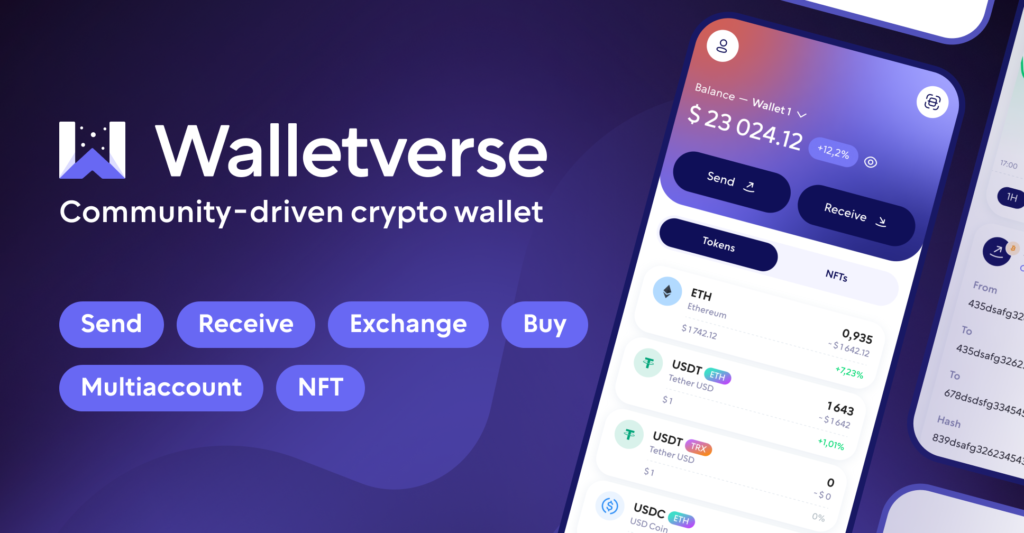
Walletverse is a mobile crypto wallet designed for users who want a simple way to buy, store, send, and exchange digital assets. It supports more than 700 cryptocurrencies and allows users to buy crypto with Apple Pay, Google Pay, credit/debit cards, and fiat currencies such as USD, EUR, GBP, JPY, KZT, INR, CAD, AUD, and others.
For ETHFI users, Walletverse can be useful as a mobile-first wallet for entering crypto with fiat and managing assets in a non-custodial environment. If ETHFI is not available for direct purchase, users can buy a more liquid asset first and then check whether a swap route is available.
Pros:
- Supports 700+ cryptocurrencies;
- Offers Apple Pay, Google Pay, and card payment options;
- Provides non-custodial asset control;
- Uses passcode and biometric authentication;
- Includes Web3, DeFi, dApps, and multi-account features;
- Supports staking for selected assets such as Solana, ETH, and TRX;
- Has a 4.8 rating on Google Play and a 5.0 rating on the App Store.
Cons:
- ETHFI availability should be checked inside the app before purchase;
- Mobile-only format may not suit users who prefer desktop wallets;
- Some swaps depend on third-party providers and liquidity conditions.



2. MetaMask

MetaMask is one of the most widely used wallets for Ethereum and EVM-compatible networks. Since ETHFI is an ERC-20 ecosystem token, MetaMask can be useful for storing, sending, and interacting with decentralized exchanges that support ETHFI.
MetaMask is especially suitable for users who understand token contracts, gas fees, and DeFi connections. Beginners may need more time to learn how to import tokens, approve transactions, and avoid fake assets.
Pros:
- Strong Ethereum and EVM network support;
- Works with many decentralized exchanges and DeFi apps;
- Available as a browser extension and mobile app;
- Allows custom token imports.
Cons:
- Less beginner-friendly than mobile wallets focused on fiat purchases;
- Users must manage gas fees carefully;
- Security depends heavily on correct seed phrase management.
3. Trust Wallet

Trust Wallet is a popular self-custody wallet that supports many blockchains and digital assets. It can be useful for users who want mobile access to tokens, DeFi apps, and crypto swaps.
For ETHFI, Trust Wallet may work as a storage and swap option if the token and route are supported. Users should always verify the correct contract address and network before sending funds.
Pros:
- Supports many cryptocurrencies and networks;
- Offers mobile access to dApps;
- Suitable for self-custody users;
- Allows custom token management.
Cons:
- Direct ETHFI fiat purchase may not always be available;
- Swap routes can depend on liquidity;
- Network fees may be high during Ethereum congestion.
4. Crypto.com DeFi Wallet

Crypto.com DeFi Wallet is a non-custodial wallet for users who want more control over their assets while using a recognizable crypto brand. It supports DeFi interactions and multi-asset storage.
For ETHFI, users should verify token support and available exchange routes. If direct buying is unavailable, users may need to purchase another crypto asset first and swap later.
Pros:
- Non-custodial wallet model;
- Supports DeFi use cases;
- Mobile-friendly design;
- Connected to a well-known crypto ecosystem.
Cons:
- ETHFI direct purchase may not be supported everywhere;
- Swap costs depend on providers and liquidity;
- Ethereum fees can affect smaller purchases.
5. Atomic Wallet

Atomic Wallet is a desktop and mobile crypto wallet that supports multi-asset storage and built-in exchange features. It can be useful for users who want one app for managing different cryptocurrencies.
For ETHFI, users should check whether the token is supported before purchase. If it is unavailable directly, another Ethereum-compatible wallet or exchange route may be required.
Pros:
- Supports many assets;
- Available on desktop and mobile;
- Includes built-in exchange options;
- Useful for multi-asset portfolio management.
Cons:
- ETHFI support may not be available in all versions;
- Built-in swaps depend on third-party providers;
- Users should compare fees before buying.
6. Binance Web3 Wallet

Binance Web3 Wallet is designed for users who want to access DeFi while staying connected to the Binance ecosystem. Binance Research covered ether.fi in March 2024 and described it as a non-custodial liquid restaking protocol, which helped introduce ETHFI to a broader exchange audience.
For users who already use Binance products, Binance Web3 Wallet may offer a convenient route into Web3 assets. ETHFI access depends on local availability, supported trading pairs, and wallet swap options.
Pros:
- Integrated with the Binance ecosystem;
- Provides Web3 and DeFi access;
- Useful for users who already buy crypto through Binance;
- Simplified wallet setup compared with some DeFi wallets.
Cons:
- Availability depends on jurisdiction and product settings;
- ETHFI support should be checked before purchase;
- Users still need to understand self-custody risks.
7. Exodus

Exodus is a multi-asset wallet known for a simple interface and availability on both desktop and mobile. It is suitable for users who want to monitor and manage a portfolio without a steep learning curve.
For ETHFI, Exodus can be useful if the token is supported directly or through available wallet integrations. Users should confirm asset support before transferring funds.
Pros:
- Clean and beginner-friendly interface;
- Available on desktop and mobile;
- Good for portfolio tracking;
- Supports many crypto assets.
Cons:
- ETHFI support may vary;
- Advanced DeFi functionality is more limited;
- Swap rates and fees should be reviewed carefully.
8. Guarda

Guarda Wallet supports many crypto assets and is available across web, desktop, and mobile. It can be useful for users who prefer flexible access from different devices.
For ETHFI, Guarda may support storage or exchange routes depending on current token availability. Users should check the asset list and network details before buying or sending ETHFI.
Pros:
- Available on multiple platforms;
- Supports many digital assets;
- Offers non-custodial storage;
- Suitable for users who want device flexibility.
Cons:
- ETHFI availability must be verified;
- Swap fees can vary;
- Interface may be less simple than mobile-only wallets.
9. OKX Wallet

OKX Wallet is a multi-chain Web3 wallet with swap, DeFi, and dApp functionality. It can be useful for users who want access to both centralized exchange tools and self-custody Web3 features.
ETHFI may be available through exchange or wallet swap routes depending on region, liquidity, and supported networks. Users should compare fees before buying with fiat or swapping from another asset.
Pros:
- Supports many chains and Web3 tools;
- Offers swap and DeFi access;
- Useful for active crypto users;
- Connected to a large exchange ecosystem.
Cons:
- Some features may feel complex for beginners;
- Regional restrictions can affect fiat access;
- Users need to check ETHFI network compatibility.
10. Coinbase Wallet

Coinbase Wallet is a self-custody wallet separate from the Coinbase exchange. It supports Ethereum-based assets and lets users connect to DeFi applications, which can be useful for managing ETHFI.
The wallet is convenient for users who want a familiar interface with access to Web3 tools. However, ETHFI availability and purchase options may vary, so users should check support before making a transaction.
Pros:
- Supports ERC-20 assets;
- Connects to DeFi apps;
- User-friendly interface;
- Suitable for users familiar with Coinbase products.
Cons:
- ETHFI may not be available for direct fiat purchase;
- Some features depend on region;
- Ethereum network fees still apply.
Buy ETHFI with Apple Pay
Buying ETHFI with Apple Pay depends on whether your wallet or payment provider supports ETHFI directly. In many cases, users first buy ETH, USDT, USDC, or another supported crypto asset with Apple Pay, then swap it for ETHFI through a wallet or exchange route.
Walletverse supports crypto purchases with Apple Pay, which makes it convenient for users who want to enter the market from a mobile device. Before confirming the purchase, check the selected fiat currency, network, provider fee, and whether ETHFI is available directly or through a swap.
Buy ETHFI with Google Pay
Google Pay can also be used to buy crypto in supported wallets and regions. The process is usually simple: choose the asset, select Google Pay as the payment method, confirm the amount, and complete the purchase through the wallet’s fiat provider.
In Walletverse, users can buy crypto with Google Pay and manage assets inside a non-custodial mobile wallet. If ETHFI is not available as a direct purchase option, users can buy another supported asset first and then exchange it for ETHFI if a route is available.
How to Buy Ether.fi (ETHFI) with Fiat?
Buying ETHFI with fiat requires a wallet or platform that supports crypto purchases and token swaps. The exact steps may vary by region, payment provider, and network.
- Choose a crypto wallet. Select a wallet that supports fiat purchases, self-custody, and Ethereum-compatible assets. Walletverse is a convenient option for mobile users because it supports Apple Pay, Google Pay, bank cards, multiple fiat currencies, and 700+ crypto assets.
- Create or import your wallet. Install the wallet app, create a new wallet, and back up your recovery phrase securely. Do not store the phrase in screenshots, chats, email, or cloud notes.
- Select a fiat currency. Choose USD, EUR, GBP, CAD, AUD, INR, KZT, JPY, or another supported fiat currency. Availability depends on the payment provider and the user’s location.
- Check whether ETHFI is available. Search for Ether.fi or ETHFI inside the wallet. If ETHFI is not available for direct purchase, buy a more liquid asset such as ETH, USDT, or USDC first.
- Choose a payment method. Use Apple Pay, Google Pay, credit card, debit card, or another supported fiat on-ramp. Review provider fees, expected delivery time, and the final amount before confirming.
- Swap to ETHFI if needed. If you bought another asset first, use a wallet swap feature or a supported exchange route to convert it to ETHFI. Review slippage, network fees, and liquidity before approving the swap.
- Store ETHFI securely. After purchase, keep ETHFI in a wallet where you control access. Walletverse adds mobile security features such as passcode and biometric authentication, while self-custody means only the user is responsible for protecting the wallet.
- Monitor token and protocol updates. ETHFI is connected to governance, Ethereum restaking, and the ether.fi ecosystem. Follow official sources and market data before making long-term decisions.
Why Wallet Choice Matters When Buying ETHFI
ETHFI is a DeFi governance token, so wallet choice affects more than simple storage. A good wallet should help users buy crypto with fiat, manage tokens securely, access Web3 features, and understand transaction costs before confirming actions.
Walletverse is useful for users who want a mobile-first crypto experience with fiat payment methods, self-custody, biometric protection, dApps, multi-account management, and support for 700+ assets. For ETHFI buyers, the most practical route may be to buy a liquid asset with fiat and then swap to ETHFI when a supported route is available.
Conclusion
Ether.fi (ETHFI) is a governance token connected to a major Ethereum liquid restaking ecosystem. The protocol grew from Ethereum staking into restaking, DeFi integrations, and governance, giving ETHFI a role in decisions around protocol development, treasury management, and ecosystem growth.
Buying ETHFI with USD, EUR, Apple Pay, Google Pay, or other fiat methods depends on wallet support, regional availability, and liquidity. Walletverse can help users enter crypto with fiat, manage assets in a non-custodial mobile wallet, and use security features such as passcode and biometric authentication.
Before buying ETHFI, users should review token availability, network fees, swap routes, volatility, and the risks of DeFi governance tokens. ETHFI is linked to an active restaking ecosystem, but it remains a market-based asset with price and liquidity risks.
Data current as of May 15, 2026.
FAQ
Most frequent questions and answers
ETHFI may be interesting for users who understand Ethereum staking, restaking, and DeFi governance. It is connected to the ether.fi ecosystem, which DefiLlama listed with about $5.204 billion in total value locked at the time of review, but ETHFI remains volatile and should not be treated as a guaranteed-return asset.
To buy ETHFI with USD, choose a wallet or exchange that supports fiat purchases and ETHFI trading or swaps. In Walletverse, users can buy crypto with USD through supported payment methods, then check whether ETHFI is available directly or through an exchange route.
You can use Ethereum-compatible wallets such as Walletverse, MetaMask, Trust Wallet, Coinbase Wallet, OKX Wallet, and similar Web3 wallets. Walletverse is suitable for users who want a mobile self-custody wallet with fiat payment options, 700+ supported assets, biometric security, and Web3 features.
ETHFI can be bought on supported crypto exchanges, wallet swap services, and DeFi routes where liquidity is available. Users should check current asset support, trading pairs, regional access, and network fees before buying.
The cheapest way depends on fiat provider fees, card fees, network gas costs, and swap liquidity. In many cases, users compare two options: buying ETHFI directly with fiat or buying a liquid asset first and swapping to ETHFI when fees are lower.
Yes, ETHFI can usually be bought with EUR if a wallet, exchange, or fiat provider supports EUR payments and ETHFI access. Walletverse supports multiple fiat currencies, including EUR, so users can buy crypto with EUR and then check available ETHFI routes.
Yes, Apple Pay and Google Pay can be used in wallets that support these payment methods. Walletverse supports Apple Pay and Google Pay for crypto purchases, though ETHFI availability should be checked inside the app before buying.
No, ETHFI and ETH are different assets. ETH is the native asset of Ethereum, while ETHFI is the governance token of the ether.fi protocol.
Ether.fi is used for non-custodial Ethereum staking and liquid restaking. Its ecosystem includes eETH, weETH, governance, DeFi integrations, and restaking infrastructure connected to Ethereum-based economic security.
Walletverse can be a good option for users who want a simple mobile wallet with fiat payments, self-custody, security features, and support for many crypto assets. For ETHFI, users should first check whether the token is available directly or whether they need to buy another asset and swap it.


