


Buy Dopex (DPX) with USD, EUR and Other Fiat Currencies
Dopex (DPX) is a DeFi token connected to decentralized options trading, Arbitrum-based liquidity pools, and crypto derivatives infrastructure. The project became known for building options products that aimed to make on-chain options more accessible for liquidity providers and traders.
For users who want to buy Dopex with USD, EUR, or other fiat currencies, the process usually starts with a crypto wallet, exchange, or fiat on-ramp that supports bank cards, Apple Pay, Google Pay, or crypto swaps. However, DPX requires extra attention because Dopex has rebranded to Stryke and introduced a migration from DPX and rDPX to SYK.
This article explains what Dopex is, how DPX worked, what changed after the Stryke migration, and which wallets can help users buy, store, send, or manage DPX-related assets.
This article was prepared by ilink, a FinTech and Web3 software developer with 14 years of experience and completed projects worldwide.
What is Dopex (DPX)?
Dopex, short for Decentralized Options Exchange, is a decentralized options protocol originally launched on Arbitrum, an Ethereum Layer 2 network. The protocol was designed to provide on-chain options markets with better liquidity, capital efficiency, and lower trading costs for options buyers and sellers. IQ.wiki describes Dopex as a decentralized options protocol that uses option pools to enable buying and selling options in a capital-efficient way.
The project used a dual-token model. DPX was the limited-supply governance and protocol fee accrual token, while rDPX was used as a rebate token connected to losses and protocol incentives. IQ.wiki lists the total DPX supply as 500,000 tokens and explains that DPX was used for protocol and application-level governance.
Dopex became especially known for its Single Staking Option Vaults, or SSOVs. These vaults allowed users to deposit assets for a defined period and receive yield from options strategies. The goal was to make options liquidity easier to provide while reducing the complexity that often makes derivatives difficult for regular DeFi users.
The project was built on Arbitrum partly because options trading can be sensitive to transaction fees. In an earlier explanation cited by IQ.wiki, Dopex contributor Halko said that the team launched on Layer 2 because Ethereum trading fees were too expensive and lower costs were important for options trading profitability.
In 2024, Dopex began a major transition into Stryke. The Stryke blog announced that DPX and rDPX migration to SYK was live, with users able to migrate legacy tokens into the new token structure. The official Stryke migration post also stated that the migration window for DPX and rDPX would last 1.5 years.
The conversion model was clear: 1 DPX converts to 100 SYK, and 1 rDPX converts to 13.333 SYK. Stryke also stated that SYK would have a total supply of 100 million tokens, with 50 million representing DPX and 30 million representing rDPX in the conversion structure.
This means DPX should now be treated as a legacy asset connected to the previous Dopex ecosystem. Before buying, users should check whether a wallet or exchange still supports DPX, whether it supports SYK instead, and whether migration is still available.
Current market data also shows why caution is important. CoinGecko reported that DPX had very low recent trading volume, listed TVL data from DefiLlama, and showed that the latest recorded DPX price reflected limited recent trading activity rather than a highly liquid market.
The newer Stryke protocol is still tracked as an options protocol. DefiLlama describes Stryke as “previous Dopex” and lists it as a maximum-liquidity, minimal-exposure options protocol, with cumulative options notional volume of about $411.05 million and cumulative options premium volume of about $1.32 million at the time of review.
For buyers, DPX is not a stablecoin and should not be treated as a simple payment token. It is a DeFi derivatives governance asset from a protocol that has moved into a newer Stryke/SYK structure.
Where Can I Buy Dopex (DPX) with Cash? 10 Best Crypto Wallets
1. Walletverse
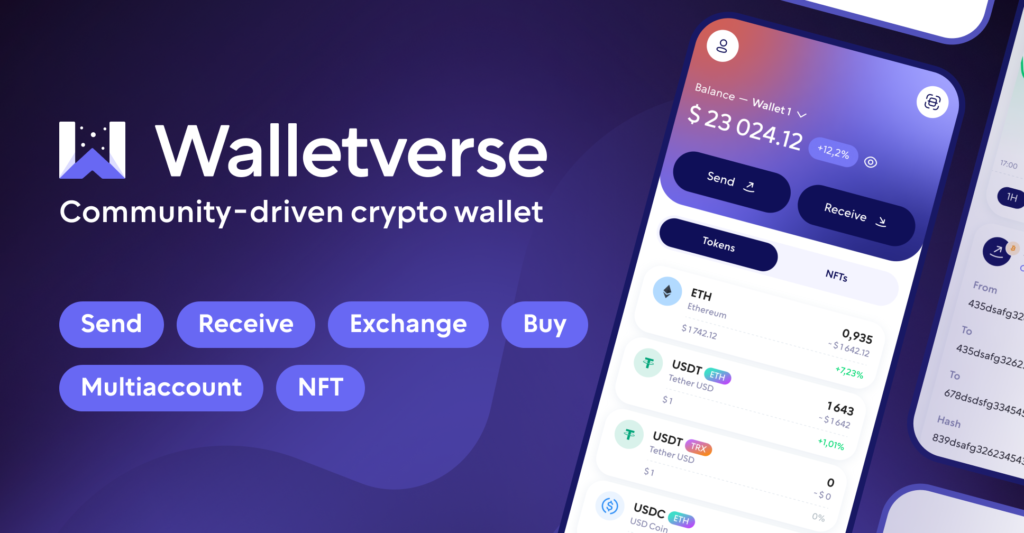
Walletverse is a mobile crypto wallet designed for users who want to buy, store, send, and exchange digital assets in one app. It supports more than 700 cryptocurrencies and allows users to buy crypto with Apple Pay, Google Pay, credit/debit cards, and fiat currencies such as USD, EUR, GBP, JPY, KZT, INR, CAD, AUD, and others.
For DPX users, Walletverse can be useful as a mobile entry point into crypto because it combines fiat purchase options, self-custody, Web3 access, DeFi tools, dApps, and multi-account management. If DPX is not available directly, users can buy another supported asset first and then check whether a DPX or SYK swap route is available.
Pros:
- Supports 700+ cryptocurrencies;
- Allows purchases with Apple Pay, Google Pay, and credit/debit cards;
- Supports multiple fiat currencies, including USD and EUR;
- Provides a non-custodial wallet model;
- Uses passcode and biometric authentication;
- Includes Web3, DeFi, dApps, and multi-account features;
- Offers staking for selected assets such as Solana, ETH, and TRX;
- Has a 4.8 rating on Google Play and a 5.0 rating on the App Store.
Cons:
- DPX availability should be checked inside the app before purchase;
- Mobile-only format may not suit users who prefer desktop wallets;
- Some swaps depend on third-party providers and liquidity;
- Users may need to check whether the supported asset is DPX or SYK.



2. MetaMask

MetaMask is one of the most widely used wallets for Ethereum and EVM-compatible networks. Since DPX was connected to the Arbitrum ecosystem, MetaMask can be useful for users who want to manage tokens, connect to decentralized exchanges, or interact with DeFi platforms.
MetaMask is better suited for users who understand gas fees, custom networks, token contracts, and wallet approvals. Buyers should verify whether they are interacting with the legacy DPX token or the newer SYK-related ecosystem.
Pros:
- Strong Ethereum and Arbitrum support;
- Works with many decentralized exchanges and DeFi apps;
- Available as a browser extension and mobile app;
- Allows custom token imports;
- Suitable for experienced DeFi users.
Cons:
- Less beginner-friendly than fiat-focused mobile wallets;
- Users must manage gas fees and approvals manually;
- Incorrect contract imports can lead to asset confusion;
- Direct fiat purchase of DPX may not be available.
3. Trust Wallet

Trust Wallet is a self-custody wallet that supports many blockchains, tokens, and Web3 features. It can be useful for users who want mobile access to crypto assets and decentralized applications.
For DPX, users should confirm whether the wallet supports the correct token and network. If direct buying is unavailable, users may need to buy ETH, USDT, USDC, or another liquid asset first and then swap through a supported route.
Pros:
- Supports many crypto assets and networks;
- Offers mobile access to dApps;
- Allows users to control private keys;
- Can support custom token additions.
Cons:
- DPX may not be available for direct fiat purchase;
- Swap routes depend on liquidity;
- Users need to check the correct network and token contract;
- Migration-related assets may create confusion for beginners.
4. Crypto.com DeFi Wallet

Crypto.com DeFi Wallet is a non-custodial wallet for users who want to manage assets and interact with DeFi services. It can be useful for users who prefer a mobile wallet linked to a recognized crypto ecosystem.
For DPX, users should confirm whether the token is supported before transferring funds. If DPX is unavailable, another Arbitrum-compatible wallet or swap route may be needed.
Pros:
- Non-custodial wallet structure;
- Supports DeFi use cases;
- Mobile-friendly interface;
- Connected to a recognizable crypto brand.
Cons:
- DPX support may be limited;
- Built-in swaps depend on third-party liquidity;
- Smaller tokens may have less convenient routes;
- Users should check network compatibility.
5. Atomic Wallet

Atomic Wallet is a desktop and mobile wallet that supports many cryptocurrencies and built-in exchange features. It can be useful for users who want one app for managing multiple assets.
For DPX, users should confirm whether the token is supported and whether swaps are available. If DPX is not available, users may need a more DeFi-focused wallet connected to Arbitrum routes.
Pros:
- Supports many crypto assets;
- Available on desktop and mobile;
- Includes built-in exchange options;
- Useful for multi-asset storage.
Cons:
- DPX support may not be available in all versions;
- Swaps depend on third-party providers;
- Users should compare fees before buying;
- DeFi-specific functionality may be limited.
6. Binance Web3 Wallet

Binance Web3 Wallet is designed for users who want self-custody and Web3 access while staying connected to the Binance ecosystem. It can be useful for users who already buy crypto through Binance and want to explore DeFi services.
For DPX, buyers should check whether the asset is still supported or whether the platform now focuses on migrated or related tokens. DPX may be harder to access directly than larger assets such as ETH, BTC, USDT, or USDC.
Pros:
- Integrated with the Binance ecosystem;
- Supports Web3 and DeFi access;
- Useful for users who already buy crypto on Binance;
- Can simplify movement between exchange and wallet tools.
Cons:
- DPX availability is not guaranteed;
- Regional restrictions may affect fiat access;
- Users should check whether DPX or SYK is supported;
- Self-custody still requires careful wallet protection.
7. Exodus

Exodus is a multi-asset wallet available on desktop and mobile. It is known for a clean interface, portfolio tracking, and simple asset management.
For DPX users, Exodus may be useful if the asset is supported directly or through an integrated exchange route. Because DPX is now a legacy token, users should verify availability before transferring funds into the wallet.
Pros:
- Available on desktop and mobile;
- Beginner-friendly interface;
- Good for portfolio tracking;
- Supports many digital assets.
Cons:
- DPX support may vary;
- Advanced DeFi access is more limited;
- Built-in exchange fees may be higher than some DEX routes;
- Migration-related tokens may not be fully supported.
8. Guarda

Guarda Wallet supports a wide range of crypto assets and works across web, desktop, and mobile. It can be useful for users who want flexible wallet access from different devices.
For DPX, users should check whether Guarda supports the correct token and network. Since older DPX liquidity may be limited, buyers should compare swap routes before making a transaction.
Pros:
- Available across several platforms;
- Supports many assets;
- Provides non-custodial storage;
- Suitable for users who want multi-device access.
Cons:
- DPX support should be verified before use;
- Swap fees and routes can vary;
- Interface may be less simple than mobile-only wallets;
- Users need to confirm whether DPX or SYK is relevant.
9. OKX Wallet

OKX Wallet is a multi-chain Web3 wallet with swap, DeFi, NFT, and dApp features. It can be useful for users who want a wallet connected to a large crypto ecosystem and multiple networks.
For DPX, users should check whether OKX Wallet supports legacy DPX, Stryke, or SYK-related routes. Since DPX has gone through a migration process, asset naming and supported contracts matter.
Pros:
- Supports multi-chain Web3 activity;
- Offers swap and dApp access;
- Useful for active crypto users;
- Connected to a large exchange ecosystem.
Cons:
- Some features may feel complex for beginners;
- DPX support may vary by region and product;
- Users should compare swap fees and liquidity;
- Migration status should be checked before purchase.
10. Coinbase Wallet

Coinbase Wallet is a self-custody wallet separate from the Coinbase exchange. It supports Ethereum-compatible assets and lets users connect to decentralized applications.
For DPX buyers, Coinbase Wallet may be useful for managing DeFi assets and connecting to swap routes. However, users should check whether DPX or SYK is supported before buying or transferring tokens.
Pros:
- Supports Ethereum-based and EVM-compatible assets;
- Connects to DeFi applications;
- Offers a familiar interface;
- Suitable for users who already know Coinbase products.
Cons:
- DPX may not be available for direct fiat purchase;
- Some features depend on region;
- Ethereum and Arbitrum network fees still apply;
- Users must check migration and token support manually.
Buy DPX with Apple Pay
Buying DPX with Apple Pay depends on whether the wallet or payment provider supports DPX directly. Because DPX has migrated toward the Stryke/SYK ecosystem, direct Apple Pay purchases may be limited or unavailable on many platforms.
A practical route is to buy a more liquid asset first, such as ETH, USDT, USDC, or another supported token, then swap into DPX or SYK if a reliable route is available. Walletverse supports crypto purchases with Apple Pay, so users can use it as a mobile fiat-to-crypto entry point and then check available swap options.
Before confirming a transaction, review the asset name, network, provider fee, exchange rate, and whether the token is legacy DPX or the newer migrated asset.
Buy DPX with Google Pay
Google Pay can also be used to buy crypto in supported wallets and regions. The usual process is to choose a crypto asset, select Google Pay as the payment method, enter the fiat amount, and confirm the purchase through the wallet’s payment provider.
In Walletverse, users can buy crypto with Google Pay and manage assets in a non-custodial mobile wallet. If DPX is not available as a direct purchase option, users can buy another supported asset first and then check whether a DPX or SYK swap route is available.
This approach can be easier for beginners because it separates the fiat purchase from the token swap. However, users should still check fees, liquidity, and migration status before buying.
How to Buy Dopex (DPX) with Fiat?
Buying DPX with fiat requires extra care because the Dopex ecosystem has transitioned toward Stryke and SYK. The key step is to confirm whether you want old DPX specifically or the migrated token structure.
- Choose a crypto wallet. Select a wallet that supports fiat purchases, self-custody, and Ethereum or Arbitrum-compatible assets. Walletverse is a convenient option for mobile users because it supports Apple Pay, Google Pay, card payments, multiple fiat currencies, and 700+ crypto assets.
- Create or import your wallet. Install the wallet app and create a new wallet, or import an existing one using your recovery phrase. Store the recovery phrase offline and never share it in messages, screenshots, emails, or cloud notes.
- Select your fiat currency. Choose USD, EUR, GBP, CAD, AUD, INR, KZT, JPY, or another supported fiat currency. Available payment methods depend on your location and the wallet’s on-ramp provider.
- Search for DPX. Search for Dopex or DPX inside the wallet. If the token does not appear, check whether the platform supports Stryke or SYK instead.
- Check migration status. Review whether DPX is still supported or whether migration to SYK is required. The official Stryke migration post stated that DPX and rDPX holders could migrate to SYK during a defined migration window.
- Choose a payment method. Use Apple Pay, Google Pay, debit card, credit card, or another supported fiat payment method. Review fees, limits, expected delivery time, and the final amount before confirming.
- Buy a liquid asset first if needed. If DPX is not available for direct fiat purchase, buy ETH, USDT, USDC, or another supported asset first. This can make it easier to swap through Ethereum or Arbitrum-compatible routes.
- Swap to DPX or SYK if supported. Use a wallet swap feature or decentralized exchange route if available. Check contract details, slippage, gas fees, liquidity, and whether you are buying legacy DPX or the newer migrated token.
- Store the token securely. After purchase, store your assets in a wallet where you control access. Walletverse uses passcode and biometric authentication, while its self-custody model means users remain responsible for protecting their wallet credentials.
Why Wallet Choice Matters When Buying DPX
Wallet choice matters because DPX is no longer a simple, widely listed token. Buyers need to check network support, token migration status, liquidity, swap routes, contract addresses, and fees before making a transaction.
Walletverse can be useful for users who want a mobile-first crypto experience with fiat payment options, self-custody, biometric protection, Web3 access, and support for 700+ cryptocurrencies. For DPX buyers, the practical route may be to buy a liquid asset with fiat first and then check whether a safe DPX or SYK route is available.
Conclusion
Dopex (DPX) is a DeFi token from an Arbitrum-based options protocol that aimed to make decentralized options trading more liquid and accessible. The project introduced products such as option pools and Single Staking Option Vaults, while DPX served as the governance and fee-accrual token in the original ecosystem.
Today, DPX requires careful research because Dopex has transitioned into Stryke, with DPX and rDPX migration to SYK. This means users should check whether a wallet, exchange, or DeFi route supports old DPX, migrated SYK, or both.
Buying DPX with USD, EUR, Apple Pay, Google Pay, or other fiat methods depends on wallet support, regional payment access, liquidity, and token availability. Walletverse can help users enter crypto with fiat, manage assets in a non-custodial mobile wallet, and protect access with passcode and biometric authentication.
Data current as of May 15, 2026.
FAQ
Most frequent questions and answers
DPX may be interesting for users who understand DeFi options, Arbitrum, and the Dopex-to-Stryke migration. However, it is a high-risk and relatively niche asset, especially because the ecosystem has moved toward SYK and DPX liquidity may be limited.
To buy DPX with USD, choose a wallet or exchange that supports fiat payments and DPX access. In Walletverse, users can buy crypto with USD through supported payment methods, then check whether DPX is available directly or whether they need to swap from another asset.
You can use Ethereum or Arbitrum-compatible wallets such as Walletverse, MetaMask, Trust Wallet, Coinbase Wallet, OKX Wallet, and similar Web3 wallets. Walletverse is suitable for users who want a mobile self-custody wallet with fiat payment methods, 700+ supported assets, biometric protection, and Web3 features.
DPX may be available through selected decentralized exchanges, wallet swap services, or platforms that still support the old token. Because Dopex has rebranded to Stryke, users should also check whether the platform supports SYK instead of DPX.
The cheapest way depends on fiat provider fees, card fees, network gas costs, and swap liquidity. In many cases, users compare direct DPX purchase with buying ETH, USDT, or USDC first and swapping later when fees are lower.
Yes, DPX may be bought with EUR if the wallet or fiat provider supports EUR payments and a DPX route is available. Walletverse supports multiple fiat currencies, including EUR, so users can buy crypto with EUR and then check available DPX or SYK swap routes.
Yes, Apple Pay and Google Pay can be used in wallets that support these payment methods. Walletverse supports Apple Pay and Google Pay for crypto purchases, but users should check whether DPX is available directly or whether another asset must be bought first.
Walletverse can be a good option for users who want a mobile crypto wallet with fiat payment options, self-custody, biometric authentication, and support for 700+ crypto assets. For DPX, users should first check whether the token is supported directly or whether they need to buy another crypto asset and swap.


