


Buy dForce (DF) with USD, EUR and Other Fiat Currencies
dForce (DF) is a DeFi token connected to lending, stablecoin infrastructure, governance, and multi-chain open finance tools. The project is designed around decentralized financial protocols that support asset creation, borrowing, lending, liquidity, and on-chain governance.
For users who want to buy dForce with USD, EUR, or other fiat currencies, the process usually starts with a crypto wallet, exchange, or fiat on-ramp that supports card payments, Apple Pay, Google Pay, and token swaps. This guide explains what DF is, how the dForce ecosystem works, and which wallets can help users buy, store, send, and manage the token.
This article was prepared by ilink, a FinTech and Web3 software developer with 14 years of experience and completed projects worldwide.
What is dForce (DF)?
dForce is a decentralized finance protocol network focused on stablecoins, lending, liquidity, and Web3 financial infrastructure. The official dForce website describes the project as “a decentralized stablecoin protocol powered by an integrated DeFi matrix,” covering assets, lending, trading, and bridge-related functions.
The DF token is the governance token of the dForce network. According to official dForce documentation, DF holders can influence protocol decisions, including new asset listings, collateral onboarding, risk parameters, fee accrual, and interest-related changes. This makes DF more than a trading asset, because it is connected to decision-making across the protocol ecosystem.
dForce has historically focused on building a DeFi matrix rather than a single isolated product. Its earlier whitepaper described three main protocol pillars: asset protocols, lending protocols, and liquidity protocols. This structure explains why dForce has been associated with stable assets, lending markets, money markets, and liquidity infrastructure.
The project also includes governance through dForce Improvement Plans, known as DIPs. Official governance documentation states that DF holders can put forward proposals to launch products, add features, change protocols, or make decisions related to dForce operations.
Security and protocol design have also been part of dForce’s development history. ConsenSys Diligence reviewed the dForce Lending Protocol in 2021 and described it as a “pool-based lending platform and stable debt protocol.” The audit process covered dForce’s lending architecture during a period when DeFi lending protocols were becoming more important across Ethereum and EVM networks.
DF has a fixed maximum supply structure. CoinGecko lists dForce with a total and maximum supply of about 999.93 million DF tokens, while also showing that DF is available across multiple crypto exchanges and decentralized routes.
The broader dForce ecosystem remains part of the lending category in DeFi analytics. DefiLlama tracks dForce as a lending protocol and describes its newer positioning as a DeFAI network focused on bringing DeFi functionality to AI agents and crypto-powered automation.
For buyers, DF should be understood as a DeFi governance and utility token. It is not a stablecoin, and its value can change depending on liquidity, exchange support, ecosystem activity, protocol usage, and broader market conditions.
Where Can I Buy dForce (DF) with Cash? 10 Best Crypto Wallets
1. Walletverse
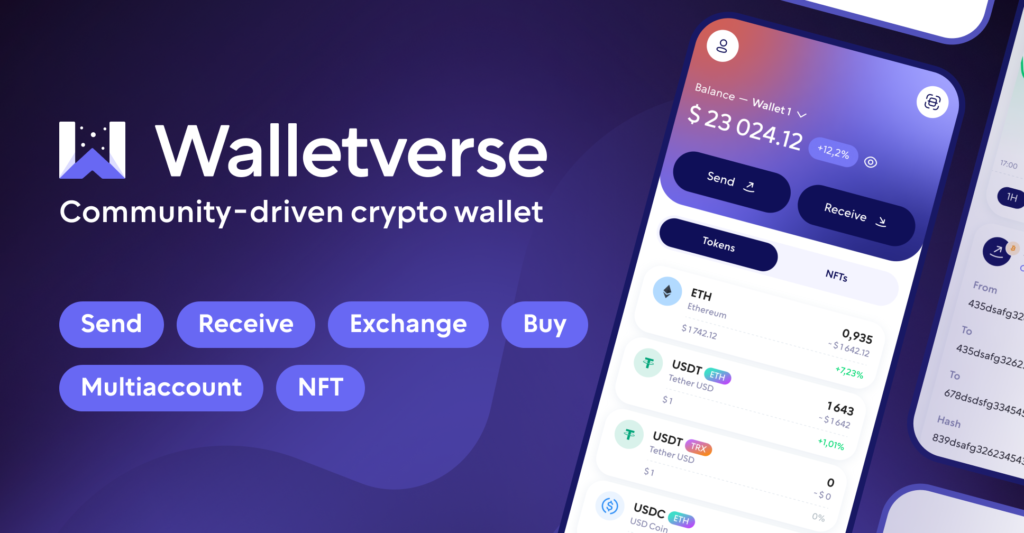
Walletverse is a mobile crypto wallet created for users who want to buy, store, send, and exchange digital assets in one app. It supports more than 700 cryptocurrencies and allows users to buy crypto with Apple Pay, Google Pay, credit/debit cards, and fiat currencies such as USD, EUR, GBP, JPY, KZT, INR, CAD, AUD, and others.
For DF users, Walletverse can be useful as a mobile entry point into crypto. If DF is not available for direct purchase, users can buy another supported asset first and then check whether a swap route to DF is available.
Pros:
- Supports 700+ cryptocurrencies;
- Allows purchases with Apple Pay, Google Pay, and credit/debit cards;
- Supports multiple fiat currencies, including USD and EUR;
- Provides a non-custodial wallet model;
- Uses passcode and biometric authentication;
- Includes Web3, DeFi, dApps, and multi-account features;
- Offers staking for selected assets such as Solana, ETH, and TRX;
- Has a 4.8 rating on Google Play and a 5.0 rating on the App Store.
Cons:
- DF availability should be checked inside the app before purchase;
- Mobile-only format may not suit users who prefer desktop wallets;
- Some swaps depend on third-party providers and liquidity;
- Fiat provider fees may vary by region.



2. MetaMask

MetaMask is one of the most widely used wallets for Ethereum and EVM-compatible networks. Since dForce operates across Ethereum-compatible DeFi infrastructure, MetaMask can be useful for users who want to manage tokens, connect to decentralized exchanges, and interact with DeFi applications.
For DF buyers, MetaMask may be more suitable after the fiat purchase step. Users can buy ETH, USDT, or USDC elsewhere, send it to MetaMask, and then use a supported swap route if DF liquidity is available.
Pros:
- Strong Ethereum and EVM network support;
- Works with many decentralized exchanges and DeFi apps;
- Available as a browser extension and mobile app;
- Allows custom token imports;
- Suitable for experienced Web3 users.
Cons:
- Less beginner-friendly than fiat-focused mobile wallets;
- Users must manage gas fees and approvals manually;
- Direct DF fiat purchase may not be available;
- Incorrect token contracts can create asset risks.
3. Trust Wallet

Trust Wallet is a self-custody wallet that supports many blockchains, tokens, and Web3 features. It is popular among mobile users who want control over their crypto assets and access to decentralized applications.
For DF, users should check whether the token is supported directly or whether it needs to be added manually. If direct buying is unavailable, users may need to buy another asset first and then swap through a supported route.
Pros:
- Supports many crypto assets and networks;
- Offers mobile access to dApps;
- Allows users to control private keys;
- Can support custom token additions.
Cons:
- DF may not be available for direct fiat purchase;
- Swap routes depend on liquidity;
- Users need to check the correct network and token details;
- Beginners may need time to understand approvals and gas fees.
4. Crypto.com DeFi Wallet

Crypto.com DeFi Wallet is a non-custodial wallet for users who want to manage assets and interact with DeFi services. It can be useful for mobile users who prefer a recognizable crypto ecosystem.
For DF, users should verify token support before sending funds. If DF is not supported directly, another wallet or exchange route may be required.
Pros:
- Non-custodial wallet structure;
- Supports DeFi use cases;
- Mobile-friendly interface;
- Connected to a recognizable crypto brand.
Cons:
- DF support may be limited;
- Built-in swaps depend on third-party liquidity;
- Smaller DeFi tokens may have fewer direct routes;
- Users should check network compatibility.
5. Atomic Wallet

Atomic Wallet is a desktop and mobile wallet that supports many cryptocurrencies and built-in exchange features. It can be useful for users who want one app for managing multiple assets.
For DF, users should confirm whether the token is supported and whether swaps are available. If DF is not listed, users may need a different wallet or exchange route.
Pros:
- Supports many crypto assets;
- Available on desktop and mobile;
- Includes built-in exchange options;
- Useful for multi-asset storage.
Cons:
- DF support may not be available in all versions;
- Swaps depend on third-party providers;
- Users should compare fees before buying;
- DeFi-specific functionality may be limited.
6. Binance Web3 Wallet

Binance Web3 Wallet is designed for users who want self-custody and Web3 access while staying connected to the Binance ecosystem. It can be useful for users who already buy crypto through Binance and want to explore decentralized services.
For DF, users should check whether the token is available in their region and whether the wallet supports a direct route. If direct access is unavailable, users may need to buy a liquid asset first and move it to a wallet that supports DF swaps.
Pros:
- Integrated with the Binance ecosystem;
- Supports Web3 and DeFi access;
- Useful for users who already buy crypto on Binance;
- Can simplify movement between exchange and wallet tools.
Cons:
- DF availability is not guaranteed in every region;
- Regional restrictions may affect fiat access;
- Users should check token and network support;
- Self-custody still requires careful wallet protection.
7. Exodus

Exodus is a multi-asset wallet available on desktop and mobile. It is known for a clean interface, portfolio tracking, and simple asset management.
For DF, Exodus may be suitable if the token is supported directly or through integrated exchange services. Users should confirm asset support before buying or transferring funds.
Pros:
- Available on desktop and mobile;
- Beginner-friendly interface;
- Good for portfolio tracking;
- Supports many digital assets.
Cons:
- DF support may vary;
- Advanced DeFi access is more limited;
- Built-in exchange fees may be higher than some external routes;
- Users may need another wallet for niche token swaps.
8. Guarda

Guarda Wallet supports a wide range of crypto assets and works across web, desktop, and mobile. It can be useful for users who want flexible wallet access from different devices.
For DF, users should check whether Guarda supports the asset directly and whether exchange options are available. DeFi tokens may require extra verification before transfer.
Pros:
- Available across several platforms;
- Supports many assets;
- Provides non-custodial storage;
- Suitable for users who want multi-device access.
Cons:
- DF support should be verified before use;
- Swap fees and routes can vary;
- Interface may be less simple than mobile-only wallets;
- Users need to confirm asset availability before sending funds.
9. OKX Wallet

OKX Wallet is a multi-chain Web3 wallet with swap, DeFi, NFT, and dApp features. It can be useful for users who want one wallet connected to a large crypto ecosystem and multiple networks.
For DF, users should check whether OKX Wallet supports the asset or a reliable exchange route. Since DeFi tokens can have different liquidity conditions across chains, fees and slippage should be reviewed before swapping.
Pros:
- Supports multi-chain Web3 activity;
- Offers swap and dApp access;
- Useful for active crypto users;
- Connected to a large exchange ecosystem.
Cons:
- Some tools may feel complex for beginners;
- DF support may vary by region and product;
- Users should compare swap fees and liquidity;
- Fiat access depends on local availability.
10. Coinbase Wallet

Coinbase Wallet is a self-custody wallet separate from the Coinbase exchange. It supports Ethereum-compatible assets and allows users to connect to DeFi applications.
For DF users, Coinbase Wallet may be useful for storage and Web3 access if the relevant network and token route are supported. Buyers should always check current DF availability before transferring funds.
Pros:
- Supports Ethereum-based and EVM-compatible assets;
- Connects to DeFi applications;
- Offers a familiar interface;
- Suitable for users who already know Coinbase products.
Cons:
- DF may not be available for direct fiat purchase;
- Some features depend on region;
- Network fees still apply;
- Users must verify token support before transfers.
Buy DF with Apple Pay
Buying DF with Apple Pay depends on whether the wallet or payment provider supports DF directly. Since DF is a DeFi governance token, direct Apple Pay purchases may not be available in every wallet or region.
A practical route is to buy a more liquid asset first, such as ETH, USDT, USDC, or BTC, then swap it for DF through a supported wallet or exchange route. Walletverse supports crypto purchases with Apple Pay, making it a convenient mobile fiat-to-crypto entry point for users who want to start with USD, EUR, or another supported currency.
Before confirming any transaction, check the selected asset, network, provider fee, exchange rate, and whether DF is supported directly or through a swap.
Buy DF with Google Pay
Google Pay can also be used to buy crypto in supported wallets and regions. The usual process is to choose a crypto asset, select Google Pay as the payment method, enter the fiat amount, and complete the purchase through the wallet’s payment provider.
In Walletverse, users can buy crypto with Google Pay and manage assets in a non-custodial mobile wallet. If DF is not available as a direct purchase option, users can buy another supported asset first and then check whether a DF swap route is available.
This route can be convenient for beginners because it separates the fiat purchase from the token swap. Still, users should check fees, liquidity, token support, and the final amount before completing the transaction.
How to Buy dForce (DF) with Fiat?
Buying DF with fiat requires a wallet or platform that supports crypto purchases and token swaps. The exact steps may vary depending on region, payment provider, and asset availability.
- Choose a crypto wallet. Select a wallet that supports fiat purchases, secure storage, and token swaps. Walletverse is a convenient option for mobile users because it supports Apple Pay, Google Pay, card payments, multiple fiat currencies, and 700+ crypto assets.
- Create or import your wallet. Install the wallet app and create a new wallet, or import an existing one using your recovery phrase. Store the recovery phrase offline and never share it in chats, screenshots, emails, or cloud notes.
- Select your fiat currency. Choose USD, EUR, GBP, CAD, AUD, INR, KZT, JPY, or another supported fiat currency. Available currencies and payment methods depend on your location and the wallet’s on-ramp provider.
- Search for DF. Search for dForce or DF inside the wallet. If the token is available, review the network, purchase limits, provider fees, and estimated delivery time.
- Buy a liquid asset first if needed. If DF is not available for direct fiat purchase, buy ETH, USDT, USDC, BTC, or another supported asset first. This can make it easier to swap into DF through a supported route.
- Choose a payment method. Use Apple Pay, Google Pay, debit card, credit card, or another supported fiat payment method. Review all fees and the final crypto amount before confirming.
- Swap to DF if supported. Use a wallet swap feature, exchange, or decentralized route if DF liquidity is available. Check the exchange rate, slippage, network fees, and token details before approving the transaction.
- Store DF securely. After purchase, store DF in a wallet where you control access. Walletverse uses passcode and biometric authentication, while its self-custody model means users remain responsible for protecting their wallet credentials.
- Monitor governance and protocol updates. DF is connected to governance, lending, stablecoin infrastructure, and DeFi protocol decisions. Users should follow dForce updates, exchange support, governance proposals, and ecosystem development before making long-term decisions.
Why Wallet Choice Matters When Buying DF
Wallet choice matters because DF is a DeFi token, not a simple fiat-backed asset. Buyers need to check token support, liquidity, swap routes, network fees, fiat payment availability, and the security model of the wallet before making a transaction.
Walletverse can be useful for users who want a mobile-first crypto experience with fiat payment methods, self-custody, biometric protection, Web3 access, and support for 700+ cryptocurrencies. For DF buyers, the practical route may be to buy a liquid asset with fiat first and then swap to DF when a supported route is available.
Conclusion
dForce (DF) is a DeFi governance and utility token connected to a protocol ecosystem focused on stablecoins, lending, liquidity, and open finance infrastructure. Its role in governance gives DF holders a way to participate in decisions around assets, collateral, risk settings, fees, and protocol development.
Buying DF with USD, EUR, Apple Pay, Google Pay, or other fiat methods depends on wallet support, payment provider access, exchange listings, liquidity, and network fees. Walletverse can help users enter crypto with fiat, manage assets in a non-custodial mobile wallet, and protect access with passcode and biometric authentication.
Before buying DF, users should check whether the token is supported directly, whether a swap route is available, and whether the final fees make sense for the purchase amount. DF is connected to an established DeFi protocol network, but it remains a volatile crypto asset.
Data current as of May 15, 2026.
FAQ
Most frequent questions and answers
DF may be interesting for users who understand DeFi lending, stablecoin infrastructure, and governance tokens. However, it is a volatile crypto asset, so users should review dForce’s ecosystem, liquidity, protocol activity, and personal risk tolerance before buying.
To buy DF with USD, choose a wallet or exchange that supports fiat payments and DF access. In Walletverse, users can buy crypto with USD through supported payment methods, then check whether DF is available directly or whether they need to swap from another asset.
You can use multi-asset and Web3 wallets such as Walletverse, MetaMask, Trust Wallet, Coinbase Wallet, OKX Wallet, and similar options, depending on current DF support. Walletverse is suitable for users who want a mobile self-custody wallet with fiat payment methods, 700+ supported assets, biometric protection, and Web3 features.
DF can be bought on selected centralized exchanges, decentralized exchanges, and wallet swap services when liquidity is available. CoinGecko lists dForce markets on exchanges such as Binance and Uniswap, but users should always check current regional availability and trading pairs before buying.
The cheapest way depends on fiat provider fees, card fees, exchange fees, network costs, and swap liquidity. Many users compare direct DF purchase with buying a liquid asset first and swapping later when fees are lower.
Yes, DF may be bought with EUR if the wallet, exchange, or fiat provider supports EUR payments and a DF route is available. Walletverse supports multiple fiat currencies, including EUR, so users can buy crypto with EUR and then check available DF swap options.
Yes, Apple Pay and Google Pay can be used in wallets that support these payment methods. Walletverse supports Apple Pay and Google Pay for crypto purchases, but users should check whether DF is available directly or whether another asset must be bought first.
dForce is used for decentralized finance services connected to lending, stablecoin infrastructure, liquidity, and governance. DF holders can participate in protocol decisions through governance proposals and voting.
No, DF is not a stablecoin. It is the governance token of the dForce ecosystem, while dForce itself includes stablecoin and DeFi infrastructure.
Walletverse can be a good option for users who want a mobile crypto wallet with fiat payment options, self-custody, biometric authentication, and support for 700+ crypto assets. For DF, users should first check whether the token is supported directly or whether they need to buy another crypto asset and swap.


