


Buy MATH (MATH) with USD, EUR and Other Fiat Currencies
MATH (MATH) is a utility token connected with the MathWallet ecosystem, a multi-chain Web3 wallet environment built for storing, sending, swapping, and using digital assets across different blockchain networks.
This article was prepared by ilink, a FinTech and Web3 software developer with 14 years of experience and completed projects worldwide.
What is MATH (MATH)?
MATH is an Ethereum-based token associated with MathWallet, a Web3 wallet ecosystem focused on multi-chain asset management, decentralized applications, cross-chain activity, and blockchain access from one interface.
Coinbase describes MATH as “an Ethereum token for MathWallet,” while CoinGecko notes that “MATH tokens can be traded on centralized crypto exchanges.” These short definitions explain the core idea well: MATH is closely connected with wallet infrastructure and Web3 access rather than being a standalone payment coin.
The MATH token was introduced in 2019 as part of the broader MathWallet roadmap. Official MathWallet materials describe an initial total token limit of 200 million MATH. On-chain data also shows MATH as an ERC-20 token on Ethereum, which means it can be stored in wallets that support Ethereum assets and custom ERC-20 tokens.
MATH is used within the MathWallet ecosystem and may be relevant for users who interact with MathWallet products, Web3 applications, token swaps, and multi-chain tools. Since it is an ecosystem token, its long-term relevance depends on wallet adoption, supported networks, liquidity, user activity, and the broader demand for decentralized asset management.
The wider crypto market also gives context to why wallet-based assets remain important. Statista expects the number of cryptocurrency users worldwide to reach more than 993 million in 2026. Chainalysis also reported that global crypto adoption continues to be led by markets such as India and the United States, with practical use cases growing across payments, savings, remittances, trading, and Web3 access.
For MATH specifically, users should pay attention to several non-price factors:
- Token utility inside the MathWallet ecosystem.
- ERC-20 compatibility and wallet support.
- Liquidity on centralized exchanges and swap routes.
- Availability of fiat-to-crypto purchase methods.
- Security of the wallet used to store the asset.
MATH can be interesting for users who already use Web3 wallets, DeFi tools, and multi-chain applications. However, like any crypto asset, it carries risk. Users should review the project, check liquidity, understand fees, and avoid buying only because the token is available in a wallet or exchange.
Where Can I Buy MATH (MATH) Cash - 10 Best Crypto Wallets
1. Walletverse
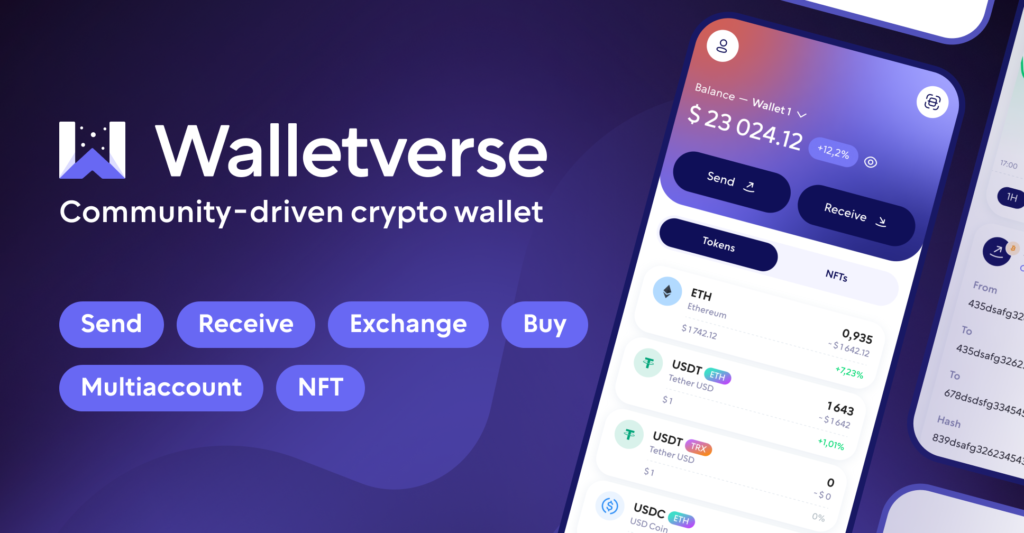
Walletverse is a mobile self-custody crypto wallet designed for users who want to buy, store, send, trade, and manage crypto from one app. It supports 700+ cryptocurrencies and is available on Google Play and the App Store.
The wallet is suitable for both beginners and advanced users because it combines a simple mobile interface with Web3, DeFi, dApps, multi-account support, fiat purchase options, swaps, staking, AML tools, and strong security features. Users can buy crypto with Apple Pay, Google Pay, credit or debit cards, and fiat currencies such as USD, EUR, GBP, JPY, KZT, INR, CAD, AUD, and others.
Walletverse is non-custodial, which means users control their own assets. Private keys are protected on the user’s device, while passcode and biometric authentication help secure access. The wallet also includes a proprietary GasFree USDT transaction system on TRON, allowing users to send USDT without holding TRX for gas fees.
Pros:
- Supports 700+ cryptocurrencies and many fiat purchase options;
- Available as a fast mobile app for iOS and Android;
- Non-custodial model gives users control over their assets;
- Passcode and biometric security improve everyday protection;
- Supports dApps, multi-account management, swaps, and staking for Solana, ETH, and TRX;
- GasFree USDT transfers on TRON reduce friction for new users.
Cons:
- Direct MATH availability may depend on liquidity and provider support;
- Mobile-only format may not suit users who prefer desktop wallets;
- Fiat purchase fees can vary depending on country, currency, and payment provider.



2. MetaMask

MetaMask is one of the most widely used Ethereum and EVM-compatible wallets. Since MATH is an Ethereum-based ERC-20 token, MetaMask can be used to store and manage MATH if the token and network are correctly selected.
MetaMask also supports fiat purchases through third-party providers in many regions. Users can choose a region, currency, payment method, token, and network inside the app. If direct MATH buying is available, the user can complete the purchase through the provider. If not, they can buy ETH or USDT and then swap to MATH through a supported route.
Pros:
- Strong support for Ethereum and ERC-20 tokens;
- Works with many DeFi platforms and dApps;
- Available as mobile app and browser extension;
- Supports fiat on-ramp providers in many regions.
Cons:
- Beginners may need time to understand gas fees and networks;
- Direct MATH purchase depends on provider support;
- Incorrect network or token contract selection can cause mistakes.
3. Trust Wallet

Trust Wallet is a popular self-custody mobile wallet with support for many digital assets, dApps, NFTs, and Web3 tools. It supports fiat crypto purchases through third-party providers and has added Apple Pay and Google Pay options in supported regions.
For MATH, users should check whether the token is available directly inside the buy or swap interface. If it is not available directly, users may buy another supported crypto asset and then exchange it for MATH through a compatible route.
Pros:
- Beginner-friendly mobile wallet;
- Supports Apple Pay, Google Pay, cards, and local payment methods through partners;
- Large asset and dApp ecosystem;
- Self-custody model gives users control of private keys.
Cons:
- Direct MATH purchase may not be available in every region;
- Third-party provider fees can differ;
- Users need to manage networks and token contracts carefully.
4. MathWallet

MathWallet is the native wallet ecosystem connected with MATH. It supports multiple platforms, including mobile, browser extension, web, desktop, and hardware wallet integrations. Because MATH is tied to the MathWallet ecosystem, this wallet is one of the most relevant options for users who want to understand the token’s original product environment.
MathWallet supports many blockchain networks, dApps, token storage, and cross-chain activity. It can be useful for users who want access to the broader ecosystem behind MATH rather than using the token only as a tradable asset.
Pros:
- Closely connected with the MATH token ecosystem;
- Supports many blockchain networks and Web3 applications;
- Available across several platforms;
- Useful for users who want to explore MathWallet products directly.
Cons:
- Interface may feel more complex for beginners;
- Fiat purchase options may vary by region and provider;
- Users still need to check whether direct MATH purchases are available in their location.
5. SafePal

SafePal offers both software and hardware wallet options. It supports a wide range of tokens, NFTs, dApps, swaps, and fiat purchase features through third-party providers. SafePal can appeal to users who want mobile convenience with the option of adding hardware-level security.
Users can check whether MATH is available directly or add it as a supported ERC-20 asset if the wallet supports the correct network and token contract.
Pros:
- Offers mobile wallet and hardware wallet options;
- Supports many blockchains, tokens, and NFTs;
- Includes fiat purchase and swap access;
- Suitable for users who want stronger long-term storage options.
Cons:
- Direct MATH purchase may not be available through every provider;
- Hardware setup adds extra steps;
- Users must verify token contract details before receiving custom assets.
6. Binance Web3 Wallet

Binance Web3 Wallet is designed for users who want to access Web3 from inside the Binance app. It offers self-custody features, dApp access, swaps, and integration with Binance’s exchange ecosystem.
If MATH is available through Binance-related trading or Web3 routes in a user’s region, this can be a convenient option. If not, users may still use Binance to buy a major asset with fiat and then transfer or swap through another supported route.
Pros:
- Integrated with a major global crypto exchange ecosystem;
- Convenient for users who already use Binance;
- Supports Web3 activity, swaps, and dApps;
- Fiat purchase options are available in many regions.
Cons:
- Availability depends heavily on region and local regulation;
- Some actions require Binance account verification;
- MATH may not be directly available in all markets.
7. Exodus

Exodus is a multi-asset wallet known for its clean interface and beginner-friendly design. It supports many cryptocurrencies, portfolio tracking, swaps, and fiat purchase options through integrated partners in selected regions.
Exodus may be useful for users who prefer a simple wallet experience, but users should check whether MATH is supported directly before using it for this asset. If direct support is unavailable, another ERC-20-compatible wallet may be more suitable.
Pros:
- Simple interface for beginners;
- Supports many crypto assets and built-in swaps;
- Available on desktop and mobile;
- Good for portfolio management and everyday asset tracking.
Cons:
- Direct MATH support must be checked before use;
- Fiat purchase availability varies by country;
- More advanced DeFi users may prefer wallets with deeper dApp integrations.
8. Bitget Wallet

Bitget Wallet is a non-custodial Web3 wallet that supports many blockchains, token swaps, market tools, dApps, and payment features. It has integrated Apple Pay, Google Pay, Visa, Mastercard, and other payment options through fiat providers.
For users who want to buy MATH, Bitget Wallet can be useful if the required network and swap route are supported. As with many wallets, direct purchase availability should be checked inside the app before making a payment.
Pros:
- Supports many blockchains and tokens;
- Includes swap, dApp, market, and payment tools;
- Offers fiat on-ramp access through partners;
- Useful for users who want a Web3-focused mobile wallet.
Cons:
- MATH support may depend on selected chain and liquidity route;
- Fiat fees and limits vary by provider;
- Advanced Web3 features may be overwhelming for new users.
9. OKX Wallet

OKX Wallet is a Web3 wallet connected with the broader OKX ecosystem. It supports multi-chain assets, dApps, swaps, NFTs, and fiat crypto purchase methods through OKX services. OKX has also introduced Apple Pay and Google Pay options in supported markets.
Users who want to buy MATH may use OKX-related fiat routes where available, or buy a major asset first and move into MATH through a supported trading route.
Pros:
- Strong multi-chain Web3 functionality;
- Connected with a large exchange ecosystem;
- Supports fiat purchases through cards and selected digital wallets;
- Useful for users who need wallet, exchange, and DeFi access in one environment.
Cons:
- Availability depends on local regulation;
- Some features require exchange account verification;
- Direct MATH access may vary by region and liquidity.
10. Coinbase Wallet

Coinbase is one of the most accessible options for users in supported regions because MATH is available on Coinbase’s centralized exchange. Users can buy MATH through Coinbase using approved payment methods such as bank account, debit card, or bank transfer, depending on region and eligibility.
Coinbase Wallet is a separate self-custody wallet, while the main Coinbase app works as a centralized exchange. A common route is to buy MATH on Coinbase and then move it to a self-custody wallet if the user wants full control.
Pros:
- MATH is available on Coinbase in supported regions;
- Fiat purchase flow is beginner-friendly;
- Supports bank accounts, debit cards, and bank transfers in many markets;
- Strong brand recognition and regulated exchange infrastructure.
Cons:
- Buying through the exchange requires account verification;
- Custodial exchange storage means Coinbase controls funds until withdrawal;
- Credit card support may be limited depending on country and asset.
Buy MATH (MATH) Apple Pay
Buying MATH with Apple Pay can be convenient because it reduces the need to enter card details manually. However, support depends on the wallet, region, payment provider, and whether MATH is available directly.
In many cases, the process looks like this:
- Open a wallet or crypto app that supports Apple Pay.
- Select Buy Crypto.
- Choose your fiat currency, such as USD, EUR, GBP, CAD, or AUD.
- Search for MATH.
- If MATH is available, enter the amount you want to buy.
- Select Apple Pay as the payment method.
- Review the provider fee, network fee, exchange rate, and final amount.
- Confirm the purchase and wait for the token to appear in your wallet.
If MATH is not listed in the Apple Pay purchase menu, another route is to buy ETH or USDT first, then swap it to MATH through a wallet, exchange, or DEX route that supports the token.
Walletverse supports crypto purchases with Apple Pay in supported regions, along with cards and other fiat payment methods. This makes it useful for users who want a mobile-first way to enter crypto and manage assets from one self-custody wallet.
Buy MATH (MATH) with Google Pay
Google Pay works in a similar way to Apple Pay. It allows users to buy crypto through a saved payment card without entering card details every time. Availability depends on the country, provider, and wallet.
A typical Google Pay purchase flow includes:
- Open a supported crypto wallet or exchange app.
- Go to Buy Crypto.
- Select your fiat currency.
- Search for MATH.
- Enter the purchase amount.
- Choose Google Pay as the payment method.
- Check all fees, limits, and network details.
- Confirm the transaction.
- Store MATH in a secure wallet after purchase.
If MATH is unavailable for direct Google Pay purchase, users can buy a more liquid asset first, such as USDT or ETH, and then exchange it for MATH where supported.
Walletverse supports Google Pay for crypto purchases in supported regions and also allows users to store, send, and exchange crypto through a non-custodial mobile wallet. For users who prefer simple onboarding, Google Pay can make the first purchase faster and more familiar.
How to Buy The MATH (MATH) with Fiat?
The easiest way to buy MATH with fiat depends on whether direct purchase is available in your region. Some platforms may support direct MATH buying with USD, EUR, or GBP. Others may require an indirect route through USDT, ETH, or another major crypto asset.
Here is a practical step-by-step process:
1. Choose a wallet or exchange.
Select a crypto app that supports fiat purchases and can either buy MATH directly or help you buy an asset that can be swapped for MATH. Walletverse, MetaMask, Coinbase, MathWallet, Trust Wallet, OKX Wallet, Bitget Wallet, and SafePal are examples of apps users may review.
2. Create or import your wallet.
If you use a self-custody wallet, create a new wallet and safely back up your seed phrase. Never share it with anyone. If you use a centralized exchange, complete account registration and verification.
3. Select your fiat currency.
Choose USD, EUR, GBP, CAD, AUD, INR, JPY, KZT, or another supported local currency.
4. Search for MATH.
If MATH appears in the buy section, select it directly. If it does not appear, buy USDT or ETH first.
5. Choose a payment method.
Depending on the app and region, you may see credit card, debit card, bank transfer, Apple Pay, Google Pay, or local payment providers.
6. Review the full cost.
Check the provider fee, network fee, spread, exchange rate, and final amount before confirming. The cheapest option is often a bank transfer or low-fee fiat provider, but this depends on location.
7. Confirm the purchase.
Complete the payment and wait for the asset to arrive.
8. Swap if needed.
If you bought ETH or USDT first, use a supported swap route to exchange it for MATH. Always check the token contract, network, liquidity, and slippage before confirming.
9. Store MATH securely.
For long-term storage, use a secure self-custody wallet. Walletverse is one option for users who want mobile self-custody, biometric access, fiat buying, swaps, dApps, and multi-currency asset management in one app.
Conclusion
MATH (MATH) is an ecosystem token connected with MathWallet and the broader Web3 wallet market. It can be stored in ERC-20-compatible wallets and may be purchased directly on selected platforms or indirectly through fiat-to-crypto and swap routes.
For users who want to buy MATH with USD, EUR, GBP, CAD, AUD, INR, JPY, KZT, or other fiat currencies, the most important step is to choose a secure wallet or exchange, compare payment methods, check direct token availability, and review all fees before confirming a transaction.
Walletverse can be a practical option for users who want a mobile, self-custodial crypto wallet with fiat purchase methods, Apple Pay, Google Pay, card payments, swaps, dApps, multi-account support, biometric protection, and 700+ supported cryptocurrencies.
Data current as of June 11, 2026.
FAQ
Most frequent questions and answers
MATH may be interesting for users who believe in the growth of Web3 wallets, multi-chain asset management, and the MathWallet ecosystem. However, it is still a volatile crypto asset, so users should research the project, check liquidity, review token utility, and avoid treating it as guaranteed profit.
You can buy MATH with USD on supported platforms where the token is listed directly. If direct USD-to-MATH purchase is not available, you can buy USDT or ETH with USD first and then swap it for MATH through a supported wallet or exchange route. Walletverse can help users buy crypto with fiat and manage assets in a self-custody mobile wallet.
You can use wallets that support Ethereum ERC-20 assets or platforms where MATH is available. MathWallet, MetaMask, Coinbase-related products, and other compatible wallets may be used depending on your region and token support. Walletverse is also useful for users who want a mobile self-custody wallet with fiat purchase methods, swaps, dApps, and multi-currency support.
MATH can be bought on selected centralized exchanges and may also be available through wallet-based purchase or swap routes. Availability changes by country, provider, and liquidity. Before buying, check whether the platform supports MATH directly or whether you need to buy another asset first and swap it.
The cheapest way is usually to compare several purchase routes before confirming. Bank transfers often have lower fees than instant card payments, while swaps may include network gas and slippage. In Walletverse and other wallets, users should compare provider fees, exchange rates, and network costs before choosing the final route.
Yes, EUR users may be able to buy MATH directly on supported platforms or buy a major crypto asset such as USDT or ETH with EUR and then swap it to MATH. Availability depends on the wallet, exchange, payment provider, and country.
In some apps and exchanges, users can buy crypto with a credit or debit card. Direct MATH card purchases depend on provider support. If MATH is not shown, users can buy another supported crypto asset with a card and then swap it for MATH.
Some self-custody wallets allow users to create a wallet without KYC. However, fiat purchases through cards, Apple Pay, Google Pay, bank transfers, and regulated providers usually require identity checks. KYC requirements depend on region, payment provider, transaction size, and local regulation.
Yes, Walletverse is designed for both beginners and advanced users. It offers a mobile-first interface, self-custody, passcode and biometric protection, fiat buying, swaps, dApps, staking options, and support for 700+ cryptocurrencies. This makes it useful for users who want to manage crypto without relying fully on a custodial exchange.
Before buying MATH, check token availability, supported networks, fees, liquidity, token contract, wallet security, and whether the platform is custodial or self-custodial. You should also remember that crypto assets are volatile and should be purchased only after personal research.


