


Buy Parrot Protocol (PRT) with USD, EUR and Other Fiat Currencies
Parrot Protocol (PRT) is a Solana-based crypto asset connected to DeFi, stablecoin minting, collateralized borrowing, lending, and liquidity locked inside yield-generating assets.
For users who want to buy PRT with USD, EUR, GBP, CAD, AUD, INR, KZT, JPY or other fiat currencies, the process usually starts with a crypto wallet, fiat on-ramp, centralized exchange, debit card, credit card, Apple Pay, Google Pay, or a swap through Solana-compatible liquidity.
This article was prepared by ilink, a FinTech and Web3 software developer with 14 years of experience and completed projects worldwide.
What is Parrot Protocol (PRT)?
Parrot Protocol is a decentralized finance project built on Solana. The project was designed to unlock liquidity from assets that are already used inside DeFi.
In simple terms, many DeFi users hold LP tokens, interest-bearing tokens, staking derivatives, or other yield-generating assets. These assets can represent real value, but they are often difficult to use as collateral in other DeFi products.
Parrot Protocol was created to make that value more accessible. Its original idea was to help users unlock liquidity from assets that would otherwise remain locked, underused, or limited to one specific DeFi platform.
The protocol’s original concept included three main parts:
- PAI, a Solana-based stablecoin;
- A non-custodial lending market;
- A margin trading system based on a virtual automated market maker.
Coinbase describes Parrot Protocol as a Solana DeFi network that includes the stablecoin PAI, a non-custodial lending market, and a margin trading vAMM. CoinMarketCap also describes Parrot as a liquidity network for borrowing and lending on Solana.
This means Parrot was not created as a simple payment coin or meme token. It was designed for DeFi users who wanted to use locked or yield-generating assets more efficiently.
For example, a user could hold liquidity provider tokens from a DeFi pool. Instead of leaving those tokens idle, the user could potentially use them as collateral to access additional liquidity. This model was especially relevant during the 2021 DeFi cycle, when billions of dollars were locked across lending protocols, decentralized exchanges, staking products, and liquidity pools.
Parrot Protocol launched during a period when Solana DeFi was growing quickly. According to CoinMarketCap’s project description, after its mainnet launch in June, Parrot grew to $400 million in total value locked and offered a suite of DeFi products. This helped the project gain visibility among Solana users looking for lending, borrowing, stablecoin, and collateral-management tools.
The PRT token was created as the utility and governance token of the Parrot ecosystem. The Parrot IDO announcement stated that PRT was intended to enable community participation in many aspects of the protocol. The same IDO plan said that 2,100,000,000 PRT tokens represented 10% of total supply, which implies a total supply of 21,000,000,000 PRT.
PRT is a Solana token. The PRT mint address commonly listed on Solana Explorer is:
PRT88RkA4Kg5z7pKnezeNH4mafTvtQdfFgpQTGRjz44
This address is important because users may find tokens with similar names or tickers. Before buying, sending, or swapping PRT, users should verify the token mint address and make sure they are using the Solana network.
Parrot Protocol also has an important later-stage history. In 2023, the project moved through a controversial proposal to redeem PRT tokens for liquid treasury value and transition toward a no-token protocol. CoinDesk reported that the proposal was approved with 99.8% of votes and led to a token buyback program.
This matters because PRT is no longer a simple active-growth token story. Users should research whether the token still has active utility, real liquidity, and exchange availability before buying.
The main topics connected to PRT include:
- Solana DeFi;
- PAI stablecoin;
- Lending and borrowing;
- Collateralized liquidity;
- LP token utility;
- Governance history;
- Token redemption;
- Solana SPL token storage.
Overall, PRT’s value depends on whether there is still enough market activity, liquidity, and practical relevance around the token after Parrot Protocol’s later-stage governance changes.
Several factors may influence PRT’s long-term relevance:
- Liquidity;
- Exchange support;
- Solana network conditions;
- Current protocol activity;
- Token redemption history;
- Holder activity;
- Broader crypto market sentiment.
As with any crypto asset, PRT can be volatile and risky. Users should always verify token details, supported networks, provider fees, liquidity, and personal risk tolerance before buying.
Where Can I Buy Parrot Protocol (PRT) - 10 Best Crypto Wallets
1. Walletverse
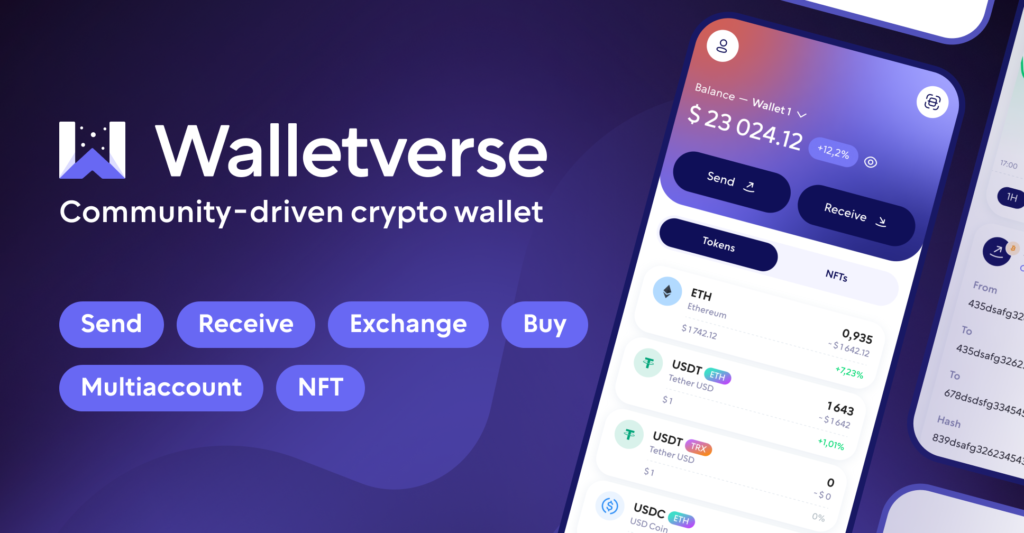
Walletverse is a mobile self-custody crypto wallet created for users who want to buy, store, send, receive, and exchange crypto in one app.
It supports 700+ cryptocurrencies and gives users access to Web3 tools, DeFi features, dApps, multi-account management, fiat on-ramp options, and crypto swaps.
For users who want to buy Parrot Protocol (PRT) with fiat, Walletverse can be used as a practical starting point.
If PRT is available through the selected provider or swap route, users can buy or exchange it directly inside the app.
If direct PRT buying is unavailable, users may buy SOL, USDC, USDT or another supported asset with Apple Pay, Google Pay, credit card, debit card, or a local fiat provider, then swap it to PRT through a compatible Solana route if liquidity exists.
Walletverse is non-custodial.
This means users control their own assets, while private keys remain under their control.
The Walletverse team cannot access user funds.
The app also includes passcode and biometric authentication, AML and KYT checks, Solana, ETH and TRX staking, and a proprietary GasFree USDT Transaction System on TRON.
This GasFree feature allows users to transfer USDT on TRON without holding TRX, because fees can be paid directly in USDT.
Pros
- Beginner-friendly mobile interface;
- Supports 700+ cryptocurrencies;
- Self-custody structure with user-controlled assets;
- Apple Pay, Google Pay, cards, and multiple fiat currencies;
- Passcode and biometric security;
- Built-in swaps, dApps, Web3 access, staking, and multi-account support;
- GasFree USDT transfers on TRON.
Cons
- Mobile-only experience;
- Direct PRT availability depends on providers, liquidity, and network support;
- Users must protect their recovery phrase because the wallet is self-custodial.



2. Phantom

Phantom is one of the most widely used wallets in the Solana ecosystem.
It supports SOL, SPL tokens, NFTs, dApps, swaps, staking tools, and fiat buying through integrated providers.
Because PRT is a Solana-based token, Phantom can be useful for users who want to manage it directly on Solana.
Users may buy SOL or USDC through supported fiat providers, then swap to PRT through available Solana liquidity routes.
Pros
- Strong Solana ecosystem support;
- Suitable for SPL tokens;
- Built-in swap functionality;
- Good dApp connectivity;
- Useful for users who already hold SOL or USDC.
Cons
- Direct PRT buying may not always be available;
- Provider availability depends on country;
- Users need SOL for Solana network fees.
3. Trust Wallet

Trust Wallet is a multi-chain self-custody wallet that supports many blockchains, including Solana.
It offers token storage, swaps, fiat buying, dApp access, and NFT support.
For users who want to buy PRT, Trust Wallet may be useful if they want one mobile wallet for many crypto assets and networks.
Users can buy SOL or stablecoins with fiat through supported providers, then swap to PRT if a suitable Solana route is available.
Pros
- Supports many blockchains and assets;
- Self-custody wallet model;
- Apple Pay, Google Pay, cards, and bank transfer support through partners;
- Good for users with multi-chain portfolios;
- Includes swaps and Web3 access.
Cons
- Solana-native experience may feel less specialized than Phantom or Solflare;
- Fees vary by third-party provider;
- Users must carefully check whether they are using the correct Solana token.
4. Solflare

Solflare is a Solana-focused wallet designed for storing, staking, buying, swapping, and managing Solana assets.
It is often used by users who want deeper access to Solana tools and applications.
For PRT, Solflare can be useful because it supports SPL tokens and connects to Solana dApps.
Users may buy SOL with fiat where supported and then swap SOL or USDC to PRT if liquidity is available.
Pros
- Built specifically for Solana;
- Supports staking, swaps, NFTs, and dApps;
- Suitable for SPL tokens such as PRT;
- Good for users focused on Solana DeFi.
Cons
- Less suitable for users who want broad multi-chain simplicity;
- Direct PRT buying depends on available routes;
- Beginners may need time to understand Solana fees and token accounts.
5. SafePal

SafePal offers mobile, browser extension, and hardware wallet options.
It supports many blockchains and tokens, including Solana-based assets.
SafePal includes buy, sell, swap, DeFi access, and hardware wallet protection for users who want stronger security options.
For PRT users, SafePal may be useful if they want software wallet convenience with the option to add hardware protection.
Users may buy supported crypto with fiat, then exchange it to PRT if a compatible Solana route exists.
Pros
- Software and hardware wallet options;
- Supports many blockchains and tokens;
- Built-in buy, sell, swap, and DeFi tools;
- Suitable for users who want stronger storage protection.
Cons
- Hardware wallet setup takes extra time;
- Direct PRT buying may require a swap route;
- Users must check chain and mint details before transfers.
6. Exodus

Exodus is a self-custody wallet available on mobile, desktop, and browser.
It supports many crypto assets and provides buying, sending, receiving, swaps, staking for selected assets, and portfolio tracking.
For PRT users, Exodus may be useful if they want a simple multi-platform wallet experience.
Users may buy SOL or another supported asset with fiat and then exchange it to PRT if a route is available.
Pros
- Easy interface for beginners;
- Mobile, desktop, and browser options;
- Supports Solana and many other assets;
- Built-in buy and swap features;
- Useful portfolio tracking tools.
Cons
- Advanced Solana DeFi users may prefer Phantom or Solflare;
- Direct PRT support should be checked before purchase;
- Swap and fiat fees depend on integrated providers.
7. Backpack
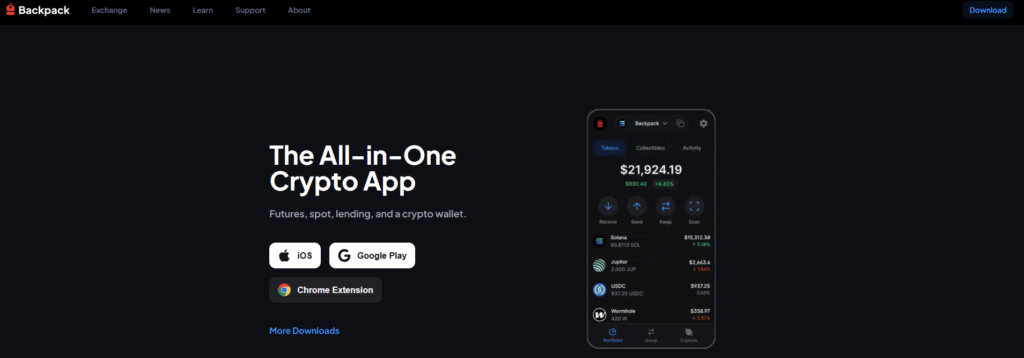
Backpack is a Web3 wallet and exchange ecosystem with strong Solana roots.
It supports Solana assets, NFTs, app-style Web3 experiences, swaps, and ecosystem interactions.
For PRT users, Backpack may be useful for managing Solana tokens and connecting to ecosystem apps.
Depending on regional availability, users may buy SOL or USDC first and then swap to PRT if a route exists.
Pros
- Strong Solana compatibility;
- Supports token management, NFTs, swaps, and dApps;
- Useful for active Web3 users;
- Modern interface for Solana ecosystem activity.
Cons
- Fiat access may vary by region;
- Some tools may feel advanced for beginners;
- Direct PRT buying may require a swap route.
8. Coin98
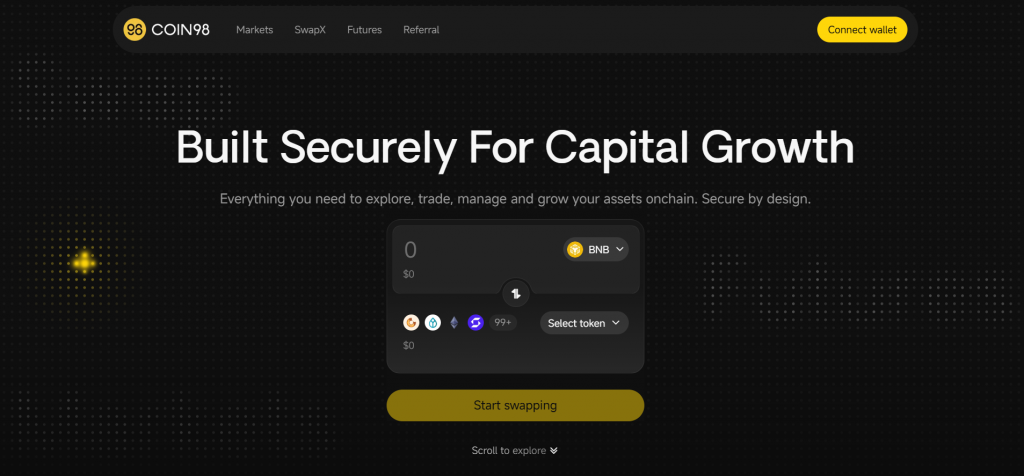
Coin98 is a multi-chain Web3 wallet designed for DeFi users.
It supports many networks, including Solana, and provides swaps, dApp access, and cross-chain asset management.
For PRT, Coin98 may be useful for users who already interact with Solana DeFi and want broad network coverage.
Users may buy SOL or USDC first, then swap to PRT through Solana-compatible liquidity if available.
Pros
- Multi-chain wallet with Solana support;
- Built for DeFi users;
- Includes swaps and dApp access;
- Useful for users managing assets across different networks.
Cons
- Interface can feel busy for beginners;
- Some tokens may require manual search;
- Fiat options may vary by country and provider.
9. Coinbase Wallet

Coinbase Wallet is a self-custody wallet from Coinbase.
It supports multiple networks and includes support for Solana and SPL tokens.
For PRT users, Coinbase Wallet may be useful because it can connect exchange-based buying with self-custody storage and Web3 access.
Users may buy SOL or another supported asset, move it to Coinbase Wallet, and swap into PRT through a compatible Solana route if available.
Pros
- Self-custody wallet from a well-known crypto brand;
- Supports Solana and SPL tokens;
- Useful for users who already use Coinbase;
- Good connection between exchange buying and wallet storage.
Cons
- Direct PRT support may vary by region and product route;
- Some users may need to move funds between Coinbase and Coinbase Wallet;
- Solana DeFi experience may be less specialized than Solana-first wallets.
10. OKX Wallet

OKX Wallet is a Web3 wallet connected to the broader OKX ecosystem.
It supports many blockchains, including Solana, and gives users access to swaps, DeFi tools, NFTs, and on-chain asset management.
For PRT buyers, OKX Wallet may be useful because it combines wallet management, exchange-style access, and route comparison tools.
Users may buy SOL, USDC or another supported asset with fiat where available, then swap into PRT if liquidity exists.
Pros
- Supports Solana and many other networks;
- Strong Web3 and DeFi functionality;
- Integrated wallet and exchange ecosystem;
- Useful for active users comparing routes and liquidity.
Cons
- Some services may be unavailable in certain regions;
- Interface may feel complex for beginners;
- Users should understand the difference between exchange custody and wallet self-custody.
Buy Parrot Protocol (PRT) with Apple Pay
Buying Parrot Protocol with Apple Pay can be convenient for users who want a fast mobile checkout experience.
The exact process depends on the wallet, fiat provider, exchange, country, and PRT availability.
Some providers may support PRT directly.
In many cases, users may need to buy SOL, USDC, USDT or another supported asset first and then swap to PRT afterward.
A typical Apple Pay flow looks like this:
- Install a crypto wallet that supports Solana-based assets, such as Walletverse, Phantom, Solflare, Trust Wallet, OKX Wallet or another compatible wallet.
- Create or import a wallet.
- Save the recovery phrase offline and never share it with anyone.
- Open the Buy section.
- Choose PRT if it is available.
- If PRT is unavailable, buy SOL or USDC.
- Select Apple Pay as the payment method.
- Complete identity verification if the provider requires it.
- Review the final quote, including provider fees and spread.
- Confirm the payment.
- Swap the purchased asset to PRT through a supported Solana route.
- Check that PRT arrives in the correct Solana wallet address.
- Keep a small amount of SOL available for future Solana network fees.
Walletverse can be useful for this process because it supports mobile crypto buying through Apple Pay, cards, local providers, and fiat currencies such as USD, EUR, GBP, CAD, AUD, INR, KZT, JPY and more.
Before confirming the payment, always review the total cost.
The final amount may include provider fees, Solana network fees, spread, and payment-processing charges.
Buy Parrot Protocol (PRT) with Google Pay
Google Pay can help Android users buy crypto faster through supported wallets and fiat providers.
The process is similar to Apple Pay.
Users choose a wallet or platform, select PRT if available, choose Google Pay, review the quote, and confirm the transaction.
If PRT is not available directly, users can buy SOL or USDC first and then swap it to PRT through a supported Solana route.
A typical Google Pay flow looks like this:
- Download a compatible wallet, such as Walletverse, Phantom, Solflare, Trust Wallet, OKX Wallet, SafePal or another wallet that supports Solana-based assets.
- Create a wallet and protect it with a passcode and biometrics.
- Store the recovery phrase securely offline.
- Open the Buy section.
- Select PRT if it is available.
- If PRT is unavailable, buy SOL or USDC first.
- Choose Google Pay as the payment method.
- Complete verification if required.
- Confirm the quote.
- Complete the purchase.
- Swap the purchased asset to PRT.
- Check that PRT arrives in the correct wallet address and on the correct network.
- Keep SOL available for future Solana fees.
Walletverse supports Google Pay and other fiat payment options, which can make it convenient for users who prefer a mobile-first crypto experience.
Availability depends on country, provider, liquidity, compliance checks, payment method, asset support, and Solana network conditions.
How to Buy Parrot Protocol (PRT) with Fiat?
The easiest way to buy Parrot Protocol with fiat is to use a wallet, exchange, or fiat provider that supports PRT or compatible Solana assets.
Because PRT may not be directly available through every provider, users often choose one of two routes.
The first route is direct purchase.
If your provider supports PRT directly, you can select PRT, choose USD, EUR, GBP or another fiat currency, pay with Apple Pay, Google Pay, card or bank transfer, and receive PRT in your wallet or exchange account.
The second route is indirect purchase.
If direct PRT buying is unavailable, you can buy SOL, USDC or USDT with fiat, then swap it to PRT through a compatible exchange, wallet, or decentralized liquidity route.
Here is a simple step-by-step process:
- Choose a wallet or exchange that supports PRT or Solana-based assets.
- Confirm that the asset is Parrot Protocol with the PRT ticker.
- Check the Solana mint address.
- Create an account or wallet.
- Complete identity verification if the fiat provider requires it.
- Select a fiat currency such as USD, EUR, GBP, CAD, AUD, INR, KZT or JPY.
- Buy PRT directly if available.
- If PRT is unavailable, buy SOL, USDC or USDT.
- Transfer funds to a self-custody Solana wallet if buying through an exchange.
- Open the swap section.
- Swap the purchased asset to PRT only through a route with enough liquidity.
- Store PRT in a secure self-custody wallet.
- Keep SOL available for Solana network fees.
- Avoid fake token pages, unknown websites, and private offers from strangers.
- Check whether PRT can be sold or swapped again before buying a large amount.
For beginners, Walletverse may be a practical choice because it combines fiat buying, self-custody, swaps, Web3 access, biometric protection, and support for many crypto assets in one mobile app.
For users focused on Solana and DeFi, Phantom, Solflare, Backpack, Trust Wallet, Coinbase Wallet, OKX Wallet, Coin98, Exodus, and SafePal may also be useful.
For users who prefer exchange liquidity first, centralized platforms listed by market aggregators may provide another route, followed by withdrawal to a self-custody wallet.
If a trusted route cannot be found, it is safer to wait rather than use an unknown provider.
Conclusion
Parrot Protocol (PRT) is a Solana-based token connected to a DeFi network focused on PAI stablecoin, non-custodial lending, liquidity unlocking, collateralized borrowing, and margin trading infrastructure.
The project was once part of the early Solana DeFi wave and became known for trying to make locked DeFi value more usable.
At the same time, PRT has an important later-stage history because the protocol moved through a 2023 token redemption and no-token transition proposal.
Users who want to buy PRT with USD, EUR or other fiat currencies can usually try two routes.
They can buy PRT directly if a provider supports it, or they can buy SOL, USDC or USDT first and swap to PRT through a compatible Solana route if liquidity is available.
Walletverse is a convenient mobile option for users who want fiat buying, self-custody, Apple Pay, Google Pay, card payments, swaps, Web3 access, and security features in one app.
At the same time, Solana-focused wallets such as Phantom, Solflare and Backpack, plus multi-chain wallets such as Trust Wallet, OKX Wallet, Coin98, Exodus, and SafePal may also be useful depending on user needs.
Before buying PRT, always check the token mint address, network, provider fees, liquidity, wallet support, exchange availability, current project activity, and risk level.
Data current as of June 19, 2026.
FAQ
Most frequent questions and answers
PRT may be interesting for users who research Solana DeFi, PAI stablecoin history, lending markets, collateralized liquidity, and older governance-token models. However, PRT is a high-risk crypto asset, so users should evaluate liquidity, current utility, token redemption history, exchange support, mint address data, and personal risk tolerance before buying.
You can buy PRT with USD directly if your wallet, exchange, or fiat provider supports it. If direct PRT buying is unavailable, you can buy SOL, USDC or USDT with USD through Walletverse or another compatible wallet, then swap it to PRT through a supported Solana route if real liquidity exists.
You can use a wallet that supports Solana-based tokens. Walletverse is a strong mobile option because it supports self-custody, fiat buying, Apple Pay, Google Pay, card payments, swaps, dApps, biometric security, and 700+ cryptocurrencies.
PRT may be available through selected exchanges, decentralized exchange routes, or compatible crypto wallets, depending on current liquidity and provider support. Because Parrot Protocol went through a token redemption and no-token transition process, users should verify current availability carefully before buying.
The cheapest way depends on your country, payment method, provider fees, spread, exchange liquidity, Solana network fees, and withdrawal fees. In many cases, buying SOL or USDC through a low-fee provider and then swapping to PRT may be cheaper than using an instant card route, if a reliable PRT route exists.
Yes, Apple Pay may be available through supported wallets and fiat providers. Walletverse supports Apple Pay for buying crypto, and users may then buy or swap to PRT if a suitable Solana route is available.
Yes, Google Pay may be available through supported Android wallets and fiat providers. Walletverse supports Google Pay for crypto purchases, although direct PRT availability depends on provider support, country, liquidity, and token route.
Yes, Parrot Protocol (PRT) is commonly listed as a Solana-based token. Users should always verify the exact mint address before buying, sending or swapping it.
The Solana mint address commonly listed for Parrot Protocol (PRT) is PRT88RkA4Kg5z7pKnezeNH4mafTvtQdfFgpQTGRjz44. Always verify the address before buying because fake tokens can use the same name or ticker.
Walletverse can be useful for beginners because it combines a simple mobile interface, fiat buying, self-custody, swaps, biometric protection, and support for many cryptocurrencies. Users should still check whether PRT is available directly or whether they need to buy SOL, USDC or USDT first and then swap to PRT.


