


BTC to LTC Exchange: How to Convert Bitcoin to Litecoin Quickly & Securely
Exchanging Bitcoin (BTC) for Litecoin (LTC) is a convenient way to move between two well-established cryptocurrencies. You may want to convert BTC to LTC for faster transfers, payments, portfolio diversification, or simply because you prefer to hold Litecoin.
A BTC to LTC exchange can usually be completed in a few simple steps. However, before making a swap, it is important to understand how the exchange rate works, what fees may apply, how long the transaction can take, and how to keep your crypto secure.
This guide explains how to convert Bitcoin to Litecoin quickly and safely, what to look for when choosing an exchange, and how to avoid common mistakes.
What Is a BTC to LTC Exchange?
A BTC to LTC exchange is the process of converting Bitcoin directly into Litecoin.
Instead of selling BTC for fiat currency such as USD or EUR and then purchasing Litecoin separately, a crypto-to-crypto exchange allows you to swap the two assets directly.
You choose Bitcoin as the cryptocurrency you want to send, Litecoin as the asset you want to receive, enter the amount, and review the estimated LTC output.
The final amount of Litecoin may depend on several factors, including:
-
the current BTC/LTC exchange rate;
-
market volatility;
-
blockchain network fees;
-
exchange fees;
-
available liquidity;
-
whether the rate is fixed or floating.
Because crypto prices change continuously, it is always worth checking the final amount you are expected to receive before confirming the exchange.
Why Convert Bitcoin to Litecoin?
Bitcoin and Litecoin are both decentralized cryptocurrencies, but they have different network characteristics.
Bitcoin is the largest and most widely recognized cryptocurrency, while Litecoin was designed with faster block generation and has traditionally been positioned as a cryptocurrency suitable for everyday transfers and payments.
Users may exchange BTC for LTC for several reasons.
You may want to:
-
use Litecoin for payments;
-
transfer funds using the Litecoin network;
-
diversify your cryptocurrency portfolio;
-
move part of your BTC holdings into LTC;
-
use a service that accepts Litecoin;
-
take advantage of changing BTC/LTC market conditions.
The right choice depends on your own goals and how you intend to use the cryptocurrency.
How to Convert BTC to LTC
The exact process depends on the service you use, but most Bitcoin-to-Litecoin exchanges work in a similar way.
Step 1: Choose BTC and LTC
Select Bitcoin as the cryptocurrency you want to exchange and Litecoin as the cryptocurrency you want to receive.
Step 2: Enter the BTC Amount
Specify how much Bitcoin you want to convert.
The platform should calculate an estimated amount of Litecoin based on the current BTC/LTC exchange rate.
Check the minimum and maximum exchange limits before continuing.
Step 3: Provide an LTC Wallet Address
You need a Litecoin-compatible wallet to receive the exchanged coins.
If you do not already have one, you can download a multi-currency wallet such as Walletverse, which supports both BTC and LTC and allows users to manage multiple crypto assets from one application.
Whichever wallet you choose, carefully copy and verify your LTC receiving address.
Step 4: Check the Exchange Rate and Fees
Before confirming the swap, review:
-
the amount of BTC you are sending;
-
the estimated LTC you will receive;
-
the exchange rate;
-
network fees;
-
service fees;
-
the receiving address;
-
the expected processing conditions.
Do not judge an exchange only by the advertised commission. The final LTC output is often a more useful comparison.
Step 5: Send Bitcoin
The exchange service will provide a Bitcoin deposit address.
Send the required BTC amount to that address.
Always make sure the address matches exactly before confirming the transaction.
Step 6: Receive Litecoin
After the Bitcoin transaction receives the required blockchain confirmations, the exchange provider processes the swap.
The resulting LTC is then sent to your Litecoin wallet.
Keep your transaction ID or exchange order number until the transaction has been completed successfully.
What Fees Apply When Converting BTC to LTC?
A Bitcoin-to-Litecoin swap may involve several types of fees.
Bitcoin Network Fee
Sending BTC requires a blockchain network fee.
The fee depends on current Bitcoin network conditions and is not necessarily determined by the exchange provider.
Exchange Fee
The crypto exchange may charge a service fee for processing the BTC to LTC conversion.
This may be shown separately or incorporated into the exchange rate.
Litecoin Network Fee
A network cost may also apply when the resulting Litecoin is sent to your wallet.
Because each platform structures its fees differently, the easiest way to compare exchanges is to check the final estimated LTC amount for the same BTC input.
A provider advertising a very low fee does not necessarily offer the cheapest exchange if its rate includes a wider spread.
How Long Does It Take to Exchange BTC for LTC?
There is no single guaranteed processing time.
The duration of a BTC to LTC swap can depend on:
-
Bitcoin blockchain confirmations;
-
network congestion;
-
the network fee attached to the BTC transaction;
-
exchange processing speed;
-
liquidity;
-
Litecoin network conditions;
-
security or compliance checks.
Bitcoin blocks are produced approximately every ten minutes on average, but that does not mean every exchange will finish in ten minutes.
Some swaps can be completed relatively quickly, while others may take longer during periods of heavy network activity.
Common Mistakes When Exchanging BTC for LTC
Using the Wrong Wallet Address
Always verify that you are entering a valid Litecoin address as the destination.
Ignoring the Final LTC Amount
A low advertised fee does not always mean the best deal. Compare the actual output amount.
Waiting Too Long After Receiving a Quote
Crypto prices can change quickly. Fixed-rate offers may also expire after a limited period.
Sending the Wrong Amount
If the exchange specifies an exact deposit amount, follow the instructions carefully.
Ignoring Minimum Exchange Limits
Services may have minimum transaction requirements based on market conditions and network costs.
Sharing Wallet Credentials
No legitimate exchange should require your recovery phrase or private keys to process a standard crypto swap.
Swap BTC to LTC with Walletverse
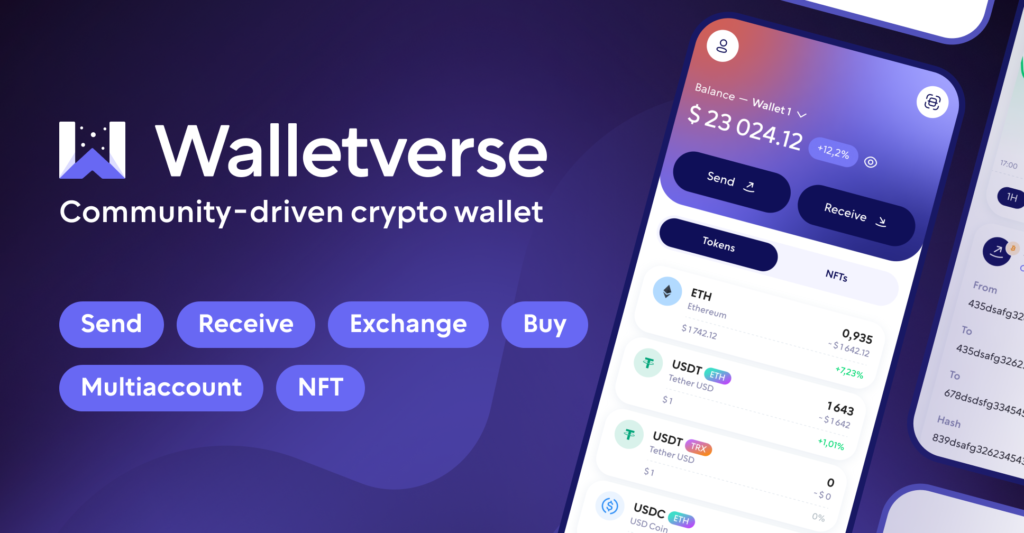
If you want a simple way to exchange Bitcoin for Litecoin and keep both assets in one place, Walletverse can be a convenient option.
The wallet supports both BTC and LTC, so you can manage your cryptocurrencies from a single mobile app instead of using separate wallets for each asset. This makes the exchange process more straightforward, especially if you want to receive Litecoin and continue storing or managing it after the swap.
With Walletverse, you can:
-
manage Bitcoin and Litecoin in one wallet;
-
send and receive BTC and LTC;
-
access crypto exchange functionality from your smartphone;
-
keep control of your wallet credentials with a self-custodial setup;
-
manage multiple cryptocurrencies without switching between different apps.
To get started, download Walletverse, create or import your wallet, make sure you have BTC available, and select the BTC to LTC exchange pair. Before confirming the transaction, review the rate, estimated LTC amount, and applicable fees.
Once the exchange is completed, you can continue managing your Litecoin directly in Walletverse.


FAQ
Most frequent questions and answers
Choose a service with transparent fees, competitive rates, reliable transaction tracking, and strong security. If you need a wallet for LTC, Walletverse supports both Bitcoin and Litecoin.
Yes, you need a Litecoin-compatible wallet to receive LTC. A multi-currency wallet such as Walletverse can be used for both BTC and LTC.
Use a crypto exchange or wallet with a direct BTC-to-LTC swap. Enter the amount, review the rate and fees, confirm the transaction, and wait for network confirmations.
Compare the final amount of LTC you will receive, not just the advertised fee. Rates, spreads, and network costs can make a big difference.
Select BTC, choose LTC, enter the amount, provide your Litecoin wallet address, review the rate and fees, send BTC, and receive LTC.


