


Best 10 iOS Crypto Wallet Apps for Apple Devices 2026
Crypto wallets have become a default tool for buying, holding, and using digital assets on mobile.
That demand is reflected in market forecasts: Grand View Research estimates the global crypto wallet market at USD 12.59B in 2024 and projects it could reach USD 100.77B by 2033 (26.3% CAGR).
This guide was prepared by ilink, a company with 13+ years of experience in blockchain, fintech, and software/app development.
Updated January 2026.
What is a Crypto Wallet?
A crypto wallet is an app that helps you manage blockchain assets by storing and using “keys” that authorize transactions.
To put it simply, it’s a secure app that lets you buy, store, and send crypto — and (in many wallets) connect to Web3 apps.
Hot vs cold wallets in one minute
Hot wallets (mobile apps). Great for daily use and fast access, but you must follow security basics.
Cold wallets (hardware/offline). Best for long-term storage of large amounts, but less convenient for everyday transactions.
This article focuses on iOS hot wallets (mobile apps).
Top 10 iOS Crypto Wallets in 2026
1. Walletverse
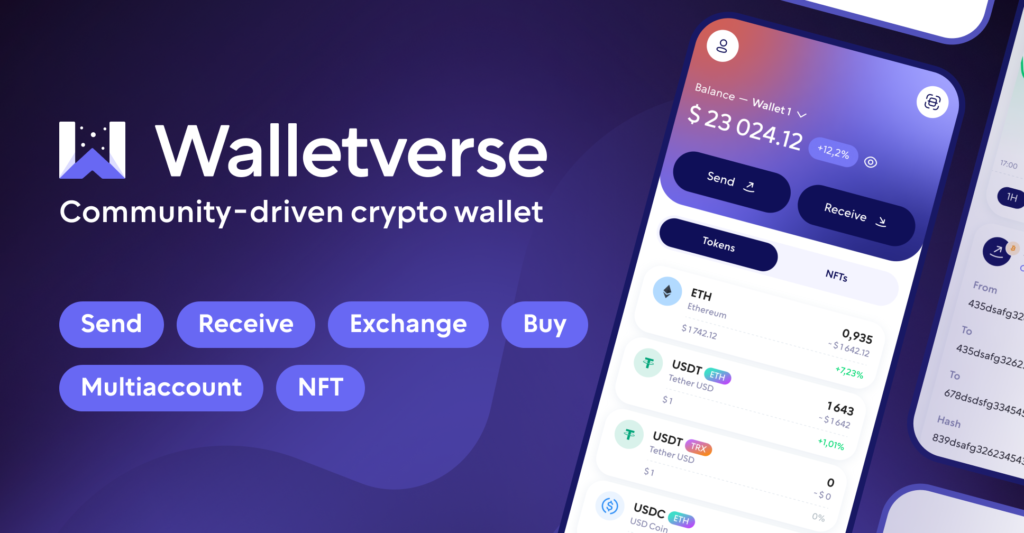
Walletverse is a mobile, multi-currency Web3 and DeFi wallet designed for everyday use, with self-custody and a strong focus on usability.
Key capabilities highlighted in its App Store listing include multi-wallet accounts, dApp access via WalletConnect, and exchange functionality with many pairs.
Best for
Beginners and advanced users who want an all-in-one mobile wallet for managing a multi-coin portfolio and Web3 access.
Pros
Mobile-first experience for day-to-day crypto
Multi-currency + Web3/dApp connectivity
Designed around self-custody workflows
Cons
Mobile-only format (no full desktop-first workflow)


2. MetaMask (iOS)

MetaMask is one of the most widely used Web3 wallets and is strongly oriented around Ethereum + EVM networks, tokens, and dApps.
MetaMask’s App Store page describes it as “trusted by over 100 million users,” which is a strong signal of adoption and ecosystem maturity.
MetaMask also explicitly warns users to install only the official app store version due to fake apps that try to steal recovery phrases.
Best for
Ethereum and EVM users who actively use dApps (DeFi, NFTs, onchain apps).
Pros
Deep dApp and EVM ecosystem support
Strong Web3 workflow and integrations
Clear guidance against phishing/fake apps
Cons
Can feel complex if you only want “buy/hold/send”
Most convenient if your activity is mainly EVM chains
3. Trust Wallet (iOS)

Trust Wallet is positioned as a multi-chain, self-custody wallet with a broad feature set for Web3 users.
Its App Store listing states it’s “trusted by over 200 million users” and highlights self-custodial, onchain earning options for stablecoins (feature availability depends on region and supported assets).
Best for
Users who want a multi-chain wallet and a broad “everything in one app” approach.
Pros
Strong multi-chain orientation
Large user base claim on official listing
Self-custody positioning and expanding feature set
Cons
Lots of features can overwhelm new users
Some buy/earn options vary by country and provider
4. Coinbase Wallet (iOS)

Coinbase Wallet is a self-custody wallet (separate from the Coinbase exchange app in terms of custody model).
Coinbase’s own help documentation explains that the wallet generates a recovery phrase and “only you have access to it,” and Coinbase cannot access it or move funds on your behalf.
Best for
Users who want a mainstream UX with self-custody fundamentals and a familiar brand.
Pros
Self-custody model with clear recovery-phrase responsibility
Good fit for users who value a guided, consumer-friendly UX
Cons
As with any self-custody wallet, losing the recovery phrase can mean losing access
Some features depend on integrated providers and region
5. Exodus (iOS)

Exodus is positioned as a self-custodial wallet where only the user controls funds, and it includes support across many networks.
Its App Store listing states: “Exodus is self-custodial which means only YOU control your wallet. No one at Exodus ever has access to your funds.”
Best for
Users who want a clean interface and a straightforward “portfolio wallet” experience.
Pros
Strong self-custody statement from official listing
Broad multi-network portfolio management (as positioned)
Cons
Like all hot wallets, security depends heavily on user behavior
Some advanced workflows may require more Web3 familiarity
6. Phantom (iOS)

Phantom has evolved from a Solana-native wallet into a multichain powerhouse, now offering seamless support for Solana, Bitcoin, Ethereum, and Polygon all within a single, beautifully designed iOS app. It is widely regarded as having the best mobile experience for Solana users, with lightning-fast performance for token swaps, staking, and NFT management directly from your iPhone.
Pros:
Exceptional user interface with smooth Solana NFT gallery and spam controls
Built-in staking and token swaps with clear fee previews
Cons:
Multichain support for Ethereum/Bitcoin is newer and less feature-rich than Solana side
Primarily optimized for Solana ecosystem power users
7. Zengo (iOS)

Zengo is a unique iOS wallet that eliminates the seed phrase entirely, using threshold cryptography (MPC) to secure your assets. Your private key is split into fragments that never exist in one place, making it resistant to phishing and seed phrase theft. It is ideal for beginners who want robust security without the stress of managing a 12-word backup.
Pros:
Seedless design with biometric recovery options reduces user error risks
Clear, guided interface with built-in Web3 support and fiat purchases
Cons:
Limited advanced DeFi features compared to MetaMask or Trust Wallet
Recovery process requires trusting their 3D face verification system
8. Ledger Live (iOS)
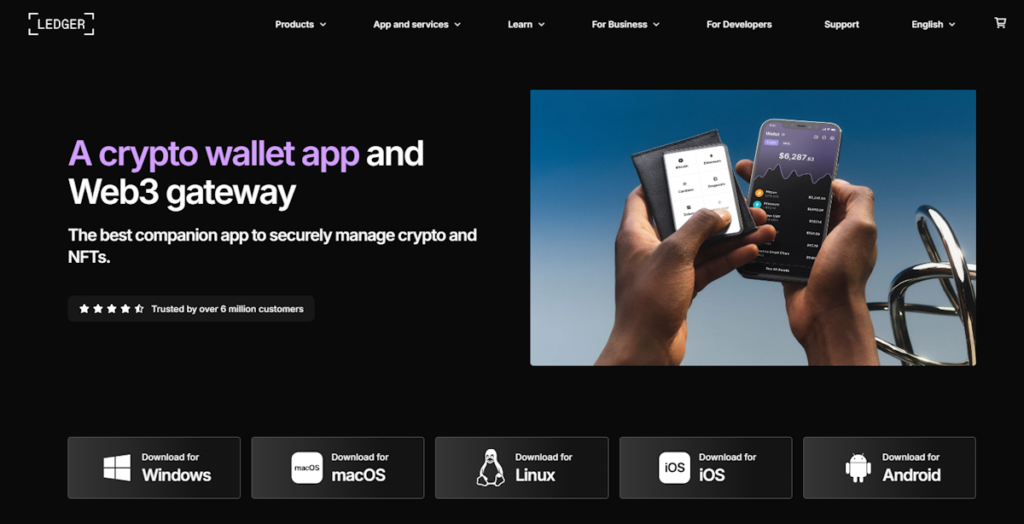
Ledger Live is the official companion app for Ledger hardware wallets, allowing iOS users to manage their crypto with bank-grade security. While the app itself is a hot interface, it pairs via Bluetooth with Ledger Nano X to sign transactions offline. This gives you the convenience of mobile management with the safety of cold storage.
Pros:
Private keys never leave the secure element chip on the hardware device
Supports 5,500+ cryptocurrencies with built-in staking and swap features
Cons:
Requires purchasing a Ledger hardware device (additional cost)
Less convenient for frequent small transactions compared to pure hot wallets
9. Muun (iOS)
Muun is a minimalist Bitcoin-only wallet that elegantly combines on-chain and Lightning Network payments into a single, unified balance. You don’t need to manage channels or worry about which layer to use, Muun automatically handles it behind the scenes . It is perfect for iOS users who want a simple, reliable Bitcoin Lightning experience.
Pros:
Automatic channel management makes Lightning as easy as on-chain sending
Clean, straightforward interface with no unnecessary features
Cons:
Bitcoin-only (no Ethereum, Solana, or altcoins)
Lightning deposits require inbound liquidity (can be slow initially)
10. Blockstream Green (iOS)
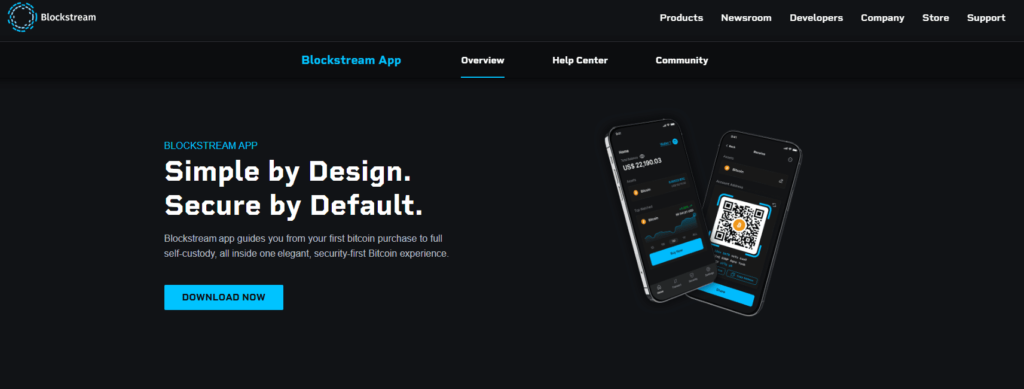
Blockstream Green is a security-focused Bitcoin wallet that offers multisignature protection and Tor integration for maximum privacy on iOS. It allows users to set up two-factor authentication policies and connect with hardware wallets like Jade . For Bitcoin holders who prioritize security over altcoin variety, Green is a top-tier choice.
Pros:
Multisig and two-factor spending policies add layers of protection
Built-in Tor support for enhanced transaction privacy
Cons:
Bitcoin-only with no support for Ethereum or other chains
Advanced security features can be overkill for casual users
How to choose the best iPhone crypto wallet
Decide on custody
If you want full control, choose self-custody (you manage the recovery phrase). Coinbase explicitly notes only you have access to the phrase.
Match the wallet to your main activity
Mainly Ethereum dApps → MetaMask
Multi-chain portfolio + broad features → Trust Wallet / Walletverse
Simple portfolio UX → Exodus
Check Web3 needs. If you use dApps, prioritize WalletConnect/dApp browser workflows.
Be realistic about security. Mobile wallets are convenient, but you must treat your recovery phrase like the keys to your vault.
FAQ
Most frequent questions and answers
The best iOS wallet app depends on how you use crypto.
If you want an all-in-one, mobile-first wallet for everyday use, Walletverse is a strong option because it combines:
self-custody security (you control access)
passcode + biometrics
multi-currency support (700+ cryptocurrencies)
Web3/dApps and multi-account features
easy buying options, including Apple Pay
That mix makes it suitable for both beginners and experienced users on Apple devices.
Setting up Walletverse on iOS is straightforward:
Download Walletverse from the App Store.
Open the app and create a new wallet.
Set a strong passcode.
Enable Face ID / Touch ID (biometric security).
Follow the in-app instructions to back up your recovery data safely.
Add crypto by receiving funds from another wallet or buying inside the app (if available in your region).
Tip: never store recovery phrases as screenshots or in cloud notes.
Yes. Walletverse supports Apple Pay for buying crypto.
Inside the app, select Buy, choose the asset and amount, then pick Apple Pay as the payment method and confirm the purchase.
Availability can vary by country and payment provider, but Apple Pay is supported in Walletverse as a purchase option.
You can get Walletverse directly from the App Store.
Search for “Walletverse,” download it, and follow the onboarding steps to start managing crypto on your iPhone.
Walletverse is free to download and includes features for buying, sending, and exchanging crypto, plus Web3 access (dApps) and multi-account support.


