


Best Crypto Wallet in Belgium 2026 for Beginners and Advanced Users
Cryptocurrency is transforming the financial landscape, and having the right tools is essential for managing your digital assets effectively. In Belgium, various options exist for storing and trading cryptocurrencies. This article will explore the best crypto wallet in Belgium for 2026, catering to beginners and advanced users.
Updated: September 2026
What is a Cryptocurrency, and How Does It Work?
Cryptocurrency is a digital or virtual currency that uses cryptography for security. Unlike traditional currencies issued by governments, cryptocurrencies operate on blockchain technology, a decentralized ledger that records all transactions across a network of computers.
Key Features of Cryptocurrency:
- Decentralization. No single authority controls the currency, making it immune to government manipulation.
- Security. Transactions are secured through cryptographic methods, reducing the risk of fraud.
- Anonymity. While transactions are public, users’ identities remain hidden behind complex codes.
- Limited supply. Many cryptocurrencies, like Bitcoin, have a capped supply to combat inflation.
Understanding Crypto Wallets
A crypto wallet is a digital tool that allows users to store, send, and receive cryptocurrencies. It doesn’t hold the cryptocurrencies; instead, it stores the private keys that give users access to their digital assets.
Main Terms:
- Private key. A secret code that enables you to access your cryptocurrency.
- Public key. A cryptographic code that allows others to send you cryptocurrency.
- Seed phrase. A series of words used to recover your wallet if you lose access.
Is Crypto Legal in Belgium?
Crypto assets can be owned and used in Belgium, but services such as custody, trading and certain exchange activities are subject to the EU Markets in Crypto-Assets Regulation (MiCA). Since July 2026, providers offering regulated crypto-asset services in the EU generally need appropriate CASP authorization. Belgian users can check provider status through official FSMA and ESMA resources before using a third-party crypto service.
Software vs Hardware Crypto Wallets in Belgium
Belgian crypto users can choose between software wallets for convenient everyday access and hardware wallets designed to keep signing keys offline.
Walletverse is a mobile self-custody wallet suited to users who want frequent access to crypto, transfers, swaps and Web3 features. Hardware wallets are generally better suited to users who prioritize offline key storage for long-term holdings.
Belgium also has a locally manufactured hardware-wallet option: NGRAVE ZERO. It is an air-gapped hardware wallet made in Belgium and designed to keep private keys offline while transactions are signed through QR codes.
The right choice depends on how often you use your crypto, which assets you hold and whether convenience or offline storage is more important to you.
Top 10 Best Crypto Wallets in Belgium 2026 - Comparison
1. Walletverse
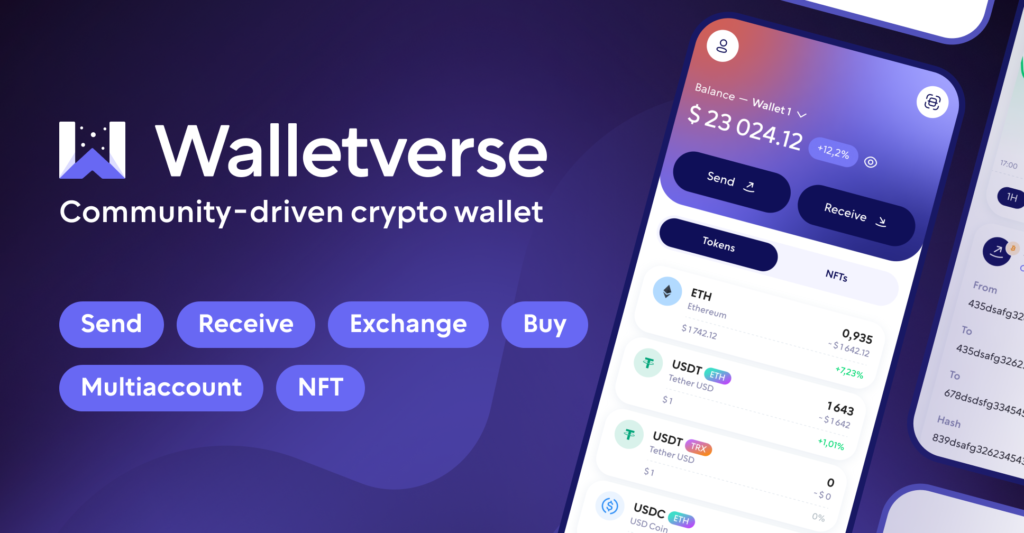
Walletverse is a leading mobile crypto wallet that caters to beginners and advanced users. It’s designed for multi-currency support and provides an excellent interface for managing various digital assets.
Features
Walletverse allows users to store, buy, and send cryptocurrencies seamlessly. Its support for decentralized applications (dApps) and staking enhances its functionality. The app is community-driven, promoting self-custody, which means only users can access their funds—adding an extra layer of security.
Pros:
- User-friendly. Intuitive design makes it easy for newcomers.
- Supports over 700 cryptocurrencies. From Bitcoin to altcoins, it has extensive coverage.
- Secure features. Incorporates pass-code and biometric authentication to ensure safety.
Cons:
- Currently, it is only available as a mobile app.


2. Exodus
Exodus is renowned for its sleek design and intuitive interface, making it an excellent choice for beginners who may feel overwhelmed by more complex wallets.
Features
Exodus offers a robust desktop and mobile wallet experience, including portfolio tracking and charts. Its built-in exchange feature allows quick trades without moving assets to an external exchange.
Pros:
- Simple navigation. The user interface is clean and easy to understand.
- Built-in exchange. Users can swap cryptocurrencies directly within the app, providing convenience.
Cons:
- Limited to specific cryptocurrencies compared to some hardware wallets.
3. Ledger Nano X
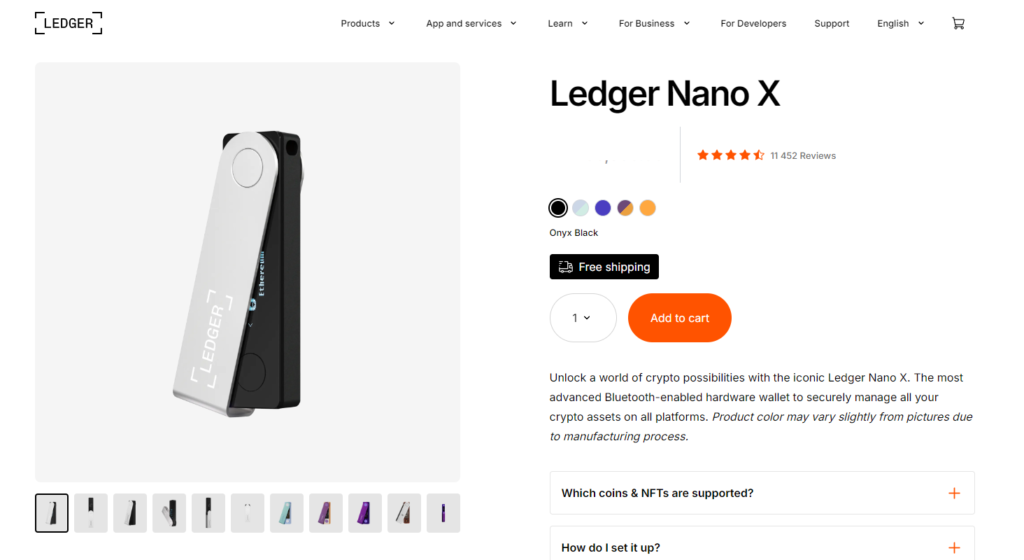
The Ledger Nano X is a premier hardware wallet prioritizing security and portability. It’s an excellent option for advanced users who want to protect their assets from online threats.
Features
The Ledger Nano X supports over 1,800 cryptocurrencies and integrates with the Ledger Live app for easy management. It’s cold storage capability ensures that assets are safe from online hacks.
Pros:
- Exceptional security. Use a secure element chip to protect your private keys.
- Bluetooth connectivity. Manage your crypto on mobile devices, enhancing usability.
Cons:
- Higher complexity and cost may deter some beginners.
4. Trezor Model T
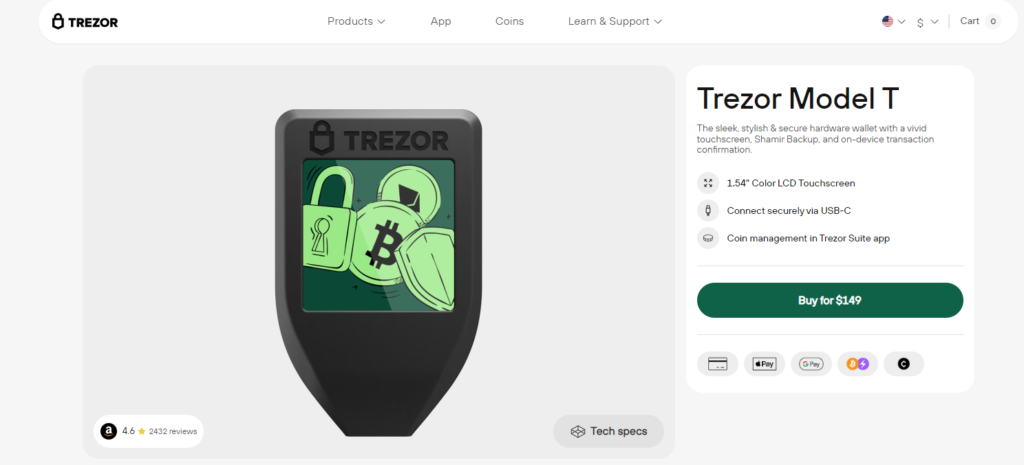
The Trezor Model T is another high-security hardware wallet with advanced features perfect for seasoned crypto users.
Features
Trezor Model T supports many cryptocurrencies and offers two-factor authentication and recovery seed backup features. Its design focuses on security and usability.
Pros:
- Touchscreen interface. Simplifies the process of entering passphrases and navigating the wallet.
- Open-source. Transparency in security measures, allowing for community audits.
Cons:
- Higher price compared to basic hardware wallets.
5. Base App Wallet
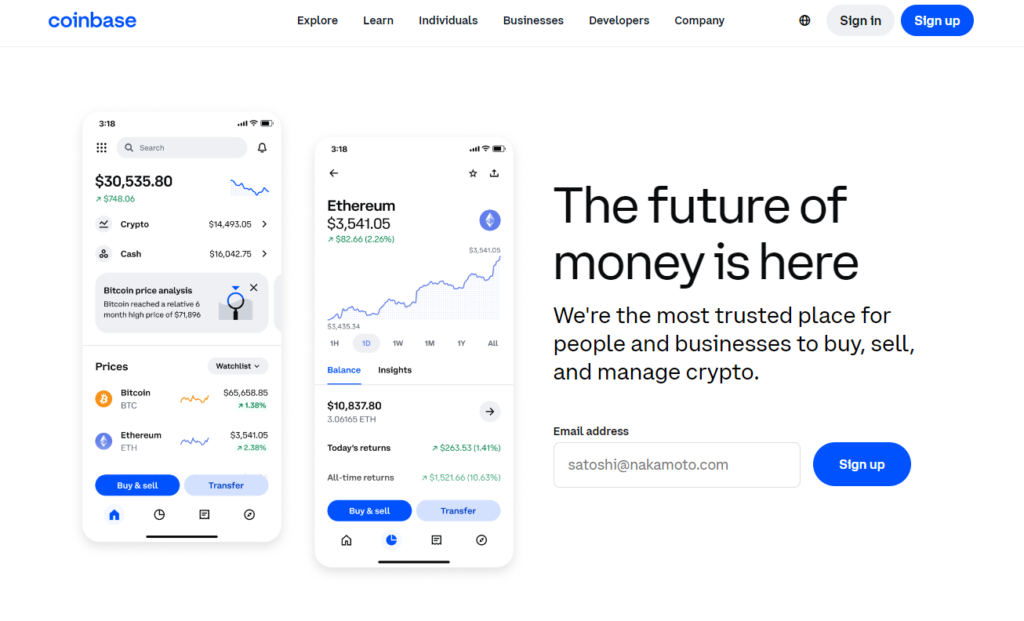
Base App Wallet is a versatile option that allows users to store not only cryptocurrencies but also non-fungible tokens (NFTs) and decentralized applications (dApps).
Features
Base App Wallet provides a seamless way to interact with the broader crypto ecosystem, including access to DeFi platforms. Users can quickly transfer assets to and from their Base App exchange account.
Pros:
- User-friendly for beginners. Simplifies the process of buying and storing crypto.
- Strong security measures. Includes insurance for digital assets stored online.
Cons:
- Higher transaction fees compared to some competitors.
6. Bitstamp
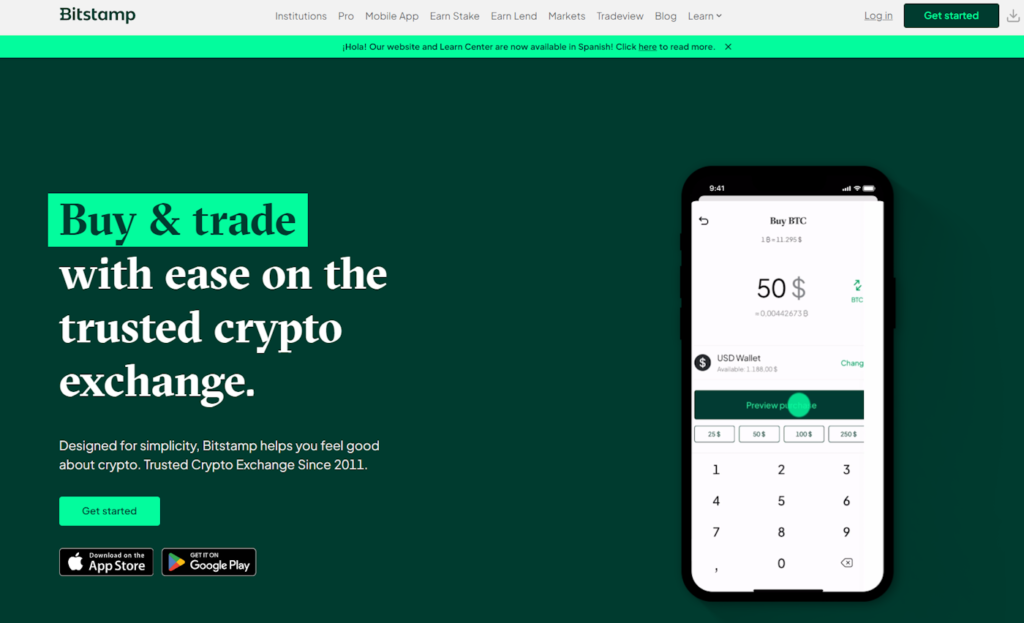
Bitstamp is one of the oldest cryptocurrency exchanges, known for its reliability and strong security protocols. It also offers a built-in wallet feature for users.
Features
Bitstamp allows for fiat-to-crypto transactions and supports various trading pairs. Its user interface is suitable for beginners and experienced traders, making it a well-rounded choice.
Pros:
- Reputation for security. Offers two-factor authentication and other robust security features.
- Low trading fees. Competitive fee structure, especially for high-volume traders.
Cons:
- Limited range of cryptocurrencies compared to more extensive exchanges.
7. Trust Wallet

Trust Wallet is the official decentralized wallet of Binance, offering a secure and user-friendly mobile experience. It supports a vast array of assets across multiple blockchains, making it a great choice for Belgian users who want to manage a diverse portfolio.
Features
Trust Wallet supports over 10 million assets across 100+ blockchains, including Bitcoin, Ethereum, and all major altcoins. It includes a built-in Web3 browser for interacting with dApps, supports NFT storage, and allows staking for various cryptocurrencies directly from the app.
Pros:
Multi-chain support with millions of assets and NFTs.
Integrated dApp browser for seamless Web3 interaction.
Staking available for popular cryptocurrencies.
Free wallet-to-wallet transfers.
Cons:
Higher fees for credit/debit card purchases.
No direct live chat support; primarily email-based assistance.
8. MetaMask

MetaMask is the leading Ethereum-based wallet and gateway to the world of decentralized applications. It is available as both a mobile app and browser extension, making it highly accessible for Belgian users who want to explore DeFi and NFTs.
Features
MetaMask allows users to store, send, and swap tokens on Ethereum and all EVM-compatible chains (BNB Chain, Polygon, Avalanche, etc.). It integrates with hardware wallets like Ledger and Trezor for enhanced security and supports fiat on-ramps through partners.
Pros:
Supports all ERC-20 tokens and major EVM networks.
Extensive dApp integration – the most widely used wallet in DeFi.
Open-source and regularly audited.
Available on mobile and desktop.
Cons:
Primarily focused on the Ethereum ecosystem (though expanding to other chains).
Requires manual network configuration for some blockchains.
Can be complex for absolute beginners.
9.Crypto.com

Crypto.com DeFi Wallet is a non-custodial wallet that gives Belgian users full control over their private keys while offering seamless integration with the broader Crypto.com ecosystem. It supports a wide range of cryptocurrencies and provides access to DeFi services.
Features
The wallet supports 1000+ assets across 30+ blockchains, including Bitcoin, Ethereum, Solana, and Cronos. It features built-in staking, a dApp browser, and the ability to connect to the Crypto.com exchange for easy funding. Users can also earn rewards through various DeFi protocols directly from the wallet.
Pros:
Non-custodial with full self-custody of private keys.
Wide multi-chain support and cross-chain swaps.
Staking and DeFi rewards available within the app.
Integration with Crypto.com exchange and Visa card.
Cons:
Some advanced features may require familiarity with DeFi.
KYC required for exchange integration, though the wallet itself is non-custodial.
Occasional network fees for certain operations.
10. Guarda Wallet

Guarda is a versatile non-custodial wallet available on multiple platforms, including Android, iOS, web, and desktop. It is particularly suitable for Belgian users who want to manage their crypto across different devices without relying on a centralized service.
Features
Guarda supports over 50 blockchains and thousands of tokens, including all major cryptocurrencies. It offers built-in exchange services, staking for PoS assets, and fiat purchase options via credit card or bank transfer. The wallet does not require registration or KYC for basic functions.
Pros:
Multi-platform support across all major operating systems.
Wide range of supported cryptocurrencies.
Integrated exchange and staking features.
No registration or KYC required for basic wallet functions.
Regular security updates and active development.
Cons:
Some services like exchange are provided by third parties with varying fees.
Interface can feel cluttered for users with simple needs.
Customer support response times may vary.
Buy and Swap Crypto in Belgium with Walletverse
A modern crypto wallet can be used for more than storing digital assets. Walletverse allows users to buy, send and exchange supported cryptocurrencies from the same self-custody mobile application.
For an exchange, select the asset you want to send and the cryptocurrency you want to receive, review the available quote and transaction details, and confirm the swap. Rates, limits, fees and available pairs can vary depending on the provider, liquidity and blockchain network.
For crypto purchases, the payment methods shown in Walletverse depend on the current provider and user location. Always review the final amount, provider fees and selected network before completing the transaction.
This can be useful for Belgian users who want to manage and exchange supported assets without keeping their entire portfolio on a centralized exchange.
Which Cryptocurrencies Does Walletverse Support?
Walletverse is a multi-currency wallet supporting 700+ cryptocurrencies. This allows users in Belgium to manage different digital assets from one mobile application rather than installing a separate wallet for every coin.
Supported assets include major cryptocurrencies and tokens such as Bitcoin (BTC), Ethereum (ETH), Tether (USDT), USD Coin (USDC), XRP, Dogecoin (DOGE), Litecoin (LTC), Cardano (ADA), Polkadot (DOT) and many others.
Before transferring crypto, always confirm that Walletverse supports the specific asset and blockchain network you intend to use. The same token can exist on several networks, and sending it through an incompatible network can cause problems with receiving the funds.
Best Places to Buy Bitcoin in Belgium
- Crypto wallets. Use wallets like Walletverse to buy Bitcoin directly via credit/debit cards or bank transfers.
- Cryptocurrency exchanges. Platforms like Bitstamp and Kraken offer competitive prices and a wide range of cryptocurrencies.
- Bitcoin ATMs. Locate Bitcoin ATMs to purchase Bitcoin instantly using cash or debit cards.
- Banks. Some banks may offer services to buy Bitcoin directly through their platforms.
- Brokerage services. Platforms like eToro provide a user-friendly interface for buying Bitcoin without the complexities of exchanges.
These options cater to various preferences, ensuring you can find a method that suits your needs!
In summary, there are multiple ways to buy Bitcoin in Belgium, including through crypto wallets, exchanges, P2P platforms, Bitcoin ATMs, banks, and brokerage services. However, storing your cryptocurrency in a wallet is the most convenient option. Not only does it offer enhanced security, but it also allows you to buy, sell, and exchange cryptocurrencies quickly and easily from your phone. This seamless access ensures that you can manage your digital assets efficiently, making it the ideal choice for beginners and experienced users.
How to Choose a Secure Crypto Wallet in Belgium
Security should be one of the main factors when choosing a crypto wallet in Belgium. A self-custody wallet gives you direct control over access to your digital assets, but it also means that you are responsible for protecting your wallet credentials and recovery information.
Walletverse is a self-custody mobile wallet with passcode and biometric protection. Walletverse states that only the user can access the wallet, while backup and recovery features are available if access to the device is lost.
Never share passwords, private keys or wallet recovery information. Before sending crypto, verify the receiving address and blockchain network, and only download wallet applications from official sources.
Belgian users should also distinguish between the wallet itself and third-party services used to buy or exchange crypto. Under the EU MiCA framework, crypto-asset service providers offering regulated services in the EU must have the appropriate authorization.
Best Crypto Exchanges in Belgium
Selecting the proper exchange can significantly impact your trading experience. Here are some of the top exchanges in Belgium for 2026:
- Bitstamp. With its long-standing reputation and user-friendly interface, Bitstamp is an excellent choice for beginners and advanced traders. Its robust security measures and competitive fees make it a trusted option.
- Kraken. Known for its advanced trading options and comprehensive security features, Kraken suits users seeking more complex trading strategies. Its broad range of cryptocurrencies and low fees for high-volume trading is a bonus.
- Binance. With its extensive features and low trading fees, Binance continues to be a favorite among experienced traders. Its large selection of cryptocurrencies allows users to diversify their portfolios quickly.
Conclusion
In conclusion, selecting the right crypto wallet in Belgium is essential for effectively managing digital assets. Whether you are a beginner or an advanced user, options are tailored to meet your needs. Walletverse, with its robust features and user-friendly interface, stands out as one of the best wallets for 2026.
FAQ
Most frequent questions and answers
The best crypto wallet for Belgium largely depends on your needs. Walletverse is highly recommended for its user-friendly interface, support for over 700 cryptocurrencies, and robust security features. Other excellent options include Exodus for beginners and Ledger Nano X for those prioritizing security with a hardware wallet.
Yes, Belgium does tax cryptocurrencies. Gains from trading or selling cryptocurrencies may be subject to capital gains tax. Individuals must report any profits from crypto transactions in their tax returns. It’s advisable to consult a tax professional for detailed guidance based on personal circumstances.
To buy Bitcoin in Belgium, you can choose from various methods:
- Exchanges. Sign up on platforms like Bitstamp or Kraken.
- Crypto wallets. Use wallets that allow direct purchases, such as Walletverse.
- P2P platforms. Buy directly from other individuals on sites like LocalBitcoins.
- Bitcoin ATMs. Locate a nearby ATM using CoinATMRadar.
Buying Ethereum in Belgium follows a similar process to buying Bitcoin. Use exchanges like Binance, Coinbase, or purchase through a crypto wallet that supports ETH transactions like Walletverse. P2P platforms are also a viable option for direct purchases.


