


Best 5 Free Crypto Wallets for beginners and advanced 2026
Crypto wallets have moved from a “nice to have” tool to core infrastructure for everyday crypto use: holding assets, sending payments, swapping tokens, and accessing Web3 apps.
This shift is visible in market forecasts. Grand View Research estimates the global crypto wallet market at USD 12.59B in 2024 and projects it to reach USD 100.77B by 2033 (CAGR 26.3% from 2025 to 2033).
Updated: September 2026.
What is a Crypto Wallet?
A crypto wallet is an app or device that helps you store and use crypto by managing your private keys (or helping you manage access to them).
Put simply, a wallet is the tool that lets you prove “this crypto is mine” and approve transactions.
What “Free Crypto Wallet” Really Means
Most popular wallets are free to download and use.
You still pay:
Network fees (blockchain transaction fees);
Swap spreads or provider fees (if you exchange inside the wallet);
Onramp fees (if you buy crypto with a card or Apple Pay / Google Pay).
So “free” usually means no subscription for basic wallet functionality.
Top 5 Free Crypto Wallets for beginners and advanced in 2026
Below are 5 widely used options that are free to start with and cover different needs: mobile-first convenience, Web3 access, and broader device support.
1. Walletverse
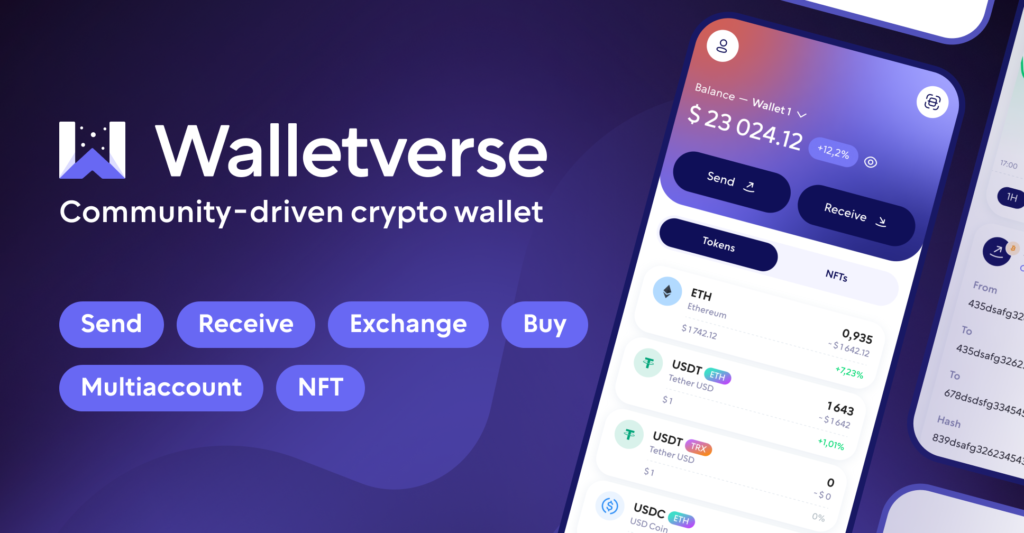
Walletverse is a mobile, self-custody crypto wallet built for both beginners and advanced users, with Web3 and DeFi features in one app.
Key highlights (2026):
multi-currency wallet supporting 700+ cryptocurrencies
self-custody with passcode and biometric authentication
dApps, multi-account support
buy crypto with Apple Pay, Google Pay, and credit or debit cards (GBP, JPY, USD, KZT, EUR, INR, CAD, AUD, and more)
staking for Solana, ETH, TRX
proprietary GasFree USDT system on TRON, pay fees in USDT without holding TRX
Google Play rating 4.8, App Store rating 5.0
Pros:
beginner-friendly mobile experience
strong everyday security options (passcode, biometrics)
broad coin support and Web3 access
convenient buying methods for new users
Cons:
mobile-only format (no desktop app)
Best for:
users who want one mobile app for storage, buying, swapping, and Web3


2. Trust Wallet
Trust Wallet positions itself as a self-custody multi-chain wallet supporting “millions of assets across 100+ blockchains,” plus dApp access.
Pros:
strong multi-chain coverage
Web3 and dApp access (mobile and extension options)
popular entry point for beginners
Cons:
card purchase fees can be high depending on region and provider
advanced DeFi actions can be confusing for first-time users
Best for:
users who want multi-chain support and frequent Web3 usage
3. Coinbase Wallet
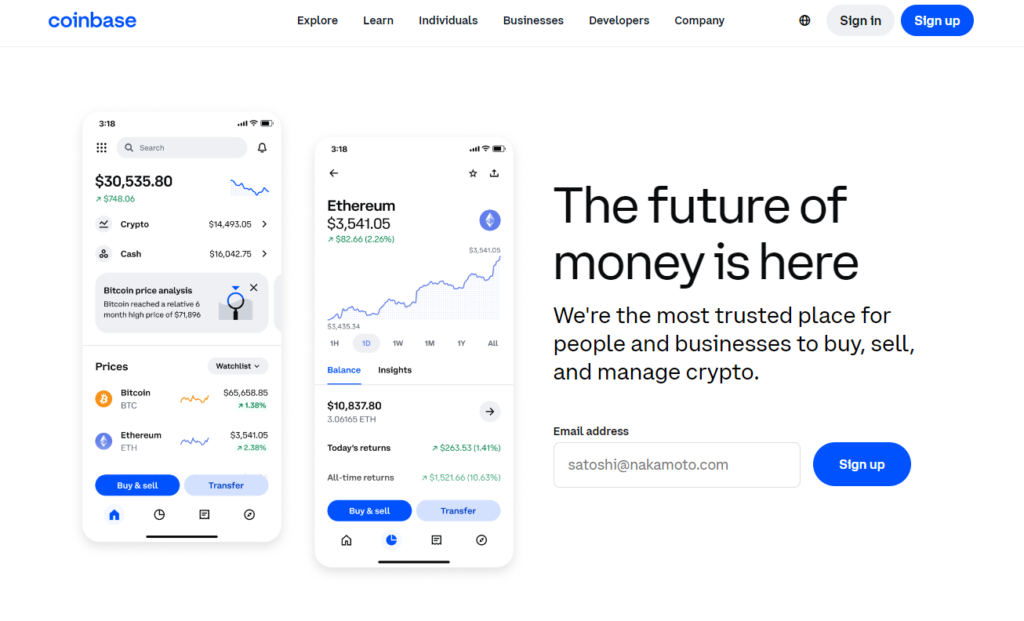
Coinbase’s self-custody wallet approach emphasizes recovery phrase ownership: the wallet generates a recovery phrase “only you have access to,” and Coinbase states it will not have access to it.
Pros:
beginner-friendly interface and onboarding
self-custody model with clear recovery phrase guidance
good bridge from “exchange user” to “self-custody user”
Cons:
some features depend on region and provider availability
swapping and onramp fees vary
Best for:
beginners who want a simple self-custody start and clear recovery instructions
4. Exodus Wallet
Exodus positions itself as a self-custodial wallet with multi-chain support and Web3 access (including a browser extension for Web3 usage).
Pros:
smooth user experience for beginners
works across devices (desktop and mobile)
Web3 wallet option for DeFi and NFTs
Cons:
advanced security controls differ from wallet to wallet, users should review settings carefully
swap and provider fees apply depending on usage
Best for:
users who want a simple interface plus desktop availability
5. MetaMask
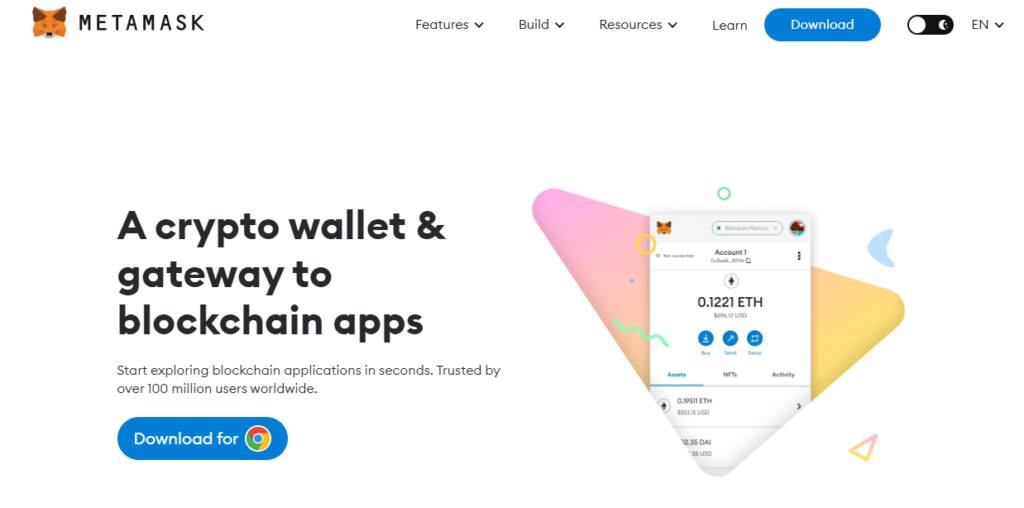
MetaMask is widely used for Ethereum and Web3. MetaMask describes itself as a self-custodial wallet for accessing blockchain apps, identities, and assets, available as both mobile app and browser extension.
Pros:
strong dApp compatibility across the Ethereum ecosystem
browser extension is convenient for DeFi and NFT use
self-custody model, keys stay with the user
Cons:
can feel complex for beginners
primarily focused on EVM networks, even though coverage is expanding
Best for:
users interacting with DeFi, NFTs, and Web3 apps on EVM networks
Supported Coins and Networks
A free wallet is only useful if it supports the coins you hold, and on the right networks. Here’s what each wallet from our list supports, according to the developers:
| Wallet | Supported coins and networks | Good to know |
|---|---|---|
| Walletverse | 700+ cryptocurrencies, including BTC, ETH, USDT, SOL, TRX and TON | GasFree USDT on TRON: pay the fee in USDT without holding TRX |
| Trust Wallet | 100+ blockchains and millions of tokens | Bitcoin, Ethereum, Solana and BNB Smart Chain in one app |
| Coinbase Wallet | 11 blockchains: Base, Bitcoin, Ethereum, Solana, BNB Chain, Arbitrum, Optimism, Polygon, Avalanche, Monad and Robinhood Chain | Focused on Base and EVM networks |
| Exodus | 50+ networks and 1,000,000+ assets | Desktop and mobile apps in sync |
| MetaMask | Ethereum and other EVM networks (Arbitrum, Optimism, Polygon, Base, Avalanche, BNB Smart Chain), plus Solana, Bitcoin and TRON | You can add custom EVM networks |
Before you choose, check the network, not just the coin. For example, USDT exists on TRON, Ethereum, BNB Smart Chain, Solana and other blockchains, and a wallet may support some of these networks but not others.
Swapping Crypto in Free Wallets
All five wallets let you swap one cryptocurrency for another right in the app, without opening an exchange account. The wallet itself is free, but swaps aren’t: every swap includes a network fee, and most also include a provider fee or a spread.
What a Swap Costs
- Network (gas) fee. Paid to the blockchain, not to the wallet. It depends on the network and how busy it is.
- Service or provider fee. For example, MetaMask charges a 0.875% service fee on swaps, and Exodus says its swap rates start from 0.5%. Other wallets show the provider fee in the quote.
- Spread and price impact. The larger your swap compared to the available liquidity, the worse the rate you get.
The easiest way to compare is to look at the final amount you’ll receive (“You receive” or “Minimum received”). It already includes all fees.
Swaps in Each Wallet
| Wallet | How swaps work |
|---|---|
| Walletverse | Built-in DEX aggregator with 10,000+ trading pairs |
| Trust Wallet | Swaps across 100+ blockchains; the quote shows the network fee and slippage before you confirm |
| Coinbase Wallet | In-app trading across supported networks; fees are shown in the quote |
| Exodus | Swaps between thousands of assets; rates from 0.5%, no separate Exodus transaction fee |
| MetaMask | Swap aggregator with a 0.875% service fee plus network fees |
How to Swap Safely
- Make sure you have enough of the network’s coin to pay the gas fee, for example ETH on Ethereum.
- Check that you’re swapping the right token. Scammers create fake tokens with the same name, so verify the contract address if in doubt.
- Keep slippage low for large or low-liquidity swaps.
- Review the final amount and the fee before confirming.
Are Free Crypto Wallets Safe?
A free wallet isn’t less secure than a paid one. Security depends on who controls the private keys and what protection the app offers. All five wallets in our list are self-custody: your private keys stay on your device, and only you can move your funds.
Security Features to Look For
- Self-custody and a recovery phrase that only you know.
- App lock with a passcode and biometrics.
- Scam and risk warnings before you send funds or sign a transaction.
- Hardware wallet support if you plan to store large amounts.
What Each Wallet Offers
- Walletverse: private keys are encrypted and stored on your device (AES encryption, ECDSA signing, BIP32/39/44 key derivation), passcode and biometric protection, plus built-in AML and KYT tools to check the risk of addresses and transactions.
- Trust Wallet: private keys never leave your device, a built-in Security Scanner, and backups with multi-device recovery.
- Coinbase Wallet: a recovery phrase that only you can access, and automatic scam token detection.
- Exodus: private keys encrypted on your device, passkey protection, and support for Trezor and Ledger hardware wallets.
- MetaMask: security alerts powered by Blockaid are on by default, and you can connect Ledger, Trezor and other hardware wallets.
How to Keep a Free Wallet Safe
- Download the wallet only from the official website, App Store or Google Play.
- Write down your recovery phrase on paper and store it offline. Never share it with anyone, including “support”.
- Double-check the recipient address and network before every transfer, and send a small test amount first.
- If you use dApps, regularly revoke token approvals you no longer need.
Types of Crypto Wallets and Typical Cost
Crypto wallets are essential tools for managing digital assets. They come in various types, each offering different levels of security and convenience. The main types of crypto wallets include hardware wallets and software wallets.
Hardware Wallets
Hardware wallets are physical devices that store your private keys offline, providing an extra layer of security. They are often considered the safest option for storing cryptocurrencies because they are immune to online hacking attempts.
- Cost: Hardware wallets generally cost between $100 and $200.
- Security: High security due to offline storage and protection against malware and phishing attacks.
- Examples: Ledger Nano S, Trezor Model T.
Software Wallets
Software wallets are digital applications that store your private keys on your device, such as a computer, smartphone, or online server. They are typically more convenient to use than hardware wallets but offer varying levels of security. Most often, these are free crypto wallets for Android and iOS devices.
- Cost: Most software wallets are free, making them accessible to beginners and advanced users.
- Types of Software Wallets:
- Mobile Wallets: These wallets are apps for your smartphone, offering easy access and convenience for everyday transactions. Examples include Walletverse and Trust Wallet.
- Desktop Wallets: These wallets are installed on your computer and provide a higher security level than mobile wallets. Examples include Exodus Wallet and Guarda Wallet.
- Web Wallets: These wallets are accessed through a web browser, allowing you to manage your crypto from any device with internet access. Examples include Coinbase Wallet and Guarda Wallet’s web version.
- Browser Extensions: These wallets integrate with your web browser, making interacting with decentralized applications (DApps) easy. Examples include MetaMask and Trust Wallet’s browser extension.
Paper Wallets
Paper wallets are physical pieces with your public and private keys printed on them. If generated and stored correctly, they are considered highly secure. Furthermore, they are free since you can simply use any paper.
- Cost: Free, except for printing and securely storing the paper.
- Security: Very high if kept safe from physical damage and unauthorized access.
Custodial vs. Non-Custodial Wallets
- Custodial Wallets: These wallets are managed by a third party, such as a cryptocurrency exchange. While they offer convenience and ease of use, you do not have full control over your private keys.
- Non-Custodial Wallets: These wallets give you full control over your private keys, ensuring that only you can access your funds. Examples include Walletverse, which offers a non-custodial, self-custody solution for managing your crypto assets.
Choosing the right type of crypto wallet depends on your security needs, convenience preferences, and the type of transactions you plan to conduct. Whether you opt for a hardware wallet for maximum security or a software wallet for ease of use, it’s crucial to understand the trade-offs and select the option that best suits your requirements.
FAQ
Most frequent questions and answers
They can be safe if they are reputable and you follow basic security hygiene (device security, backups, scam awareness). In self-custody wallets, your security depends heavily on how you protect your recovery phrase.
Yes. Usually not for installing the app, but you still pay blockchain network fees, and you may pay provider fees for swaps and card purchases.
A beginner-friendly mobile wallet with clear onboarding, simple UI, and strong security defaults is typically easiest. Many users start with Walletverse, Trust Wallet, or Coinbase Wallet depending on what features they need.
It depends on how you use crypto. If you want one mobile app for buying, swapping and storing 700+ coins, Walletverse is a strong choice. Trust Wallet covers the most blockchains, Exodus is convenient on desktop, and MetaMask is the go-to option for Ethereum dApps and DeFi.
Trust Wallet supports 100+ blockchains and millions of tokens, and Exodus lists 50+ networks and over a million assets. Walletverse supports 700+ cryptocurrencies. Whichever wallet you choose, check that it supports the network you need, not just the coin.


