


Best Tether (USDT) Wallets in 2026
Choosing the best USDT wallet in 2026 is not only about security. You also need to consider which Tether networks the wallet supports, how you plan to use USDT, who controls the private keys, and how network fees are paid.
For everyday mobile use and TRON-based USDT transfers, Walletverse is our top pick, particularly for users who want a self-custody wallet with multi-chain support and a GasFree option for USDT transfers on TRON.
Hardware wallets such as Ledger are better suited to long-term storage, while wallets such as MetaMask are more appropriate for users focused on DeFi and EVM applications.
This guide compares the best USDT wallets for different types of users and explains what to check before sending Tether on TRC20, ERC20, Solana, BNB Chain, or another supported network.
How We Ranked the Best USDT Wallets
There is no single USDT wallet that is best for everyone.
We evaluated wallets using the factors that matter most when managing Tether.
USDT Network Support
USDT is available on several blockchain networks. A good Tether wallet should clearly show which network you are using and reduce the risk of sending funds over an incompatible chain.
We gave additional consideration to support for widely used networks such as TRON and Ethereum, as well as broader multi-chain support.
Self-Custody and Security
We considered who controls access to the assets, how keys or recovery credentials are protected, and which additional safeguards are available.
Important security features may include:
private keys controlled by the user;
recovery phrases or alternative recovery systems;
PIN or passcode protection;
biometric authentication;
hardware-based signing;
transaction warnings.
USDT Transfer Experience
A good wallet should make receiving and sending USDT straightforward.
That means clearly identifying the selected network, showing the receiving address, displaying transaction fees before confirmation, and reducing unnecessary complexity around gas tokens.
Ease of Use
Beginners and experienced Web3 users have different requirements.
We considered wallet setup, interface clarity, network selection, transaction confirmation, asset management, and access to additional features such as swaps and dApps.
Additional Functionality
We also considered features such as:
buying crypto with fiat;
in-app swaps;
DEX access;
WalletConnect;
multiple wallet accounts;
staking for supported assets;
DeFi access.
Top 10 The Best Tether USDT Wallets
1. Walletverse — Best USDT Wallet for Everyday Mobile Use
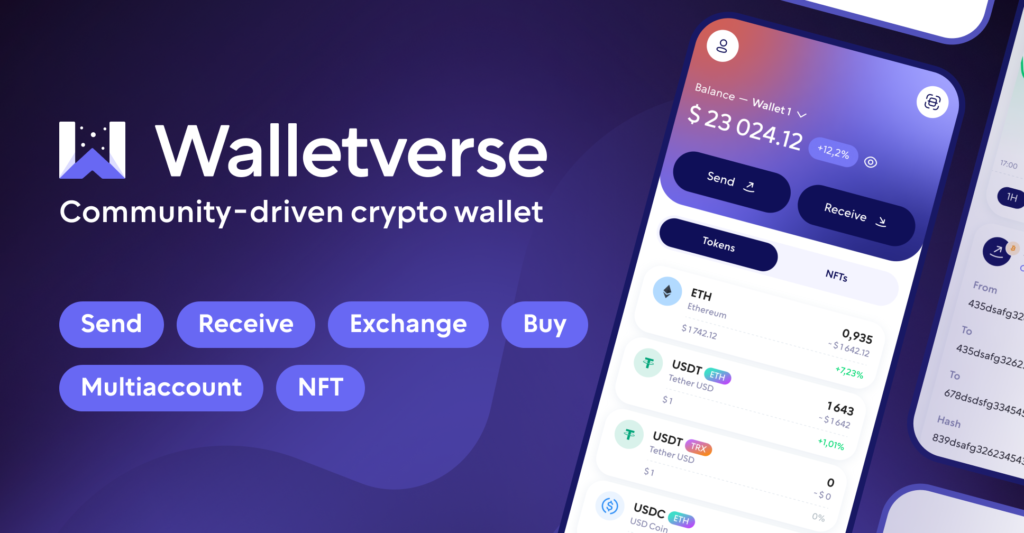
Walletverse is a mobile self-custody crypto wallet built for users who want to manage USDT alongside a broader cryptocurrency portfolio.
It supports multiple blockchain networks and combines self-custody with buying, sending, receiving, swaps, Web3 access, and multi-account management.
Why Walletverse Stands Out for USDT
Its most distinctive USDT feature is GasFree USDT on TRON.
Normally, users sending TRC20 USDT may need a separate TRX balance to cover network costs.
Walletverse simplifies this by offering a transaction model that allows eligible fees to be paid in USDT.
That removes one of the most common points of friction for everyday TRC20 users: receiving USDT successfully but then discovering that they cannot move it without first acquiring TRX.
Walletverse Security
Walletverse is self-custodial, meaning users retain control of wallet access rather than depositing their assets with a centralized exchange.
The app also provides passcode and biometric protection.
Walletverse Features
Walletverse allows users to:
manage USDT and other crypto assets;
create multiple wallet accounts;
buy supported cryptocurrencies;
swap supported assets;
access Web3 services;
connect to dApps;
send and receive crypto from a mobile device.
Best For
Walletverse is particularly suitable for users who:
primarily manage crypto from a smartphone;
regularly send or receive USDT;
use TRC20;
want self-custody;
hold multiple cryptocurrencies;
want swaps and Web3 functionality in one application.
Pros
Self-custody
GasFree USDT option on TRON
Mobile-first interface
Broad cryptocurrency support
Passcode and biometric protection
Multi-account support
Built-in crypto buying and exchange options
Web3 and dApp access
Cons
Mobile-only
Users looking for fully offline cold storage may prefer a hardware wallet


2. Ledger — Best USDT Hardware Wallet for Long-Term Storage

Ledger is one of the best-known hardware wallet ecosystems.
Unlike a normal mobile hot wallet, a hardware wallet is designed to keep sensitive signing information isolated from an always-online device.
This makes Ledger particularly suitable for users who hold significant amounts of USDT for long periods and do not need to move the funds every day.
Best For
Ledger is best suited to:
long-term USDT storage;
larger portfolios;
users who prioritize cold-storage security.
Pros
Hardware-based security
Suitable for long-term holdings
Broad cryptocurrency ecosystem
Physical confirmation of transactions
Cons
Requires purchasing hardware
Less convenient than a mobile wallet for frequent transfers
Users remain responsible for protecting recovery information
3. Trezor — Best Established Hardware Alternative
Trezor is another established hardware wallet manufacturer.
Its main advantage is keeping transaction signing separate from normal everyday online activity.
It is particularly relevant to users whose priority is long-term storage rather than frequent USDT payments.
Best For
Long-term crypto holders who prefer a hardware wallet.
Pros
Hardware-based wallet
Strong focus on self-custody
Established security ecosystem
Suitable for larger long-term portfolios
Cons
Costs more than free software wallets
Less convenient for everyday USDT transfers
Exact USDT network support should be checked before choosing a device
4. Exodus — Best USDT Wallet for Beginners

Exodus is known for an accessible interface and support across mobile and desktop environments.
It is a useful option for people who want to manage a portfolio visually and prefer using a computer as well as a smartphone.
Best For
beginners;
desktop users;
users managing diversified crypto portfolios.
Pros
User-friendly interface
Desktop and mobile applications
Multi-asset management
Built-in exchange functionality
Cons
Software-wallet security depends on protecting recovery credentials
Some integrated services may cost more than using external platforms directly
5.Trust Wallet — Best Multi-Chain Mobile Alternative

Trust Wallet is a popular self-custody mobile wallet designed for users who hold assets across several blockchain ecosystems.
Its broad network support makes it useful for people who receive USDT through different networks rather than sticking to a single blockchain.
Trust Wallet also provides access to Web3 applications and other crypto functionality from a mobile interface.
Best For
Users who want a widely used multi-chain mobile wallet.
Pros
Self-custody
Broad blockchain support
Mobile interface
Web3 and dApp functionality
Suitable for multi-asset portfolios
Cons
Network selection can still be confusing for inexperienced users
Hot-wallet security depends heavily on device and recovery-phrase security
6. MetaMask — Best USDT Wallet for DeFi Users

MetaMask is one of the most widely used gateways to Ethereum and Web3 applications.
For users whose USDT activity is primarily connected to decentralized exchanges, lending protocols and other DeFi applications, MetaMask remains a strong option.
It is available as both a browser-based wallet and a mobile application.
Best For
MetaMask is especially useful for:
Ethereum users;
DeFi;
dApps;
advanced Web3 activity.
Pros
Deep dApp integration
Strong Ethereum and EVM ecosystem
Browser and mobile access
Hardware wallet connectivity
Cons
More complex for beginners
Popular wallets are frequent phishing targets
Users must carefully check transactions and approvals
7. TronLink — Best Wallet for Dedicated TRON Users
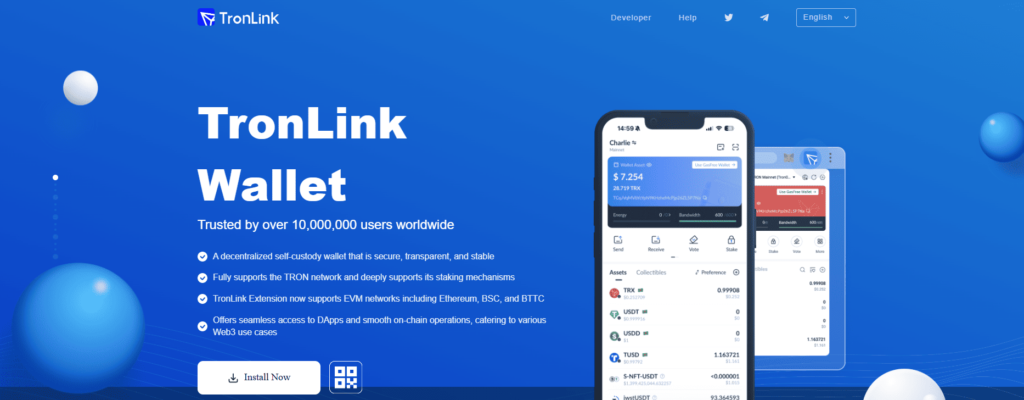
TronLink is designed around the TRON ecosystem.
For users whose primary activity consists of TRX, TRC20 tokens and TRON dApps, a TRON-focused wallet can provide more specialized functionality than a general multi-chain wallet.
Best For
TRON ecosystem users;
TRC20 token management;
TRON dApps;
advanced TRON functionality.
Pros
TRON-focused functionality
TRC20 support
Mobile and browser options
Access to TRON applications
Cons
Less useful for users who need broad cross-chain portfolio support
TRON network mechanics may be confusing for beginners
8. SafePal — Best Hot and Cold Wallet Ecosystem

SafePal combines software wallet functionality with optional hardware wallet products.
That makes it useful for users who want an everyday mobile interface while retaining the option to move longer-term holdings into hardware-backed storage.
Best For
Users who want both mobile convenience and hardware-wallet options.
Pros
Software and hardware ecosystem
Multi-chain support
Web3 functionality
Flexible hot and cold storage setup
Cons
Full security benefits require additional hardware
More complex than a basic mobile wallet
9. OneKey — Best for Security-Focused Multi-Chain Users

OneKey provides both software and hardware wallet products and focuses heavily on transaction security and multi-chain access.
It can suit more experienced users who want additional security tooling without giving up access to Web3.
Best For
Security-conscious multi-chain users.
Pros
Software and hardware options
Multi-chain functionality
Security-focused tools
Web3 support
Cons
More advanced features may create a steeper learning curve for beginners
10. Zengo — Best Alternative Recovery Model

Zengo takes a different approach to wallet security by using Multi-Party Computation rather than relying entirely on a traditional single seed-phrase model.
This can appeal to users concerned about losing or exposing a conventional recovery phrase.
Best For
Users looking for a mobile wallet with an alternative recovery and security architecture.
Pros
MPC security approach
Beginner-friendly mobile experience
Multi-network functionality
Alternative recovery model
Cons
The security model may not appeal to users who specifically want a traditional seed phrase
Advanced users may prefer conventional key-management systems
Best USDT Wallets by Use Case
Best USDT Wallet for TRC20
Walletverse is particularly attractive for TRC20 users because of its GasFree USDT functionality on TRON.
TronLink is another strong choice for users who want deeper TRON-specific functionality.
Best USDT Wallet for Long-Term Storage
A hardware wallet such as Ledger or Trezor is generally more appropriate for users who prioritize offline protection over convenience.
Best USDT Wallet for DeFi
MetaMask is a strong choice for users interacting primarily with Ethereum and EVM-based decentralized applications.
Best USDT Wallet for Beginners
Walletverse and Exodus both provide comparatively simple interfaces, although the better choice depends on whether you prefer mobile-only use or desktop access.
Best Multi-Chain USDT Wallet
Users receiving Tether over several networks should prioritize a wallet that clearly identifies network versions and supports the chains they actually use.
Walletverse and Trust Wallet are two mobile-first options worth considering.
FAQ
There is no single best wallet for every user. For mobile self-custody and everyday USDT management, Walletverse is a strong option. Its GasFree USDT feature is especially useful for users transferring Tether on TRON. For long-term cold storage, a hardware wallet such as Ledger may be more appropriate.
Walletverse is particularly useful for users who want a multi-chain mobile wallet and the ability to use GasFree USDT functionality on TRON.
Traditional TRON transactions require network resources or TRX to cover transaction costs. Walletverse also offers a GasFree USDT option designed to allow eligible TRON USDT transfers to pay the fee in USDT instead of requiring users to maintain a separate TRX balance.
It depends on where you intend to send and use the funds. TRON is widely used for transfers, Ethereum is important for DeFi, and other supported networks can provide different combinations of ecosystem access and transaction costs. Compatibility with the receiving platform should always come before fee optimization.


