


Buy Blast (BLAST) with USD, EUR and Other Fiat Currencies
The Layer-2 landscape on Ethereum continues to evolve, with innovative solutions emerging to address scalability and user engagement. Among these, Blast has distinguished itself as the first Ethereum Layer-2 offering native yield for ETH and stablecoins, fundamentally changing how users interact with L2 ecosystems. Its native token, BLAST, serves as the governance mechanism for this rapidly growing platform. For investors and DeFi enthusiasts seeking exposure to this yield-generating ecosystem, acquiring BLAST with traditional currency is the essential first step. This guide provides a comprehensive overview of purchasing Blast using USD, EUR, and other fiat currencies through secure, user-friendly platforms.
Prepared by ilink, a FinTech and Web3 software developer with 13 years of experience and completed projects worldwide.
What is Blast (BLAST)?
Blast is an Ethereum Layer-2 scaling solution that launched in 2024 with a unique value proposition: native yield generation for ETH and stablecoins . Unlike traditional L2s where bridged assets sit idle, Blast automatically generates yield for users. ETH deposited into Blast earns yield through L1 ETH staking, while the platform’s auto-rebasing stablecoin USDB generates yield from protocols like MakerDAO’s on-chain T-bill protocol. This innovation effectively makes Blast the first L2 where user balances automatically grow over time.
BLAST serves as the native governance token for the Blast ecosystem. Token holders can participate in the Blast DAO, voting on proposals that shape the future development of the platform, including protocol upgrades, fee structures, and ecosystem funding initiatives.
From a tokenomics perspective, BLAST has a fixed maximum supply of 100 billion tokens. As of early March 2026, approximately 56.4 billion tokens (56.4% of total supply) are in circulation . The remaining tokens are subject to a structured vesting schedule extending into 2028.
Where Can I Buy Blast (BLAST) With Cash: 10 Best Crypto Wallets
To acquire BLAST with fiat currency, you need a secure and versatile crypto wallet that bridges traditional payment methods with blockchain technology. Since BLAST operates as an ERC-20 token on the Ethereum network, wallet compatibility with Ethereum is essential. Here are 10 of the best wallets to consider for buying, storing, and managing your Blast tokens.
1. Walletverse
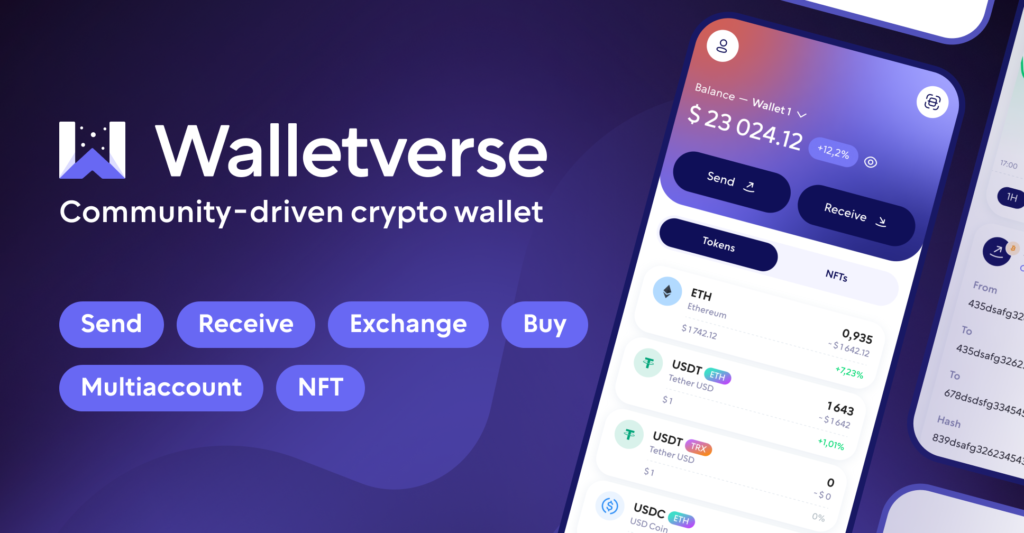
Walletverse is the ultimate mobile crypto wallet designed to simplify DeFi and Web3 access for both beginners and advanced users. As a multi-currency, non-custodial wallet, it supports over 700 cryptocurrencies, including all ERC-20 tokens like BLAST. You can buy BLAST directly using familiar payment methods like Apple Pay, Google Pay, or credit/debit cards, with support for a wide range of fiat currencies including USD, EUR, GBP, CAD, AUD, JPY, INR, KZT, and more. The app features passcode and biometric authentication for top-tier security and is community-driven with a 4.8 rating on Google Play and a perfect 5.0 on the App Store. A standout feature is its proprietary GasFree USDT Transaction System, which allows users to transfer USDT on the TRON blockchain without needing TRX for fees, lowering the barrier for new users. It also supports staking for assets like Solana, ETH, and TRX, and is fully AML/KYC compliant while maintaining non-custodial principles.
- Pros: GasFree USDT transfers, support for 700+ coins including all ERC-20 tokens, excellent mobile ratings, multiple fiat on-ramps (USD, EUR, GBP, JPY, INR, CAD, AUD, KZT), strong security with biometric authentication.
- Cons: Currently available as a mobile-only application.



2. MetaMask

MetaMask is the leading Ethereum Virtual Machine (EVM) wallet, available as a browser extension and mobile app. As the most widely used wallet for Ethereum-based tokens, it offers seamless interaction with decentralized applications and complete control over private keys. Since BLAST is an ERC-20 token, MetaMask provides direct access to the Blast ecosystem through custom RPC configuration.
- Pros: Unmatched dApp compatibility, full user control over private keys, supports all ERC-20 tokens including BLAST, trusted by millions of users.
- Cons: Primarily focused on EVM chains; integrated fiat purchases require third-party services within the “Buy” feature.
3. Trust Wallet

Trust Wallet is a popular mobile wallet supporting a massive range of assets across multiple chains, including all Ethereum-based tokens. It includes a built-in Web3 browser for dApp interaction and supports fiat purchases via third-party partners.
- Pros: Multi-chain support, user-friendly interface, built-in Web3 browser, supports buying crypto with fiat via partners.
- Cons: As a hot wallet, security relies entirely on user device safety.
4. Ledger Nano X

For long-term BLAST holders, the Ledger Nano X hardware wallet provides bank-grade security by keeping private keys offline. It connects via Bluetooth to Ledger Live, which supports Ethereum and all ERC-20 tokens.
- Pros: Highest level of security for cold storage, supports all ERC-20 tokens including BLAST, Bluetooth connectivity for mobile use.
- Cons: Requires physical device purchase; less convenient for frequent trading.
5. Coinbase

Separate from the Coinbase exchange, this self-custody wallet supports hundreds of thousands of tokens and offers a seamless way to buy crypto with fiat. It provides easy access to DeFi protocols and complete control over private keys.
- Pros: High security, easy connection to Coinbase exchange, supports multiple blockchains including Ethereum, user-friendly interface.
- Cons: The interface can be slightly complex for absolute beginners.
6. Exodus

Exodus is a multi-platform desktop and mobile wallet known for its elegant design and ease of use. It supports a wide array of assets including all ERC-20 tokens and includes a built-in exchange feature for swapping between cryptos.
- Pros: Intuitive user interface, built-in exchange, supports Trezor hardware wallet integration, beautiful design.
- Cons: Not fully open-source; built-in exchange fees can be higher than some alternatives.
7. Guarda Wallet

Guarda is a versatile, non-custodial wallet available on web, desktop, and mobile. It supports over 50 blockchains including Ethereum and offers multiple built-in fiat gateways for buying crypto directly with a card or bank transfer.
- Pros: Multi-platform availability, no registration required for basic functions, strong support for staking and exchanges.
- Cons: The web version requires entering a seed phrase, posing risks on shared computers.
8. Crypto.com DeFi Wallet

This non-custodial wallet integrates seamlessly with the Crypto.com exchange ecosystem. It gives users full control over their private keys while providing easy access to fiat on-ramps and supports multiple chains including Ethereum.
- Pros: Strong integration with the Crypto.com platform, supports 30+ blockchains, allows direct fiat purchases.
- Cons: The app interface can feel feature-dense for absolute beginners.
9. SafePal

Backed by Binance, SafePal offers both software and hardware wallet solutions. The mobile app features a built-in exchange and direct fiat purchase options, making it easy to acquire BLAST on the Ethereum network.
- Pros: Affordable hardware wallet option, feature-rich software app, supports multiple chains including Ethereum.
- Cons: The ecosystem is newer compared to more established brands like Ledger.
10. Tangem Wallet
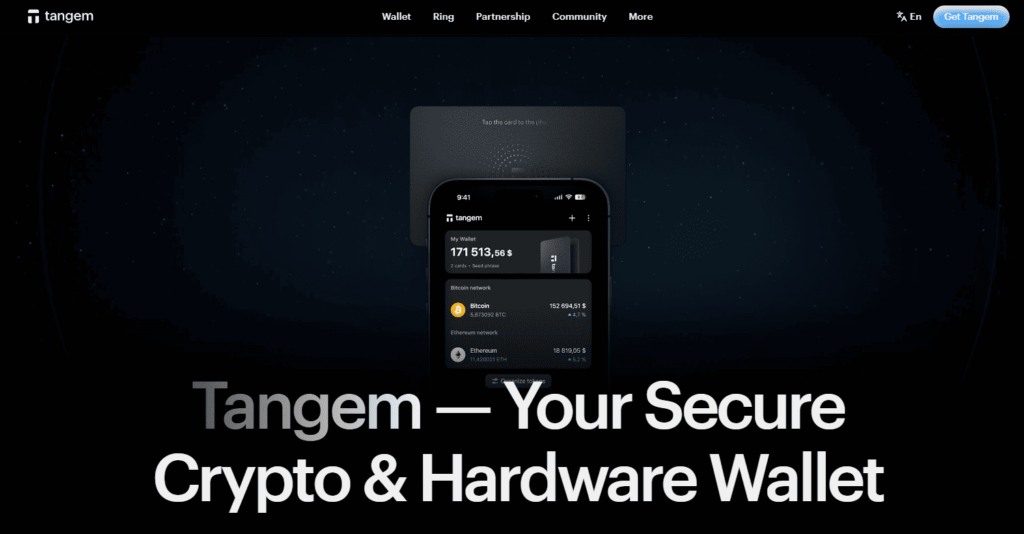
Tangem is a hardware wallet solution in the form of a card, supporting multiple cryptocurrencies including all ERC-20 tokens like BLAST. It offers non-custodial storage with the private key stored on the card’s secure element.
- Pros: Hardware-level security in a card form factor, no battery or charging needed, supports Ethereum and BLAST, no KYC required for basic wallet functions.
- Cons: Requires NFC-enabled phone; less convenient for frequent DeFi interactions.
Buy BLAST with Apple Pay
Apple Pay provides a seamless and secure way to purchase digital assets by combining convenience with biometric authentication. Using Apple Pay to buy BLAST eliminates the need to manually enter card details for every transaction, as the payment is authenticated with Face ID or Touch ID. In a modern wallet like Walletverse, you simply select BLAST, choose Apple Pay as your funding source, and the equivalent value in your chosen fiat currency (like USD or EUR) is instantly converted into BLAST tokens, credited directly to your self-custody wallet. This method is favored for its speed and the added layer of security it provides for your financial data, making it an excellent choice for first-time buyers and experienced investors alike.
Buy BLAST with Google Pay
Google Pay offers Android users a streamlined and secure contactless payment solution, acting as a bridge between your bank account and the crypto world. When you opt to buy Blast (BLAST) using Google Pay within apps like Walletverse, you are leveraging Google’s tokenized payment system, which means your actual card numbers are not shared with the merchant, reducing fraud risk. The process is straightforward: select Google Pay, confirm the transaction on your device, and the BLAST tokens will be sent directly to your wallet address, ready for participation in the Blast ecosystem, including governance voting and yield-generating activities.
How to Buy Blast (BLAST) with fiat?
Buying BLAST with regular money is simple through Walletverse. Just follow these steps.
- Download Walletverse from Google Play Store or Apple App Store.
- Create a new wallet and securely store your recovery phrase offline. Enable passcode and biometric login.
- Tap “Buy Crypto” on the main screen.
- Search for “BLAST” and select BLAST.
- Choose your currency like USD or EUR and enter the amount you want to spend.
- Pick Apple Pay, Google Pay, or your credit card as the payment method.
- Review the details including fees and the exchange rate.
- Confirm with your fingerprint or face scan. Your BLAST appears in your wallet instantly.
Blast (BLAST) represents an innovative evolution in Ethereum Layer-2 technology, offering users native yield on ETH and stablecoins while maintaining the security and decentralization of the Ethereum mainnet . With its fixed supply of 100 billion tokens, community-focused allocation of 50%, and structured vesting schedules extending through 2028, the tokenomics are designed for long-term ecosystem sustainability . While the token has experienced significant price volatility since its June 2024 launch, from its ATH of $0.0286 to its current trading range, the platform’s unique value proposition and growing ecosystem of dApps continue to attract users and developers . The path to owning BLAST is clear and secure with modern self-custody wallets. By using a solution like Walletverse, you can seamlessly convert your fiat currency into BLAST while maintaining absolute control over your private keys and benefiting from innovative features like GasFree USDT transactions.
Data current as of March 2026.
FAQ
Most frequent questions and answers
BLAST is the governance token for the Blast L2 ecosystem, which offers native yield on ETH and stablecoins. Its value is tied to network adoption, TVL growth, and developer activity, but it operates in the competitive L2 sector with significant volatility and ongoing token unlocks through 2028.
You can buy BLAST with USD using a secure mobile wallet like Walletverse. Simply download the app, complete KYC verification, select “Buy,” choose BLAST, and pay with Apple Pay, Google Pay, or a credit/debit card.
You need a wallet that supports the Ethereum network, as BLAST is an ERC-20. Walletverse is an excellent choice as it is non-custodial, supports 700+ cryptocurrencies, and offers built-in fiat purchasing for BLAST.
BLAST tokens can be purchased through fiat on-ramps in multi-currency wallets or on centralized exchanges including HTX, BingX, and various Korean exchanges. For a direct, all-in-one experience, you can use a wallet like Walletverse to buy BLAST instantly with your bank card.
The cheapest method involves comparing fees. Using a wallet like Walletverse with bank transfer options often incurs lower fees than credit cards. Additionally, with approximately 56.4% of tokens currently circulating and remaining unlocks scheduled through 2028, monitoring unlock dates can help optimize entry timing.


