


Buy ConstitutionDAO (PEOPLE) with USD, EUR and Other Fiat Currencies
ConstitutionDAO (PEOPLE) remains one of the best-known examples of how crypto communities can organize around a shared mission. Even though the original project ended in 2021, PEOPLE is still actively traded and continues to attract attention from traders, meme-coin buyers, and users interested in DAO history.
If you want to buy PEOPLE with USD, EUR, GBP, CAD, INR, AUD, JPY, KZT, or other fiat currencies, the easiest route is usually a wallet with a built-in fiat on-ramp plus an Ethereum-token swap path. In practice, that means buying a supported asset such as ETH or USDT and then swapping it for PEOPLE on Ethereum when direct fiat support for PEOPLE is unavailable in your region. PEOPLE is an Ethereum-based token, so wallet support for Ethereum and ERC-20 assets is the main requirement.
This article was prepared by ilink, a FinTech and Web3 software developer with 13 years of experience and completed projects worldwide.
What Is ConstitutionDAO (PEOPLE)?
ConstitutionDAO was launched in November 2021 as a decentralized crowdfunding effort to buy a rare copy of the U.S. Constitution at a Sotheby’s auction. Reuters reported that the winning bid was $41 million, with the final price reaching $43.2 million including fees. ConstitutionDAO lost the auction, and the original project later shut down.
That history is exactly why PEOPLE still gets attention. The official ConstitutionDAO website later called the project a “beautiful experiment in a single-purpose DAO,” while Coinbase describes PEOPLE as an “experiment in the realm of decentralized autonomous organizations.” Binance Research likewise summarizes ConstitutionDAO as a crowdfunding movement that originally tried to buy a first-edition copy of the U.S. Constitution.
From a technical perspective, PEOPLE operates on Ethereum, which means it can be held in wallets that support Ethereum tokens. Coinbase lists ConstitutionDAO with a current supply of about 5.06 billion PEOPLE, while CoinGecko shows a circulating supply of about 5.1 billion and a market cap a little above $33 million on April 13, 2026. That gives PEOPLE a relatively small-cap profile compared with large-cap crypto assets, which usually means higher volatility and faster sentiment-driven moves.
One unusual detail is that the original ConstitutionDAO redemption contract still describes a redemption path of 1 ETH for 1,000,000 PEOPLE, subject to gas costs, because the original project was wound down rather than converted into a traditional operating DAO. That historical structure is part of why PEOPLE is often discussed as both a meme-driven token and a landmark Web3 community artifact.
Where Can I Buy ConstitutionDAO (PEOPLE) with Cash? 10 Best Crypto Wallets
1. Walletverse
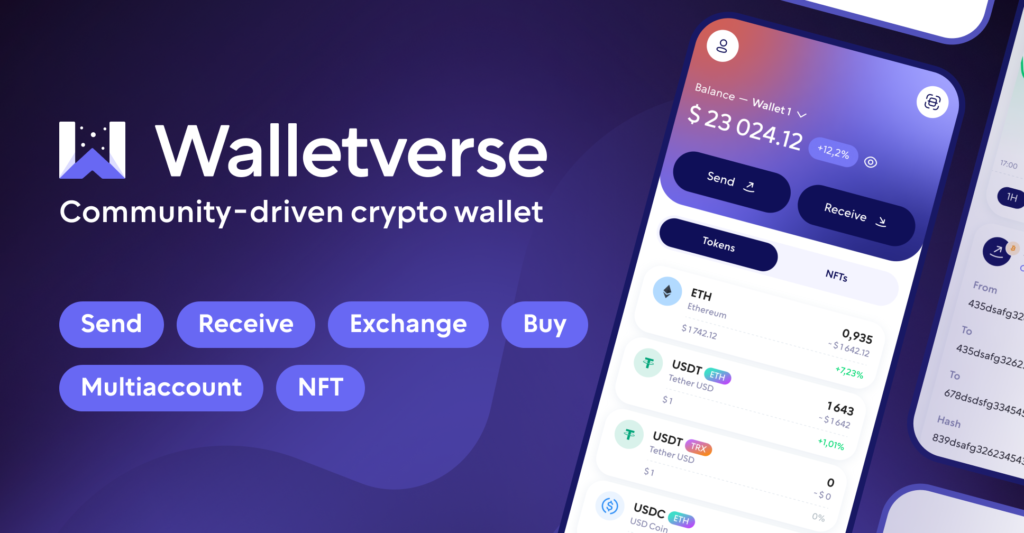
Walletverse is a mobile-first, non-custodial wallet built for users who want a straightforward way to buy, store, send, and swap crypto inside one app. According to its Google Play listing and Walletverse site materials, it supports 1000+ cryptocurrencies, multi-wallet functionality, DEX swaps, fiat purchases through multiple providers, dApp access, and security features such as passcode and biometric authentication. Walletverse also highlights its GasFree USDT on TRON feature, which removes the need to hold TRX for certain USDT transfers.
For PEOPLE buyers, Walletverse is especially practical because it is mobile, self-custodial, and designed around quick fiat onboarding plus token management. If a direct PEOPLE purchase is not available through a local on-ramp, buying ETH or USDT and swapping into PEOPLE is the most realistic route.
Pros
- Mobile-first and easy for beginners;
- Non-custodial with passcode and biometric security;
- Supports fiat purchases, swaps, dApps, and multiple accounts;
- Useful for both simple buys and longer-term self-custody.
Cons
- Mobile-only approach may be limiting for desktop-first users;
- Direct fiat availability for specific tokens can vary by provider and region.



2. MetaMask

MetaMask is still one of the most widely used wallets for Ethereum and EVM-based assets. Its official buy-crypto pages show support for buying crypto through providers that can offer debit/credit cards, Apple Pay, Google Pay, PayPal, wire transfer, Venmo, and bank transfer, depending on region. MetaMask also supports selecting the token and the network during the purchase flow.
For PEOPLE, MetaMask is a strong option if you are comfortable buying ETH first and then swapping to PEOPLE on Ethereum.
Pros
- Excellent for Ethereum and ERC-20 assets;
- Strong Web3 and DeFi compatibility;
- Broad set of fiat payment methods in supported regions.
Cons
- Less beginner-friendly than simpler mobile wallets;
- Network fees on Ethereum can be noticeable during busy periods.
3. Trust Wallet

Trust Wallet positions itself as a self-custody Web3 wallet with support for 10M+ assets across 100+ blockchains, plus built-in buy, sell, swap, earn, NFT, and dApp features. Its official pages also note support for debit/credit cards, mobile payments, and bank transfers through integrated providers.
That makes it a practical choice for buying ETH or another supported asset with fiat and then moving into PEOPLE.
Pros
- Strong multi-chain support;
- Easy mobile experience;
- Good mix of fiat on-ramp, swaps, and Web3 access.
Cons
- Large feature set can feel crowded to brand-new users;
- Fiat options depend on third-party providers and jurisdiction.
4. TokenPocket
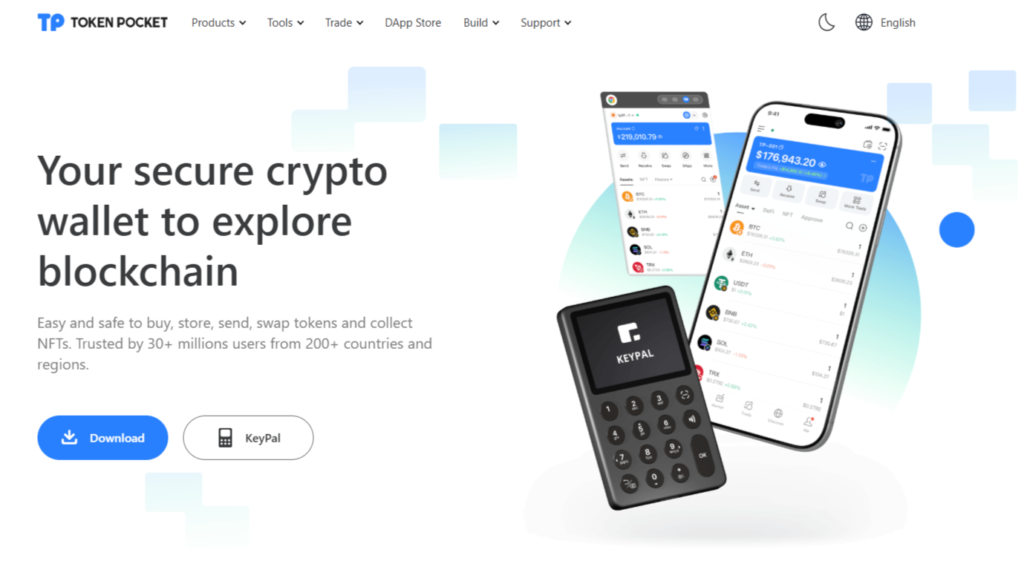
TokenPocket is a long-running Web3 wallet that emphasizes mobile DeFi access, token management, and wallet tools. Its official pages say users can buy crypto with credit cards, and its help center shows fiat purchase flows for assets through the wallet. The platform also describes itself as a secure wallet for buying, storing, sending, and swapping tokens.
For PEOPLE, TokenPocket makes sense if you want an on-chain wallet with broad Web3 tooling.
Pros
- Strong Web3 and DeFi orientation;
- Built-in buy and swap functionality;
- Good for users who want more than just basic storage.
Cons
- UX can be less intuitive for complete beginners;
- Best for users already comfortable with Web3 terminology.
5. Zengo

Zengo uses an MPC-based security model instead of a traditional seed phrase and promotes itself as a self-custodial wallet with millions of customers. Its buy pages list credit/debit card, bank transfer, SEPA, Apple Pay, Google Pay, and PayPal for supported regions, and Zengo says it supports Ethereum plus thousands of tokens built on Ethereum.
Zengo is a good choice if you want a simpler recovery model and easy fiat onboarding.
Pros
- Beginner-friendly security model;
- Strong payment-method coverage;
- Good fit for mobile users who want fewer setup risks.
Cons
- Less customizable than some advanced wallets;
- Power users may prefer classic seed-based wallets.
6. Coinbase Wallet

Coinbase Wallet is useful for users who want a simpler bridge between a mainstream exchange ecosystem and self-custody. Coinbase’s help pages say users can connect the wallet to a Coinbase account to buy crypto or transfer crypto into the wallet, and Coinbase Wallet supports ETH and other supported assets for Web3 use.
For PEOPLE, the most practical flow is often to acquire ETH through Coinbase or another supported path and then hold or swap inside the wallet ecosystem.
Pros
- Friendly for users already in the Coinbase ecosystem;
- Good beginner-to-intermediate UX;
- Easy path from exchange balance to self-custody.
Cons
- Less flexible for advanced DeFi users than some Ethereum-native wallets;
- Direct in-wallet fiat options depend on linked services and region.
7. Exodus

Exodus supports Ethereum and ERC-20 assets across desktop, mobile, and browser extension formats. Its Ethereum wallet pages say users can store, manage, or swap ETH and ERC-20 tokens, and its buy-crypto support pages list credit/debit cards, bank transfers, PayPal, Apple Pay, and Google Pay through integrated providers.
That makes Exodus a convenient choice if you want a polished interface and cross-device access.
Pros
- Clean interface across desktop and mobile;
- Good ERC-20 support;
- Multiple fiat purchase methods in supported regions.
Cons
- Some advanced DeFi users prefer more configurable wallets;
- Pricing and provider options can vary by country.
8. Guarda

Guarda is a multi-platform wallet with web, desktop, mobile, and extension support. Its official pages say it supports 50+ blockchains and thousands of tokens, including Ethereum assets, and allows users to buy crypto with credit/debit card, with Apple Pay and Google Pay shown among supported payment options on some buy pages. Guarda also has a dedicated ERC-20 guide.
For PEOPLE, Guarda works best if you want a broad-asset wallet and simple fiat-to-ETH access.
Pros
- Multi-platform and flexible;
- Good Ethereum and ERC-20 compatibility;
- Straightforward buy, exchange, and storage features.
Cons
- Interface is less modern than some mobile-first competitors;
- Token buying options depend on provider coverage.
9. Atomic Wallet

Atomic Wallet is a non-custodial wallet with built-in crypto purchases through payment partners. Its buy pages say users can buy crypto with USD, EUR, and local currencies worldwide, using bank cards and other payment methods depending on provider support. Atomic also highlights Ethereum wallet support and broad multi-asset coverage.
Atomic is a practical option if you want a simple wallet for buying ETH and moving into PEOPLE.
Pros
- Easy fiat purchase flow for mainstream users;
- Non-custodial design;
- Good multi-asset coverage.
Cons
- Fewer advanced Web3 tools than more DeFi-native wallets;
- Fiat and sell features are partner-dependent.
10. SafePal

SafePal offers both software and hardware wallet options, which is useful if you want to start with mobile convenience and later add hardware security. SafePal says it supports Ethereum and all ERC-20 tokens, plus built-in buy, sell, and trade features across app, extension, and hardware formats.
For PEOPLE, SafePal is a strong choice if security is a top priority.
Pros
- Strong security positioning with hardware options;
- Supports Ethereum and ERC-20 assets;
- Useful for users who may want to upgrade to hardware storage.
Cons
- Can feel more advanced than beginner-first wallets;
- Best experience may involve more setup than app-only alternatives.
Buy PEOPLE with Apple Pay
The easiest Apple Pay route is usually not a direct fiat purchase of PEOPLE itself. In most wallets, the practical flow is:
- Open a wallet that supports Apple Pay and Ethereum-token storage;
- Buy ETH or sometimes USDT/USDC with Apple Pay;
- Swap that asset into PEOPLE on Ethereum.
That approach works because PEOPLE is an Ethereum token, while wallet fiat on-ramp providers more often support major assets first. MetaMask, Exodus, and Zengo all explicitly list Apple Pay support on relevant buy-crypto pages, and Walletverse materials also state that users can buy crypto with Apple Pay and then manage or swap assets in-app.
For Walletverse users, the Apple Pay path is straightforward: fund the wallet with a supported asset through its fiat partners, then swap into PEOPLE if the direct pair is not offered by your local provider. This is usually the cleanest mobile-first route for users who want to stay inside one wallet flow.
Buy PEOPLE with Google Pay
Google Pay follows the same logic. Instead of assuming that every provider lets you purchase PEOPLE directly with fiat, it is safer to think of Google Pay as the payment rail used to acquire a supported base asset first.
MetaMask, Exodus, and Zengo all mention Google Pay support through integrated buy providers, while Walletverse also states that Google Pay is available for crypto purchases in its app ecosystem. Once funds arrive in your wallet, you can swap into PEOPLE on Ethereum.
That is also one of the cheapest and most flexible ways to buy smaller Ethereum tokens in practice: use a familiar payment method to buy a liquid asset, then convert it inside a self-custody wallet.
How to Buy ConstitutionDAO (PEOPLE) with Fiat
Here is the most practical step-by-step method:
1. Choose a Wallet That Supports Ethereum Tokens
Pick a wallet such as Walletverse, MetaMask, Trust Wallet, Exodus, or another option from the list above. PEOPLE is an Ethereum token, so ERC-20 support matters first.
2. Complete the Wallet Setup
Create your wallet, back up your recovery phrase if the wallet uses one, and enable any security features such as passcode or biometrics. Walletverse, for example, emphasizes self-custody plus passcode and biometric protection.
3. Buy ETH, USDT, or Another Supported Base Asset with Fiat
Use your preferred fiat method: card, bank transfer, Apple Pay, Google Pay, or local on-ramp. The best option depends on your region and wallet provider.
4. Swap into PEOPLE
Once the base asset lands in your wallet, swap it into PEOPLE on Ethereum. This is often the easiest way to reach smaller tokens that may not appear as direct fiat-purchase options.
5. Store or Transfer PEOPLE
After the swap, you can hold PEOPLE in your wallet, send it to another Ethereum address, or move it to another self-custody wallet if you prefer.
A practical note: because PEOPLE is on Ethereum, your total cost can include network fees, spread, and fiat-provider fees. For smaller purchases, it is worth comparing the total cost before confirming.
Conclusion
ConstitutionDAO (PEOPLE) is no longer an active mission-driven DAO in the original sense, but it still holds an unusual place in crypto history. It began as a record-breaking crowdfunding experiment, failed to win the Sotheby’s auction, and then lived on as a tradeable Ethereum token with a strong narrative attached to it. That mix of history, meme energy, and exchange liquidity is why PEOPLE still attracts buyers today.
For most users, the best way to buy PEOPLE with USD, EUR, or other fiat currencies is through a wallet that supports Ethereum tokens and has a built-in fiat on-ramp. Walletverse is especially well suited to that flow if you want a mobile, self-custodial option with easy buying, swapping, and day-to-day token management.
FAQ
Most frequent questions and answers
PEOPLE is best understood as a high-risk, narrative-driven Ethereum token rather than a blue-chip asset. It has a recognizable history and active market trading, but it also has a relatively small market cap and can be volatile. That makes it more suitable for users who understand speculative tokens than for people looking only for lower-volatility long-term holdings.
The easiest method is to use a wallet with fiat on-ramp support, buy ETH or USDT with USD, and then swap into PEOPLE. In Walletverse, that can be done inside a self-custody mobile environment that supports fiat purchases, swaps, and Ethereum-token management.
Any wallet that supports Ethereum and ERC-20 tokens can work for PEOPLE. Good options include Walletverse, MetaMask, Trust Wallet, Coinbase Wallet, Exodus, Guarda, SafePal, TokenPocket, Atomic Wallet, and Zengo. Walletverse is a strong fit if you want a mobile-first, beginner-friendly, non-custodial option.
You can buy PEOPLE through wallets and exchanges that support Ethereum-token trading. On the wallet side, the practical route is usually to buy a supported base asset with fiat and then swap to PEOPLE. Walletverse is useful here because it combines fiat buying, token swaps, and self-custody in one app.
Yes. Walletverse is a self-custodial wallet that supports Ethereum-based assets and broader multi-asset management. That makes it suitable for buying a supported asset with fiat, swapping into PEOPLE, and then keeping the token in the same wallet.


