


Buy Huobi BTC (HBTC) with USD, EUR and Other Fiat Currencies
Buying Huobi BTC (HBTC) with USD, EUR, and other fiat currencies is possible through crypto wallets and fiat on-ramp services, although direct support for HBTC is often more limited than for major assets such as BTC, ETH, or USDT. In practice, many users buy a liquid asset with fiat first and then swap it into HBTC if direct purchase is unavailable in their region or provider flow.
This article was prepared by ilink, a FinTech and Web3 software developer with 13 years of experience and completed projects worldwide.
In this guide, we explain what Huobi BTC is, how it works, where it can be stored, and how users can buy it with Apple Pay, Google Pay, cards, and other fiat payment methods.
What Is Huobi BTC (HBTC)
Huobi BTC, or HBTC, is a tokenized version of Bitcoin issued on Ethereum. CoinGecko describes it as a token “designed to promote the growth of the decentralized marketplace by integrating Bitcoin (BTC) into the decentralized finance (DeFi) ecosystem,” while maintaining a 1:1 backing model against BTC.
The main idea behind HBTC is simple. Bitcoin itself does not natively operate inside Ethereum-based DeFi applications, so wrapped representations were created to bridge that gap. HBTC was launched to let BTC holders access Ethereum liquidity, decentralized exchanges, and DeFi protocols while keeping exposure to Bitcoin’s price. Coinbase notes that Huobi BTC launched in 2020 and operates on the Ethereum platform.
A short description from CoinGecko captures the project well: HBTC was launched by Huobi Global and was created to bring Bitcoin into DeFi. That matters because wrapped Bitcoin products became an important part of on-chain finance, allowing Bitcoin-linked assets to move through Ethereum-based ecosystems more easily.
Where Can I Buy Huobi BTC (HBTC) with Cash? 10 Best Crypto Wallets
1. Walletverse
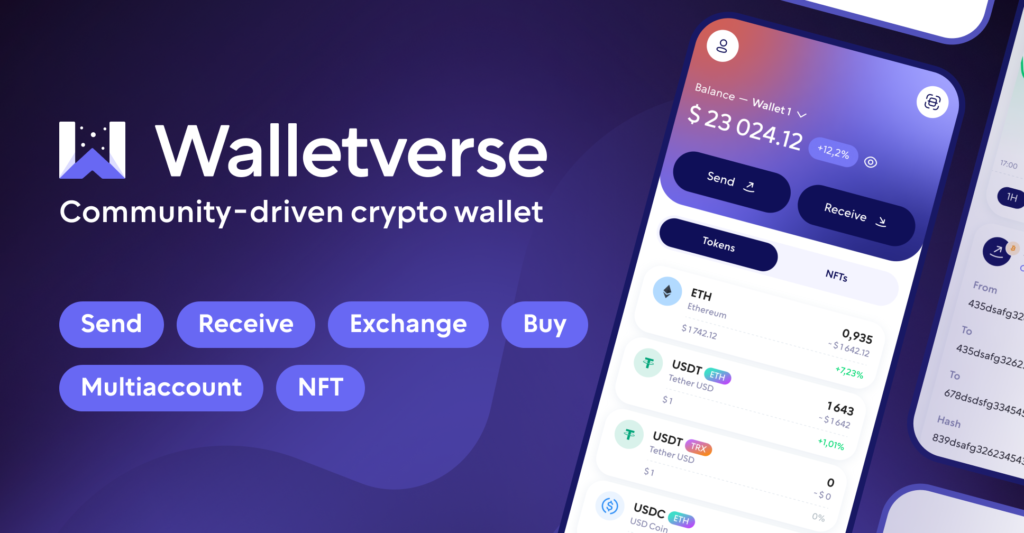
Walletverse is a mobile crypto wallet designed for users who want a non-custodial, app-based way to buy, store, send, and exchange digital assets. Based on the product information provided, it supports more than 700 cryptocurrencies, dApps, multi-account management, staking, and fiat purchases through Apple Pay, Google Pay, cards, and multiple fiat currencies.
It stands out as a practical option for both beginners and experienced users because it combines self-custody with a relatively simple mobile experience. Its passcode and biometric security, multi-currency support, and GasFree USDT feature on TRON make it especially attractive for users who want convenience without giving up control of their funds.
- Pros:
- Non-custodial mobile wallet;
- Supports 700+ cryptocurrencies;
- Apple Pay, Google Pay, cards, and multiple fiat currencies;
- dApps, staking, and multi-account support;
- Passcode and biometric authentication;
- Available on Google Play and the App Store.
- Cons:
- Mobile-only format may not suit desktop-first users;
- Direct HBTC purchase availability can vary by provider and region;
- Self-custody means users are fully responsible for backup and recovery.



2. MetaMask

MetaMask is one of the best-known self-custody wallets in crypto and is widely used for Ethereum-based assets and DeFi access. Its buy-crypto flow supports fiat purchases through integrated partners, making it a familiar option for users who may later want to swap into an Ethereum-based token like HBTC.
- Pros:
- Strong Ethereum and DeFi integration;
- Self-custodial;
- Mobile app and browser extension;
- Easy access to token imports and swaps.
- Cons:
- Less beginner-friendly than some simpler wallets;
- Direct HBTC purchase may not be available;
- Network settings and fees can confuse new users.
3. Trust Wallet

Trust Wallet is a popular self-custody wallet known for broad multi-chain support and a beginner-friendly mobile experience. It is commonly used for buying crypto with cards and for storing assets intended for swaps or DeFi access.
- Pros:
- Easy to use for mobile users;
- Broad token support;
- Suitable for self-custody and swaps;
- Good for users exploring Web3.
- Cons:
- Asset availability depends on third-party providers;
- Direct HBTC support should be checked before purchase;
- Less specialized for hardware-level storage.
4. Ledger

Ledger is best known for hardware wallet security. Ledger Live adds buying, swapping, and asset management functions, which makes it a strong choice for long-term holders who want more protection than a standard hot wallet.
- Pros:
- Strong security with hardware support;
- Suitable for long-term storage;
- Useful for serious investors;
- Self-custody with stronger signing security.
- Cons:
- Requires hardware purchase for best experience;
- Less convenient for quick everyday use;
- Direct fiat-to-HBTC support is less certain.
5. Zengo

Zengo uses MPC-based security instead of a traditional seed phrase model. This makes it appealing to users who want a simpler self-custody experience with strong account recovery design.
- Pros:
- Different security model from traditional wallets;
- Beginner-friendly;
- Good mobile experience;
- Supports fiat purchase flows through partners.
- Cons:
- Some experienced users prefer classic seed-based control;
- Direct support for smaller assets may vary;
- Less flexible for some DeFi-heavy workflows.
6. Coinbase Wallet

Coinbase Wallet is Coinbase’s self-custody wallet rather than the custodial exchange account. It is a useful choice for users who want a mainstream brand and straightforward UI while still holding their own keys.
- Pros:
- Self-custody with a familiar interface;
- Good for beginners;
- Strong support for Ethereum ecosystem assets;
- Useful for NFT and dApp activity.
- Cons:
- Users sometimes confuse it with Coinbase exchange storage;
- On-ramp coverage depends on country;
- Direct HBTC buying may be limited.
7. Exodus

Exodus is a long-running wallet available on mobile and desktop, known for a polished interface and in-wallet buying and swapping features. It is often chosen by users who want an all-in-one portfolio-style app without complex setup.
- Pros:
- Clean interface across devices;
- Easy crypto buying and swapping;
- Good for holding many assets;
- Friendly for users transitioning from fintech apps.
- Cons:
- Some features depend on integrated providers;
- Direct HBTC purchase may not be supported;
- Not the strongest choice for advanced DeFi customization.
8. Guarda

Guarda offers web, desktop, and mobile access in a non-custodial format. It is useful for people who want flexible access across devices and prefer not to rely on a single mobile-only environment.
- Pros:
- Multi-platform access;
- Non-custodial;
- Buying, storing, and exchanging in one wallet;
- Useful for users who want web access too.
- Cons:
- Broader interface can feel less streamlined;
- Availability of HBTC should be checked first;
- Some functions rely on third-party integrations.
9. Atomic Wallet

Atomic Wallet is a software wallet focused on buying, managing, and swapping assets in one place. It appeals to users who want a practical wallet without needing advanced technical knowledge.
- Pros:
- Easy portfolio management;
- Supports many assets;
- Useful for swaps and everyday holding;
- Available on desktop and mobile.
- Cons:
- Hot-wallet security depends on device safety;
- Fiat routes vary by jurisdiction;
- Direct HBTC purchase is not guaranteed.
10. Tangem
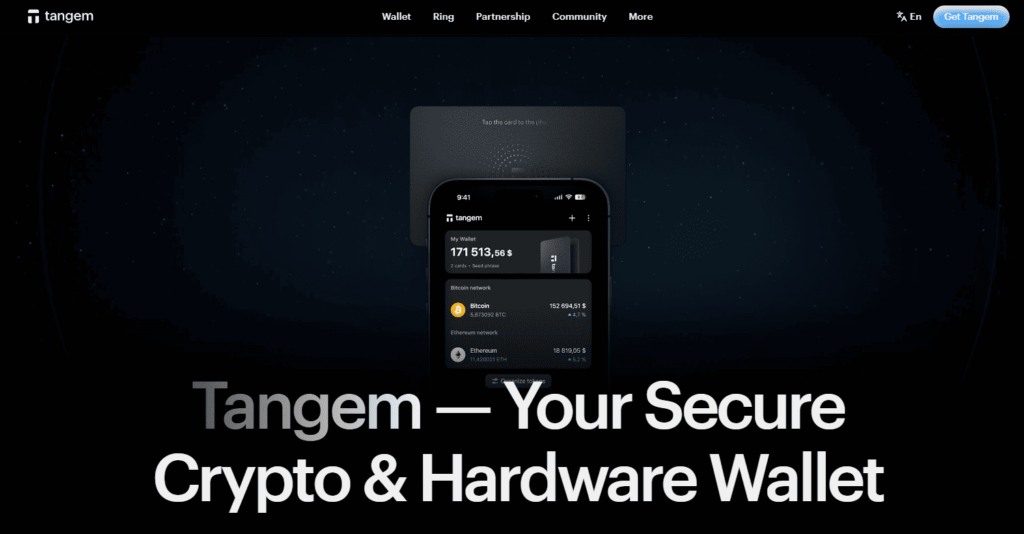
Tangem combines hardware-style cold storage with a mobile app, offering a simpler path into hardware-backed self-custody. It can suit users who want offline-style protection without the traditional hardware-wallet workflow.
- Pros:
- Hardware-style security;
- Non-custodial;
- Portable and simple;
- Good for users who want cold-storage convenience.
- Cons:
- Requires buying the hardware cards;
- Less ideal for frequent DeFi use;
- HBTC buying and storage support should be confirmed in advance.
Buy HBTC with Apple Pay
Buying HBTC with Apple Pay usually happens through a wallet’s integrated fiat on-ramp provider rather than through a direct issuer relationship. The usual flow is to choose a wallet, select Apple Pay as the purchase method, and see whether HBTC is directly available. If it is not, users commonly buy BTC, ETH, or USDT first and then convert that asset into HBTC where liquidity is available.
For mobile users, this is where Walletverse can be especially practical. Based on the details provided, it supports Apple Pay, self-custody, a wide range of fiat currencies, and a large asset catalog in one mobile app. That makes it well suited to users who want a straightforward route from fiat into crypto, even when the final token may require a swap step.
Buy HBTC with Google Pay
Google Pay works in a similar way. If the wallet’s provider supports it in your region, you can fund a crypto purchase through Google Pay and then either buy HBTC directly or buy a more liquid asset first and swap later. Because HBTC’s active trading is relatively limited, the second route may often be the more realistic one.
Walletverse is also relevant here for Android users because, based on your product information, it supports Google Pay, multiple fiat currencies, and a mobile-first self-custody model. For users who want speed and convenience on Android, that is a strong setup.
How to Buy the Huobi BTC (HBTC) with Fiat?
Here is a practical step-by-step route for buying HBTC with fiat:
- Choose a wallet that supports fiat purchases and self-custody;
- Set up the wallet and securely store recovery details if applicable;
- Select your preferred payment method, such as Apple Pay, Google Pay, debit card, or credit card;
- Check whether HBTC is directly available through the wallet’s on-ramp provider in your country;
- If direct purchase is unavailable, buy BTC, ETH, or USDT first;
- Swap that asset into HBTC through the wallet or supported exchange route;
- Review the quoted rate, fees, and network costs before confirming;
- Store the purchased HBTC in your wallet and enable all available security settings.
For users who value a smoother mobile experience, Walletverse is a strong candidate because it combines fiat purchase options, self-custody, and asset management in one place. For users who prioritize stronger cold-storage protection, Ledger or Tangem may be the better fit.
FAQ
Most frequent questions and answers
HBTC has a clear use case as a wrapped Bitcoin token on Ethereum, but it is not a high-liquidity mainstream trading asset today. It may still be useful for specific storage or compatibility needs, yet buyers should be aware that current daily volume appears low on major data platforms.
The simplest route is to open a wallet that supports fiat purchases, add USD through card or mobile payment, and check whether HBTC is directly listed. If it is not, buy a more liquid asset first and then swap it into HBTC. In a wallet like Walletverse, that process can start from a mobile app with self-custody controls and multiple fiat payment methods.
You can use mobile wallets, software wallets, and hardware-supported wallets depending on your needs. Walletverse is suitable for users who want a mobile self-custody wallet with fiat purchase options. Other options include MetaMask, Trust Wallet, Coinbase Wallet, Exodus, Guarda, Atomic Wallet, Zengo, Ledger, and Tangem.
You can buy HBTC through crypto services that support the asset directly or indirectly through swap routes, for example Walletverse. Since direct fiat support may be limited, many users buy BTC, ETH, or USDT first and convert it into HBTC afterward.


