


Buy Pendle (PENDLE) with USD, EUR and Other Fiat Currencies
Pendle is part of the DeFi sector, where users work with yield-bearing assets, fixed-yield strategies, liquidity markets and tokenized future yield. It is mainly known as a protocol that lets users separate and trade the principal and yield parts of crypto assets.
This article was prepared by ilink, a FinTech and Web3 software developer with 14 years of experience and completed projects worldwide.
What is Pendle (PENDLE)?
Pendle (PENDLE) is the native token of Pendle Finance, a DeFi protocol focused on yield trading. Pendle documentation describes the protocol as a permissionless yield-trading platform where users can execute different yield-management strategies.
The main idea behind Pendle is the tokenization of yield. In simple terms, Pendle can split a yield-bearing asset into two parts: the principal and the future yield. This allows users to trade, hedge, fix or speculate on yield in a more flexible way.
Consensys described Pendle as “a yield derivatives layer for DeFi,” while Pendle’s own website calls it “the world’s largest crypto yield trading platform.” These short descriptions explain why the project is important in the DeFi market. It gives crypto users a way to interact with yield in a structure that is closer to traditional fixed-income and interest-rate markets.
Pendle was first introduced under the name Benchmark in 2020. According to Messari, the Pendle testnet launched on March 20, 2021, and the PENDLE token contract was deployed on April 27, 2021. Pendle later launched on Ethereum in June 2021, and Pendle V2 launched in November 2022 with a more advanced AMM design.
The protocol expanded across multiple chains. Pendle documentation lists supported deployments on Ethereum, Optimism, BNB Chain, Sonic, HyperEVM, Mantle, Base, Arbitrum, Berachain, Monad, Katana and Ink. This multi-chain presence matters because DeFi users often choose networks based on liquidity, fees, asset availability and strategy type.
PENDLE is used for governance, staking and ecosystem incentives. DeFiLlama describes PENDLE as the native governance and utility token of the Pendle Finance DeFi protocol for trading tokenized future yields. It also describes sPENDLE as a liquid staking version that gives holders governance power and protocol revenue share.
Some useful non-price statistics about PENDLE include:
- Total token supply listed by Binance Launchpool in 2023: 251,061,124 PENDLE;
- Binance Launchpool token rewards in 2023: 5,021,222 PENDLE;
- Launchpool rewards share: 2% of total token supply;
- Circulating supply at the Binance Launchpool announcement: 140,192,253.58 PENDLE;
- Initial circulating share at that time: 56% of total token supply;
- Pendle docs state that all team and investor tokens were fully vested as of September 2024;
- Weekly emissions as of September 2024 were 216,076 PENDLE, with a 1.1% weekly decrease until April 2026;
- After April 2026, the emission model changes to a 2% annual terminal inflation rate for incentives;
- Pendle reported average TVL of $5.8 billion in 2025;
- Pendle reported peak TVL of $13.4 billion in 2025;
- Pendle reported $47.8 billion in trading volume in 2025;
- Pendle reported $58 billion in fixed yield settled in 2025;
- Pendle reported 155,553 new participants in 2025.
These figures are more useful for an evergreen article than market capitalization or live price, because price and market cap change every day.
PENDLE may be interesting for users who follow DeFi, yield trading, fixed-yield products, liquid staking tokens, liquid restaking tokens, stablecoin yield, RWAs and on-chain interest-rate markets. However, PENDLE is still a volatile crypto asset. Users should check liquidity, token support, network fees, protocol risk and project updates before buying.
Where Can I Buy Pendle (PENDLE) Cash? 10 Best Crypto Wallets
1. Walletverse
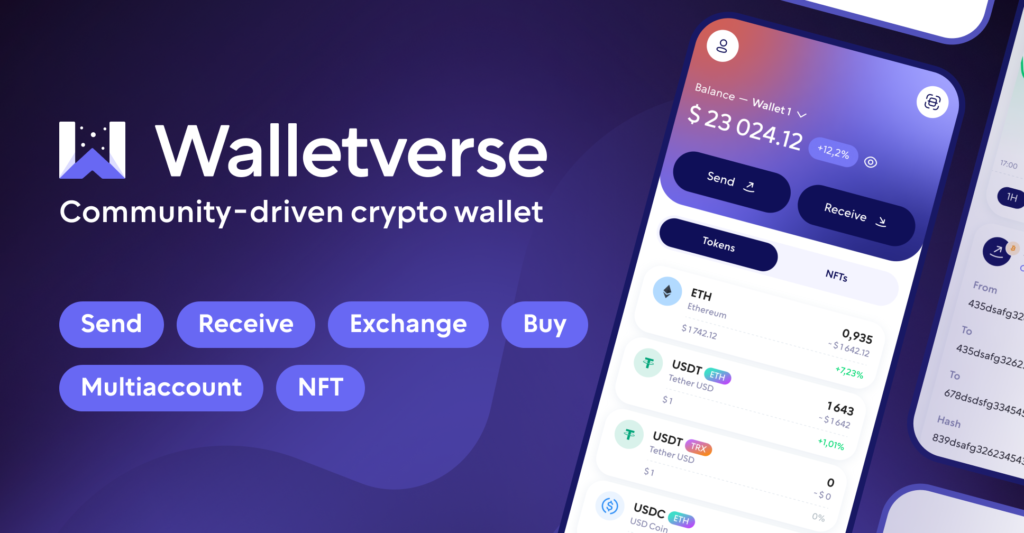
Walletverse is a mobile crypto wallet created for users who want a simple way to buy, store, send and exchange digital assets. It is suitable for beginners who need a clean interface and for advanced users who want access to Web3, DeFi, dApps and multi-account management.
Walletverse supports 700+ cryptocurrencies and allows users to buy crypto with Apple Pay, Google Pay, credit and debit cards, as well as fiat currencies such as USD, EUR, GBP, JPY, KZT, INR, CAD, AUD and more. The wallet is non-custodial, which means users control their assets. Even the Walletverse team cannot access user funds.
Security is one of the key parts of Walletverse. The app supports passcode and biometric authentication, helping users protect access to their wallet. It also includes AML and CYT features, Solana, ETH and TRX staking, and a proprietary GasFree USDT Transaction System on TRON. This system lets users send USDT on TRON without holding TRX separately for gas, because transaction fees can be paid directly in USDT.
Walletverse is available on Google Play and the App Store, with a Google Play rating of 4.8 and an App Store rating of 5.0.
Pros:
- Supports 700+ cryptocurrencies and multiple fiat payment methods;
- Allows buying crypto with Apple Pay, Google Pay, cards and major fiat currencies;
- Non-custodial wallet structure gives users control over their assets;
- Passcode and biometric authentication help protect account access;
- Mobile-first design is convenient for everyday crypto use;
- GasFree USDT transfers on TRON reduce friction for new users.
Cons:
- Currently focused on mobile users;
- Direct PENDLE availability may depend on region and liquidity provider;
- Users still need to check the correct token and network before transfer.



2. MetaMask

MetaMask is one of the most popular wallets for Ethereum and EVM-compatible networks. Since PENDLE is closely connected with Ethereum and other EVM networks, MetaMask can be useful for users who want to store PENDLE, import token contracts and interact with DeFi applications.
MetaMask also supports crypto buying through third-party providers. Depending on the region, users may be able to buy crypto with cards, bank transfers, Apple Pay, Google Pay, PayPal or local payment methods. If PENDLE is not available for direct purchase, users can buy ETH, USDC or another supported asset first and then use a swap or exchange route.
Pros:
- Strong support for Ethereum and EVM-compatible assets;
- Useful for DeFi users and token imports;
- Available as a browser extension and mobile app;
- Supports several fiat on-ramp methods through providers.
Cons:
- Less beginner-friendly than simple mobile wallets;
- Network setup and token imports may confuse new users;
- Gas and bridge fees may apply depending on the route.
3. Trust Wallet

Trust Wallet is a popular self-custody wallet for mobile crypto users. It supports many blockchain networks, tokens, NFTs and decentralized applications. It can be useful for users who want a mobile wallet for buying and managing DeFi assets.
Trust Wallet supports fiat purchases through third-party providers. Apple Pay and Google Pay are available in supported regions, making the buying process easier for mobile users. If PENDLE is not available directly, users can buy another supported asset first and exchange it later.
Pros:
- Strong mobile wallet experience;
- Supports many networks, tokens and dApps;
- Apple Pay and Google Pay are available in supported regions;
- Suitable for users who want self-custody.
Cons:
- Provider fees vary by country and payment method;
- Direct PENDLE buying may not be available everywhere;
- Users must check network compatibility carefully.
4. Crypto.com Onchain Wallet

Crypto.com Onchain Wallet is a self-custody wallet for users who want DeFi access, swaps and multi-chain asset management. It can connect with the Crypto.com App, which may make fiat funding easier for verified users.
Crypto.com supports buying and selling many crypto assets with debit cards, credit cards, bank transfers and selected digital payment methods. Users who want PENDLE should check whether the asset is supported directly. If not, they may need to buy a liquid asset first and swap later.
Pros:
- Self-custody wallet for Web3 and DeFi users;
- Connects with the Crypto.com ecosystem;
- Supports many assets and networks;
- Useful for users who already use Crypto.com services.
Cons:
- Some fiat features require a Crypto.com account;
- Regional restrictions may apply;
- PENDLE availability may differ by country and provider.
5. Atomic Wallet

Atomic Wallet is a non-custodial wallet available on mobile and desktop. It supports storage, buying, swapping and staking for many digital assets.
Atomic Wallet allows users to buy crypto with fiat through integrated payment partners. Depending on the asset and region, payments may include cards, bank transfers, Apple Pay or Google Pay. Users should confirm whether PENDLE is supported directly before using it for this token.
Pros:
- Non-custodial wallet structure;
- Mobile and desktop apps are available;
- Supports many assets and built-in swaps;
- Fiat buying is available through third-party partners.
Cons:
- Direct PENDLE support may vary;
- Provider fees can differ by region;
- Some users may prefer wallets with broader Web3 integrations.
6. Binance Web3 Wallet

Binance Web3 Wallet gives users access to self-custody features inside the Binance ecosystem. Binance is relevant for PENDLE because it introduced Pendle through Binance Launchpool in 2023 and listed PENDLE trading in the Innovation Zone.
Binance supports fiat purchases in many regions using cards, bank transfers, Apple Pay and Google Pay in selected flows. Users may be able to buy PENDLE directly on Binance where available, or buy a major asset first and then trade it for PENDLE.
Pros:
- Strong exchange ecosystem and large liquidity base;
- PENDLE has direct Binance Launchpool history;
- Supports fiat purchases in many regions;
- Useful for users who want trading and wallet access together.
Cons:
- Some services vary by country;
- KYC is usually required for fiat purchases;
- The platform can feel complex for beginners.
7. Exodus

Exodus is a self-custody wallet known for its clean design and portfolio tracking. It is available on mobile, desktop and browser extension.
Exodus supports crypto buying through third-party providers. Payment methods may include credit cards, debit cards, bank transfers, Apple Pay and Google Pay, depending on location. If PENDLE is not available directly, users can buy another supported asset and use an exchange route.
Pros:
- Beginner-friendly interface;
- Mobile, desktop and browser access;
- Built-in fiat buying through partners;
- Good portfolio management experience.
Cons:
- Provider fees and payment methods vary by region;
- Direct PENDLE support may not be available everywhere;
- Advanced users may prefer wallets with deeper DeFi integrations.
8. Guarda

Guarda is a non-custodial multi-currency wallet available on mobile, desktop and web. It supports many assets, swaps and fiat purchases through integrated providers.
Guarda can be useful for users who prefer wallet access across several devices. Payment methods may include credit cards, debit cards, bank transfers, Apple Pay and Google Pay depending on the provider and country.
Pros:
- Non-custodial wallet with mobile, desktop and web access;
- Supports many assets and blockchain networks;
- Built-in buy and exchange features;
- Suitable for users who want more than one device option.
Cons:
- Third-party provider fees may vary;
- Direct PENDLE availability should be checked first;
- The interface may feel less simple than mobile-first wallets.
9. OKX Wallet

OKX Wallet is a Web3 wallet connected with the OKX ecosystem. It supports multi-chain asset management, dApps, NFTs, swaps and DeFi tools.
OKX supports crypto purchases with cards and selected mobile payment methods in supported regions. Users can also access Apple Pay and Google Pay in certain fiat buying flows. For PENDLE, users should check whether direct purchase is supported or whether they need to buy another asset first.
Pros:
- Strong Web3 wallet with multi-chain support;
- Apple Pay and Google Pay are available in supported regions;
- Useful for users who want exchange access and on-chain tools;
- Supports dApps, NFTs and DeFi interactions.
Cons:
- Availability depends on country and compliance rules;
- Some features may feel advanced for beginners;
- Direct PENDLE purchase support may vary.
10. Coinbase Wallet

Coinbase Wallet is a self-custody wallet connected with the wider Coinbase ecosystem. It is separate from a Coinbase exchange account, but it can be useful for users who want a recognized wallet brand and access to Web3 tools.
Coinbase Wallet supports many Ethereum-compatible assets and Web3 interactions. Users who buy crypto through Coinbase or another fiat route can move assets into Coinbase Wallet if the token and network are supported. For PENDLE, users should check the latest network support before transferring.
Pros:
- Recognized wallet connected with a major crypto platform;
- Useful for users already familiar with Coinbase;
- Supports self-custody and Web3 access;
- Suitable for users who want a simple wallet from a known brand.
Cons:
- PENDLE purchase availability depends on region and exchange support;
- Exchange fees may be higher than some trading platforms;
- Users must protect their recovery phrase carefully.
Buy Pendle (PENDLE) with Apple Pay
Apple Pay is one of the easiest ways to buy crypto on mobile because users do not need to enter card details manually. Payments can be confirmed with Face ID, Touch ID or a device passcode.
A typical Apple Pay purchase flow looks like this:
1. Open a supported wallet or exchange
Choose a wallet or platform that supports fiat crypto purchases. Walletverse, Trust Wallet, MetaMask, Binance Web3 Wallet, OKX Wallet and other platforms may offer fiat buying options through integrated providers.
2. Select Buy Crypto
Open the buy section and search for PENDLE or Pendle. Make sure you are selecting the correct token.
3. Check direct availability
If PENDLE is available directly, enter the amount you want to buy. If it is not available, buy USDT, USDC, ETH, BNB or another supported asset first.
4. Choose Apple Pay
Select Apple Pay as the payment method if it is available in your country and supported by the provider.
5. Review fees and limits
Check the provider fee, card fee, exchange spread, network fee and final amount of crypto you will receive.
6. Confirm the payment
Approve the transaction with Face ID, Touch ID or your device passcode.
7. Store or transfer PENDLE
Keep PENDLE in a supported wallet or move it to a self-custody wallet where you control access to your funds.
Apple Pay availability depends on the country, bank card, crypto provider and compliance rules. Some providers support Apple Pay only for selected assets or fiat currencies.
Walletverse can be useful for mobile users because it supports Apple Pay, multiple fiat currencies, crypto buying, storing, sending, exchanging and self-custody in one app.
Buy Pendle (PENDLE) with Google Pay
Google Pay is a convenient option for Android users and some desktop users. It allows users to pay with a card saved in Google Wallet, which can make the checkout process faster.
A typical Google Pay purchase flow looks like this:
1. Open a wallet or exchange that supports Google Pay
Choose a platform with fiat purchase support. Availability depends on your country and provider.
2. Search for PENDLE
Look for Pendle or PENDLE in the buy section. Check the token details before confirming.
3. Buy PENDLE directly or buy a base asset first
If direct PENDLE buying is supported, enter the amount. If not, buy USDT, USDC, ETH, BNB or another supported asset first.
4. Select Google Pay
Choose Google Pay as the payment method if it is available.
5. Review the transaction
Check all fees, payment limits, exchange rate, network route and final amount.
6. Confirm the payment
Approve the transaction through Google Pay.
7. Swap or transfer if needed
If you bought another asset first, exchange it for PENDLE on a supported exchange or swap route.
Google Pay is fast and familiar, but it may not always be the cheapest option. Card-based and mobile wallet payments often include higher provider fees than bank transfers. Before confirming a purchase, check the total cost and the amount of crypto you will receive.
Walletverse supports Google Pay and can be a practical option for users who want to buy, store, send and exchange crypto from a mobile app.
How to Buy The Pendle (PENDLE) with Fiat?
There are two common ways to buy PENDLE with fiat.
The first way is direct purchase. This is the simplest method when your wallet, exchange or fiat provider supports PENDLE as a buyable asset.
The second way is indirect purchase. This is common when direct fiat buying is unavailable. In this case, users buy a major crypto asset with fiat, then exchange it for PENDLE.
A practical process looks like this:
1. Choose a wallet or exchange
Select a platform that supports fiat payments and can help you access PENDLE. Walletverse, MetaMask, Trust Wallet, Binance Web3 Wallet, OKX Wallet, Coinbase Wallet, Crypto.com Onchain Wallet, Guarda, Exodus and Atomic Wallet are possible options.
2. Check PENDLE availability
Search for Pendle or PENDLE inside the app. Make sure you are choosing the correct token. PENDLE is connected with Ethereum and other supported EVM networks, so users should pay attention to the network before transferring or importing it.
3. Select fiat currency
Choose USD, EUR, GBP, CAD, AUD, JPY, KZT, INR or another supported fiat currency. Available currencies depend on the wallet, region and payment provider.
4. Choose payment method
Payment methods may include Apple Pay, Google Pay, debit card, credit card, bank transfer or local payment options.
5. Review all fees
Check the provider fee, card fee, exchange spread, network fee, swap fee and withdrawal fee. The cheapest route is not always the fastest route.
6. Complete KYC if required
Most fiat-to-crypto providers require identity verification. This is common for card payments, bank transfers and regulated payment systems.
7. Buy PENDLE or buy a base asset first
If PENDLE is available directly, complete the purchase. If not, buy USDT, USDC, ETH, BNB or another liquid asset, then swap it for PENDLE on a supported platform.
8. Move assets to self-custody if needed
If you bought PENDLE on a centralized exchange, you can keep it there or withdraw it to a self-custody wallet. A wallet like Walletverse gives users control over their assets, but users must protect their recovery phrase and private keys.
9. Start with a test transaction
Before sending a large amount, make a small test transfer. This helps confirm that the address, network and wallet support are correct.
Conclusion
Pendle (PENDLE) is a DeFi token connected with Pendle Finance, a yield-trading protocol that lets users work with tokenized future yield. Its role is closely tied to yield markets, fixed-yield strategies, liquidity incentives, staking and governance.
Users can buy PENDLE with fiat in different ways. Some platforms may support direct PENDLE purchases. Others may require users to buy USDT, USDC, ETH, BNB or another crypto asset first, then exchange it for PENDLE.
Walletverse is a strong option for users who want a mobile self-custody wallet with 700+ cryptocurrencies, Apple Pay, Google Pay, card payments, multiple fiat currencies, biometric protection, dApps, swaps and simple crypto management.
Before buying PENDLE, always check the correct token, network support, fees, payment limits and local regulations. Crypto assets are volatile, and users should make decisions based on their own research.
Data current as of June 10, 2026.
FAQ
Most frequent questions and answers
PENDLE may be interesting for users who follow DeFi, yield trading, fixed-yield products, liquid staking, liquid restaking and on-chain interest-rate markets. It has a clear role inside the Pendle ecosystem, but it is still a volatile asset. Users should check current utility, liquidity, token emissions, network support and protocol risks before buying.
You can buy PENDLE with USD through a wallet, exchange or fiat on-ramp that supports PENDLE access. If PENDLE is available directly, choose PENDLE, select USD, pick Apple Pay, Google Pay, debit card, credit card or bank transfer, then confirm the order. If direct buying is unavailable, buy USDT, USDC, ETH or BNB with USD and swap it for PENDLE.
You can use wallets that support PENDLE storage, Ethereum assets or compatible EVM token imports. Walletverse is a good example for mobile users because it supports 700+ cryptocurrencies, fiat purchases, Apple Pay, Google Pay, card payments, biometric authentication and self-custody. Other options may include MetaMask, Trust Wallet, Binance Web3 Wallet, OKX Wallet, Coinbase Wallet, Crypto.com Onchain Wallet, Guarda, Exodus and Atomic Wallet.
PENDLE can be bought on supported exchanges and through wallet-based fiat on-ramp routes where available. Binance introduced PENDLE through Launchpool in 2023, and major market trackers list PENDLE markets on several exchanges. If your wallet does not support direct PENDLE purchase, you can buy a major crypto asset first and exchange it for PENDLE later.
The cheapest way is often to use a low-fee exchange or bank transfer route, then trade for PENDLE. Apple Pay, Google Pay and card payments are usually faster, but they may include higher provider fees. Always compare the final quote, network fee, swap fee and withdrawal fee before buying.
Yes, you can buy PENDLE with EUR if your exchange, wallet or on-ramp provider supports EUR payments and PENDLE access. If direct buying is unavailable, you can buy USDT, USDC, ETH or BNB with EUR and then swap it for PENDLE.
Yes, many crypto wallets and exchanges support debit card purchases. Availability depends on your country, bank, payment provider and the asset list. Before paying, check whether PENDLE is available directly or whether you need to buy another crypto first.
Walletverse supports 700+ cryptocurrencies and is designed for mobile self-custody, buying, sending, storing and exchanging crypto. Before transferring PENDLE, users should check the latest in-app asset list and make sure the correct PENDLE token and network route are supported.
Both are convenient. Apple Pay is usually better for iPhone users, while Google Pay is usually better for Android users. The better option depends on your device, country, card, provider fee and whether PENDLE is available through the selected buying route.


