


Buy Shentu (CTK) with USD, EUR and Other Fiat Currencies
Buying Shentu (CTK) with USD, EUR, and other fiat currencies is possible through self-custody wallets and integrated fiat on-ramp services. Depending on the wallet and your region, users can pay with bank cards, Apple Pay, Google Pay, bank transfer, and other local methods, then either buy CTK directly or purchase a more widely supported asset first and swap into CTK. Wallets such as MetaMask and Trust Wallet publicly describe fiat purchase flows through third-party providers, although token availability can vary by country and partner.
This guide was prepared by ilink, a FinTech and Web3 software developer with 13 years of experience and completed projects worldwide.
What Is Shentu (CTK)
Shentu is a delegated proof-of-stake blockchain built around security for blockchain applications. Coinbase describes Shentu as a blockchain that prioritizes security and is designed to support mission-critical applications across areas such as DeFi, NFTs, and other blockchain-based systems. It also notes that Shentu was created with a strong focus on security and trustworthiness.
What makes Shentu different from many general-purpose blockchains is its security-first design. Coinbase says the platform’s Security Oracle is intended to provide real-time security insights for on-chain transactions and to identify and flag potential vulnerabilities before they occur. That gives Shentu a clearer niche than chains built mainly around speed or low fees.
Shentu is also designed to work across multiple blockchain environments. Coinbase says the network is cross-chain compatible and includes compatibility with EVM and Hyperledger Burrow, as well as eWASM and AntChain. That interoperability matters because it positions Shentu as infrastructure that can connect with broader blockchain ecosystems rather than operate in isolation.
A simple way to understand Shentu is this: it is a security-oriented blockchain infrastructure project, and CTK is the token linked to that network. That makes CTK more relevant to users interested in blockchain security architecture and infrastructure than to users who only want a basic transfer token.
Where Can I Buy Shentu (CTK) with Cash? 10 Best Crypto Wallets
1. Walletverse
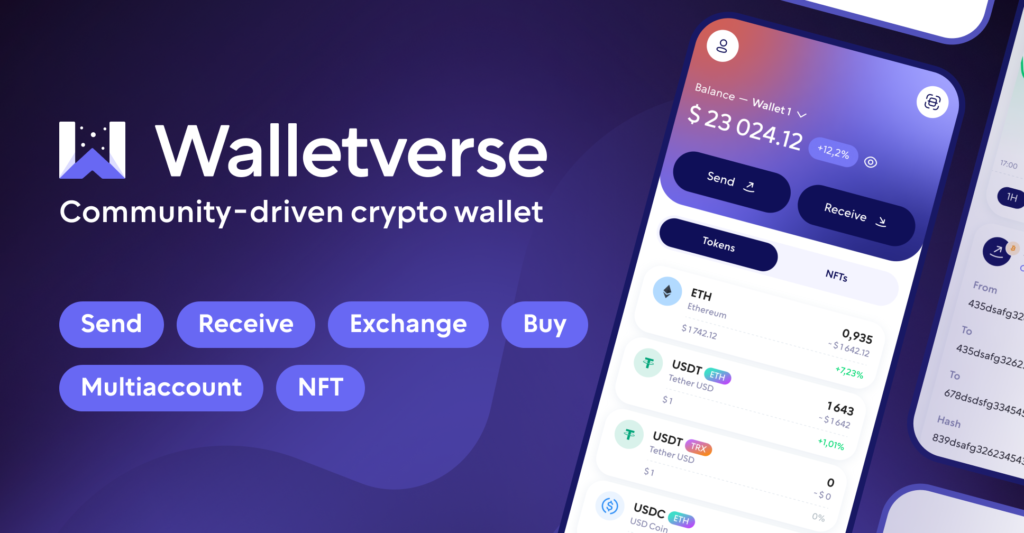
Walletverse is a mobile-first, non-custodial crypto wallet designed for users who want to buy, store, send, and exchange crypto in one app. Based on the product information you provided, it supports 700+ cryptocurrencies, dApps, multi-account management, staking, and fiat purchases with Apple Pay, Google Pay, credit cards, debit cards, and multiple fiat currencies including USD, EUR, GBP, JPY, KZT, INR, CAD, and AUD.
Walletverse is especially practical for users who prefer a mobile-only experience. It combines self-custody with a beginner-friendly interface, while still offering tools that more advanced users expect, such as dApp access, multi-account support, and staking. The passcode and biometric protection, along with the GasFree USDT feature on TRON, make it a convenient choice for users who want to manage crypto directly from a phone.
pros:
- Mobile-first non-custodial experience;
- Broad support for 700+ cryptocurrencies;
- Apple Pay, Google Pay, cards, and multiple fiat currencies;
- dApp access, multi-account support, and staking;
- Passcode and biometric security;
- Strong fit for both beginners and advanced users.
cons:
- Mobile-only format may not suit desktop-first users;
- Direct CTK purchase availability can depend on region and provider;
- Self-custody means users must manage their own recovery details.



2. MetaMask

MetaMask is one of the best-known self-custody wallets in crypto, especially for Ethereum-compatible assets and Web3 access. Its official buy pages say users can buy crypto with cards, bank accounts, Apple Pay, Google Pay, PayPal, and other regional methods depending on location.
pros:
- Strong Web3 and Ethereum ecosystem integration;
- Self-custodial on mobile and browser;
- Supports Apple Pay and Google Pay through providers;
- Useful for buying a base asset and swapping into CTK.
cons:
- Can feel technical for complete beginners;
- Network and gas settings may confuse new users;
- Direct CTK purchase is not guaranteed in every region.
3. Trust Wallet

Trust Wallet is a self-custody wallet with broad multi-chain support. Its official pages say users can top up with Apple Pay, Google Pay, debit cards, credit cards, and bank transfer, and it describes itself as a gateway to millions of assets and Web3 apps.
pros:
- Broad multi-chain coverage;
- Simple mobile experience for everyday use;
- Integrated buy and swap flows;
- Good fit for users exploring Web3.
cons:
- Feature breadth can feel overwhelming to some new users;
- Direct CTK support depends on provider coverage;
- Less ideal for users who prefer desktop-only workflows.
4. Ledger

Ledger combines hardware wallet security with a wallet app and portfolio tools. It is especially useful for people who plan to hold crypto longer term and want stronger protection than a software-only wallet.
pros:
- Stronger security when paired with hardware;
- Good for long-term holders;
- Buy, swap, stake, and manage in one ecosystem;
- Trusted hardware-wallet brand.
cons:
- Hardware purchase adds cost;
- Less convenient than mobile-only wallets for quick use;
- Direct fiat-to-CTK availability may be limited.
5. Zengo

Zengo is a mobile wallet known for its MPC-based security model. Its official materials say users can buy crypto with Apple Pay, Google Pay, bank transfer, credit cards, and debit cards in many regions.
pros:
- Alternative security model without traditional seed phrase exposure;
- Supports Apple Pay and Google Pay;
- Strong mobile experience for new users;
- Security-focused positioning.
cons:
- Some experienced users prefer traditional seed-based control;
- Direct CTK availability depends on region and provider;
- Less flexible for certain power-user Web3 workflows.
6. Coinbase Wallet

Coinbase Wallet is Coinbase’s self-custody wallet rather than the hosted exchange account. It is useful for users who want a familiar interface while still controlling their own assets and credentials. Coinbase’s broader wallet materials emphasize user control over crypto, keys, and data.
pros:
- Recognizable brand with self-custody control;
- Beginner-friendly interface;
- Good for tokens, NFTs, and DeFi access;
- Useful for users already familiar with Coinbase.
cons:
- Often confused with Coinbase exchange storage;
- Regional on-ramp availability varies;
- Direct CTK purchase may not always be listed.
7. Exodus

Exodus is a long-running wallet available on mobile and desktop. Exodus publicly states that users can buy crypto directly in the wallet with methods such as cards, bank transfers, Apple Pay, and Google Pay, with availability depending on location and provider.
pros:
- Polished interface across desktop and mobile;
- Built-in buy, sell, swap, and staking tools;
- Supports Apple Pay and Google Pay through providers;
- Good for users managing multiple assets.
cons:
- Some advanced users may want more customization;
- Direct CTK support should be checked before purchase;
- Fees and payment methods depend on third-party providers.
8. Guarda

Guarda is a non-custodial wallet available on web, desktop, and mobile. It is generally used by people who want flexible access across devices and a broader mix of wallet, exchange, and staking features in one ecosystem.
pros:
- Multi-platform access across devices;
- Non-custodial setup;
- Useful mix of buy, exchange, and staking features;
- Good for users who want web access alongside mobile.
cons:
- Interface is broader than some minimalist wallets;
- Direct CTK support must be verified first;
- Some features depend on external providers.
9. Atomic Wallet

Atomic Wallet positions itself as an all-in-one wallet for buying, swapping, and staking crypto. It is useful for users who want one place to enter with fiat and manage a portfolio without relying heavily on exchange accounts.
pros:
- All-in-one portfolio management experience;
- Supports a large number of assets;
- Apple Pay and Android Pay mentioned in official buy flow;
- Available on mobile and desktop.
cons:
- Software-wallet security still depends on device safety;
- Not every asset is directly available via fiat on-ramp;
- Interface is more utility-focused than premium.
10. Tangem
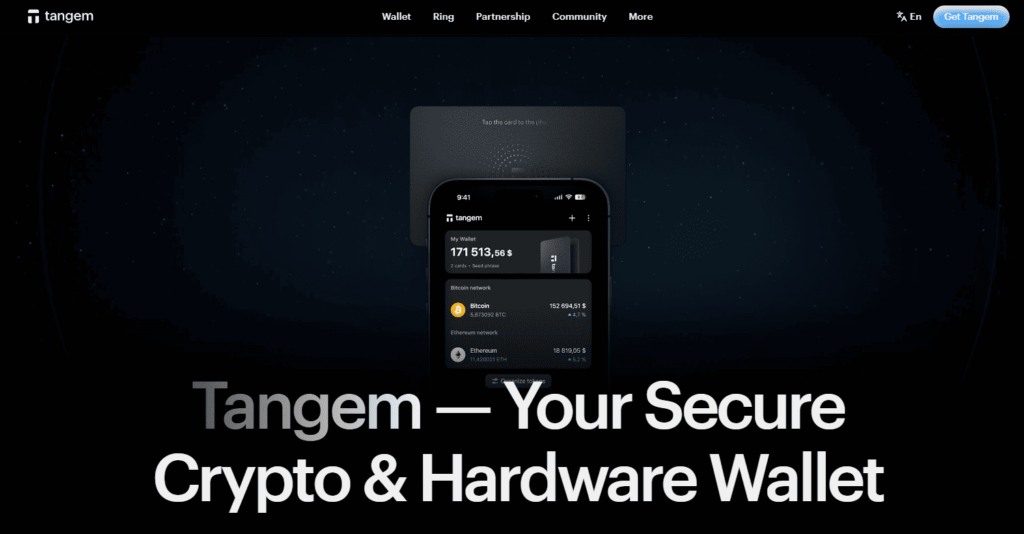
Tangem is a hardware-style wallet built around NFC cards and a mobile app. It is attractive for users who want hardware-style protection with a simpler mobile experience.
pros:
- Hardware-style security with a simple mobile workflow;
- Supports in-app buying through common payment methods;
- Good for users who want offline-style protection;
- Portable and easy to carry.
cons:
- Requires buying hardware cards;
- Not as smooth for heavy DeFi usage as browser wallets;
- CTK availability should be confirmed before purchase.
Buy CTK with Apple Pay
Buying CTK with Apple Pay usually means using a wallet that integrates a licensed payment provider. Trust Wallet publicly says it supports Apple Pay for buy-crypto flows, and your Walletverse product information also includes Apple Pay support. That gives users a simple entry route into self-custody before buying or swapping into CTK.
In practice, the process is simple. You open the wallet, choose the buy function, select Apple Pay, enter the fiat amount in USD, EUR, or another supported currency, and check whether CTK is available directly. If it is not, you can buy a more liquid asset first and then swap into CTK. That two-step route is common across wallet ecosystems because token coverage depends on the wallet’s on-ramp partners and your region.
For users who want a mobile-first self-custody experience, Walletverse is a practical option because, based on the product information you provided, it combines Apple Pay purchases, broad token support, dApps, and passcode or biometric security in one place.
Buy CTK with Google Pay
Google Pay is another convenient way to buy CTK with fiat. Trust Wallet publicly references Google Pay support, and your Walletverse product details also include Google Pay as a supported payment method. That makes Google Pay a practical option for Android users who want a quicker checkout process before buying or swapping into CTK.
The main thing to remember is that convenient payment methods do not guarantee direct token availability. It is still important to compare quotes, spreads, and whether CTK is offered directly or through a swap path. Exodus explicitly notes that available payment methods depend on your location and that not every method is available through every provider.
Walletverse fits this use case well because it is designed around mobile self-custody, supports multiple fiat currencies, and is positioned for both new and experienced users who want a fast in-app buying experience.
How to Buy the Shentu (CTK) with Fiat?
To buy Shentu with fiat, follow these steps:
- Choose a self-custody wallet with fiat on-ramp support, such as Walletverse, MetaMask, Trust Wallet, Exodus, or another wallet from the list above.
- Set up the wallet and safely back up your recovery phrase or other security credentials. Self-custody means you are responsible for safeguarding access to your assets.
- Open the buy section and select your payment method, such as Apple Pay, Google Pay, credit card, debit card, or bank transfer.
- Enter the amount in USD, EUR, or another supported fiat currency. Trust Wallet says it supports 100+ local fiat currencies.
- Check whether CTK is available directly in your region. Since providers differ, availability is not always the same across wallets.
- If direct purchase is unavailable, buy a more liquid supported asset first.
- Swap that asset into CTK inside the wallet or through a connected exchange feature. Wallet-based swap routes are often the easiest fallback when direct on-ramp coverage is limited.
- Review the final quote, fees, and network costs before confirming. Provider conditions vary by location.
- Store your CTK in the wallet and enable every available security feature, including biometrics or device locks when supported.
For a smoother mobile route, Walletverse is especially suitable because it combines self-custody, in-app buying, broad asset support, and mobile security features in one environment. For users who prioritize stronger offline protection, Ledger or Tangem may be better suited for storage after purchase.
FAQ
Most frequent questions and answers
CTK has a clearer infrastructure use case than many generic tokens because it is tied to a blockchain built around security and risk-awareness. That gives it a more defined role than a simple transfer coin, but it still carries adoption, ecosystem, and broader crypto risk. Whether it is a good crypto depends on your interest in blockchain security infrastructure and your tolerance for volatility and protocol risk.
The usual path is to open a wallet with fiat purchase support, fund the purchase in USD using a card, Apple Pay, Google Pay, or bank transfer, and check whether CTK is directly available. If it is not, buy a more liquid asset first and then swap into CTK. Walletverse is an example of a mobile self-custody wallet that supports fiat purchases and broad token management.
You can use several types of wallets depending on your needs. Walletverse is a strong option for mobile-first users who want self-custody, Apple Pay or Google Pay support, and broad token coverage. Other commonly used choices include MetaMask, Trust Wallet, Coinbase Wallet, Exodus, Guarda, Atomic Wallet, Zengo, Ledger, and Tangem.
You can buy CTK through wallets and exchanges that support it directly or through a swap path, for example Walletverse.


