


How to Buy Lido Staked ETH (stETH) in 2026
As staking becomes a core part of Ethereum’s future, many investors are looking for efficient ways to earn rewards while maintaining liquidity. One of the most well-known solutions for this is Lido’s stETH, an innovative token that represents staked Ether. If you’re considering adding stETH to your portfolio in 2026, this guide will walk you through its purpose, how it works, and the best wallets for storing and managing it.
What is Lido Staked ETH (stETH)?
Lido Staked ETH (stETH) is a tokenized version of staked Ethereum, created by Lido, a decentralized staking protocol. When users stake ETH via Lido, they receive stETH in return, which reflects the value of the staked ETH plus daily rewards.
The token was introduced in response to Ethereum’s shift to Proof-of-Stake, offering a solution for users who want to earn staking rewards without locking up their ETH or running a validator node. Over the years, stETH has grown in popularity thanks to its flexibility and integration with numerous DeFi platforms.
stETH is one of the leading liquid staking tokens, widely used across lending, farming, and liquidity pools.
How Does Lido Staked ETH (stETH) Work?
When a user stakes ETH via Lido, the protocol distributes the funds to professional node operators who run validator nodes. In exchange, the user receives an equivalent amount of stETH, which increases in value daily as staking rewards accumulate.
stETH remains freely transferable, allowing holders to use it in various DeFi applications while their original ETH continues earning rewards. This system removes the typical drawback of staking, illiquidity, by making the staked asset tradable.
stETH is pegged to ETH but can experience slight differences in value on the open market due to supply and demand fluctuations, particularly during high volatility.
Top 10 Best Crypto Wallets to Buy Lido Staked ETH (stETH) in 2026
1. Walletverse
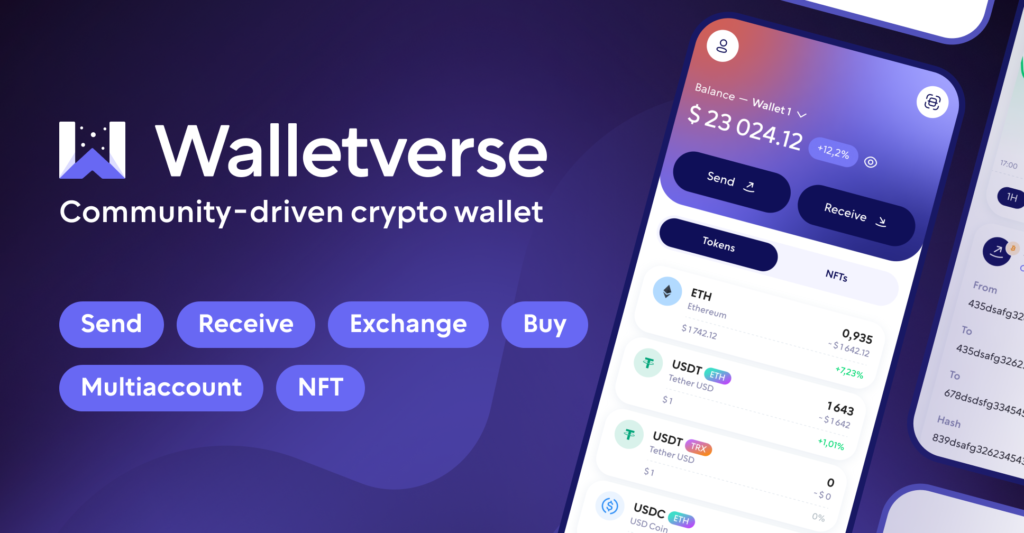
Walletverse is a feature-rich mobile crypto wallet designed to handle complex Web3 assets with ease. It supports over 600 cryptocurrencies, including stETH, and allows purchases via Apple Pay, Google Pay, and credit/debit cards in multiple fiat currencies.
It’s built for users who want full control over their assets. With biometric authentication, multi-account support, and integration with dApps, Walletverse is tailored for both new and experienced users. Its clean interface, fast performance, and community-driven development make it an ideal place to manage stETH and other DeFi tokens.
Pros:
- Secure self-custody
- Buy crypto directly in-app
- Fast, modern interface
- Robust support for DeFi and staking
Cons:
Mobile-only platform


2. MetaMask

MetaMask is a browser and mobile wallet that supports Ethereum and stETH. Its wide DeFi integrations make it a top choice for stETH users.
Pros:
- Full Web3 support
- Easy integration with Lido
- Flexible token management
Cons:
- Requires manual import of tokens
- Limited fiat options
3. Coinbase Wallet

Separate from the Coinbase exchange, Coinbase Wallet is a self-custody option that supports stETH and other Ethereum-based tokens.
Pros:
- Smooth integration with Coinbase ecosystem
- Easy token management
- Good UI for mobile users
Cons:
- Not as customizable for advanced users
- Limited DeFi features
4. Trust Wallet
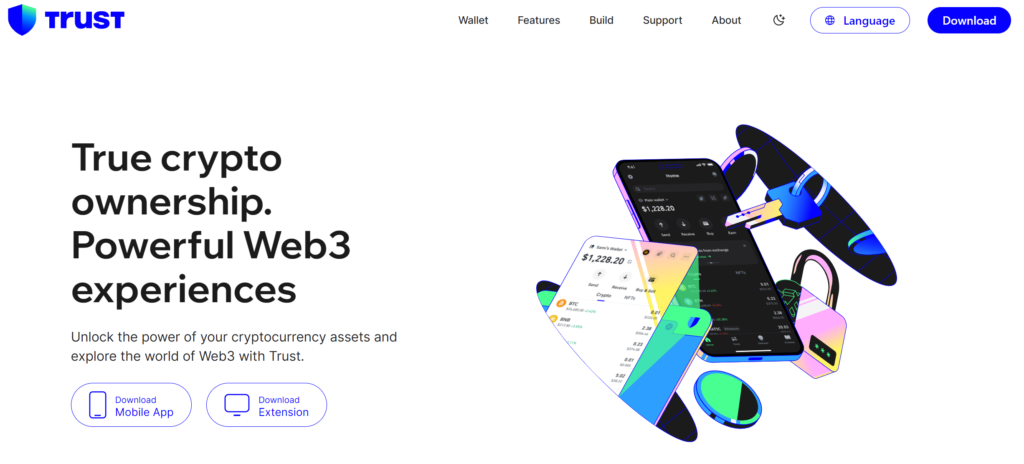
Trust Wallet is known for its simplicity and broad token support, including ERC-20 assets like stETH.
Pros:
- Simple user interface
- Supports staking and token swaps
- Popular among mobile users
Cons:
- Lacks built-in Web3 browser on iOS
- No desktop version
5. Ledger Nano

Ledger hardware wallets allow users to store stETH securely while using MetaMask to interact with DeFi protocols.
Pros:
- Excellent cold storage security
- Compatible with staking platforms
- Ideal for large holdings
Cons:
- Requires additional setup
- Not beginner-friendly
6. Guarda Wallet
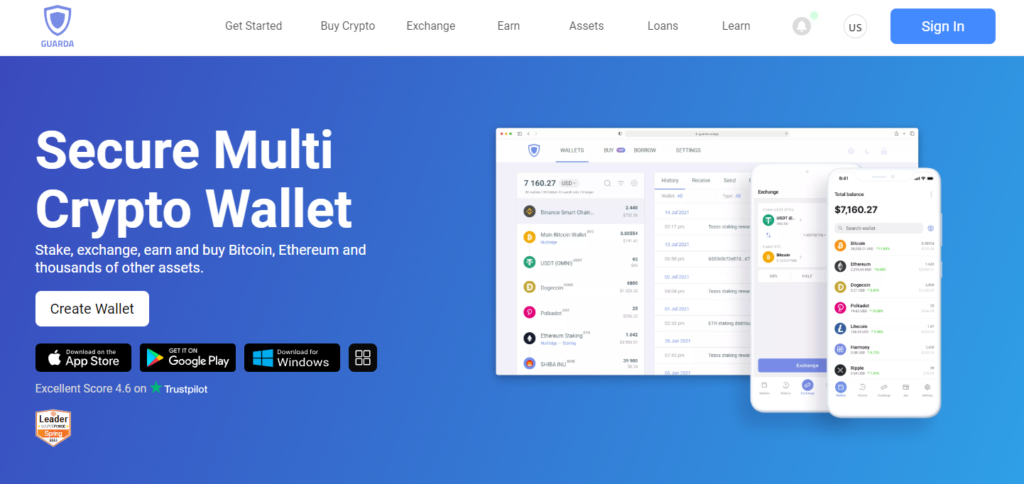
Guarda provides cross-platform access and supports custom ERC-20 tokens like stETH.
Pros:
- Good token compatibility
- Works with hardware wallets
- Intuitive Web and mobile versions
Cons:
- Certain functions require registration
- Not as DeFi-focused
7. Argent
Argent is a smart contract wallet focused on Ethereum assets and DeFi usability.
Pros:
- Gasless transactions (in some cases)
- Secure and beginner-friendly
- Good Lido support
Cons:
- Only supports Ethereum network
- Fewer advanced tools
8. Trezor Wallet
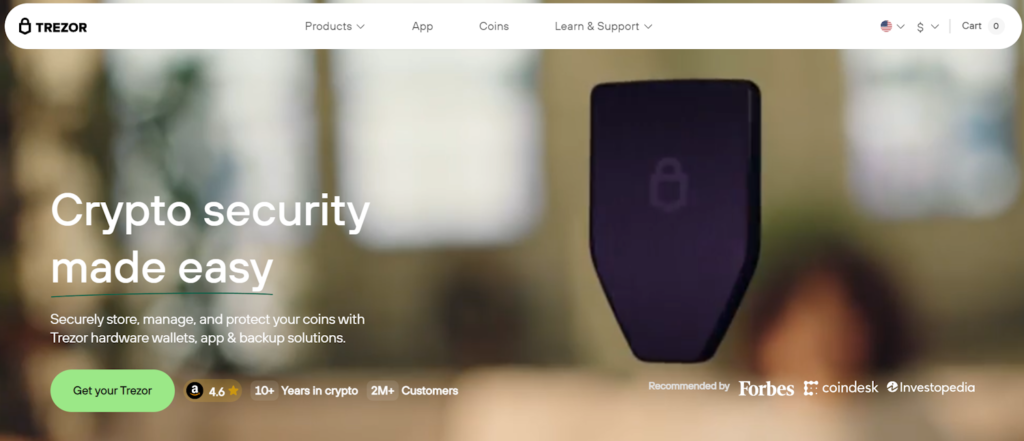
Like Ledger, Trezor can be paired with MetaMask for safe stETH storage and Web3 access.
Pros:
- Hardware-based protection
- Great for long-term storage
- Integration with many DeFi apps
Cons:
- Not ideal for daily transactions
- Physical device needed
9. Atomic Wallet
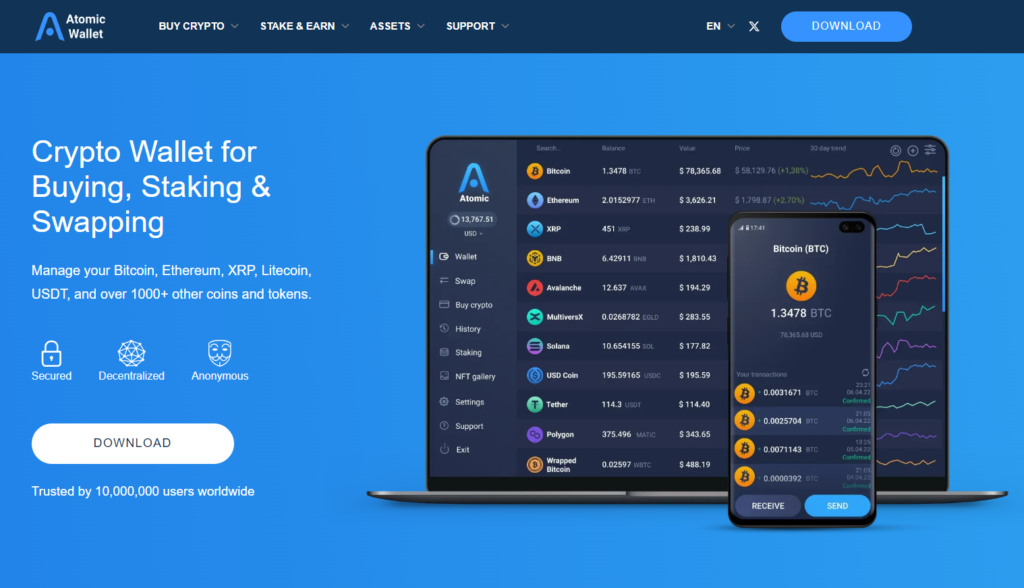
Atomic Wallet supports stETH along with other Ethereum tokens and offers staking features within the app.
Pros:
- Built-in exchange
- Multi-platform access
- User-controlled keys
Cons:
- Some advanced DeFi tools missing
- Limited direct fiat options
10. Exodus

Exodus offers an appealing design and supports ETH-based assets, including stETH.
Pros:
- Desktop and mobile availability
- Integrated exchange features
- Clean, beginner-friendly interface
Cons:
- Not open-source
- Limited Web3 access
Where Can I Store Lido Staked ETH (stETH)?
stETH can be stored in any Ethereum-compatible wallet. For mobile users, Walletverse provides a powerful environment that balances security, flexibility, and speed. It’s equipped for DeFi operations, crypto purchases, and everyday management, all while maintaining strict self-custody principles.
As Ethereum staking becomes mainstream, liquid solutions like Lido’s stETH are proving essential for users who want both yield and mobility. With the right wallet, buying and managing stETH in 2026 is simple and secure. Walletverse offers a seamless entry point for storing and transacting with this evolving digital asset.
FAQ
Most frequent questions and answers
It offers the benefits of ETH staking without locking up funds. While staking yields and ETH price can fluctuate, stETH provides flexible utility and passive earning potential.
You can buy stETH through the Walletverse app using fiat payment methods like Apple Pay, Google Pay, or your bank card.
stETH is used to represent staked ETH. It earns daily rewards and can be used across DeFi protocols for trading, lending, and liquidity pooling.


