


How to Swap IDRT to BTC
- Updated: 2026-01-29
IDRT (Rupiah Token) is an IDR-pegged stablecoin used by many Indonesian crypto users as a “digital rupiah” for trading, transfers, and moving value between local and global markets. IDRT is issued on multiple chains (including Ethereum and Binance Chain/BNB Chain), which makes it easier to use across different apps and swap routes.
Many holders eventually convert IDRT to Bitcoin to access deeper global liquidity, long-term BTC exposure, or broader exchange availability. Indonesia’s crypto market continues to grow at the retail level, with reported registered crypto investors reaching over 20 million by the end of 2025, one reason IDR-based on-chain rails like IDRT remain relevant.
Quick IDRT facts
- Asset: Rupiah Token (ticker: IDRT).
- Type: fiat-backed stablecoin pegged to Indonesian Rupiah (IDR).
- Networks: issuer states IDRT runs on Ethereum and Binance Chain/BNB Chain.
- Supply snapshot: CoinMarketCap lists circulating supply around 173.86B IDRT and market cap around $10.08M (values fluctuate).
Best Way to Simply Exchange IDRT to BTC
The “best” method depends on what you care about most: speed, fees, simplicity, or custody.
1. Centralized exchanges (CEX)
Best when you want strong liquidity, predictable pricing, and simple conversion into BTC.
How it usually works:
Deposit IDRT to the exchange (make sure you choose the correct chain).
Trade IDRT for BTC using a spot market or “convert” tool.
Withdraw BTC (or keep it on the exchange if you accept custodial storage).
What to check:
Does the exchange support the exact IDRT network you’re depositing from?
Are you withdrawing native BTC (Bitcoin network) or a BTC token on another chain?
2. Instant swap services
Best when you want fewer steps and a fast quote without using an order book.
Typical flow:
Select “From: IDRT” and “To: BTC”.
Enter amount and review the quote (rate, fees, estimated arrival).
Send IDRT to the provided address, receive BTC automatically.
What to check:
Slippage policy and whether the quote is fixed or floating.
BTC delivery type: native BTC vs wrapped BTC (WBTC, BTCB, etc.).
3. Crypto wallets with built-in swaps (self-custody)
Best when you prefer controlling your private keys while swapping inside one app.
Typical flow:
Open the swap feature in your wallet.
Choose IDRT → BTC and pick the route/network.
Confirm and pay network fees.
What to check:
You may receive BTC on a specific network (for example, a BTC token on an EVM chain). Confirm this before swapping.
Step-by-step: how to swap IDRT to BTC safely
Use this checklist to reduce common mistakes.
Confirm your IDRT network. IDRT exists on multiple chains (the issuer references Ethereum and Binance Chain/BNB Chain).
If you send IDRT to an address on the wrong chain, funds can be lost.Decide what “BTC” you actually need:
Native BTC (Bitcoin network) is best for long-term holding and broad compatibility.
Wrapped BTC (like WBTC/BTCB) is used for DeFi and swaps on smart-contract chains.
Compare the real cost. A “good rate” can still be expensive after network fees + swap fees + spread. If you’re optimizing cost, compare:
Total received BTC.
Total fees shown.
Estimated completion time.
Confirm destination address format.
Native BTC addresses look different from EVM addresses (0x…).
If the swap is delivering wrapped BTC, you’ll typically provide an EVM-style address.
Start with a small test swap. If it’s your first time using a new route/provider, test with a small amount to confirm the correct network and asset format.
Convert IDRT to BTC – Top 10 Best Crypto Wallets to Swap
1. Walletverse
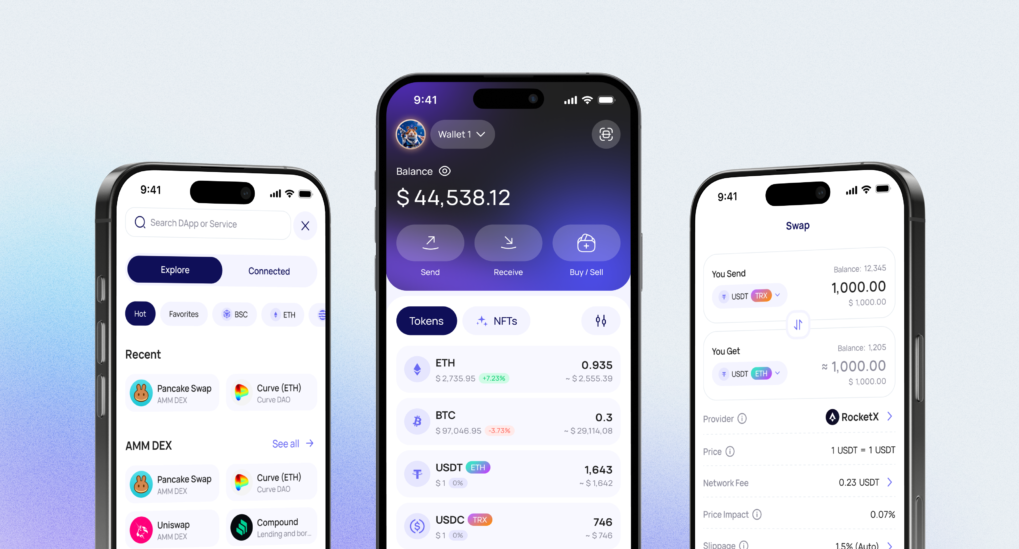
Walletverse is a mobile self-custody wallet built for fast everyday crypto use, with built-in swaps, multi-account support, and access to Web3 apps. It supports 700+ cryptocurrencies and lets users buy crypto with Apple Pay, Google Pay, and bank cards in multiple fiat currencies (USD, EUR, KZT, INR, CAD, AUD, and more). Security features typically include passcode and biometric protection.
Pros
Large multi-asset support for portfolios
In-app swaps and simple UX
Self-custody (you control keys)
Web3 access inside the app
Cons
Mobile-only experience for most users


2. Trust Wallet
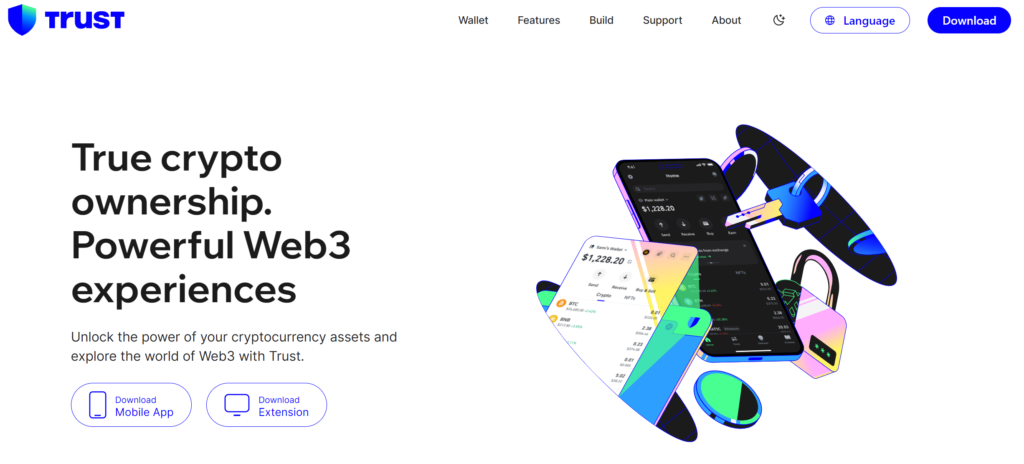
A popular self-custody wallet known for broad chain support and an easy on-ramp into dApps and swaps through integrated providers.
Pros
Beginner-friendly interface
Wide chain and token coverage
Built-in swap options
Cons
Swap pricing depends on route/provider
Support experience can vary by region
3. Coinbase Wallet

A self-custody wallet that connects easily to Web3 apps and swap aggregators, with a strong focus on usability.
Pros
Smooth onboarding for new users
Good Web3 compatibility
Supports multiple swap routes
Cons
Some features depend on region and provider availability
Fiat flows may still require external services
4. Atomic Wallet
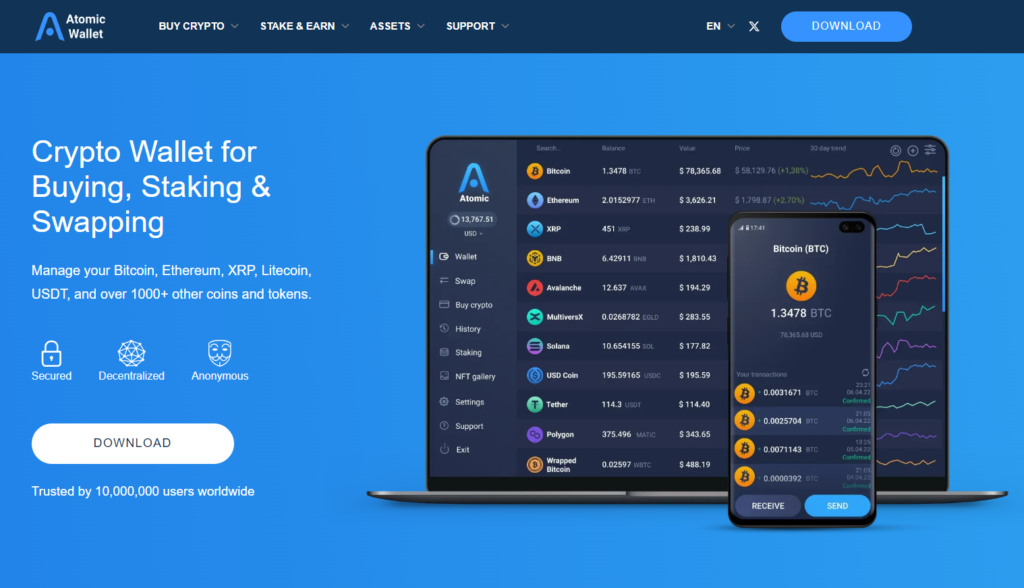
A multi-asset wallet with built-in exchange features and staking support for selected assets.
Pros
Simple portfolio management
Integrated swaps
Staking for some coins
Cons
Swap fees/spreads vary by partner
Web3/dApp tooling is more limited than some competitors
5. Guarda Wallet
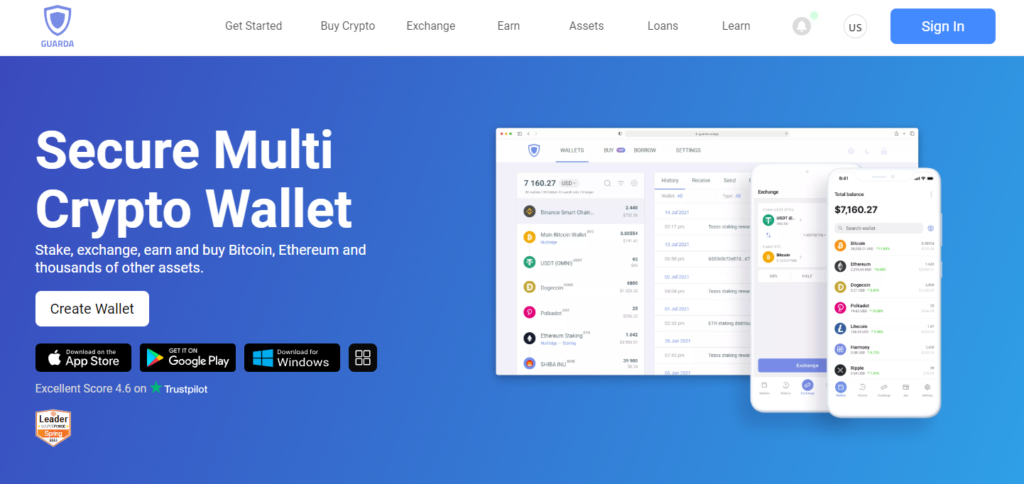
A multi-platform wallet (often used on mobile and desktop) with broad asset support and integrated exchange features.
Pros
Works across multiple platforms
Wide token coverage
Extra tools like staking for certain assets
Cons
Some advanced features involve additional fees
UI can feel “busy” for beginners
6. Crypto.com Wallet

A self-custody wallet designed for DeFi activity, swaps, and connecting to apps across supported networks.
Pros
Useful for DeFi workflows
Multiple network access
Integrates well within a larger ecosystem
Cons
Not the simplest first wallet for newcomers
Some flows are smoother if you also use related apps/services
7. MetaMask

One of the most widely used wallets for Ethereum and EVM networks, with swap aggregation and strong dApp support.
Pros
Excellent dApp compatibility
Huge ecosystem of integrations
Flexible network management
Cons
Can be confusing for first-time users
Best results mainly on EVM assets (not “native BTC” by default)
8. Binance Web3 Wallet

A wallet experience tied to a large exchange ecosystem, often benefiting from deep liquidity and multiple swap options.
Pros
Strong liquidity access (depending on route)
Multiple network coverage
Helpful for active traders
Cons
Some features may require an exchange account
Availability varies by jurisdiction
9. Exodus

A user-friendly wallet known for a polished interface and straightforward swapping for supported assets.
Pros
Clean design and simple navigation
Desktop + mobile availability (varies by platform)
Good for everyday portfolio viewing
Cons
Web3 features can be limited compared to DeFi-first wallets
Not every asset is swappable in-app
10. Coinomi
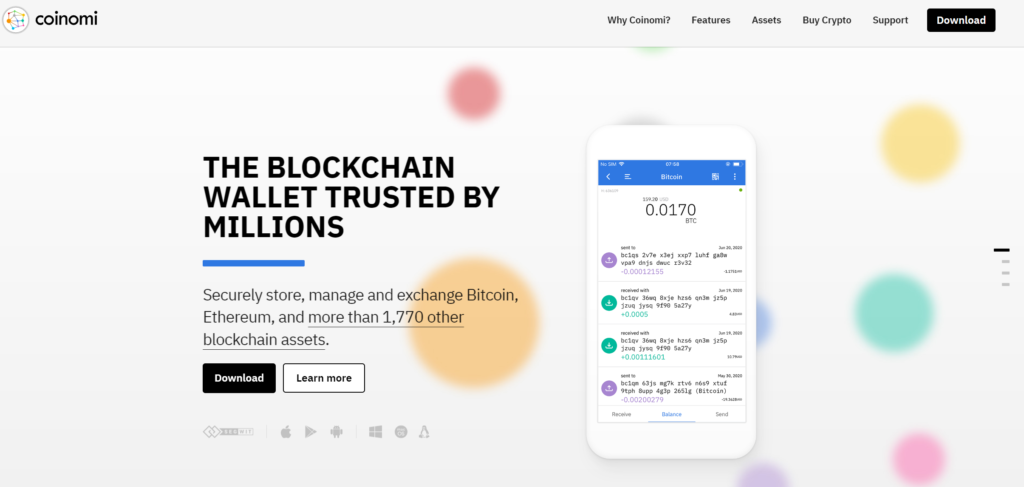
A long-running multi-asset wallet focused on broad compatibility and basic exchange integrations.
Pros
Supports many chains and assets
Generally stable for long-term use
Privacy-oriented approach (feature set varies by platform)
Cons
Interface feels dated to some users
Fewer modern DeFi/Web3 conveniences
What is IDRT (Rupiah Token)?
IDRT is a stablecoin designed to track the Indonesian Rupiah (IDR) at a 1:1 peg, providing an on-chain “digital rupiah” for transfers, trading, and payments.
The issuer describes IDRT as running on Ethereum and Binance Chain/BNB Chain, which helps it move across common crypto rails used in exchanges and wallets.
What Else Can You Swap IDRT For?
Depending on the wallet/exchange route, IDRT is commonly swapped into:
BTC
ETH
USDT
BNB
SOL
XRP
USDC
MATIC
Availability depends on supported chains, liquidity, and providers.
Why Convert IDRT to BTC?
Common reasons users move from IDRT to BTC:
Bitcoin is widely recognized and broadly supported across platforms
BTC liquidity is typically stronger on global markets
Users prefer BTC for long-term holding compared to fiat-pegged assets
BTC can be a “base asset” for accessing more trading pairs and global venues
Note: BTC is volatile. A swap from a stablecoin to BTC changes your risk profile immediately.
FAQ
Most frequent questions and answers
Yes, either through an instant swap service or a wallet with built-in swaps, if there’s a supported route and liquidity for your chosen network.
It depends on the route. Some swaps deliver native BTC to a Bitcoin address; others deliver wrapped BTC on an EVM chain. Always confirm the output network and token type before you confirm.
Sending IDRT on the wrong network (for example, depositing an EVM token to an incompatible chain address). Confirm the chain every time.


