


Top-Rated Solana Wallets with Built-In SOL Staking in 2026
Last reviewed: September 3, 2026
Staking SOL no longer requires moving funds to a centralized exchange or using a separate staking dashboard. Several self-custody wallets now let users delegate SOL, monitor rewards, and manage staking directly from the wallet interface.
The best option, however, depends on what you value most. Walletverse is a strong fit for mobile users who manage SOL alongside assets on other networks. Solflare offers one of the deepest Solana-native staking experiences. Phantom combines native and liquid staking with broad Solana dApp support. Ledger prioritizes hardware-backed key security, while Trust Wallet and Exodus make SOL staking accessible to users managing multi-chain portfolios.
This guide compares six leading SOL staking wallets based on staking method, custody, validator control, supported platforms, security model, and overall usability.
Best SOL Staking Wallets in 2026: Quick Comparison
| Wallet | Best for | SOL staking | Custody | Platforms | Main trade-off |
|---|---|---|---|---|---|
| Walletverse | Mobile multi-chain users | Built-in SOL staking | Self-custody | iOS, Android | Mobile-only and less Solana-specific than dedicated wallets |
| Solflare | Native SOL staking | Direct validator delegation | Self-custody | Mobile, browser, web | Focused primarily on the Solana ecosystem |
| Phantom | Native + liquid staking | Native staking and liquid staking | Self-custody | Mobile, browser | Native stake creation may differ by platform |
| Ledger | Hardware-backed staking | SOL staking through Ledger Wallet | Hardware self-custody | Hardware + companion app | Requires a hardware device |
| Trust Wallet | Mobile multi-chain staking | In-wallet SOL delegation | Self-custody | Mobile, browser | Less Solana-specialized than Solflare |
| Exodus | Desktop and portfolio users | Built-in SOL staking | Self-custody | Desktop, mobile, Web3 wallet | Uses a selected staking provider rather than broad validator choice |
How We Compared SOL Staking Wallets
A high headline APY is not enough to determine whether a staking wallet is good. Staking rewards change over time, and two wallets offering similar estimated yields can provide very different levels of control and security.
For this comparison, we focused on six decision factors: whether users retain custody of their assets, whether staking is available directly from the wallet, how much control users have over validator selection, how clearly the wallet presents staking and unstaking, which platforms are supported, and what additional security or multi-chain features the wallet provides.
Estimated staking yields should always be checked inside the wallet immediately before staking. Solana staking rewards are variable rather than guaranteed.
How SOL Staking Works
Solana uses Proof of Stake. SOL holders can delegate tokens to validators that participate in network consensus. Delegating does not require transferring ownership of the tokens to the validator when native self-custodial staking is used.
Native SOL staking typically creates a separate stake account controlled by the wallet owner. After delegation, the stake moves through an activation period before it begins earning rewards.
Solana processes staking changes around epoch boundaries. Rewards are calculated and distributed by epoch, and staking yield can change depending on network inflation, the amount of SOL actively staked, validator performance, and validator commission.
This is why a fixed APY should never be treated as permanent.
Native Staking vs. Liquid Staking
Native staking and liquid staking solve different problems.
With native staking, SOL is delegated directly to a validator. The user retains control of the stake account, but the SOL cannot be freely transferred or used in DeFi while the stake is active. Unstaking also requires a cooldown period.
With liquid staking, SOL is deposited into a staking pool or protocol and the user receives a liquid staking token representing the position. That token can potentially be traded or used in DeFi while rewards continue to accrue.
The trade-off is additional complexity and smart-contract or protocol risk.
For long-term holders who primarily want straightforward network participation, native staking is generally easier to understand. Liquid staking is more relevant to users who want their staked position to remain usable across DeFi.
1. Walletverse — Best for Mobile Multi-Chain Staking
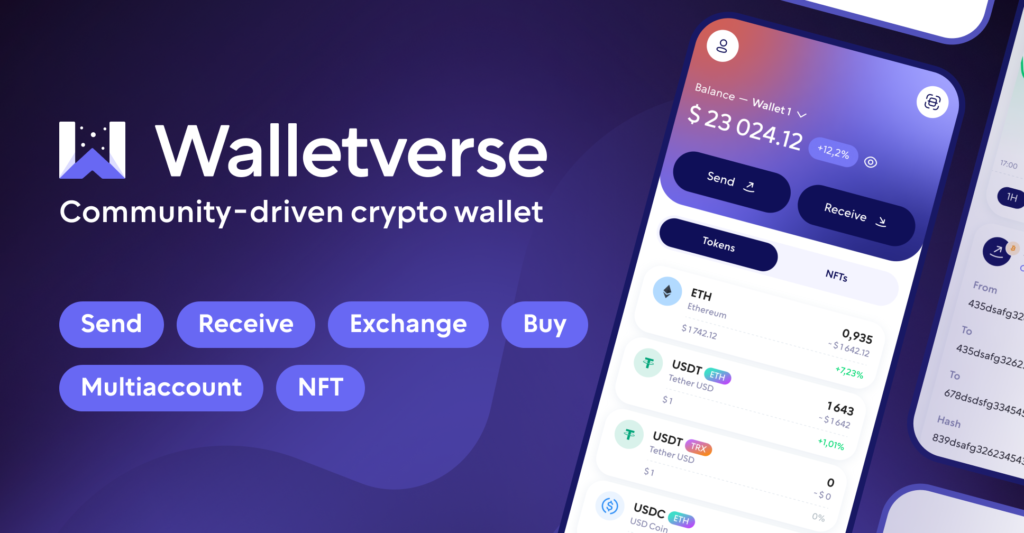
Walletverse is designed for users who want to manage multiple cryptocurrencies from a single mobile wallet rather than use a separate application for every blockchain.
The Walletverse product currently includes SOL among its supported staking assets, allowing users to manage Solana alongside other supported cryptocurrencies from the same wallet environment.
Its main advantage is convenience. A user who holds SOL together with assets on other networks can manage the broader portfolio, buy and swap supported assets, connect to Web3 applications, and access staking features without maintaining a Solana-only wallet.
Walletverse also focuses heavily on mobile security, including passcode and biometric protection.
For Solana specialists, however, a wallet such as Solflare may provide deeper validator and ecosystem tooling. Walletverse is better positioned for users who want SOL staking as part of a broader multi-chain wallet rather than a dedicated Solana workstation.
Best for: mobile users, multi-chain portfolios, and users who want staking and everyday crypto management in one application.
Main limitation: Walletverse is mobile-focused, and dedicated Solana wallets can provide more specialized Solana functionality.


2. Solflare — Best for Native Solana Staking

Solflare is one of the strongest options for users whose main priority is native SOL staking.
The wallet is built around the Solana ecosystem and allows users to delegate SOL to validators while maintaining self-custody. Its staking experience places more emphasis on validator selection and Solana-specific workflows than most general-purpose multi-chain wallets.
This makes Solflare particularly suitable for users who care about validator commission, validator performance, decentralization, and direct native staking.
Solflare also supports broader Solana functionality such as token management, NFTs, swaps, dApps, and hardware-wallet workflows.
The trade-off is specialization. If you manage assets across many unrelated blockchain ecosystems, a broader multi-chain wallet may be more convenient.
Best for: users focused primarily on Solana and native staking.
Main limitation: less useful as an all-in-one wallet for a highly diversified multi-chain portfolio.
3. Phantom — Best for Native and Liquid SOL Staking

Phantom has evolved from a Solana-focused wallet into a broader multi-chain wallet while maintaining deep integration with the Solana ecosystem.
For staking, Phantom offers both native SOL staking and a liquid staking option. Native staking delegates SOL directly to a validator, while liquid staking provides a liquid staking token that can remain useful in compatible DeFi applications.
That choice makes Phantom particularly attractive to users who are not sure whether they want traditional delegation or a more flexible liquid staking strategy.
Phantom also offers strong support for Solana dApps, NFTs, swaps, and token management.
Users should pay attention to platform differences. The exact availability and workflow for native and liquid staking can differ between the mobile application and browser extension, so the current interface should be checked before choosing a staking method.
Best for: Solana users who want a choice between native and liquid staking.
Main limitation: some staking functionality is platform-specific, and liquid staking introduces additional protocol considerations.
4. Ledger — Best for Hardware-Backed SOL Staking

Ledger is the strongest option in this comparison for users whose first priority is keeping private keys isolated on dedicated hardware.
SOL can be managed and staked through the Ledger ecosystem while transactions are authorized using the hardware device. Users can select an amount to stake and interact with validators through the companion wallet interface.
The major advantage is key isolation. Even when the wallet application runs on an internet-connected computer or phone, signing authority remains on the hardware device.
This makes Ledger particularly attractive for long-term holders and larger balances.
The obvious trade-offs are cost and convenience. A hardware wallet must be purchased, initialized, backed up, and physically available when transactions need to be signed.
Best for: long-term SOL holders and users prioritizing hardware security.
Main limitation: additional device cost and a slower workflow than a standard mobile wallet.
5. Trust Wallet — Best for Mobile Multi-Chain Users

Trust Wallet is another strong choice for users who want to hold and stake SOL inside a broader multi-chain wallet.
SOL can be delegated from the wallet interface, allowing users to participate in staking without moving their funds to a centralized exchange.
Its biggest advantage is familiarity and breadth. Users who already manage assets from multiple blockchain ecosystems can add SOL without adopting a dedicated Solana-only application.
The trade-off is similar to other multi-chain wallets: dedicated Solana products can offer deeper Solana-specific functionality.
Best for: mobile users who already use a multi-chain wallet and want straightforward SOL staking.
Main limitation: less specialized Solana tooling than wallets built specifically around the ecosystem.
6. Exodus — Best for Desktop and Portfolio Management

Exodus is particularly useful for users who prefer a polished desktop experience or want to monitor a diversified crypto portfolio from one interface.
SOL staking is built into the wallet across supported Exodus platforms. The wallet creates and manages the required staking account while the user retains self-custody.
Exodus simplifies validator management by using its supported staking infrastructure rather than requiring users to research a long list of validators themselves.
For beginners, that can make staking easier. Advanced users who specifically want to choose and compare independent validators may prefer Solflare or Phantom.
Exodus also provides clear portfolio views across many cryptocurrencies, making it a practical option for people who care as much about portfolio management as Solana-native functionality.
Best for: desktop users, beginners, and diversified portfolios.
Main limitation: less validator choice and less Solana-native depth than specialized wallets.
Which SOL Staking Wallet Is Best for You?
Choose Walletverse if you primarily use a phone, hold assets across multiple networks, and want SOL staking integrated into the same wallet you use for everyday portfolio management.
Choose Solflare if native SOL staking and validator control are the most important factors.
Choose Phantom if you want deep Solana integration plus the choice between native and liquid staking.
Choose Ledger if protecting private keys with dedicated hardware matters more than convenience.
Choose Trust Wallet if you already use a multi-chain mobile wallet and want to add SOL staking without changing your workflow.
Choose Exodus if you prefer desktop portfolio management and want a simplified built-in staking process.
SOL Staking Fees
There are several different costs to consider.
Native staking requires normal Solana network transactions when creating, delegating, deactivating, or withdrawing a stake account. Validators may also deduct a commission from staking rewards.
Liquid staking can include additional protocol or exit fees.
Some wallets simplify this information, while others expose the validator and fee structure in more detail. Always review the final staking terms shown in the wallet before approving the transaction.
The highest advertised APY is not necessarily the highest net return after fees.
How Long Does It Take to Unstake SOL?
Native SOL staking is not instant.
When a native stake is deactivated, the SOL normally remains unavailable until the relevant epoch transition completes. Network-wide warmup and cooldown rules can cause activation or deactivation to take longer under some conditions.
Users who may need immediate access to their SOL should consider this before staking.
Liquid staking can provide faster liquidity because the user holds a tradable staking token, but that convenience introduces additional protocol and liquidity risks.
Is Staking SOL Safe?
Staking is not risk-free.
With native self-custodial staking, delegating SOL does not normally give the validator control of the user’s wallet. However, users still face SOL price volatility, validator performance risk, wallet-security risk, and temporary illiquidity while stake is activating or deactivating.
Liquid staking adds smart-contract, staking-pool, liquidity, and integration risks.
Custodial staking introduces another category entirely because the exchange or platform controls the assets on the user’s behalf.
For all self-custody wallets, the recovery phrase remains critical. Anyone who obtains it can potentially control the wallet. It should never be entered into a website or shared with support staff.
FAQ
Most frequent questions and answers
Walletverse is one of the top wallets for earning staking rewards in 2026.
The best way to stake Solana is through a self-custody wallet like Walletverse, where users maintain ownership of their private keys and can easily manage staking without third parties.
Yes. Staking Solana is considered safe, especially when using decentralized wallets like Walletverse that protect your assets with passcode and biometric authentication
Walletverse, Solflare, Phantom, Trust Wallet, Exodus, and the Ledger wallet ecosystem all provide ways to stake SOL without relying on a traditional centralized exchange account. Their staking methods and level of validator control differ.
Yes. Native staking through a self-custody wallet allows the user to retain control of the stake account while delegating SOL to a validator.
Neither is universally better. Native staking is simpler and avoids an additional liquid-staking protocol layer, while liquid staking gives users more flexibility to trade or use their staking position in DeFi.


