


Best Solana Wallets for Staking & Security in 2026: 6 SOL Wallets Compared
Last reviewed: September 3, 2026
Choosing the best Solana wallet in 2026 depends on what you plan to do with your SOL. A long-term holder may prioritize hardware-backed key security, while an active Solana user may care more about native staking, validator selection, swaps, NFTs, and dApp connectivity. Multi-chain users may prefer one mobile wallet for SOL and assets on other networks.
For most users, there is no single wallet that wins every category. Walletverse is a strong option for mobile users who want self-custody, multi-asset management, and staking in one app. Solflare is one of the strongest choices for Solana-native staking, Phantom combines an accessible interface with native and liquid SOL staking, and Ledger is better suited to users who prioritize offline private-key protection.
This guide compares the leading Solana wallets by custody model, staking functionality, security, platform support, hardware compatibility, and overall use case.
Best Solana Wallets in 2026: Quick Comparison
| Wallet | Custody | SOL Staking | Platforms | Best For |
|---|---|---|---|---|
| Walletverse | Self-custody | In-app staking | iOS, Android | Mobile multi-chain users |
| Solflare | Self-custody | Native SOL staking | Mobile, web, browser extension | Solana staking and DeFi |
| Phantom | Self-custody | Native + liquid staking | Mobile, browser extension | Everyday Solana users |
| Ledger | Hardware self-custody | SOL staking | Hardware + mobile/desktop app | Long-term SOL storage |
| Trust Wallet | Self-custody | Native SOL staking | Mobile and supported browser workflows | Broad multi-chain portfolios |
| Backpack | Self-custody | SOL staking support | iOS, Android, browser | Solana power users |
How We Evaluated the Best Wallets for Solana
This comparison is based on publicly available product information and official wallet and Solana documentation. We considered the following factors:
Custody: whether users retain control of their private keys.
SOL staking: whether staking is available directly in the wallet and whether native or liquid staking is supported.
Security model: hot-wallet versus hardware-wallet protection, authentication and signing safeguards.
Validator control: whether users can choose validators and understand staking terms.
Platform support: mobile, browser, desktop and hardware availability.
Solana ecosystem support: SOL, SPL tokens, dApps, NFTs and other Solana-specific functionality.
Multi-chain support: whether users can manage assets outside Solana in the same wallet.
Ease of use: how practical the wallet is for everyday holding, sending and staking.
Transparency: whether important limitations, staking risks and fees are clearly communicated.
Walletverse publishes this comparison and is therefore an interested party. For that reason, we identify where competing wallets have advantages rather than presenting Walletverse as the best choice for every type of user.
1. Walletverse — Best for Mobile Multi-Chain Users Who Want SOL Staking
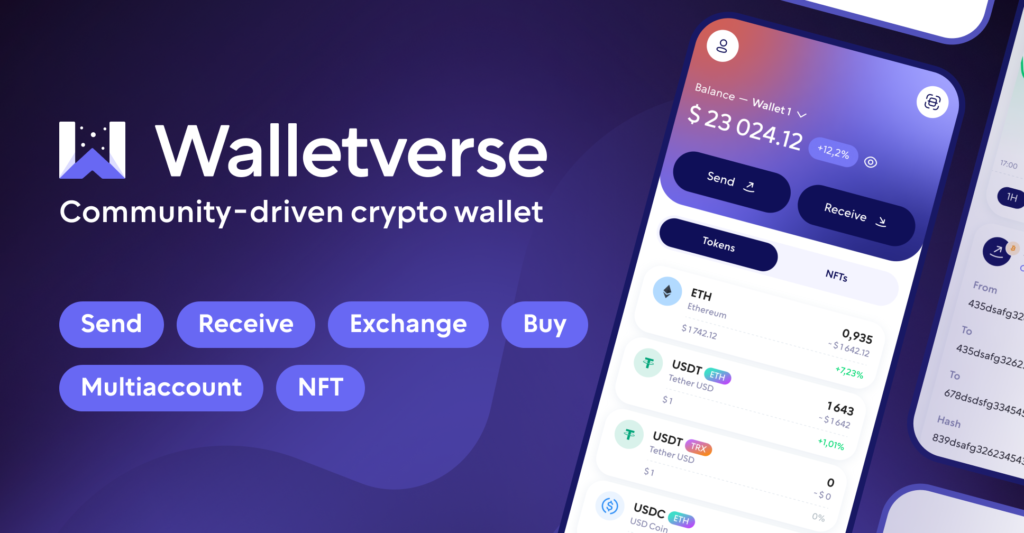
Walletverse is a self-custody mobile crypto wallet designed for users who want to manage Solana alongside a broader crypto portfolio. The app supports 600+ cryptocurrencies and combines storage, crypto purchases, swaps, dApp connectivity and staking from a mobile interface. Walletverse states that private-key access remains with the user and provides passcode and biometric protection.
For a user who owns SOL as part of a portfolio rather than operating exclusively inside the Solana ecosystem, that all-in-one approach can be convenient. Instead of maintaining separate wallets for several networks, users can manage multiple assets from one application.
Why choose Walletverse?
Walletverse is most relevant for users who prioritize:
self-custody;
mobile-first crypto management;
SOL staking inside the same app used for other assets;
support for hundreds of cryptocurrencies;
fiat purchases using supported payment providers;
passcode and biometric access protection;
WalletConnect access to compatible Web3 applications.


2. Solflare — Best for Native SOL Staking and Solana-Focused Users

Solflare is a Solana-focused self-custody wallet available through mobile apps, web and browser extensions. The official Solana directory highlights support for staking, NFTs, Token Extensions, Solana Pay and hardware-wallet integrations.
Its biggest advantage for this comparison is its close focus on the Solana ecosystem. Users who primarily hold SOL and Solana tokens may prefer this depth over a more generalized multi-chain wallet.
Solflare is particularly suitable for native staking because users can delegate SOL while retaining control over their keys. Native staking means SOL is delegated to a validator rather than exchanged for a liquid staking token.
3. Phantom — Best All-Round Solana Wallet for Everyday Use

Phantom remains one of the most recognizable wallets in the Solana ecosystem. Unlike older descriptions that characterize Phantom as a Solana-only wallet, Phantom now supports Solana and other networks and is available through mobile apps and Chromium-based browser extensions.
For staking, Phantom now offers two distinct options: native staking and liquid staking.
With native staking, SOL is delegated directly to a Solana validator. The SOL remains in a stake account under the user’s control and staking rewards are paid in SOL.
Phantom also offers liquid staking through Phantom Staked SOL, or PSOL. Liquid staking provides a token representing the staked position, allowing users to retain greater liquidity and potentially use the token in compatible DeFi applications. Liquid staking introduces additional considerations that do not apply to simple native delegation.
4. Ledger — Best Hardware Wallet for Long-Term SOL Security

For users whose first priority is protecting a large or long-term SOL position, a hardware wallet changes the security model.
Ledger keeps private keys on a hardware device instead of relying only on an internet-connected phone or computer. Ledger currently supports SOL staking through its wallet application, allowing users to delegate SOL while maintaining hardware-backed control over transaction authorization.
Hardware wallets do not make crypto risk-free. Users still need to protect their recovery information, verify transactions carefully and avoid malicious applications. However, isolating the signing keys from a general-purpose computer or smartphone can materially reduce exposure to some forms of malware and key theft.
5. Trust Wallet — Best Multi-Chain Mobile Alternative
Trust Wallet is another self-custody option for users who manage SOL alongside assets from many other blockchain networks.
SOL can be staked directly from the wallet by choosing an amount and validator. Trust Wallet’s current staking documentation states that the process remains non-custodial: the user retains control over the keys and the validator does not gain spending authority over the delegated SOL.
This makes Trust Wallet relevant to the same broad user segment as Walletverse: people who value multi-chain convenience rather than a strictly Solana-native environment.
6. Backpack — Best for Solana Power Users and Advanced Workflows
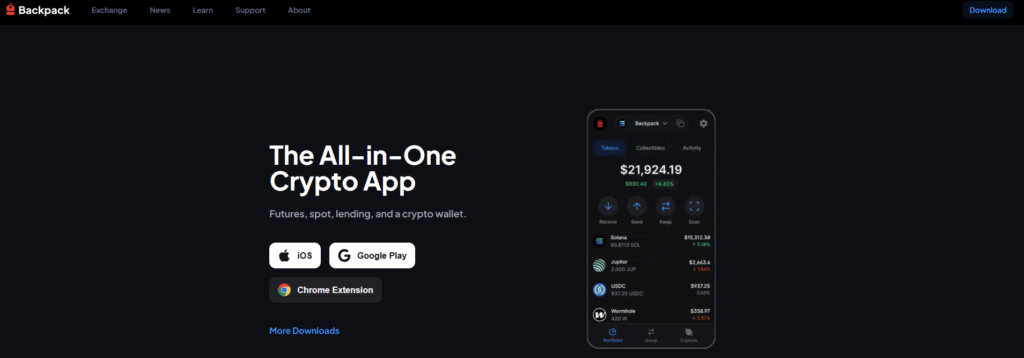
Backpack is a self-custody wallet supporting Solana and multiple other networks. The official Solana directory currently lists mobile and browser availability, staking and NFT functionality, as well as hardware-backed and multisig-related workflows.
Backpack is particularly relevant to users already active in the Solana ecosystem and those who want more advanced wallet functionality than a simple buy-and-hold interface.
Native vs. Liquid vs. Custodial SOL Staking
Not every service described as “Solana staking” works the same way.
Native staking
With native staking, SOL is delegated directly to a Solana validator. The user retains control of the stake account while the delegated SOL contributes voting weight to a validator. Rewards are affected by network conditions, validator performance and validator commission.
Native stake activation and deactivation are tied to Solana epochs, so unstaking is not necessarily instantaneous. Solana’s documentation explains that a stake account goes through a deactivating state before the SOL can be withdrawn.
Liquid staking
Liquid staking provides a token representing staked SOL. This can make the position easier to use inside DeFi without waiting for normal native-staking deactivation.
The trade-off is additional complexity. Depending on the implementation, liquid staking may introduce smart-contract, liquidity, depeg or protocol-specific risks that do not exist in the same form when simply delegating SOL natively.
Custodial staking
With custodial staking, a centralized service holds the assets and stakes them on the user’s behalf. This may be simpler for beginners, but the user no longer has the same direct private-key control as with self-custody.
For users specifically searching for a secure Solana wallet, this custody distinction is more important than a small difference in advertised APY.
How Much Can You Earn Staking SOL in 2026?
SOL staking rewards are variable rather than fixed.
Your effective return can depend on network issuance, validator performance, validator commission, total stake participation and the type of staking used. Third-party interfaces may also apply their own fees or use different staking providers.
For that reason, an advertised APY should be treated as a current estimate rather than a guaranteed rate.
When comparing wallets, check:
whether the displayed rate is native or liquid staking;
which validator or staking provider is used;
validator commission;
whether additional fees apply;
whether the displayed rate is an estimate or historical performance;
how quickly the position can be unstaked.
Do not choose a wallet solely because it displays the highest APY.
Is Staking SOL Safe?
Native SOL staking does not normally require transferring ownership of your SOL to the validator. Delegation gives the validator voting weight, not permission to spend your tokens.
However, staking is not risk-free.
The most important risks include SOL price volatility, missed rewards from validator underperformance, the temporary lack of liquidity while native stake is activating or deactivating, loss or theft of wallet credentials, phishing, malicious transaction approvals and additional protocol risks when liquid staking is used.
Slashing should also be described accurately. Solana’s current documentation states that slashing is not automatically applied by the protocol in the way users may expect from some other Proof-of-Stake networks. Network rules can evolve, so users should consult current Solana documentation when evaluating staking risk.
Which Solana Wallet Should You Choose?
Choose Walletverse if you want a mobile self-custody wallet that combines SOL staking with management of a broader multi-chain portfolio.
Choose Solflare if native Solana staking, validator control and deep Solana ecosystem functionality are your priorities.
Choose Phantom if you want an accessible all-round Solana experience with both native and liquid staking.
Choose Ledger if your top priority is hardware-backed security for a larger or long-term SOL balance.
Choose Trust Wallet if you want another established multi-chain mobile option with native SOL staking.
Choose Backpack if you are an experienced Solana user looking for more advanced ecosystem and hardware-oriented workflows.
Final Verdict
The best Solana wallet in 2026 depends less on finding the highest advertised APY and more on matching the wallet’s custody model and security features to the way you actually use SOL.
Walletverse is a practical choice for users who want self-custody, multi-chain asset management and SOL staking from a mobile app. Solflare is particularly strong for Solana-native staking, Phantom offers one of the broadest everyday Solana experiences, and Ledger is the better fit when hardware-backed security matters most.
Whichever wallet you choose, verify current staking conditions, protect your recovery credentials and understand whether you are using native, liquid or custodial staking before committing SOL.
FAQ
Most frequent questions and answers
Walletverse offers the best combination of security, usability, and staking rewards. Its mobile interface is simple, fast, and built for everyday users.
Your SOL remains in your wallet during staking, but poor validator performance or network issues can reduce rewards. Using reputable wallets like Walletverse minimizes these risks.
Yes. Native staking through a self-custody wallet allows you to delegate SOL without transferring spending authority to the validator.


