


Buy Storj (STORJ) with USD, EUR and Other Fiat Currencies
Decentralized infrastructure has become an important alternative to traditional cloud services, especially for data storage and content delivery. Instead of relying on a single provider, decentralized networks distribute data across thousands of independent nodes, improving resilience, privacy, and cost efficiency. Storj is one of the most established projects in this space.
Storj (STORJ) is a blockchain-based token that powers a decentralized cloud storage network used by businesses and individual users worldwide. Today, STORJ can be purchased with fiat currencies such as USD and EUR using modern crypto wallets that support card payments and mobile payment systems.
This article was prepared by ilink, a FinTech and Web3 software developer with more than 13 years of experience and completed projects worldwide.
What Is Storj (STORJ)?
Storj is a decentralized cloud storage platform that allows users to store data securely across a global network of independent nodes. Instead of placing files on centralized servers, Storj encrypts, splits, and distributes data fragments across multiple locations, ensuring privacy and redundancy.
The Storj project was founded in 2014, making it one of the earliest decentralized storage initiatives. Over time, it evolved into a production-ready platform used by developers, enterprises, and content-driven applications. The network is designed to be compatible with common cloud storage workflows, including S3-compatible APIs, which lowers the barrier for adoption.
STORJ is the utility token of the Storj network. It is used to pay node operators for providing storage and bandwidth, and it also serves as the primary payment method for users consuming storage services.
According to public documentation from Storj Labs, the network stores petabytes of data across tens of thousands of nodes distributed globally. This scale places Storj among the most widely deployed decentralized storage solutions in active use.
Market research by Gartner has repeatedly highlighted decentralized storage as a growing segment within cloud infrastructure, citing benefits such as reduced vendor lock-in and improved data sovereignty. In a statement on decentralized systems, IBM Research has also noted that distributed storage models can significantly enhance fault tolerance compared to centralized architectures.
Storj’s design aligns with these trends by combining end-to-end encryption, automatic redundancy, and a usage-based payment model.
Where Can I Buy Storj (STORJ) with Cash – 10 Best Crypto Wallets
1. Walletverse
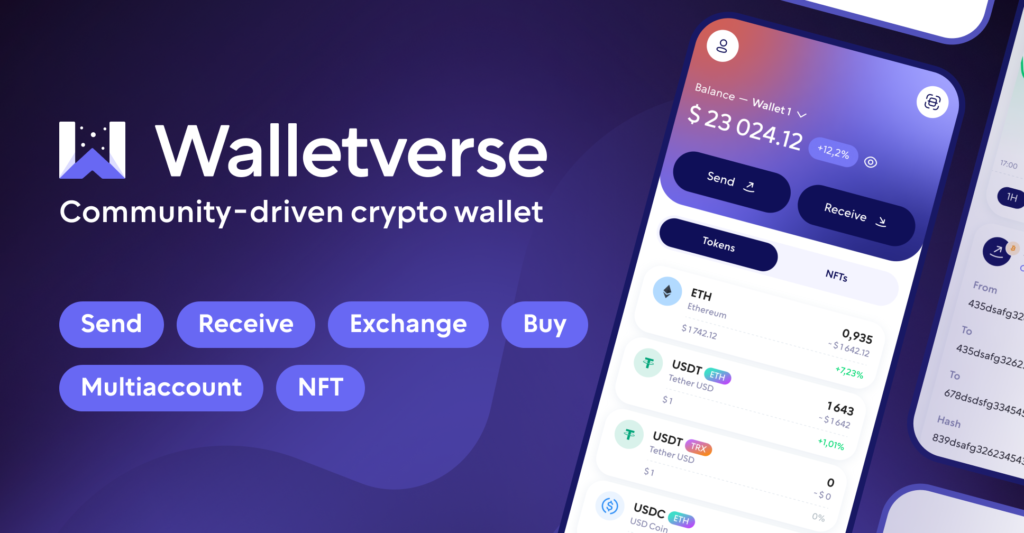
Walletverse is a mobile self-custody crypto wallet built for secure asset management and everyday crypto use. It supports more than 700 cryptocurrencies and provides access to Web3 services, DeFi tools, and decentralized applications.
Users can buy STORJ using Apple Pay, Google Pay, or credit and debit cards in multiple fiat currencies, including USD, EUR, GBP, CAD, AUD, INR, JPY, and KZT.
Walletverse follows a strict self-custody model. Private keys are stored only on the user’s device and protected through passcode and biometric authentication. Neither Walletverse nor any third party can access user funds.
The wallet also includes a proprietary GasFree USDT transaction system on the TRON blockchain, allowing users to send USDT without holding TRX and pay fees directly in USDT.
Pros:
- Supports 700+ cryptocurrencies
- Apple Pay and Google Pay available
- Full self-custody with biometric protection
- GasFree USDT transactions
- More than 20,000 active users
Cons:
- Mobile-only application
User reviews of the app:



2. Trust Wallet
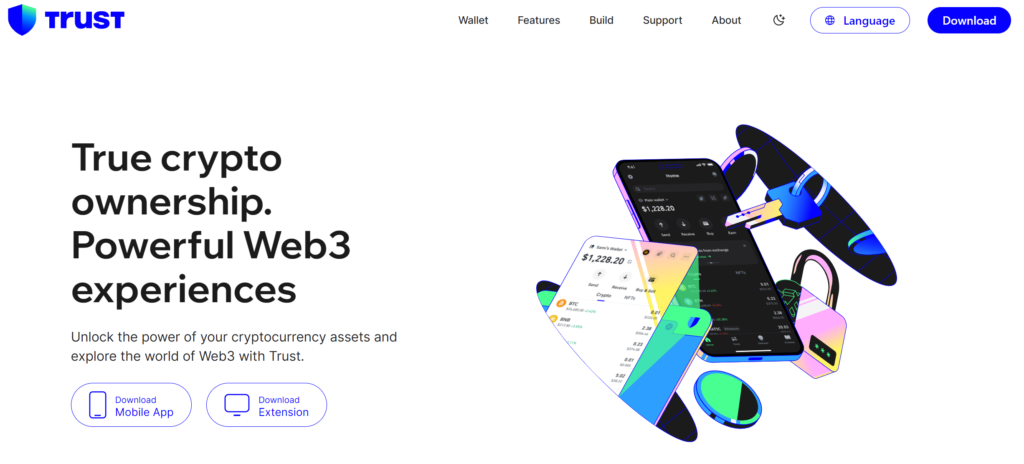
Trust Wallet supports Ethereum-based tokens, including STORJ.
Pros:
- Easy-to-use interface
- Web3 and DeFi support
- Wide asset compatibility
Cons:
- Fiat availability depends on region
- Fees vary by payment provider
3. Coin98 Wallet

Coin98 focuses on multi-chain and Web3 access.
Pros:
- Cross-chain functionality
- Built-in swaps
- DeFi-oriented tools
Cons:
- Complex interface for new users
- Fewer fiat gateways
4. Atomic Wallet
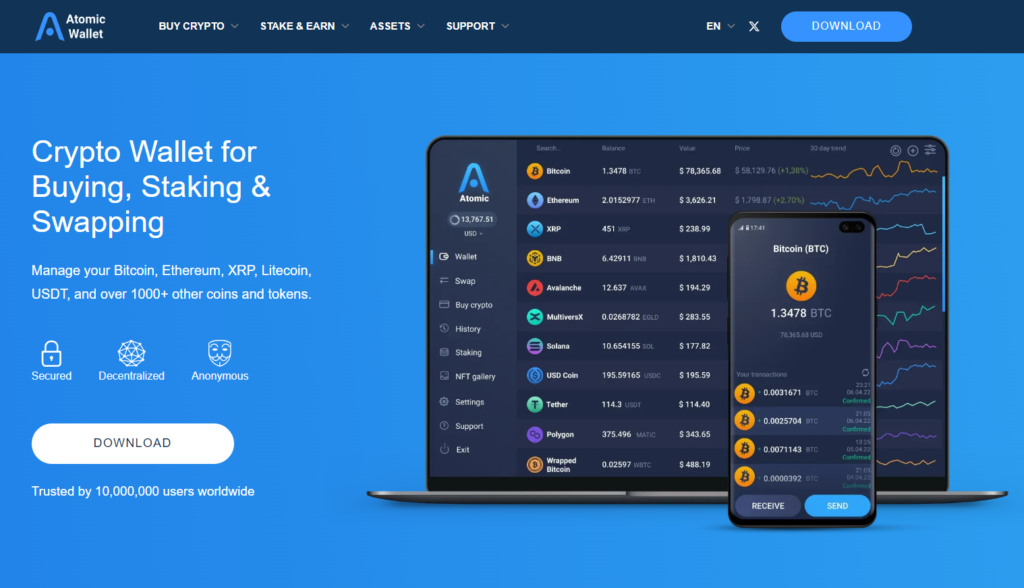
Atomic Wallet offers built-in swaps and staking.
Pros:
- Wide asset coverage
- Simple onboarding
- Integrated exchange
Cons:
- Fiat fees depend on provider
- Customer support response time may vary
5. Guarda Wallet
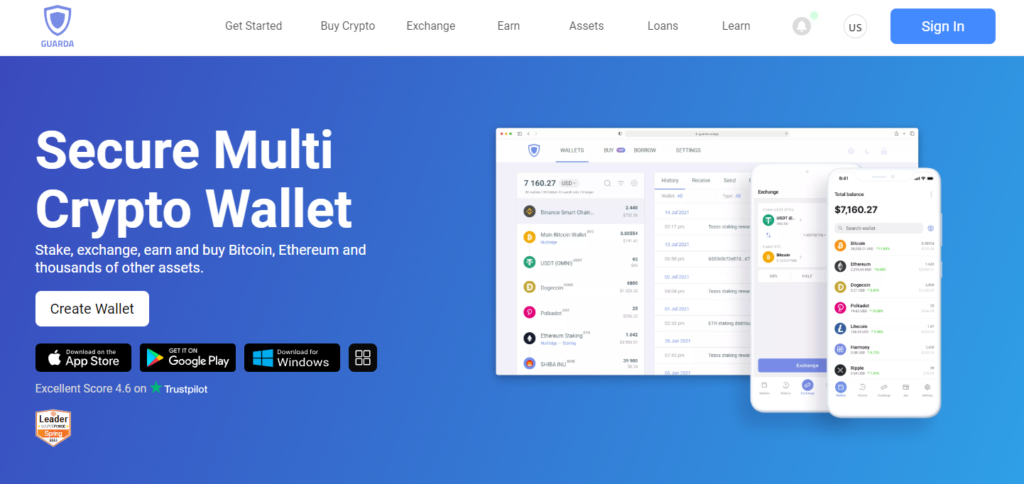
Guarda provides multi-platform wallet access.
Pros:
- Available on web, desktop, and mobile
- Secure key storage
- Integrated exchange
Cons:
- Higher conversion fees
- Limited advanced DeFi features
6. OKX Wallet

OKX Wallet is designed for advanced Web3 users.
Pros:
- Multi-chain support
- NFT and DeFi integrations
- High security standards
Cons:
- Steeper learning curve
- Fiat options vary by region
7. MetaMask
MetaMask is widely used within the Ethereum ecosystem.
Pros:
- Strong DeFi integration
- Browser and mobile support
- Large developer ecosystem
Cons:
- Not beginner-friendly
- Limited direct fiat options
8. SafePal
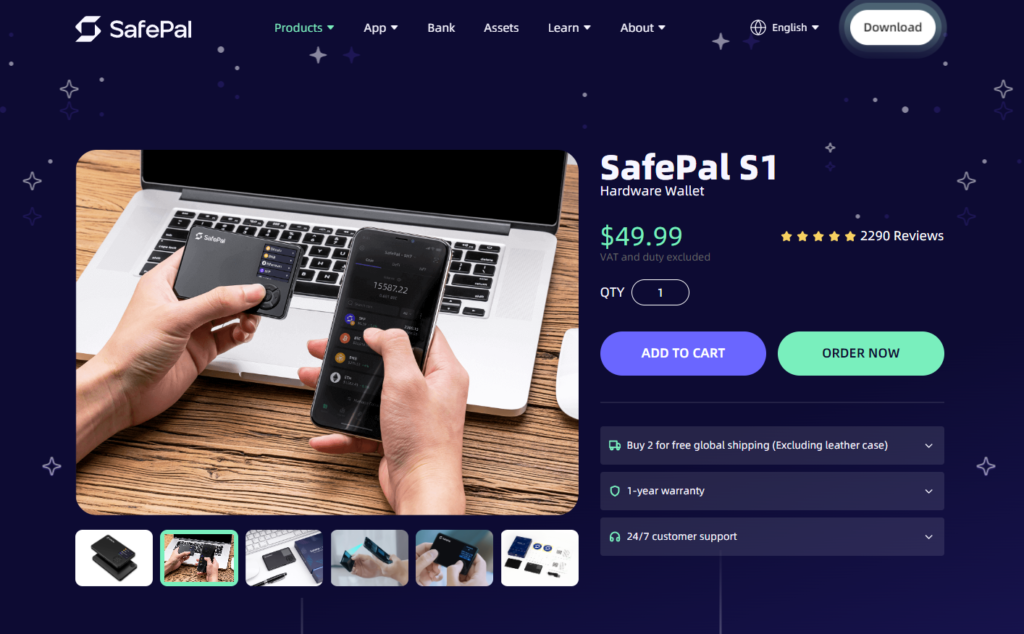
SafePal offers both software and hardware wallet options.
Pros:
- Hardware wallet compatibility
- Offline storage options
- DeFi access
Cons:
- Limited fiat on-ramps
- Interface may feel complex
9. Exodus
Exodus emphasizes usability and design.
Pros:
- Beginner-friendly layout
- Portfolio tracking
- Multi-platform support
Cons:
- Limited customization
- Fiat support varies by location
10. Coinomi
Coinomi focuses on privacy and long-term stability.
Pros:
- Strong privacy features
- Multi-platform availability
- Long operational history
Cons:
- Limited NFT support
- Basic DeFi tools
Buy STORJ with Apple Pay
Apple Pay allows users to buy STORJ quickly using their iPhone or iPad. Payments are confirmed with biometric authentication, and tokens are delivered directly to the user’s wallet, making this method both secure and convenient.
Buy STORJ with Google Pay
Google Pay enables Android users to purchase STORJ using saved cards or linked bank accounts. Transactions are typically processed within minutes, and the purchased tokens are credited directly to the wallet.
How to Buy the Storj (STORJ) with Fiat
To buy STORJ using fiat currency, follow these steps:
- Install a crypto wallet that supports fiat purchases
- Create a wallet and securely store the recovery phrase
- Open the buy crypto section
- Select Storj (STORJ)
- Choose a fiat currency such as USD or EUR
- Select a payment method like card, Apple Pay, or Google Pay
- Enter the amount and confirm the transaction
- Receive STORJ directly in your wallet
Storj represents a mature approach to decentralized cloud storage, offering real-world utility for businesses and developers who value privacy, redundancy, and cost efficiency. Its long operational history and active network usage distinguish it from many experimental storage projects.
With modern crypto wallets, users can easily buy Storj using fiat currencies while maintaining full control over their assets through self-custody solutions.
Data current as of January 2026.
FAQ
Most frequent questions and answers
STORJ is primarily a utility token used to power decentralized cloud storage. Its value is linked to network usage, demand for decentralized infrastructure, and adoption by developers and enterprises.
You can buy STORJ with USD through crypto wallets that support card payments, Apple Pay, or Google Pay, for example Walletverse.
Walletverse allows users to buy, store, and manage STORJ securely with full self-custody and fiat support.
STORJ is available through crypto wallets with fiat on-ramps, for example Walletverse, and on major cryptocurrency exchanges,.
Debit or credit card purchases often provide competitive pricing. Using wallets with optimized transaction flows can help reduce overall costs, for example Walletverse.


