


Buy Orchid (OXT) with USD, EUR and Other Fiat Currencies
Orchid (OXT) is one of the older Ethereum-based utility tokens still discussed in the privacy and Web3 infrastructure space. It is tied to the Orchid network, which describes itself as a decentralized marketplace for bandwidth and privacy services rather than a typical payment coin or meme token. Orchid’s own documentation explains that providers stake OXT to compete for traffic, while users pay for services through Orchid’s payment system.
If you want to buy OXT with USD, EUR, GBP, CAD, AUD, INR, JPY, KZT, or other fiat currencies, the easiest route is usually a wallet with a built-in fiat on-ramp and support for Ethereum-based tokens. In many cases, users buy a supported asset such as ETH or USDT first and then swap into OXT if direct fiat support for Orchid is limited in their region. OXT is an ERC-20 token on Ethereum, so Ethereum compatibility is the first requirement when choosing a wallet.
This article was prepared by ilink, a FinTech and Web3 software developer with 13 years of experience and completed projects worldwide.
What Is Orchid (OXT)?
Orchid is a decentralized network built around private internet access and bandwidth marketplaces. Orchid’s official site says OXT is its native ERC-20 token, and its documentation explains that providers stake OXT to increase their chance of being selected for inbound service requests in a stake-weighted system. Orchid payments are then handled through a probabilistic nanopayment model designed for network services.
Kraken describes Orchid as software designed to incentivize a decentralized VPN-style network, while Orchid’s own “How it works” materials say the protocol lets users request remote network access and pay for it using crypto through Orchid nanopayments. That makes OXT different from many tokens that mainly exist for trading. It has a defined role inside a bandwidth marketplace.
That combination gives OXT a clear profile. It is a real utility token with a long-running privacy-network narrative, but it is also volatile and relatively small compared with top crypto assets. Buyers should treat it as a higher-risk altcoin rather than a conservative core holding. This is an inference based on its small market capitalization and price history.
Where Can I Buy Orchid (OXT) with Cash? 10 Best Crypto Wallets
1. Walletverse
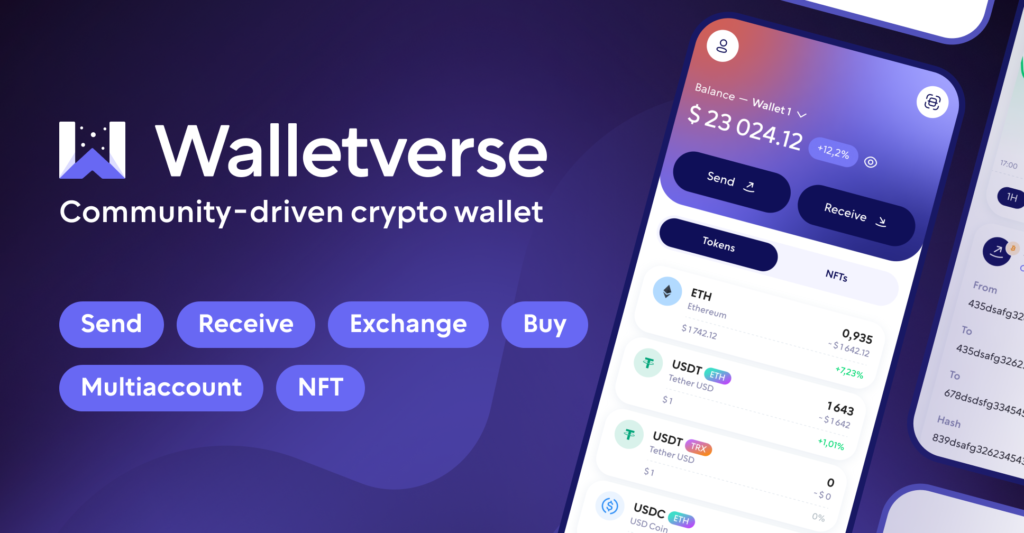
Walletverse is a mobile-first, non-custodial crypto wallet designed for buying, storing, sending, and swapping digital assets in one app. Based on the product information you provided, it supports 700+ cryptocurrencies, dApps, multiple accounts, fiat purchases through methods such as Apple Pay, Google Pay, bank cards, and multiple fiat currencies, plus biometric and passcode protection. It is positioned as a self-custody wallet for both beginners and more experienced users.
For OXT buyers, Walletverse is a strong fit because Orchid is an ERC-20 token, and Walletverse is built around multi-asset management, swaps, and mobile-first usability. If direct OXT purchases are not available in a local fiat corridor, buying ETH or USDT and swapping into OXT is the most practical path.
Pros
- Mobile-first and easy to use;
- Non-custodial with passcode and biometric security;
- Supports many fiat payment methods and currencies;
- Strong for self-custody, swaps, and day-to-day token management.
Cons
- Mobile-only format may not suit desktop-first users;
- Direct fiat availability for specific tokens can vary by provider and region.



2. MetaMask

MetaMask is one of the most established Ethereum wallets and is especially strong for ERC-20 assets like OXT. Its official buy-crypto pages show support for cards, Apple Pay, Google Pay, PayPal, Venmo, wire transfer, and bank transfer in supported regions. MetaMask also has a dedicated OXT price page and states that users can buy, sell, manage, and trade OXT directly in MetaMask.
Pros
- Excellent Ethereum and ERC-20 support;
- Deep Web3 and DeFi integration;
- Wide set of payment methods in supported markets.
Cons
- Less beginner-friendly than simpler wallets;
- Ethereum transaction fees can add noticeable cost.
3. Trust Wallet

Trust Wallet promotes itself as a self-custody wallet with support for 10M+ assets across 100+ blockchains, plus buy, sell, swap, staking, NFT, and dApp access through integrated services. Its buy-crypto flows support cards and local payment options through third-party on-ramp partners.
For OXT, Trust Wallet works well if you want a broad multi-chain wallet that still handles Ethereum tokens comfortably.
Pros
- Strong multi-chain coverage;
- Good mobile experience;
- Easy mix of fiat on-ramp and token swaps.
Cons
- Fiat options depend on region and providers;
- Large feature set can feel busy to first-time users.
4. TokenPocket
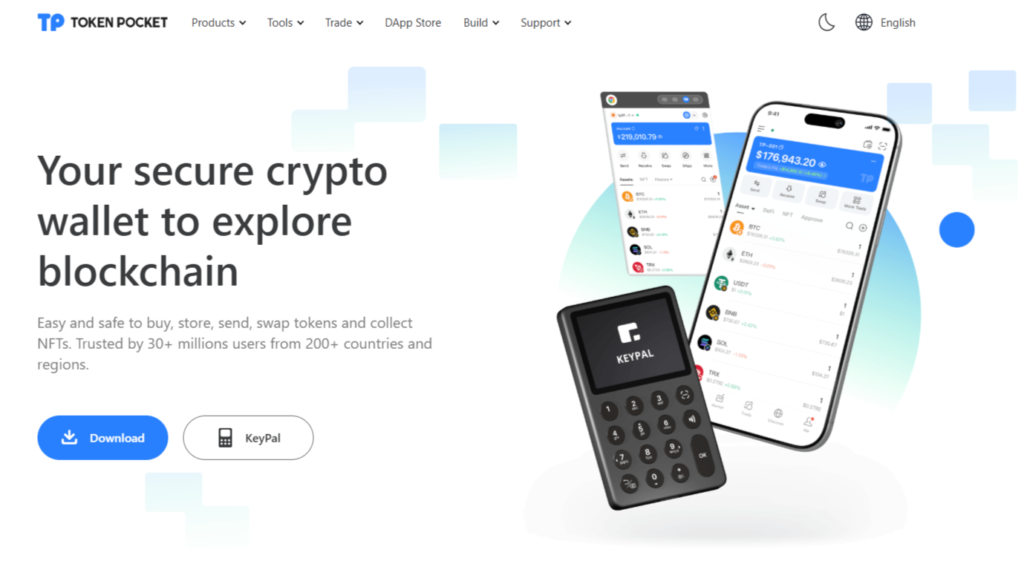
TokenPocket is a Web3-oriented wallet with strong on-chain tooling, token management, and integrated purchase flows. It supports Ethereum assets and suits users who want not only storage but also broader DeFi access. That can be useful for OXT buyers who may later interact with Ethereum-based ecosystems beyond simple holding.
Pros
- Good Web3 and DeFi access;
- Built-in buy and swap tools;
- Useful for more active on-chain users.
Cons
- Less intuitive for complete beginners;
- Better suited to users already familiar with wallets.
5. Zengo

Zengo uses an MPC-based security approach instead of a traditional seed phrase, which appeals to users who want an easier recovery model. Its public buy pages list cards, bank transfer, SEPA, Apple Pay, Google Pay, and PayPal in supported regions. Zengo supports Ethereum and many Ethereum-based tokens, so it can be used to buy a base asset with fiat and then move into OXT.
This description is based on Zengo’s current public buy and wallet product materials.
Pros
- Beginner-friendly recovery model;
- Strong payment-method coverage;
- Good for mobile users who want less setup risk.
Cons
- Less customizable than classic seed-based wallets;
- Advanced users may prefer more manual control.
6. Coinbase Wallet

Coinbase Wallet is useful for users who want a smoother path from mainstream exchange activity into self-custody. Because Coinbase has active OXT pricing and converter support, users already in the Coinbase ecosystem may find it easier to acquire a base asset and manage OXT from a familiar environment. Coinbase’s live OXT pages also make market data easy to follow.
Pros
- Friendly for users already using Coinbase;
- Solid beginner-to-intermediate UX;
- Convenient bridge from exchange balances to self-custody.
Cons
- Less flexible for advanced DeFi workflows than MetaMask;
- Direct in-wallet fiat options depend on linked services and region.
7. Exodus

Exodus is a polished multi-platform wallet available on desktop and mobile, and it supports Ethereum plus ERC-20 assets. Exodus buy pages support cards, bank transfers, Apple Pay, Google Pay, and PayPal through integrated providers, which makes it practical for fiat-to-OXT workflows that start with ETH or another liquid asset. Its interface is one of the cleaner ones for users who want a straightforward portfolio view.
This wallet description is based on current Exodus public product pages and the general wallet model.
Pros
- Clean design across desktop and mobile;
- Strong ERC-20 compatibility;
- Multiple fiat on-ramp methods.
Cons
- Less customizable for advanced on-chain users;
- Provider pricing varies by country.
8. Guarda

Guarda supports web, desktop, mobile, and extension use, with broad multi-chain and ERC-20 coverage. Its public materials highlight buy, exchange, and storage features for Ethereum-based assets and support for card purchases through fiat partners. That makes it a workable choice for users who want flexibility across devices while still handling OXT as an Ethereum token.
Pros
- Multi-platform flexibility;
- Broad token coverage;
- Easy buy and exchange flows.
Cons
- UX is less streamlined than some newer wallets;
- Direct token purchase availability depends on provider support.
9. Atomic Wallet

Atomic Wallet is a non-custodial wallet with broad asset coverage and fiat purchases through integrated providers. Its public buy pages emphasize support for multiple fiat currencies and standard card-based purchase flows. OXT buyers can use it as a simple fiat-to-ETH-to-OXT path if direct OXT fiat purchase is unavailable.
Pros
- Simple purchase flow for mainstream users;
- Non-custodial design;
- Broad asset support.
Cons
- Fewer advanced Web3 tools than MetaMask or Trust Wallet;
- Fiat features depend on partners.
10. SafePal

SafePal combines software and hardware wallet options, which is attractive for users who care strongly about long-term asset security. Public SafePal materials say it supports Ethereum and ERC-20 tokens plus buy, trade, and manage functions across app, extension, and hardware formats. For OXT buyers, it is a solid choice if security and eventual hardware storage matter more than maximum simplicity.
Pros
- Strong security-oriented positioning;
- Good Ethereum and ERC-20 support;
- Hardware upgrade path available.
Cons
- More setup than a pure beginner wallet;
- Can feel advanced for first-time buyers.
Buy OXT with Apple Pay
The easiest Apple Pay route usually starts with buying a widely supported asset such as ETH rather than assuming direct OXT fiat support in every region. Since OXT is an ERC-20 token, the usual flow is:
- Open a wallet that supports Apple Pay and Ethereum-based assets;
- Buy ETH, USDT, or another supported base asset with Apple Pay;
- Swap that asset into OXT.
MetaMask explicitly lists Apple Pay on its buy-crypto page, and Walletverse also states that users can buy crypto with Apple Pay and manage assets inside the app. That makes mobile wallets particularly convenient for OXT buyers who want to move from fiat to token ownership without leaving the wallet environment.
For Walletverse users, Apple Pay can be a fast way to fund the wallet with a supported asset and then swap into OXT if your local provider does not offer a direct OXT purchase pair.
Buy OXT with Google Pay
Google Pay works in much the same way. In most cases, the simplest flow is to buy a liquid supported asset first and then swap to OXT. MetaMask publicly lists Google Pay among its supported buy methods, while Walletverse also supports Google Pay in its crypto-buying flow based on the details you provided.
This route is especially useful for smaller purchases because it removes extra transfer steps. Instead of buying on one platform and moving assets to another wallet, users can often complete the whole flow in one app.
How to Buy The Orchid (OXT) with Fiat
1. Choose a Wallet That Supports Ethereum Tokens
Pick a wallet such as Walletverse, MetaMask, Trust Wallet, Coinbase Wallet, Exodus, or another option that supports Ethereum and ERC-20 tokens. OXT is an ERC-20 asset, so Ethereum compatibility is essential.
2. Complete Wallet Setup
Create the wallet, back up your recovery method if needed, and enable security tools such as passcode or biometrics. Walletverse, for example, emphasizes self-custody plus passcode and biometric protection.
3. Buy ETH, USDT, or Another Supported Base Asset with Fiat
Use your preferred method such as credit card, debit card, Apple Pay, Google Pay, or bank transfer. The exact options depend on the wallet and your country. MetaMask’s buy-crypto flow shows how broad those method options can be in supported regions.
4. Swap into OXT
Once the base asset arrives in your wallet, swap it into OXT. This is often the easiest method for smaller Ethereum-based tokens that may not always appear as direct fiat-buy options.
5. Store or Transfer Your OXT
After the swap, you can keep OXT in your wallet, send it to another Ethereum address, or move it into a different self-custody solution if that better matches your storage plan.
A useful note: when buying OXT this way, your total cost is not just the token price. It can also include fiat-provider fees, spread, and Ethereum network fees.
Conclusion
Orchid is one of the more unusual utility tokens in crypto because it is tied to a real privacy and bandwidth marketplace rather than only to speculation. Its role as a staking and payment asset inside a decentralized network gives it a clearer functional story than many smaller altcoins. At the same time, OXT remains a volatile small-cap token, so buyers should approach it with realistic expectations and pay close attention to fees, liquidity, and market conditions.
For most users, the easiest way to buy OXT with USD, EUR, and other fiat currencies is through a wallet that supports Ethereum tokens and includes a built-in fiat on-ramp. Walletverse is especially practical if you want a mobile, self-custodial option with easy funding, swaps, and day-to-day token management.
FAQ
Most frequent questions and answers
OXT has a clearer utility story than many low-cap tokens because it is tied to Orchid’s decentralized bandwidth marketplace. Orchid describes OXT as the token that powers staking and payment logic in the network. That said, market data shows OXT is still a small-cap and highly volatile asset, so it is better viewed as a higher-risk altcoin than a conservative long-term core holding.
The simplest route is to use a wallet with a fiat on-ramp, buy ETH or USDT with USD, and then swap into OXT. In Walletverse, that can be done inside a self-custody mobile wallet that supports fiat purchases, swaps, and Ethereum-token management.
Any wallet that supports Ethereum and ERC-20 tokens can work for OXT. Good options include Walletverse, MetaMask, Trust Wallet, Coinbase Wallet, Exodus, Guarda, SafePal, TokenPocket, Atomic Wallet, and Zengo. Walletverse is especially convenient for users who want a mobile-first, beginner-friendly, self-custody option.
You can buy OXT through wallets and exchanges that support Ethereum-token trading, for example Walletverse. On the wallet side, the practical route is usually to buy a supported base asset with fiat and then swap into OXT. MetaMask’s public pages also state that OXT can be bought and traded directly in MetaMask.
Yes. Walletverse is a self-custodial wallet designed for buying, storing, sending, and swapping multiple crypto assets, including Ethereum-based tokens. That makes it suitable for funding your wallet with fiat, swapping into OXT, and keeping the token in the same app afterward.


