


Buy Bone ShibaSwap (BONE) with USD, EUR and Other Fiat Currencies
Bone ShibaSwap (BONE) is one of the key tokens in the Shiba Inu ecosystem. It is connected with ShibaSwap, Shibarium, decentralized governance, staking, and on-chain utility, which makes it different from many meme-related crypto assets that rely mainly on community attention.
For users who want to buy Bone ShibaSwap with USD, EUR, GBP, CAD, AUD, INR, JPY, KZT, or other fiat currencies, the easiest route is usually a crypto wallet or exchange service that supports bank cards, Apple Pay, Google Pay, local payment methods, or fiat-to-crypto providers. This article explains what BONE is, how it works, and which wallets can help users buy, store, send, swap, and manage BONE.
This article was prepared by ilink, a FinTech and Web3 software developer with 14 years of experience and completed projects worldwide.
What is Bone ShibaSwap (BONE)?
Bone ShibaSwap (BONE) is a utility and governance token created for the Shiba Inu ecosystem. It was launched as part of ShibaSwap, the decentralized exchange connected with SHIB, LEASH, and other ecosystem assets.
BONE was originally designed to support governance inside the ShibaSwap ecosystem. In practice, this means that BONE holders can participate in ecosystem decision-making, including proposals related to ShibaSwap and the broader Shiba Inu infrastructure.
Its role expanded after the launch of Shibarium, the Layer 2 blockchain built for the Shiba Inu ecosystem. Official Shibarium documentation lists BONE as the currency symbol of the network and identifies Shibarium’s chain ID as 109. The same documentation describes Shibarium as a Layer 2 solution focused on “low gas fees and fast transaction processes.”
BONE also plays a role in Shibarium’s Proof-of-Stake architecture. According to Shibarium documentation, BONE is the native staking token for Shibarium, and the network uses it as a staking and governance asset.
From a tokenomics perspective, BONE has a maximum supply of 250,000,000 tokens. CoinMarketCap lists a circulating supply of about 229.9 million BONE, while CoinGecko also references the 250 million maximum supply.
BONE’s ecosystem relevance is also connected with Shibarium’s network activity. Shibariumscan lists more than 1.56 billion total transactions and more than 269 million wallet addresses, showing that the network has processed significant on-chain activity since launch.
In simple terms, BONE can be used for:
- Governance participation in the Shiba Inu ecosystem;
- Gas fees on Shibarium;
- Staking and validator-related activity;
- Liquidity and DeFi activity on ShibaSwap;
- Ecosystem interaction across Shiba Inu Web3 products.
This does not make BONE risk-free. Like other crypto assets, it is volatile, depends on market liquidity, and is influenced by ecosystem adoption, user activity, exchange availability, and broader crypto market cycles.
Where Can I Buy Bone ShibaSwap (BONE) with Cash? 10 Best Crypto Wallets
1. Walletverse
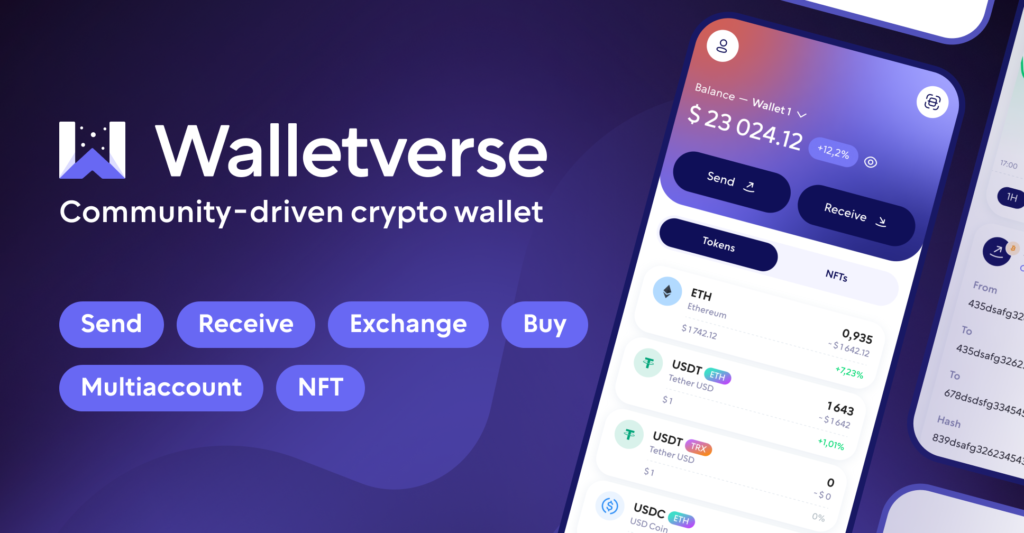
Walletverse is a mobile self-custody crypto wallet designed for users who want to buy, store, send, and exchange digital assets from one app. It supports 700+ cryptocurrencies according to the official Walletverse website, while Google Play describes the app as a free self-custodial DeFi wallet supporting Bitcoin, Ethereum, USDT, BNB, XRP, DOGE, Solana, TRX, and 600+ more assets, tokens, and blockchains.
Walletverse is suitable for beginners because it has a simple mobile interface, passcode protection, biometric authentication, and payment support through bank cards, Apple Pay, Google Pay, and fiat currencies such as USD, EUR, GBP, JPY, KZT, INR, CAD, AUD, and others. It is also useful for advanced users because it includes Web3 and DeFi access, dApps, multi-account functionality, staking for selected assets, and a proprietary GasFree USDT Transaction System on TRON.
The wallet is non-custodial, which means users control their own private keys. Walletverse also uses passcode and biometric security so only the wallet owner can access the funds.
Pros:
- Supports 700+ cryptocurrencies;
- Offers Apple Pay, Google Pay, card, and fiat purchase options;
- Provides a beginner-friendly mobile experience;
- Includes Web3, DeFi, dApps, and multi-account functionality;
- Uses passcode and biometric authentication;
- Non-custodial structure keeps users in control of funds;
- GasFree USDT on TRON helps users transfer USDT without holding TRX.
Cons:
- Mobile-only format may not suit desktop-first users;
- Direct BONE availability may depend on providers and liquidity routes;
- Users must safely manage their own recovery phrase.



2. MetaMask

MetaMask is one of the most widely used Ethereum and EVM-compatible wallets. It is especially relevant for BONE because BONE operates on Ethereum and is also connected with Shibarium, an EVM-compatible ecosystem.
MetaMask supports buying crypto with debit cards, credit cards, bank transfers, Apple Pay, Google Pay, PayPal, and other regional methods depending on user location.
Pros:
- Strong support for Ethereum and EVM-compatible networks;
- Suitable for ShibaSwap and Shibarium interactions;
- Supports many fiat payment options;
- Widely used across DeFi and Web3 platforms.
Cons:
- Manual network setup may be needed for Shibarium;
- Beginners may find gas fees, token imports, and network switching confusing;
- Direct BONE purchase may not always be available through fiat providers.
3. Trust Wallet

Trust Wallet is a popular self-custody wallet with support for many crypto assets, NFTs, and Web3 dApps. Google Play describes it as a multi-chain self-custody wallet and a gateway to 10+ million digital assets, NFTs, and thousands of Web3 dApps.
Trust Wallet can be useful for BONE users because it supports Ethereum-compatible assets and offers fiat purchase options through integrated providers. Trust Wallet also supports Apple Pay and Google Pay for crypto purchases in supported regions.
Pros:
- Strong multi-chain and Web3 support;
- Apple Pay and Google Pay purchase options;
- Suitable for DeFi and dApp users;
- Self-custody model gives users control over assets.
Cons:
- Some tokens may need to be added manually;
- Fiat purchase availability depends on region and provider;
- Beginners may need extra care when using swaps and dApps.
4. SafePal

SafePal offers software, browser extension, and hardware wallet options. Its Google Play listing describes SafePal as a non-custodial wallet suite with hardware wallet, mobile app, and browser extension solutions.
SafePal can be a practical choice for users who want both mobile access and optional cold-storage security. It supports buying, selling, and trading crypto through its wallet ecosystem.
Pros:
- Offers both software and hardware wallet options;
- Non-custodial model;
- Suitable for users who want stronger storage separation;
- Supports crypto buying, selling, and trading features.
Cons:
- Hardware wallet setup adds extra steps;
- BONE purchase routes may vary;
- Beginners must understand the difference between hot and cold storage.
5. Atomic Wallet

Atomic Wallet is a non-custodial wallet for managing, buying, swapping, and staking crypto. The official website says users can manage, swap, buy, and stake assets, while Google Play describes Atomic as a non-custodial app for over 300 cryptocurrencies.
Atomic supports crypto purchases by bank card, Visa, Mastercard, Apple Pay, and Android Pay for selected assets and regions.
Pros:
- Simple app for managing and swapping crypto;
- Non-custodial wallet structure;
- Supports card and mobile payment purchases;
- Suitable for users who prefer a straightforward interface.
Cons:
- Supports fewer assets than some larger multi-chain wallets;
- BONE may require swap routing rather than direct fiat purchase;
- Not ideal for users who need advanced Web3 tooling.
6. Binance Web3 Wallet

Bitget Wallet is a non-custodial Web3 wallet with broad multi-chain coverage. Google Play states that Bitget Wallet supports 130+ blockchains and a million tokens, with swaps, market insights, Launchpad, DApp browser, earn, and payment solutions.
This makes it relevant for users who want a wallet with strong multi-chain discovery and trading tools. For BONE, users should check whether the token is available directly or through Ethereum/Shibarium-compatible routes.
Pros:
- Supports many blockchains and tokens;
- Includes DApp browser and swap functionality;
- Designed for active multi-chain users;
- Non-custodial structure.
Cons:
- Large feature set may be overwhelming for beginners;
- Fiat and swap availability depend on region and providers;
- Users must verify token contracts carefully.
7. Exodus

Exodus is a self-custodial multi-chain wallet available on mobile and desktop. The official Exodus website says users can buy and sell crypto using credit or debit cards, bank accounts, Apple Pay, or Google Pay, with assets delivered to the wallet.
Exodus is often preferred by users who want a polished interface, portfolio tracking, swaps, and hardware wallet integrations.
Pros:
- User-friendly design;
- Mobile and desktop availability;
- Supports buying and swapping crypto;
- Integrates with hardware wallet options.
Cons:
- Advanced DeFi users may want more custom network control;
- Swap and purchase fees depend on providers;
- BONE availability should be checked before purchase.
8. Guarda

Guarda is a multi-currency non-custodial wallet that supports buying, exchanging, staking, sending, and receiving crypto. Its official site says users can buy Bitcoin, Ethereum, and thousands of other assets, while its mobile wallet page mentions credit/debit cards, Apple Pay, UnionPay, and SEPA.
Guarda may work well for users who want a wallet available across multiple platforms with fiat purchase support and broad token management.
Pros:
- Non-custodial wallet;
- Supports many assets;
- Offers card, Apple Pay, and SEPA purchase options;
- Available across mobile and desktop environments.
Cons:
- Fees depend on third-party providers;
- Direct BONE purchase availability should be checked;
- Some users may prefer wallets with deeper Shibarium-specific integrations.
9. OKX Wallet

OKX Wallet is a self-managed Web3 wallet that supports crypto storage, swaps, NFTs, DeFi, and dApps. OKX states that its wallet app is self-managed, meaning users control their own assets and can recover them with private keys.
OKX also supports fiat purchasing through options such as SEPA, Visa, Mastercard, and other methods depending on the region.
Pros:
- Combines wallet, swap, DeFi, and dApp access;
- Suitable for active Web3 users;
- Supports many networks and liquidity routes;
- Connected with the broader OKX trading ecosystem.
Cons:
- Some features may feel complex for beginners;
- Fiat options vary by jurisdiction;
- Users should check whether BONE is available directly or through swaps.
10. Coinbase Wallet

Coinbase Wallet is a self-custody wallet separate from the main Coinbase exchange account. Coinbase describes it as a wallet that gives users control over their crypto, keys, and data.
Users can add crypto to Coinbase Wallet through the Buy button, with payment methods such as bank account, local payment methods, and cards available in many countries.
Pros:
- Clean interface for beginners;
- Self-custody structure;
- Strong connection with the Coinbase ecosystem;
- Supports buying crypto through several payment methods.
Cons:
- BONE availability may depend on swap routes and supported assets;
- Some users may need Coinbase exchange access for easier fiat funding;
- Advanced DeFi users may prefer more customizable wallets.
Buy BONE with Apple Pay
Buying BONE with Apple Pay is usually possible in two ways. The first option is to buy BONE directly if the wallet’s fiat provider supports it. The second option is to buy another supported crypto asset, such as ETH or USDT, and then swap it for BONE through a wallet, exchange, or decentralized exchange.
In Walletverse, users can buy crypto with Apple Pay through supported providers and manage assets inside a self-custody mobile wallet. This is convenient for users who want a fast fiat entry point without manually entering card details each time.
A common Apple Pay flow looks like this:
- Install a crypto wallet that supports Apple Pay purchases.
- Create or import a wallet.
- Complete any required verification from the payment provider.
- Choose fiat currency, such as USD or EUR.
- Select BONE if it is directly available.
- If BONE is not directly available, buy ETH, USDT, or another supported asset.
- Swap the purchased asset for BONE through a supported route.
- Store BONE in a self-custody wallet and keep the recovery phrase offline.
Apple Pay is especially useful for mobile-first users because it reduces manual card entry and can make fiat onboarding faster.
Buy BONE with Google Pay
Buying BONE with Google Pay follows a similar process. The user chooses a wallet or crypto app that supports Google Pay, selects the purchase amount, confirms the transaction, and receives the purchased asset after the provider processes the payment.
Walletverse supports Google Pay purchases through supported fiat on-ramp options, making it practical for Android users who want to buy crypto with fiat and manage it from one mobile app.
A typical Google Pay process includes:
- Download a wallet that supports Google Pay.
- Set up wallet security with passcode and biometrics.
- Choose the Buy option.
- Select the fiat currency, such as USD, EUR, GBP, or CAD.
- Choose BONE if it is available from the provider.
- If direct purchase is unavailable, buy a liquid asset such as ETH or USDT.
- Swap that asset into BONE using a supported exchange or swap route.
- Confirm the token contract and network before sending or storing funds.
Google Pay can be a convenient option for users who already use it for everyday digital payments and want a familiar checkout flow when entering crypto.
How to Buy The Bone ShibaSwap (BONE) with Fiat?
The easiest way to buy Bone ShibaSwap with fiat is to use a wallet or exchange service that supports fiat payments and crypto swaps. The exact process depends on whether BONE is available for direct purchase in your region.
Step 1. Choose a wallet
Select a wallet that supports self-custody, token storage, and fiat purchase options. Walletverse is a strong mobile-first choice because it supports 700+ cryptocurrencies, Apple Pay, Google Pay, credit/debit cards, and multiple fiat currencies.
Step 2. Create and secure your wallet
Set up the wallet and enable passcode or biometric authentication. If the wallet is non-custodial, write down your recovery phrase and store it offline. Do not save it in screenshots, cloud notes, chats, or email.
Step 3. Choose your fiat currency
Select USD, EUR, GBP, CAD, AUD, INR, JPY, KZT, or another supported fiat currency. Availability depends on your wallet, payment provider, country, and compliance requirements.
Step 4. Select BONE or buy a swap asset
If BONE is listed directly, choose BONE and complete the purchase. If it is not available directly, buy a more liquid asset such as ETH or USDT, then swap it for BONE.
Step 5. Check the network
BONE can be connected with Ethereum and Shibarium, so users should always check the network before sending or receiving funds. Sending tokens to the wrong network may result in loss of access.
Step 6. Confirm fees and limits
Review provider fees, network fees, exchange rate, slippage, and purchase limits. Fiat on-ramp fees may differ depending on card type, region, provider, and payment method.
Step 7. Store BONE securely
After purchase, keep BONE in a secure wallet. For everyday use, a mobile self-custody wallet may be enough. For larger long-term holdings, some users prefer hardware wallets or multi-wallet storage strategies.
Conclusion
Bone ShibaSwap (BONE) is more than a community token. It is used for governance in the Shiba Inu ecosystem, plays a role in ShibaSwap, and functions as the gas and staking-related token for Shibarium.
Users can buy BONE with USD, EUR, and other fiat currencies through wallets, exchanges, and fiat on-ramp providers. In many cases, the process involves buying BONE directly or purchasing another crypto asset first and swapping it into BONE.
Walletverse is a convenient option for mobile users because it combines self-custody, 700+ supported cryptocurrencies, fiat payment options, Apple Pay, Google Pay, bank cards, Web3 access, dApps, passcode protection, biometric security, and GasFree USDT transactions on TRON in one app.
As with any crypto asset, users should check current availability, verify the token contract, review fees, and understand the risks before buying.
Data current as of May 15, 2026.
FAQ
Most frequent questions and answers
BONE may be interesting for users who follow the Shiba Inu ecosystem, ShibaSwap, Shibarium, and community-driven Web3 projects. It has real ecosystem utility through governance, gas fees, and staking-related activity, but it is still a volatile crypto asset and should be evaluated carefully.
You can buy BONE with USD through a wallet or exchange that supports fiat purchases and BONE trading. In Walletverse, users can buy crypto with cards, Apple Pay, Google Pay, and supported fiat currencies, then store or exchange assets inside a self-custody mobile wallet.
You can use wallets that support Ethereum-compatible assets, Shibarium access, or swap routes for BONE. Walletverse is a convenient mobile option because it supports 700+ cryptocurrencies, self-custody, Web3 features, and fiat purchase methods.
BONE can be bought through selected crypto exchanges, Web3 wallets, fiat on-ramp providers, and decentralized swap routes. Availability changes by country, provider, and liquidity, so users should always check whether BONE is directly supported before starting a purchase.
The cheapest way usually depends on fees, spread, network costs, and payment method. Bank transfers or buying a liquid asset first and swapping it through a low-fee route may be cheaper than card payments, but users should compare the final received amount before confirming the transaction.
Yes, users can buy BONE with EUR if their wallet, exchange, or fiat provider supports EUR payments and BONE purchase or swap routes. If direct BONE buying is unavailable, users can buy ETH or USDT with EUR and then swap it for BONE.
Yes, BONE can be stored in a compatible mobile crypto wallet. Walletverse is designed for mobile self-custody and allows users to manage crypto assets with passcode and biometric authentication.
No, BONE and SHIB are different tokens within the Shiba Inu ecosystem. SHIB is the main Shiba Inu token, while BONE is used for governance, ShibaSwap utility, and Shibarium gas-related activity.


