


Buy MANTRA (OM) with USD, EUR and Other Fiat Currencies
MANTRA is part of the real-world asset tokenization sector, also known as RWA. This market connects blockchain infrastructure with assets such as real estate, private credit, commodities, funds, bonds and other regulated financial instruments.
This guide explains what MANTRA is, how OM evolved, where users can buy it, and which wallets may be useful for buying, storing and managing the asset.
This article was prepared by ilink, a FinTech and Web3 software developer with 14 years of experience and completed projects worldwide.
What is MANTRA (OM)?
MANTRA is a Layer 1 blockchain ecosystem focused on real-world asset tokenization, decentralized finance and regulatory-ready on-chain infrastructure. MANTRA Chain documentation describes it as a modular Layer 1 blockchain engineered for DeFi and RWA tokenization, with a foundational commitment to regulatory compliance.
The project began in 2020, when OM launched as an ERC-20 token on Ethereum. At that time, MANTRA was mainly a DeFi project, and OM was used as the project’s dApp token. According to MANTRA documentation, the original ERC-20 OM token had a hard cap supply of 888,888,888 OM.
The project later moved toward a broader RWA-focused Layer 1 vision. MANTRA began building MANTRA Chain in 2022, with the goal of creating infrastructure for tokenized real-world assets, compliant on-chain finance and institutional use cases.
In February 2024, a community proposal to make OM the native Layer 1 staking coin for MANTRA Chain passed with strong support. MANTRA Chain mainnet launched on October 10, 2024, with OM as the native staking coin from genesis.
The token structure later changed. On March 2, 2026, at block 13,000,000, MANTRA completed a non-dilutive 1:4 token split and ticker transition. Under this change, 1 OM became 4 MANTRA, the ticker changed from OM to MANTRA, and the maximum hard cap became 10,000,000,000 MANTRA. The project says this did not change the value of holdings, only the unit denomination.
This is important for users. Some exchanges, wallets, data platforms and older articles may still use OM, while newer MANTRA ecosystem materials may use MANTRA. Before buying or transferring, users should always check the exact token, network and current ticker used by the selected platform.
MANTRA is closely connected with RWA adoption. Its official website describes MANTRA as an EVM-compatible Layer 1 blockchain for RWAs, capable of adherence to real-world regulatory requirements. The chain is built to support permissionless infrastructure while also allowing permissioned applications that can meet compliance needs such as KYC, KYB, KYT and validator-level controls.
Some useful non-price statistics about MANTRA and OM include:
- OM originally launched in 2020 as an ERC-20 token on Ethereum;
- Original ERC-20 OM hard cap supply: 888,888,888 OM;
- MANTRA Chain mainnet launched on October 10, 2024;
- MANTRA Chain genesis supply: 1,777,777,776 OM mainnet staking coins;
- Community vote support: 82.17% of ERC-20 OM holders and 49.17% of mainnet validators voted in favor of the revised tokenomics proposal;
- Token split date: March 2, 2026;
- Split ratio: 1 OM became 4 MANTRA;
- New maximum hard cap after the split: 10,000,000,000 MANTRA;
- MANTRA Chain became fully EVM-compatible after the v5.0.0 Abunnati Upgrade;
- MANTRA raised $11 million in 2024 to build RWA-focused blockchain infrastructure;
- Reuters reported that MANTRA signed a deal with DAMAC Group to tokenize assets in the Middle East worth at least $1 billion;
- MANTRA also previously agreed with MAG Property Development to tokenize real estate assets worth around $500 million;
- McKinsey estimated that tokenized assets could reach around $3 trillion by 2030.
These figures are more useful for an evergreen article than market capitalization or live price, because price and market cap change every day.
One trusted company quote also shows how traditional asset owners view tokenization. In Reuters coverage of the DAMAC agreement, DAMAC Managing Director of Sales and Development Amira Sajwani said, “DAMAC is always exploring new technologies to enhance our product offerings. Partnering with MANTRA is a natural extension of our commitment to innovation and forward-thinking solutions.”
MANTRA may be interesting for users who follow RWA tokenization, compliant DeFi, staking, Layer 1 blockchains, institutional crypto infrastructure and tokenized finance. However, MANTRA is still a volatile crypto asset. Users should check liquidity, migration status, token support, fees, network compatibility and project updates before buying.
Where Can I Buy MANTRA (OM) Cash? 10 Best Crypto Wallets
1. Walletverse
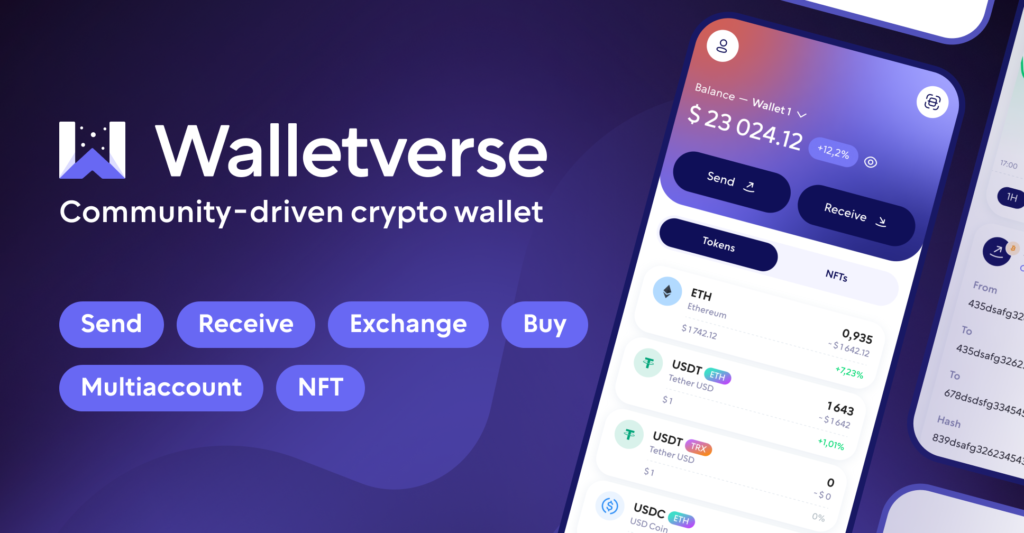
Walletverse is a mobile crypto wallet created for users who want a simple way to buy, store, send and exchange digital assets. It is suitable for beginners who need a clean interface and for advanced users who want access to Web3, DeFi, dApps and multi-account management.
Walletverse supports 700+ cryptocurrencies and allows users to buy crypto with Apple Pay, Google Pay, credit and debit cards, as well as fiat currencies such as USD, EUR, GBP, JPY, KZT, INR, CAD, AUD and more. The wallet is non-custodial, which means users control their assets. Even the Walletverse team cannot access user funds.
Security is one of the key parts of Walletverse. The app supports passcode and biometric authentication, helping users protect access to their wallet. It also includes AML and CYT features, Solana, ETH and TRX staking, and a proprietary GasFree USDT Transaction System on TRON. This system lets users send USDT on TRON without holding TRX separately for gas, because transaction fees can be paid directly in USDT.
Walletverse is available on Google Play and the App Store, with a Google Play rating of 4.8 and an App Store rating of 5.0.
Pros:
- Supports 700+ cryptocurrencies and multiple fiat payment methods;
- Allows buying crypto with Apple Pay, Google Pay, cards and major fiat currencies;
- Non-custodial wallet structure gives users control over their assets;
- Passcode and biometric authentication help protect account access;
- Mobile-first design is convenient for everyday crypto use;
- GasFree USDT transfers on TRON reduce friction for new users.
Cons:
- Currently focused on mobile users;
- Direct MANTRA or OM availability may depend on region and liquidity provider;
- Users still need to check the correct token, ticker and network before transfer.



2. MetaMask

MetaMask is one of the most popular wallets for Ethereum and EVM-compatible networks. It can be useful for users who want to manage EVM assets, import token contracts and interact with decentralized applications.
MANTRA Chain became fully EVM-compatible after the Abunnati Upgrade, while older OM history is connected with Ethereum. This means MetaMask may be relevant for users working with EVM-based MANTRA routes, depending on current network support and token availability.
MetaMask also supports crypto buying through third-party providers. Depending on the region, users may be able to buy crypto with cards, bank transfers, Apple Pay, Google Pay, PayPal or local payment methods. If MANTRA is not available for direct purchase, users can buy ETH, USDC or another supported asset first and then use a swap or exchange route.
Pros:
- Strong support for Ethereum and EVM-compatible assets;
- Useful for DeFi users and token imports;
- Available as a browser extension and mobile app;
- Supports several fiat on-ramp methods through providers.
Cons:
- Less beginner-friendly than simple mobile wallets;
- Network setup and token imports may confuse new users;
- Users must avoid old or unsupported OM contracts.
3. Trust Wallet

Trust Wallet is a popular self-custody wallet for mobile crypto users. It supports many blockchain networks, tokens, NFTs and decentralized applications. It can be useful for users who want a mobile wallet for buying and managing crypto assets.
Trust Wallet supports fiat purchases through third-party providers. Apple Pay and Google Pay are available in supported regions, making the buying process easier for mobile users. If MANTRA or OM is not available directly, users can buy another supported asset first and exchange it later.
Pros:
- Strong mobile wallet experience;
- Supports many networks, tokens and dApps;
- Apple Pay and Google Pay are available in supported regions;
- Suitable for users who want self-custody.
Cons:
- Provider fees vary by country and payment method;
- Direct MANTRA buying may not be available everywhere;
- Users must check whether the wallet supports the current token version.
4. Crypto.com Onchain Wallet

Crypto.com Onchain Wallet is a self-custody wallet for users who want DeFi access, swaps and multi-chain asset management. It can connect with the Crypto.com App, which may make fiat funding easier for verified users.
Crypto.com supports buying and selling many crypto assets with debit cards, credit cards, bank transfers and selected digital payment methods. Users who want MANTRA should check whether the current asset version is supported directly. If not, they may need to buy a liquid asset first and swap later.
Pros:
- Self-custody wallet for Web3 and DeFi users;
- Connects with the Crypto.com ecosystem;
- Supports many assets and networks;
- Useful for users who already use Crypto.com services.
Cons:
- Some fiat features require a Crypto.com account;
- Regional restrictions may apply;
- MANTRA availability may differ by country and provider.
5. Atomic Wallet

Atomic Wallet is a non-custodial wallet available on mobile and desktop. It supports storage, buying, swapping and staking for many digital assets.
Atomic Wallet allows users to buy crypto with fiat through integrated payment partners. Depending on the asset and region, payments may include cards, bank transfers, Apple Pay or Google Pay. Users should confirm whether MANTRA or OM is supported directly before using it for this token.
Pros:
- Non-custodial wallet structure;
- Mobile and desktop apps are available;
- Supports many assets and built-in swaps;
- Fiat buying is available through third-party partners.
Cons:
- Direct MANTRA support may vary;
- Provider fees can differ by region;
- Some users may prefer wallets with broader Web3 integrations.
6. Binance Web3 Wallet

Binance Web3 Wallet gives users access to self-custody features inside the Binance ecosystem. Binance is also relevant because it supports many major crypto assets, fiat payment routes and trading pairs across global markets.
Users can buy crypto with cards, bank transfers, Apple Pay or Google Pay in selected regions. If MANTRA or OM is available directly, users may be able to buy or trade it through Binance services where supported. If not, users may buy USDT, USDC, ETH or BNB first and then exchange it for MANTRA through a supported route.
Pros:
- Strong exchange ecosystem and large liquidity base;
- Supports fiat purchases in many regions;
- Apple Pay and Google Pay are available in selected flows;
- Useful for users who want trading and wallet access together.
Cons:
- Some services vary by country;
- KYC is usually required for fiat purchases;
- Users must check ticker changes and supported deposit networks.
7. Exodus

Exodus is a self-custody wallet known for its clean design and portfolio tracking. It is available on mobile, desktop and browser extension.
Exodus supports crypto buying through third-party providers. Payment methods may include credit cards, debit cards, bank transfers, Apple Pay and Google Pay, depending on location. If MANTRA is not available directly, users can buy another supported asset and use an exchange route.
Pros:
- Beginner-friendly interface;
- Mobile, desktop and browser access;
- Built-in fiat buying through partners;
- Good portfolio management experience.
Cons:
- Provider fees and payment methods vary by region;
- Direct MANTRA support may not be available everywhere;
- Advanced users may prefer wallets with deeper DeFi and RWA integrations.
8. Guarda

Guarda is a non-custodial multi-currency wallet available on mobile, desktop and web. It supports many assets, swaps and fiat purchases through integrated providers.
Guarda can be useful for users who prefer wallet access across several devices. Payment methods may include credit cards, debit cards, bank transfers, Apple Pay and Google Pay depending on the provider and country.
Pros:
- Non-custodial wallet with mobile, desktop and web access;
- Supports many assets and blockchain networks;
- Built-in buy and exchange features;
- Suitable for users who want more than one device option.
Cons:
- Third-party provider fees may vary;
- Direct MANTRA availability should be checked first;
- The interface may feel less simple than mobile-first wallets.
9. OKX Wallet

OKX Wallet is a Web3 wallet connected with the OKX ecosystem. It supports multi-chain asset management, dApps, NFTs, swaps and DeFi tools.
OKX supports crypto purchases with cards and selected mobile payment methods in supported regions. Users can also access Apple Pay and Google Pay in certain fiat buying flows. For MANTRA, users should check whether direct purchase is supported or whether they need to buy another asset first.
Pros:
- Strong Web3 wallet with multi-chain support;
- Apple Pay and Google Pay are available in supported regions;
- Useful for users who want exchange access and on-chain tools;
- Supports dApps, NFTs and DeFi interactions.
Cons:
- Availability depends on country and compliance rules;
- Some features may feel advanced for beginners;
- Direct MANTRA purchase support may vary.
10. Coinbase Wallet

Coinbase Wallet is a self-custody wallet connected with the wider Coinbase ecosystem. It is separate from a Coinbase exchange account, but it can be useful for users who want a recognized wallet brand and access to Web3 tools.
Coinbase Wallet supports many Ethereum-compatible assets and Web3 interactions. Users who buy crypto through Coinbase or another fiat route can move assets into Coinbase Wallet if the token and network are supported. For MANTRA, users should check the latest network support and confirm whether the platform uses OM or MANTRA.
Pros:
- Recognized wallet connected with a major crypto platform;
- Useful for users already familiar with Coinbase;
- Supports self-custody and Web3 access;
- Suitable for users who want a simple wallet from a known brand.
Cons:
- MANTRA purchase availability depends on region and exchange support;
- Exchange fees may be higher than some trading platforms;
- Users must protect their recovery phrase carefully.
Buy MANTRA (OM) with Apple Pay
Apple Pay is one of the easiest ways to buy crypto on mobile because users do not need to enter card details manually. Payments can be confirmed with Face ID, Touch ID or a device passcode.
A typical Apple Pay purchase flow looks like this:
1. Open a supported wallet or exchange
Choose a wallet or platform that supports fiat crypto purchases. Walletverse, Trust Wallet, MetaMask, Binance Web3 Wallet, OKX Wallet and other platforms may offer fiat buying options through integrated providers.
2. Select Buy Crypto
Open the buy section and search for MANTRA, OM, or the ticker used by the selected platform. Make sure you are selecting the current supported asset, not an outdated contract.
3. Check direct availability
If MANTRA is available directly, enter the amount you want to buy. If it is not available, buy USDT, USDC, ETH, BNB or another supported asset first.
4. Choose Apple Pay
Select Apple Pay as the payment method if it is available in your country and supported by the provider.
5. Review fees and limits
Check the provider fee, card fee, exchange spread, network fee and final amount of crypto you will receive.
6. Confirm the payment
Approve the transaction with Face ID, Touch ID or your device passcode.
7. Store or transfer MANTRA
Keep MANTRA in a supported wallet or move it to a self-custody wallet where you control access to your funds.
Apple Pay availability depends on the country, bank card, crypto provider and compliance rules. Some providers support Apple Pay only for selected assets or fiat currencies.
Walletverse can be useful for mobile users because it supports Apple Pay, multiple fiat currencies, crypto buying, storing, sending, exchanging and self-custody in one app.
Buy MANTRA (OM) with Google Pay
Google Pay is a convenient option for Android users and some desktop users. It allows users to pay with a card saved in Google Wallet, which can make the checkout process faster.
A typical Google Pay purchase flow looks like this:
1. Open a wallet or exchange that supports Google Pay
Choose a platform with fiat purchase support. Availability depends on your country and provider.
2. Search for MANTRA or OM
Look for MANTRA, OM, or the current ticker used by the platform. Check token details before confirming.
3. Buy MANTRA directly or buy a base asset first
If direct MANTRA buying is supported, enter the amount. If not, buy USDT, USDC, ETH, BNB or another supported asset first.
4. Select Google Pay
Choose Google Pay as the payment method if it is available.
5. Review the transaction
Check all fees, payment limits, exchange rate, network route and final amount.
6. Confirm the payment
Approve the transaction through Google Pay.
7. Swap or transfer if needed
If you bought another asset first, exchange it for MANTRA on a supported exchange or swap route.
Google Pay is fast and familiar, but it may not always be the cheapest option. Card-based and mobile wallet payments often include higher provider fees than bank transfers. Before confirming a purchase, check the total cost and the amount of crypto you will receive.
Walletverse supports Google Pay and can be a practical option for users who want to buy, store, send and exchange crypto from a mobile app.
How to Buy The MANTRA (OM) with Fiat?
There are two common ways to buy MANTRA with fiat.
The first way is direct purchase. This is the simplest method when your wallet, exchange or fiat provider supports MANTRA or OM as a buyable asset.
The second way is indirect purchase. This is common when direct fiat buying is unavailable. In this case, users buy a major crypto asset with fiat, then exchange it for MANTRA.
A practical process looks like this:
1. Choose a wallet or exchange
Select a platform that supports fiat payments and can help you access MANTRA. Walletverse, MetaMask, Trust Wallet, Binance Web3 Wallet, OKX Wallet, Coinbase Wallet, Crypto.com Onchain Wallet, Guarda, Exodus and Atomic Wallet are possible options.
2. Check MANTRA or OM availability
Search for MANTRA or OM inside the app. Because the project completed a ticker transition, users should check whether the platform uses the old OM name or the new MANTRA ticker. Always confirm the correct token and network before paying or transferring.
3. Select fiat currency
Choose USD, EUR, GBP, CAD, AUD, JPY, KZT, INR or another supported fiat currency. Available currencies depend on the wallet, region and payment provider.
4. Choose payment method
Payment methods may include Apple Pay, Google Pay, debit card, credit card, bank transfer or local payment options.
5. Review all fees
Check the provider fee, card fee, exchange spread, network fee, swap fee and withdrawal fee. The cheapest route is not always the fastest route.
6. Complete KYC if required
Most fiat-to-crypto providers require identity verification. This is common for card payments, bank transfers and regulated payment systems.
7. Buy MANTRA or buy a base asset first
If MANTRA is available directly, complete the purchase. If not, buy USDT, USDC, ETH, BNB or another liquid asset, then swap it for MANTRA on a supported platform.
8. Move assets to self-custody if needed
If you bought MANTRA on a centralized exchange, you can keep it there or withdraw it to a self-custody wallet. A wallet like Walletverse gives users control over their assets, but users must protect their recovery phrase and private keys.
9. Start with a test transaction
Before sending a large amount, make a small test transfer. This helps confirm that the address, network and wallet support are correct.
Conclusion
MANTRA, historically known by the OM ticker, is connected with MANTRA Chain, an RWA-focused Layer 1 blockchain built for tokenized assets, compliant DeFi, staking and regulated on-chain finance.
Users can buy MANTRA with fiat in different ways. Some platforms may support direct MANTRA purchases. Others may require users to buy USDT, USDC, ETH, BNB or another crypto asset first, then exchange it for MANTRA.
Walletverse is a strong option for users who want a mobile self-custody wallet with 700+ cryptocurrencies, Apple Pay, Google Pay, card payments, multiple fiat currencies, biometric protection, dApps, swaps and simple crypto management.
Before buying MANTRA or OM, always check the correct ticker, token version, network support, fees, payment limits and local regulations. Crypto assets are volatile, and users should make decisions based on their own research.
Data current as of June 10, 2026.
FAQ
Most frequent questions and answers
OM, now transitioned into MANTRA under the current MANTRA Chain token structure, may be interesting for users who follow RWA tokenization, compliant DeFi, staking and Layer 1 blockchain infrastructure. It has a clear role in the MANTRA ecosystem, but it is still a volatile crypto asset. Users should check current utility, liquidity, migration status, network support and project updates before buying.
You can buy MANTRA or OM with USD through a wallet, exchange or fiat on-ramp that supports the asset. If it is available directly, choose MANTRA or OM, select USD, pick Apple Pay, Google Pay, debit card, credit card or bank transfer, then confirm the order. If direct buying is unavailable, buy USDT, USDC, ETH or BNB with USD and swap it for MANTRA.
You can use wallets that support MANTRA, OM, EVM-compatible assets or the current network used by the selected platform. Walletverse is a good example for mobile users because it supports 700+ cryptocurrencies, fiat purchases, Apple Pay, Google Pay, card payments, biometric authentication and self-custody. Other options may include MetaMask, Trust Wallet, Binance Web3 Wallet, OKX Wallet, Coinbase Wallet, Crypto.com Onchain Wallet, Guarda, Exodus and Atomic Wallet.
MANTRA or OM can be bought on supported exchanges and through wallet-based fiat on-ramp routes where available. If your wallet does not support direct MANTRA purchase, you can buy a major crypto asset first and exchange it for MANTRA later. Always check whether the platform uses OM or MANTRA and whether it supports the current token version.
The cheapest way is often to use a low-fee exchange or bank transfer route, then trade for MANTRA. Apple Pay, Google Pay and card payments are usually faster, but they may include higher provider fees. Always compare the final quote, network fee, swap fee and withdrawal fee before buying.
Yes, you can buy MANTRA with EUR if your exchange, wallet or on-ramp provider supports EUR payments and MANTRA access. If direct buying is unavailable, you can buy USDT, USDC, ETH or BNB with EUR and then swap it for MANTRA.
Yes, many crypto wallets and exchanges support debit card purchases. Availability depends on your country, bank, payment provider and the asset list. Before paying, check whether MANTRA is available directly or whether you need to buy another crypto first.
Walletverse supports 700+ cryptocurrencies and is designed for mobile self-custody, buying, sending, storing and exchanging crypto. Before transferring MANTRA or OM, users should check the latest in-app asset list and make sure the correct token and network route are supported.


