


Benefits of Staking Solana: Rewards, Risks & How It Works
Staking Solana (SOL) allows token holders to earn additional SOL while helping secure the Solana network. Instead of leaving SOL idle in a wallet, holders can delegate their tokens to a validator and receive staking rewards for participating in the network’s Proof-of-Stake system.
The main benefits of staking Solana include earning SOL rewards, automatically compounding those rewards, maintaining control of your assets with native staking, supporting network security and decentralization, and partially offsetting the effect of SOL inflation.
However, staking is not risk-free. Reward rates can change, SOL itself is volatile, validator performance affects returns, and native staking involves a waiting period when activating or deactivating stake.
Key Takeaways
Staking lets SOL holders earn additional SOL without selling their existing tokens.
Native staking allows you to delegate SOL while retaining control of the assets through your wallet.
Staking helps secure and decentralize the Solana network.
Rewards depend on network inflation, validator performance, validator commission, and overall staking participation.
Native staking is less liquid than simply holding SOL because activation and deactivation normally occur around epoch boundaries.
Liquid staking offers greater flexibility but introduces additional smart-contract and liquidity risks.
SOL staking rewards do not remove the underlying market risk of holding SOL.
What Is Solana Staking?
Solana staking is the process of delegating SOL to a validator that participates in the network’s consensus process.
Solana uses Proof of Stake together with its broader network architecture to determine how validators participate in confirming the state of the blockchain. Delegated SOL contributes to a validator’s stake weight, while validators earn rewards for performing their role successfully.
A portion of those rewards is distributed to delegators after the validator’s commission is deducted.
With native staking, delegating SOL does not mean transferring ownership of the tokens to the validator. Your stake is managed through a stake account controlled by the appropriate wallet authorities, while the validator receives voting power associated with the delegated stake.
That distinction is one of the major reasons native staking is attractive to long-term SOL holders who prefer self-custody.
What Are the Benefits of Staking Solana?
1. Earn Rewards on SOL You Already Hold
The most obvious benefit of staking Solana is the opportunity to earn additional SOL.
Instead of keeping SOL inactive in a wallet, staking allows the same holdings to participate in network consensus and generate staking rewards.
Solana staking yields are variable rather than fixed. The effective return depends on factors including network inflation, the percentage of SOL being staked, validator performance, and validator commission.
For that reason, it is better to evaluate the current staking rate when you stake rather than assume that a historical APY will remain available.
2. Compound Your SOL Holdings Over Time
Solana’s native staking rewards are added to the delegated stake, allowing future rewards to be calculated on a gradually increasing SOL balance.
This creates a compounding effect.
For example, assume you stake 100 SOL and the effective annual return over a particular period is 6%. A simple calculation would produce approximately 6 SOL in rewards over one year before considering changes in the reward rate.
Actual results will differ because staking rates are not guaranteed and can change over time.
Compounding increases the number of SOL you own; it does not guarantee an increase in the fiat value of your portfolio. If the market price of SOL falls, the value of the total position can still decrease despite receiving staking rewards.
3. Help Secure the Solana Network
Staking is not only a yield mechanism. It is part of how Solana protects the network.
Validators participate in consensus and transaction processing, while delegated stake determines the economic weight behind validators.
A widely distributed stake makes it more difficult for a small number of participants to gain excessive influence over consensus.
By staking SOL, delegators therefore contribute to the economic security of the blockchain while receiving rewards for participating.
4. Support Greater Decentralization
Where you delegate SOL also matters.
When stake becomes concentrated among a small number of large validators, the network can become less decentralized. Delegating to reliable independent validators can help distribute stake more broadly across the validator set.
This means SOL holders can consider more than the highest advertised reward when choosing a validator.
Commission, uptime, performance history, validator size, infrastructure reliability, and contribution to decentralization can all be relevant factors.
5. Retain Control With Native Staking
One of the important advantages of native Solana staking is self-custody.
When staking through a compatible self-custody wallet, the validator does not receive your private keys and does not take ownership of the delegated SOL.
You remain responsible for the wallet and its recovery credentials.
This is fundamentally different from sending SOL to a centralized platform, where the platform may take custody of the assets and manage staking on the user’s behalf.
Self-custody removes some forms of counterparty risk, but it also places responsibility for wallet security entirely on the user.
6. Staking Can Help Offset SOL Inflation
Solana uses token issuance as part of its staking incentive model.
As new SOL enters circulation through inflation, holders who do not participate in staking may see their proportional share of the total token supply diluted over time.
Stakers receive part of this newly issued SOL through staking rewards.
Staking can therefore help long-term SOL holders offset some of the dilution associated with network inflation.
This does not mean staking guarantees a positive investment return. Inflation rewards affect the number of SOL held, while the market price of SOL can move independently.
7. Solana’s Low Transaction Costs Make Staking Accessible
Solana is designed for relatively low transaction fees, which makes staking, managing stake accounts, and moving SOL comparatively inexpensive at the network level.
Low fees are particularly useful for users who want to manage multiple staking positions or adjust their delegation strategy without transaction costs consuming a large portion of potential rewards.
Users should still keep a small amount of unstaked SOL available to pay network transaction fees.
How Do Solana Staking Rewards Work?
Staking rewards are distributed based on Solana’s reward mechanism and validator performance.
The amount a delegator ultimately receives can be influenced by the total amount of SOL staked across the network, the network’s inflation schedule, the validator’s voting performance, and the commission charged by that validator.
This is why two users staking the same amount of SOL with different validators may receive slightly different results.
Validator commission deserves particular attention. A commission is the percentage of earned rewards retained by the validator for operating its infrastructure.
A lower commission can increase the delegator’s net reward, but commission should not be evaluated in isolation. A poorly performing validator with a very low fee may still produce worse results than a reliable validator charging a reasonable commission.
Native Staking vs Liquid Staking
There are two major ways to stake SOL.
Native SOL Staking
With native staking, SOL is delegated directly to a validator through a stake account.
The primary advantages are simplicity, direct participation in network staking, and the ability to remain in self-custody when using a compatible wallet.
The main trade-off is liquidity. Stake activation and deactivation occur around Solana epoch boundaries, so SOL may not become immediately available when you decide to unstake.
Native staking is generally most suitable for users who plan to hold SOL and do not need immediate access to the entire position.
Liquid Staking
Liquid staking works differently.
Instead of maintaining a traditional delegated stake position, a user deposits SOL into a liquid staking protocol and receives a liquid staking token representing the underlying position.
That token can potentially be transferred, traded, or used in DeFi while the underlying SOL continues to participate in staking.
Greater capital flexibility is the main benefit, but it comes with additional considerations including smart-contract risk, protocol risk, liquidity conditions, and possible differences between the market value of the liquid staking token and the SOL it represents.
For users whose primary objective is simple long-term staking, native staking is easier to understand. Users who need additional liquidity may prefer liquid staking after considering the additional risks.
What Are the Risks of Staking Solana?
Understanding the benefits of staking SOL also requires understanding the trade-offs.
The largest risk for many holders is SOL price volatility. Receiving more SOL does not protect a portfolio from a substantial decline in the market price of SOL.
Validator performance is another consideration. A validator that performs poorly can generate fewer rewards, making validator selection important.
There is also liquidity risk. Native stake does not become immediately spendable the moment a user decides to deactivate it. Deactivation depends on Solana’s epoch process, which means users should not stake SOL they may need immediately.
At the time of this article’s latest review, Solana does not use automatic protocol-level slashing that routinely confiscates a delegator’s SOL because of validator downtime or poor performance. The protocol and related proposals continue to evolve, however, so staking rules should always be checked against current Solana documentation.
Liquid staking introduces an additional category of risks because users interact with smart contracts and receive another token representing their staked position.
Finally, self-custody itself involves operational risk. Losing a recovery phrase or exposing private keys can result in permanent loss of access to crypto assets.
How Long Does It Take to Unstake Solana?
Native Solana stake is activated and deactivated according to network epochs rather than through an instant unlock mechanism.
As a result, unstaking normally requires waiting for the relevant epoch transition before the SOL becomes fully available for withdrawal.
Epoch duration can vary, so users should treat estimates such as “two to three days” as approximate rather than as a guaranteed withdrawal time.
This is an important consideration during periods of high market volatility: staked SOL may not be immediately available to sell or transfer.
Is Staking Solana Worth It?
Staking can make sense for someone who already intends to hold SOL over the medium or long term and is comfortable with SOL’s market volatility.
Instead of leaving those tokens idle, the holder can potentially increase the number of SOL they own while contributing to network security.
Staking may be less appropriate for users who need immediate liquidity, expect to trade the position actively, or do not want exposure to cryptocurrency price volatility.
The important comparison is therefore not simply “staking versus earning nothing.” It is whether the additional SOL rewards compensate for the reduced liquidity and other risks for your particular strategy.
Staking SOL With Walletverse
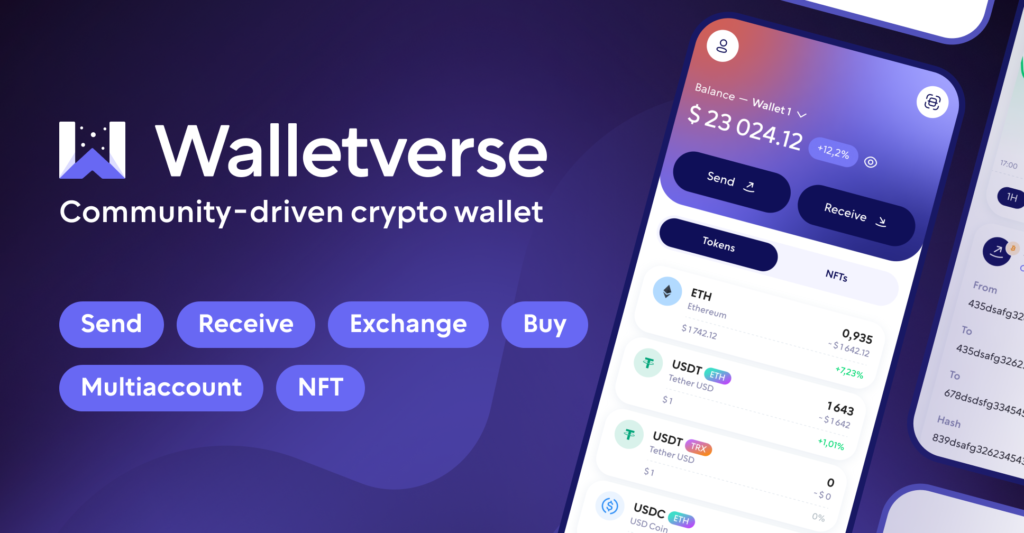
Walletverse provides a self-custody environment for managing crypto assets, including SOL.
For users who already hold Solana and want to stake from a mobile wallet, Walletverse is designed to make the process straightforward while allowing users to remain responsible for their own wallet credentials.
Because staking rates change with network conditions, always check the current SOL staking rate displayed in the Walletverse app before confirming a staking transaction rather than relying on an APY quoted in an older article.
As with any self-custody wallet, protect your recovery information carefully and verify all transaction details before signing.


Final Thoughts
The benefits of staking Solana go beyond earning additional SOL. Stakers contribute to the security and decentralization of the network while potentially compounding their SOL holdings over time.
For long-term holders, native staking can be an efficient way to put otherwise idle SOL to work without transferring ownership to a validator.
However, staking rewards should always be considered together with SOL price volatility, validator performance, liquidity requirements, and wallet-security responsibilities.
Before staking, compare validators carefully, review the current reward rate and Solana staking rules, and only stake an amount that fits your liquidity needs.
FAQ
Most frequent questions and answers
Yes. Staking Solana offers stable returns and supports network security. With reliable wallets like Walletverse, it’s both safe and profitable.
The main benefits are earning additional SOL, compounding staking rewards, participating in network security, supporting decentralization, and maintaining self-custody when using native staking through a compatible wallet.
There is no permanently fixed SOL staking APY. Returns vary according to network conditions, inflation, total stake participation, validator performance, and validator commission. Always check the current estimated rate before staking.
Yes. Even if your SOL balance increases through staking rewards, the market price of SOL can decline. Other risks include reduced rewards from validator underperformance, liquidity constraints while unstaking, wallet-security risks, and additional smart-contract risks when using liquid staking.
Staking has risks and should not be described as risk-free. Native staking through self-custody avoids giving a validator control of your private keys, but SOL price volatility, validator performance, unstaking delays, wallet security, and protocol changes still need to be considered.


