


Ethereum Staking – Rewards, Rates, Platforms
Ethereum remains the foundation of decentralized finance and smart contracts, driving innovation across the blockchain ecosystem. Since the network transitioned from Proof of Work (PoW) to Proof of Stake (PoS) through the Ethereum 2.0 upgrade, staking has become a core mechanism for securing the network and generating protocol-level rewards.
Staking Ethereum allows users to lock ETH to support transaction validation while earning consistent returns. According to data cited by Binance and CoinLaw, more than 35 million ETH were staked by late 2025, representing approximately 29–31% of the total circulating supply. This level of participation translates into a staking market capitalization exceeding $200 billion, fueled by growing institutional involvement and the rapid expansion of liquid staking solutions. As a result, Ethereum staking is widely viewed as one of the most reliable and sustainable approaches to passive income within the blockchain economy.
What Is ETH Staking
Ethereum staking began with the network’s migration to PoS, finalized after “The Merge” in 2022. Before that, Ethereum relied on miners to validate transactions. Now, it depends on validators who lock their ETH as collateral to secure the blockchain.
When you stake Ethereum, you commit your ETH tokens to support network operations and validation. In return, you earn rewards based on the amount staked and the validator’s performance.
The process makes the blockchain more decentralized and stable while offering participants predictable yields.
In the early days, users needed 32 ETH to become a validator. However, many wallets and staking platforms now provide staking pools, allowing anyone to participate with smaller amounts. This change has democratized Ethereum staking, making it open to beginners and long-term investors alike.
The average staking reward currently ranges between 1% and 5% annually, depending on network activity and validator performance.
Key Takeaways
(Quote from www.investopedia.com)
- Ethereum staking involves committing ether as collateral to validate transactions on the Ethereum network and earn ETH.
- Ethereum can be staked independently or through a third party such as a crypto wallet, exchange, or staking pool.
- Ethereum replaced its energy-intensive, computation-driven Proof-of-Work (PoW) mining mechanism with a financially-governed Proof-of-Stake (PoS) mechanism.
- Ethereum staking offers the benefits of passive income, network security contribution, governance influence, ecological sustainability, and capital appreciation.
- It also carries the risks of hardware expenses, cybersecurity threats, opportunity costs, and capital depreciation.
Top 10 Best Ethereum Staking Wallets
1. Walletverse
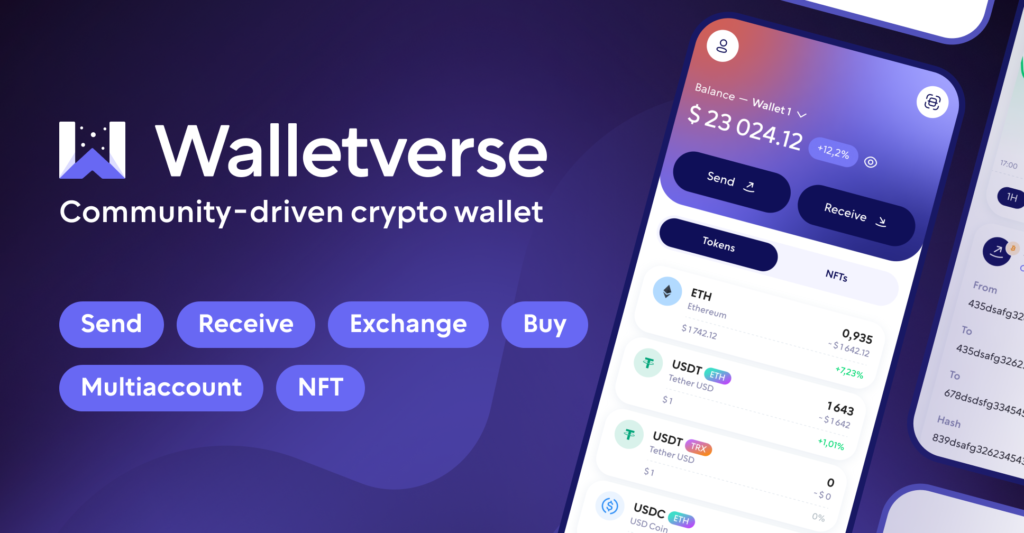
Walletverse is a mobile multi-currency Web3 and DeFi wallet designed for both new and advanced users. It supports over 700 cryptocurrencies, including Ethereum, and offers seamless staking directly from the mobile app.
With self-custody, AML protection, and biometric authentication, Walletverse provides one of the most secure staking environments. The Ethereum staking APY is around 2.71%.
(The data is current as of December 24, 2025. Check in the app.)
Pros:
- User-friendly and fast mobile wallet;
- A proprietary GasFree USDT transaction system;
- Secure self-custody with AML compliance;
- Supports 700+ cryptocurrencies and dApps;
- Google Play rating 4.8, AppStore 5.0;
- Buy crypto with Apple Pay, Google Pay, and cards;
- 20.000 active users.
Cons:
- Mobile-only version
Walletverse user reviews:



2. Trust Wallet
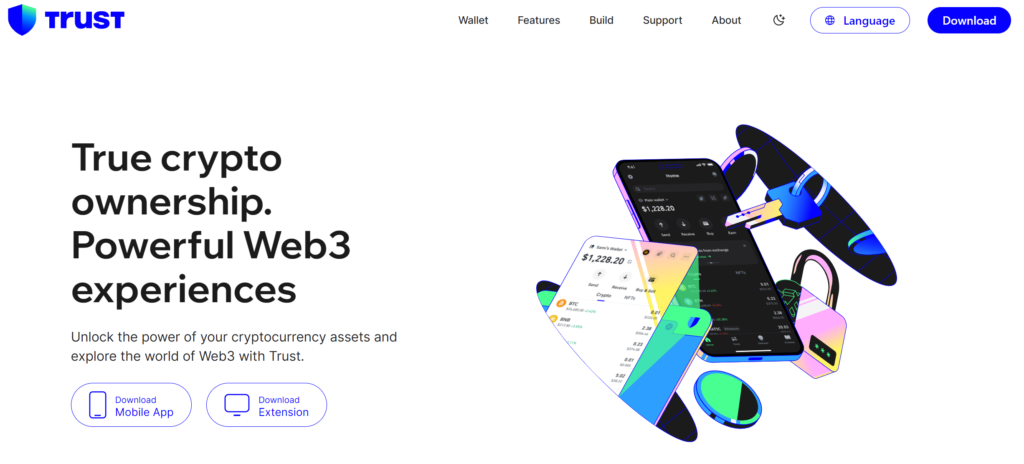
Trust Wallet, developed by Binance, supports Ethereum staking with a focus on simplicity and accessibility. It’s suitable for mobile users who want to stake directly in-app.
Pros:
- Simple mobile interface
- Supports NFTs and dApps
- Wide range of tokens
Cons:
- Limited validator transparency
- Custodial risk if connected to centralized exchanges
3. Ledger Nano X
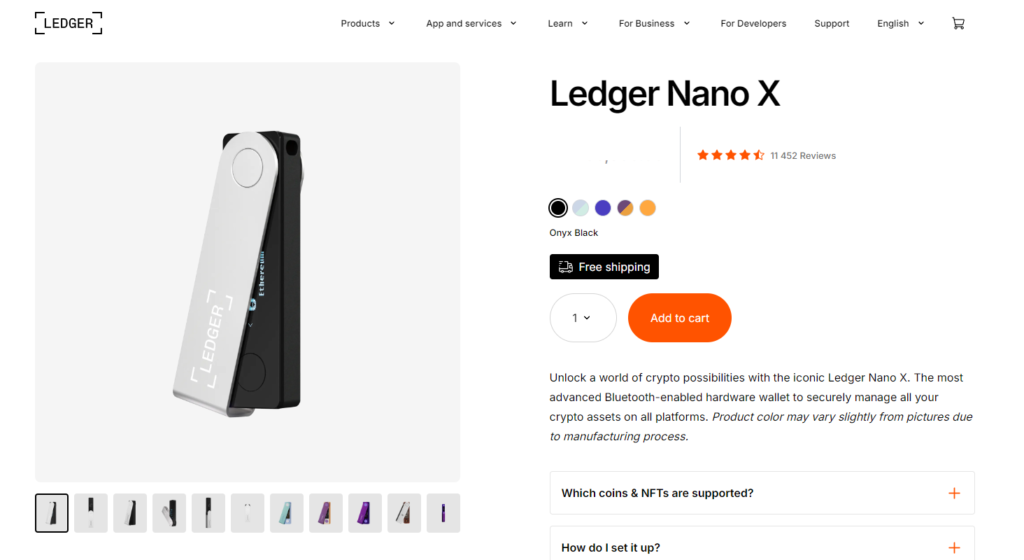
Ledger is a hardware wallet offering unmatched security for staking Ethereum. Users can connect it to apps like Lido or Kiln to stake ETH while keeping private keys offline.
Pros:
- Highest level of asset protection
- Works with multiple staking providers
- Offline key management
Cons:
- Requires setup through external apps
- Hardware purchase needed
4. Atomic Wallet

Atomic Wallet offers built-in staking for Ethereum and dozens of other coins. It’s known for its simplicity and multi-asset management capabilities.
Pros:
- Easy-to-use interface
- Built-in staking feature
- Supports multiple assets and tokens
Cons:
- Closed-source
- Limited control over validator choice
5. MetaMask
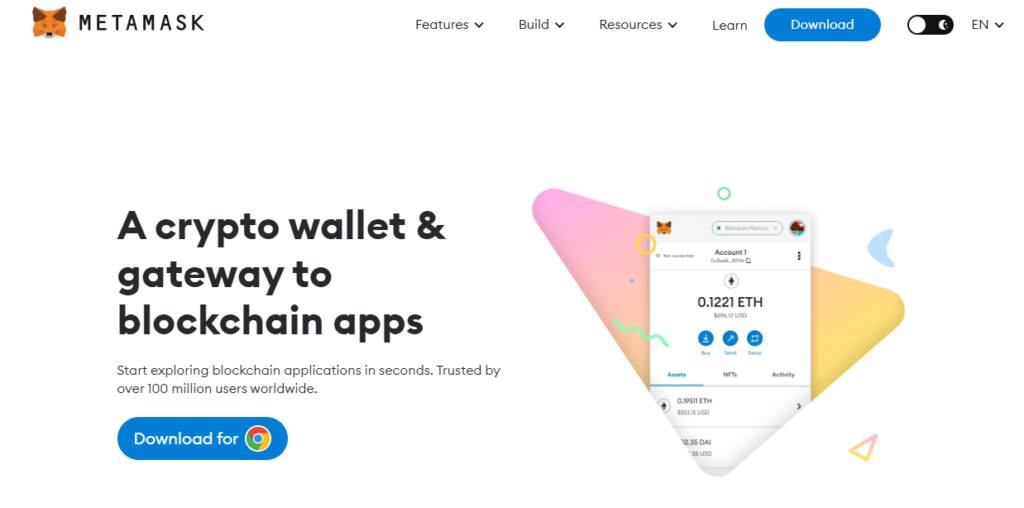
MetaMask is one of the most widely used Ethereum wallets. It supports staking through third-party integrations like Lido and Rocket Pool, giving users flexibility in how they earn rewards.
Pros:
- Trusted and widely used wallet
- Integration with major DeFi platforms
- Browser and mobile compatibility
Cons:
- Requires external staking services
- Must manage validator selection manually
6. Lido

Lido is a decentralized staking service that allows users to stake any amount of ETH and receive liquid staking tokens (stETH) in return. These tokens can be used in DeFi protocols to earn extra rewards.
Pros:
- Liquid staking with stETH tokens
- Easy and accessible for all users
- High transparency and decentralized governance
Cons:
- Smart contract dependency
- Centralization concerns in validator selection
7. Binance Wallet

Binance offers an integrated staking platform for Ethereum, allowing users to earn rewards directly through the exchange or mobile app.
Pros:
- Fast and easy to use
- Reliable exchange infrastructure
- Flexible staking durations
Cons:
- Custodial wallet (no private key control)
- Regional restrictions may apply
8. Coinbase Wallet

Coinbase Wallet provides easy access to Ethereum staking through its exchange and wallet ecosystem. It’s ideal for beginners who prefer a simple interface and trusted platform.
Pros:
- Beginner-friendly experience
- Backed by a major exchange
- Simplified staking process
Cons:
- Custodial option — Coinbase holds private keys
- Higher staking fees than decentralized platforms
9. Exodus
Exodus is a multi-platform wallet supporting Ethereum staking with a simple, beginner-friendly interface. It allows users to manage multiple assets and monitor rewards directly in-app.
Pros:
- Intuitive design for beginners
- Multi-platform accessibility
- Built-in exchange and staking features
Cons:
- Closed-source software
- Slightly higher network fees
10. MyEtherWallet (MEW)

MyEtherWallet has long been one of the most trusted tools for managing Ethereum. It supports staking through integrations with hardware wallets and third-party validators.
Pros:
- Established and secure platform
- Compatible with hardware wallets
- Direct staking via trusted providers
Cons:
- Interface may be complex for beginners
- Requires external validators for staking
How Does Ethereum Staking Work
Ethereum staking works by locking up ETH to secure the network and validate transactions. Validators replace miners from the old Proof of Work model. They’re randomly chosen to propose and confirm blocks, and in return, they receive staking rewards.
If a validator behaves maliciously or stays offline, a portion of their stake can be slashed. This system ensures honesty and reliability across the network.
Users who don’t have 32 ETH can still stake through staking pools or wallets like Walletverse and Lido, which aggregate smaller amounts from multiple users and share the rewards.
Is Staking ETH Risk-Free?
While Ethereum staking is generally safe, it’s not completely risk-free. Possible risks include:
- Validator downtime can reduce rewards.
- Poor validator performance may cause penalties.
- Custodial staking means trusting third parties with your ETH.
- Smart contract vulnerabilities in DeFi platforms could pose risks.
To minimize risk, it’s best to use non-custodial wallets like Walletverse or hardware wallets like Ledger, which keep full control in your hands.
Ethereum staking has become a reliable way for investors to earn passive rewards while contributing to network security. With an average APY of 3–5%, it’s a practical and sustainable method to grow your crypto holdings.
Walletverse provides a secure and user-friendly staking environment for Ethereum and other major cryptocurrencies. With a competitive 2.71% APY for ETH staking, self-custody security, AML compliance, and biometric protection, Walletverse offers an effortless experience for both new and advanced users.
This article was prepared by ilink, a fintech, Web3 and software developer with 13 years of experience and proven projects worldwide.
(The data is current as of December 24, 2025. )
FAQ
Most frequent questions and answers
Yes. Staking Ethereum helps secure the network and provides steady passive income. It’s ideal for long-term holders seeking predictable returns.
Earnings depend on validator performance and total network participation, typically between 3% and 5% annually. Walletverse currently offers about 1.76% APY for ETH staking.
Your ETH remains yours, but validators who act maliciously or stay offline can face penalties. Using reliable wallets like Walletverse and trusted validators minimizes these risks.
The main point of staking ETH is to help secure the Ethereum network while earning rewards. By staking ETH, users support transaction validation under Ethereum’s Proof of Stake system and receive passive income in return, without the energy costs of mining.


