


Best Crypto Wallet in Malaysia 2026 for Beginners and Advanced Users
As cryptocurrency gains momentum globally, Malaysia is no exception. With a burgeoning interest in digital currencies, choosing the right crypto wallet is essential for beginners and advanced users. This article will explore the best crypto wallet in Malaysia in 2026, covering how wallets work, the different types available, and the criteria for making an informed choice.
Is Cryptocurrency Legal in Malaysia?
Individuals can own and trade digital assets in Malaysia, but cryptocurrencies are not legal tender and should not be treated as an official replacement for the Malaysian Ringgit.
Digital-asset activities such as regulated exchange operations and digital-asset custody fall under the oversight of the Securities Commission Malaysia (SC). The SC maintains rules for Digital Asset Exchanges and other regulated digital-asset service providers.
It is important to distinguish these regulated services from a self-custody crypto wallet. A self-custody wallet such as Walletverse is software that allows users to control access to their own digital assets; it should not be described as a Malaysian-regulated digital asset exchange.
When using a third-party service to buy, sell or exchange cryptocurrency, Malaysian users should independently check the provider’s current availability and regulatory status.
How Crypto Wallets Work
A cryptocurrency wallet is a digital tool that stores, sends, and receives cryptocurrencies. It manages your public and private keys, enabling you to interact with blockchain networks. When you send or receive crypto, the wallet uses these keys to confirm transactions, ensuring your funds are secure. Understanding how wallets operate is crucial for effectively managing your digital assets.
5 Main Types of Crypto Wallets - Comparison
- Mobile wallets. Designed for smartphones, these wallets provide easy access to everyday transactions.
- Pros:
- Convenient for daily use and quick transactions.
- User-friendly interfaces designed for mobile devices.
- Cons:
- Vulnerable to malware and hacking if the phone is compromised.
- Requires an internet connection for most functions.
- Desktop wallets. Installed on a computer, offering more security and control over private keys but less portability.
- Pros:
- They are more secure than mobile wallets as they are less exposed to online threats.
- Allows for more extensive management of cryptocurrencies.
- Cons:
- Less convenient for on-the-go transactions.
- Risk of loss if the computer is damaged or infected with malware.
- Web wallets. Accessible through web browsers, allowing for quick transactions but often at higher security risks.
- Pros:
- Easy to access from any device with an internet connection.
- The simple setup process often requires minimal information.
- Cons:
- Higher risk of hacking and phishing attacks.
- Less control over private keys compared to other wallet types.
- Hardware wallets. Physical devices that store cryptocurrencies offline provide enhanced security against hacks.
- Pros:
- Highest level of security for storing large amounts of cryptocurrencies.
- Immune to online threats since they are offline.
- Cons:
- More expensive compared to software wallets.
- Less convenient for frequent transactions as you need to connect the device to access funds.
- Paper wallets. A physical printout of your keys, completely offline, making it immune to online threats.
- Pros:
- Extremely secure against online hacks.
- Simple to create and manage without technical skills.
- Cons:
- It can be easily lost, damaged, or destroyed.
- It is not user-friendly for frequent transactions or trading.
How to Choose a Secure Crypto Wallet in Malaysia
Security should be one of the main considerations when choosing a crypto wallet in Malaysia. Users should look at who controls access to the assets, how the wallet is protected, what recovery options are available and whether the wallet supports the blockchain networks they intend to use.
One important distinction is between custodial and self-custody wallets. With a custodial service, a third party controls the infrastructure used to access the assets. With a self-custody wallet, users retain control over their wallet credentials and are responsible for protecting their recovery information.
Walletverse is a self-custody mobile wallet. It provides passcode and biometric protection and allows users to manage supported cryptocurrencies without handing custody of their wallet to a centralized exchange.
Users should also follow basic security practices:
- Download wallet applications only from official sources.
- Never share recovery information, private keys or passwords.
- Verify the recipient address and blockchain network before every transfer.
- Be cautious of links asking you to “verify” or “synchronize” a wallet.
- Keep the wallet application and mobile operating system updated.
Users who prioritize offline key storage for long-term holdings may also consider a compatible hardware wallet. A mobile self-custody wallet such as Walletverse is generally more convenient for regular transfers, portfolio management and supported swaps.
Top 10 Best Crypto Wallets in Malaysia 2026
1. Walletverse
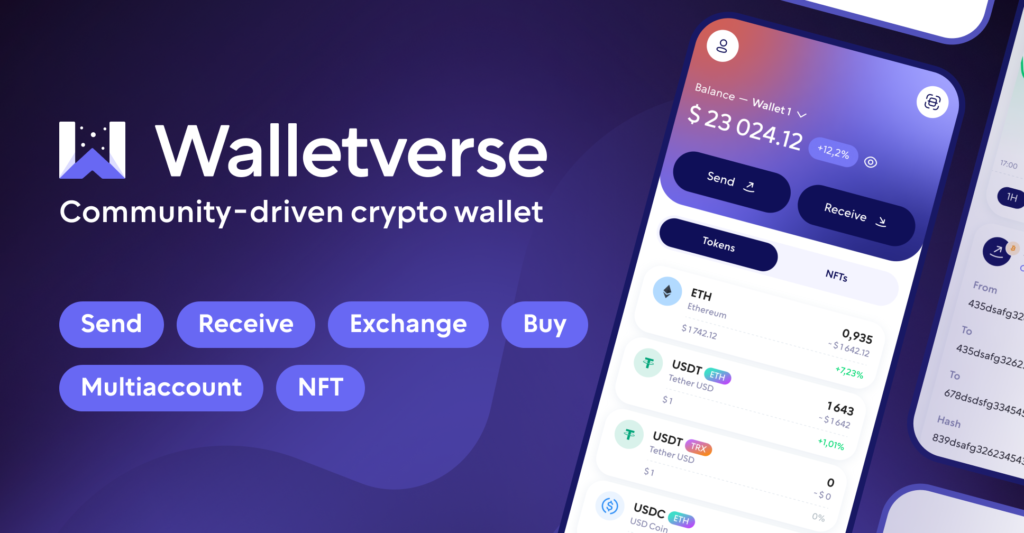
Walletverse is the ultimate self-custody crypto wallet, catering to beginners and advanced users. Here are its key features:
Pros:
- Multi-currency support. Supports over 600 cryptocurrencies, including Bitcoin and Ethereum.
- User-friendly interface. Designed for easy navigation, making it accessible to all users.
- Security features. Utilizes passcode and biometric authentication to safeguard your digital assets.
- Community-driven. Engages users with gamification and rewards.
- Flexible payment options. Buy crypto using Apple Pay, Google Pay, and credit/debit cards in multiple currencies.
Cons:
- Currently only available as a mobile app.


2. Trust Wallet
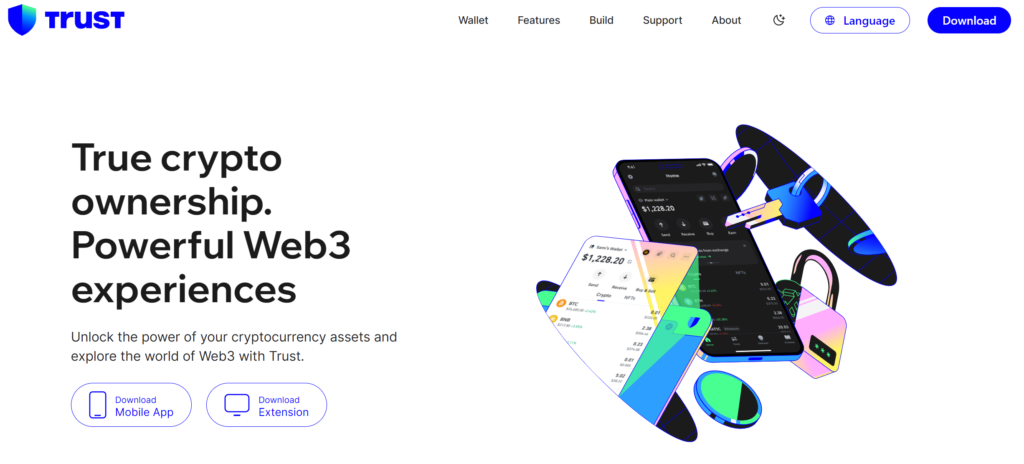
A popular mobile wallet that provides a simple user experience and supports numerous cryptocurrencies.
Pros:
- Decentralized, giving users full control over their private keys.
- Integrated DApp browser for accessing decentralized applications.
Cons:
- Vulnerable to online threats due to being a hot wallet.
- Customer support can be limited.
3. Exodus Wallet
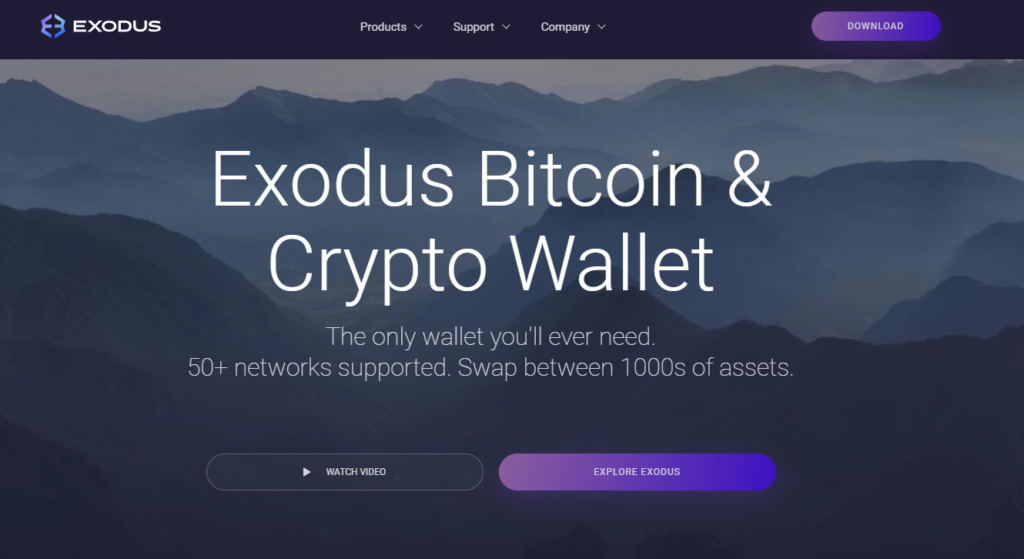
Known for its attractive interface, Exodus allows easy swapping between cryptocurrencies directly within the wallet.
Pros:
- Intuitive design and user-friendly setup.
- Built-in exchange feature for trading cryptocurrencies.
Cons:
- Closed source, which raises some transparency concerns.
- Limited coin support compared to some competitors.
4. Ledger Nano S
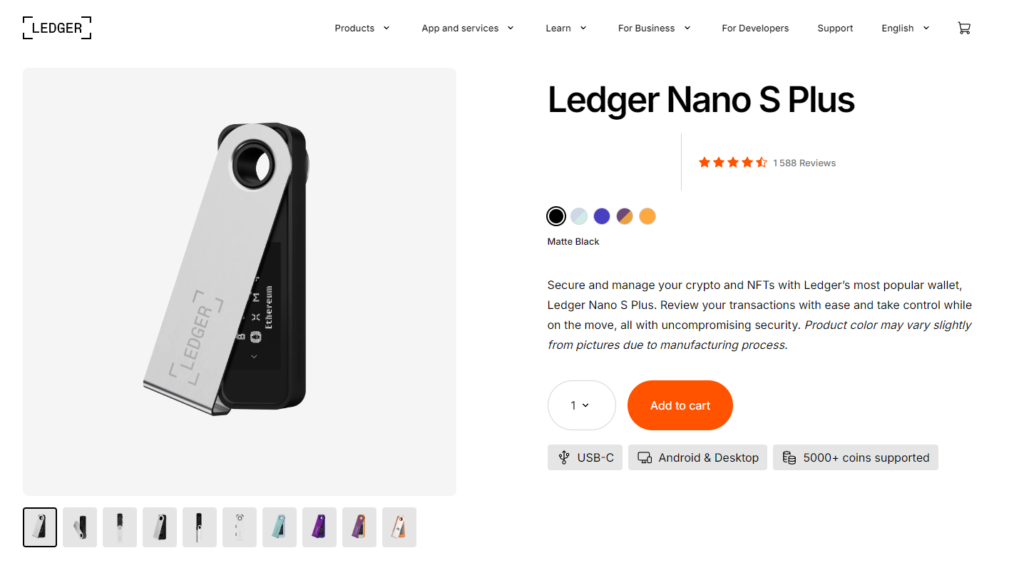
A hardware wallet offers high security for users who prefer offline storage for their digital assets.
Pros:
- Extremely secure due to offline storage.
- Supports a wide range of cryptocurrencies.
Cons:
- Higher initial cost compared to software wallets.
- It is not as convenient for everyday transactions.
5. Coinomi
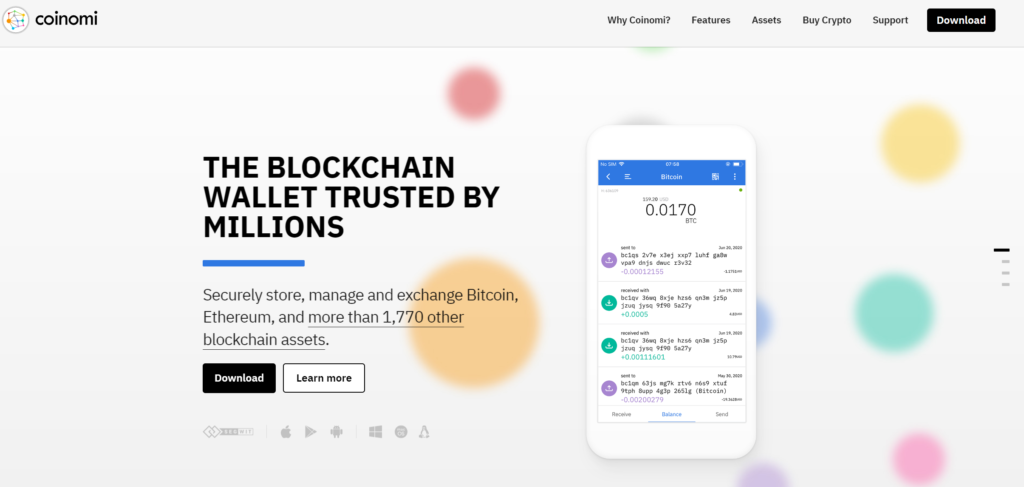
A versatile wallet that supports a wide range of cryptocurrencies and includes built-in exchange features.
Pros:
- Multi-currency support with a user-friendly interface.
- The built-in exchange allows easy swapping of coins.
Cons:
- Hot wallet risks associated with being online.
- Occasional bugs reported by users.
6. MetaMask

MetaMask is the leading Ethereum-based wallet and gateway to the world of decentralized applications. Available as both a mobile app and browser extension, it allows users to store, send, and swap tokens on Ethereum and all EVM-compatible chains. For Malaysian users interested in DeFi and NFTs, MetaMask provides seamless integration with thousands of dApps and protocols.
Pros:
Extensive dApp integration with access to thousands of decentralized applications.
Supports all ERC-20 tokens and major EVM networks like Polygon and Avalanche.
Cons:
Primarily focused on Ethereum ecosystem; other chains require manual setup.
Users must carefully safeguard their seed phrase to prevent loss of funds.
7. Ledger Nano X

Ledger Nano X is a premium hardware wallet that offers bank-grade security for cryptocurrency holders. It stores private keys offline in a secure element chip, protecting assets from online threats. With Bluetooth connectivity, Malaysian users can manage their crypto on the go via the Ledger Live mobile app, making it a perfect blend of security and convenience.
Pros:
Exceptional security with offline cold storage and secure element chip.
Bluetooth connectivity allows mobile management via iOS and Android.
Cons:
Higher price point compared to software wallets (around RM 600-700).
Requires physical device for each transaction, less convenient for frequent use.
8. Trezor Model T
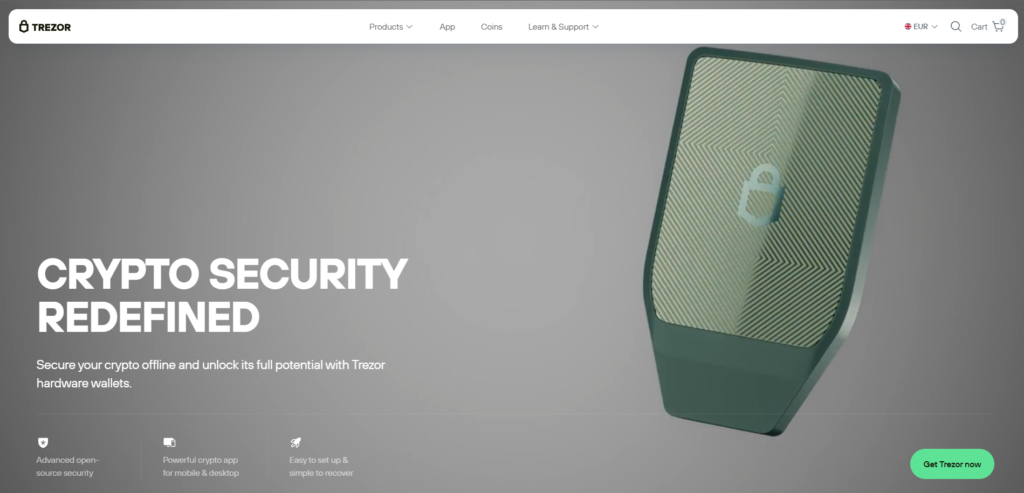
Trezor Model T is a highly regarded hardware wallet known for its robust security and user-friendly design. It features a touchscreen interface that simplifies navigation and offers extensive cryptocurrency support. Malaysian users who prioritize security and transparency will appreciate its open-source software and strong community backing.
Pros:
Touchscreen interface makes navigation and transaction confirmation easy.
Open-source software ensures transparency and regular community audits.
Cons:
Higher cost compared to basic hardware wallets and software options.
Limited customer support options for troubleshooting.
9. SafePal

SafePal offers both software and hardware wallet solutions, with support for over 30,000 cryptocurrencies across 100+ blockchains. Its hardware wallet features an EAL 5+ certified security chip and air-gapped QR code communication, keeping private keys completely offline. For Malaysian users seeking affordable security, SafePal provides excellent value.
Pros:
EAL 5+ security chip with air-gapped QR code signing for maximum protection.
Affordable hardware wallet option at around RM 200-250.
Cons:
No desktop application; relies on mobile app for management.
Smaller ecosystem and community compared to Ledger or Trezor.
10. Coinbase Wallet

Coinbase Wallet is a non-custodial mobile wallet that offers a seamless entry point for beginners. It supports multiple blockchains including Ethereum, Solana, Polygon, and Bitcoin, allowing users to store thousands of tokens and collect NFTs. Malaysian users benefit from its clean interface and integration with the Coinbase exchange for easy funding.
Pros:
User-friendly interface ideal for beginners new to cryptocurrency.
Supports multiple blockchains with built-in dApp browser and NFT gallery.
Cons:
Some features require a Coinbase account for full functionality.
Higher transaction fees compared to some competitors.
Which Cryptocurrencies Does Walletverse Support?
Walletverse is a multi-currency self-custody wallet supporting 700+ cryptocurrencies. This allows users in Malaysia to manage multiple supported digital assets from one mobile application rather than installing a separate wallet for every cryptocurrency.
Supported assets include major cryptocurrencies such as Bitcoin (BTC), Ethereum (ETH), Tether (USDT), USD Coin (USDC), XRP, Dogecoin (DOGE), Litecoin (LTC), Cardano (ADA), Polkadot (DOT) and many others.
However, cryptocurrency support and blockchain network support are not always the same thing. Some assets are available on several networks, and a wallet may support one version without supporting every network on which that asset exists.
Before receiving or transferring cryptocurrency with Walletverse, verify the exact asset and network you intend to use. This is particularly important for stablecoins and tokens that operate across multiple blockchains.
Users with diversified portfolios should also consider whether a wallet supports the assets they already own rather than choosing a wallet solely on the total number of listed cryptocurrencies.
How to Buy and Swap Crypto with Walletverse in Malaysia
Walletverse provides access to cryptocurrency purchasing and exchange functionality from the same self-custody mobile application.
To make a crypto swap, select the asset you want to exchange, choose the cryptocurrency you want to receive and enter the amount. If the required route is currently available, review the quoted rate, estimated received amount, applicable fees and selected blockchain network before confirming the transaction.
Walletverse also provides access to cryptocurrency purchasing services through supported third-party providers. Available fiat currencies, payment methods, transaction limits and identity-verification requirements depend on the provider and the user’s location.
Malaysian users should not assume that every cryptocurrency can be purchased directly with Malaysian Ringgit (MYR) or that every payment method is available locally. Check the options shown by the current provider before starting a transaction.
The same applies to swaps. Exchange pairs, rates, liquidity and fees can change over time, so users should review the current quote rather than relying on a fixed rate published in an article.
Walletverse is a self-custody wallet, while third-party purchase and exchange providers may operate under different regulatory frameworks. Users should distinguish between wallet functionality and the regulatory status of a service that buys, sells or exchanges digital assets.
Criteria for Choosing the Right Crypto Wallet in Malaysia
When selecting a crypto wallet in Malaysia, consider these key factors:
- Regulatory compliance.
- Ensure the wallet adheres to Malaysian regulations for added security and legal assurance.
- Local currency support.
- Look for wallets facilitating transactions in Malaysian Ringgit (MYR) for easier conversions.
- User education resources.
- Opt for wallets that provide educational materials and local language support to help beginners.
- Community engagement.
- Consider wallets actively involved in the Malaysian crypto community, offering valuable insights.
- Multi-language support.
- Look for wallets that support Malay and English for better accessibility.
- Security certifications.
- Check for recognized security certifications to ensure the wallet’s reliability.
- Scalability for future needs.
- Choose wallets that can grow with you, offering advanced features like staking or DeFi access.
- Backup and recovery options.
- Ensure straightforward backup processes for your private keys to safeguard your assets.
- User reviews and reputation.
- Research feedback from Malaysian users to gauge reliability and performance.
Selecting the best crypto wallet in Malaysia in 2026 requires careful consideration of your needs and preferences. Whether you opt for Walletverse or another option, prioritize security, usability, and support for your desired cryptocurrencies. With the right wallet, you can confidently navigate the exciting world of digital currencies.
FAQ
Most frequent questions and answers
Walletverse is highly recommended for its user-friendly interface, extensive support for over 600 cryptocurrencies, and strong security features.
Several platforms are legal, including Binance, Luno, and LocalBitcoins, as they comply with local regulations.
You can buy cryptocurrency through exchanges, peer-to-peer platforms, or mobile wallets that allow direct purchases. For example, you can download the Walletverse cryptocurrency wallet for secure self-custody storage of your assets and quick buying and selling.
Yes, USDT (Tether) is legal and commonly used for trading and transactions in Malaysia.
Currently, there are no specific taxes on cryptocurrency transactions in Malaysia, but it’s advisable to stay updated on regulatory changes.


