


Best Digital Wallet for Cryptocurrency 2026
- Updated: 2026-01-28
With cryptocurrency adoption expanding globally, the “wallet” is no longer just a place to hold coins. In 2026, a good digital crypto wallet is your control center for storing assets, sending and receiving payments, swapping tokens, connecting to Web3 apps, and tracking your portfolio.
The crypto wallet market is also growing fast: the global crypto wallet market size was valued at USD 12.20 billion in 2025 and is projected to grow from USD 14.84 billion in 2026 to USD 98.57 billion by 2034, exhibiting a compound annual growth rate (CAGR) of 26.7% during the forecast period . Asia Pacific dominated the market with a share of 32.13% in 2025, driven by favorable regulatory initiatives and the rise of Web3 gaming and DeFi platforms .
On the user side, surveys show ownership rising in multiple regions, with over 993 million people worldwide expected to use cryptocurrencies by 2026, representing a penetration rate of 12.63% . This keeps pushing demand for simpler, safer wallets. Institutional adoption is also accelerating, with 75% of investors planning to increase digital-asset allocations in 2025-2026, citing interest in stablecoins, DeFi, and tokenization .
This guide explains how digital wallets work, what types exist, how to choose one, and a curated list of the top options for 2026.
Updated: February 2026.
What is a Digital Crypto Wallet?
A digital crypto wallet is an app or device that helps you manage cryptocurrency on blockchain networks. It lets you:
Receive crypto (via addresses and QR codes).
Send crypto (by signing transactions).
Store and manage tokens across networks.
In many cases, connect to dApps (DeFi, NFT markets, Web3 services).
Important nuance: a wallet does not “store coins” like a physical wallet stores cash. It manages keys that control access to funds recorded on the blockchain.
How Digital Crypto Wallet Works
A wallet handles three core jobs:
Key management. Your wallet creates and protects cryptographic keys (or a recovery phrase that can recreate them).
Transaction signing. When you send crypto, the wallet signs the transaction to prove you’re authorized.
Blockchain interaction. The wallet broadcasts the signed transaction to the network and tracks confirmations.
If you use a self-custody (non-custodial) wallet, you control the keys. If you use a custodial wallet (often inside an exchange), the provider holds the keys on your behalf.
Types of Digital Wallets
Hot wallets (online)
Connected to the internet for convenience. Includes:
Mobile wallets (apps);
Desktop wallets;
Browser-extension wallets;
Web wallets.
Best for: everyday use, frequent transactions.
Cold wallets (offline)
Designed for maximum security:
Hardware wallets (Ledger, Trezor);
Paper wallets (rare in modern use).
Best for: long-term storage, larger balances.
Top 10 Best Digital Wallets for Cryptocurrency 2026
1. Walletverse
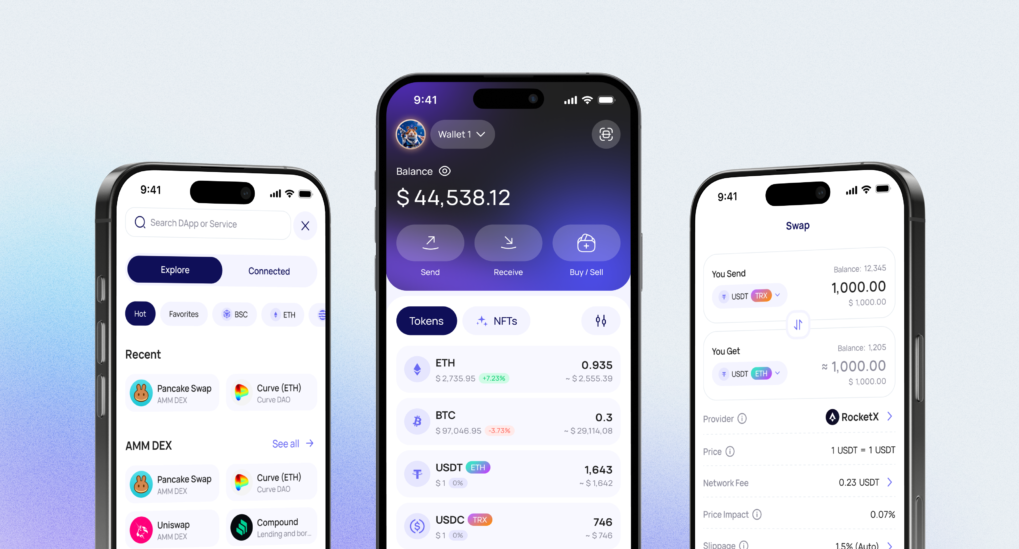
Walletverse is a self-custody, multi-currency, Web3 and DeFi mobile wallet built for beginners and advanced users. It supports 700+ cryptocurrencies, dApps, multi-accounts, and buying crypto with Apple Pay, Google Pay, and cards (GBP, JPY, USD, KZT, EUR, INR, CAD, AUD, and more). It also includes features like passcode + biometric authentication, and a proprietary GasFree USDT transaction system on TRON (pay fees in USDT without holding TRX).
Best for: everyday multi-asset management and “one app” simplicity on mobile.


2. Trust Wallet (mobile + Web3)
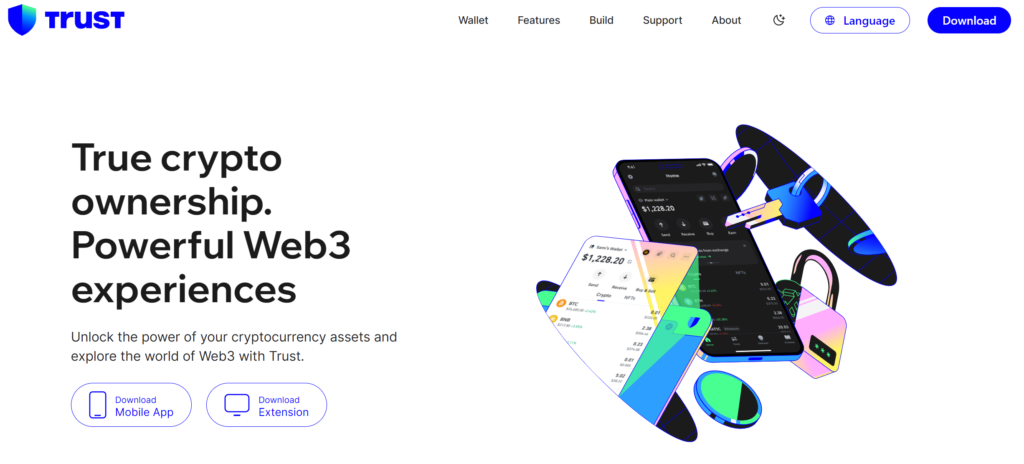
Trust Wallet positions itself as a self-custody wallet with broad multi-chain coverage, supporting 100+ blockchains and millions of assets (including NFTs), with Web3 functionality.
Best for: users who want wide asset coverage and Web3 features in a popular mobile wallet.
3. MetaMask (mobile + browser extension)
MetaMask remains one of the most common wallets for Ethereum and EVM networks and for connecting to dApps. For safety, MetaMask emphasizes that anyone with your Secret Recovery Phrase can control the wallet, which highlights how important recovery-phrase security is.
Best for: Ethereum, EVM chains, DeFi, and frequent dApp usage.

4. Exodus Wallet (mobile + desktop)
Exodus focuses on usability and multi-platform access. It also highlights self-custody and the ability to add tokens across supported networks (useful when you hold niche assets).
Best for: users who want a polished UI on both desktop and mobile.

5. Coinbase Wallet
Coinbase Wallet is positioned as a self-custody wallet where users control their crypto and keys (separate from the Coinbase exchange).
Best for: users who want a mainstream UX while still using a self-custody model.

6. Atomic Wallet (desktop + mobile)
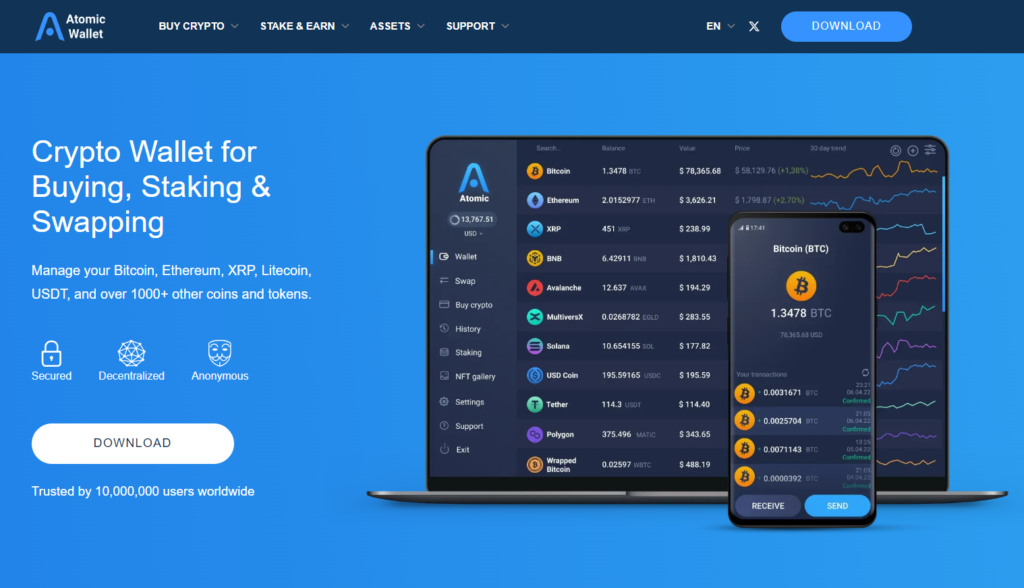
Atomic Wallet is often chosen for multi-asset management and in-app swaps.
Best for: users who want a multi-asset wallet with exchange-style convenience (while understanding the tradeoffs).
7. Mycelium
Mycelium is well-known among Bitcoin users and leans toward privacy and advanced BTC features.
Best for: BTC-only users who want a more “power user” mobile wallet.
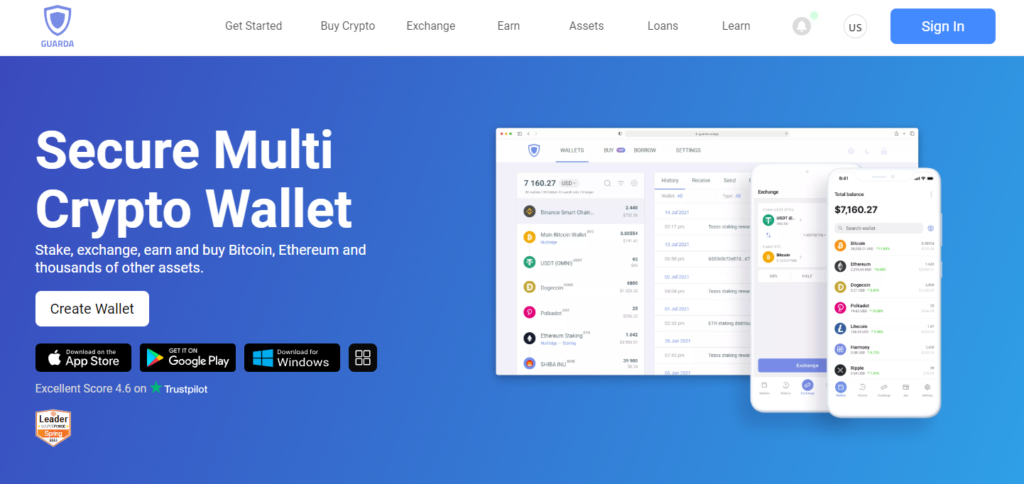
8. Guarda Wallet
Guarda markets broad asset support (including large token coverage) and multi-platform access.
Best for: users who want a flexible wallet across devices and many assets.
9. Ledger Nano X
Ledger Nano X is a hardware wallet designed for offline key storage. Ledger states Nano X supports 5,500+ coins and tokens.
Best for: long-term storage and higher balances, with frequent hardware-grade security.

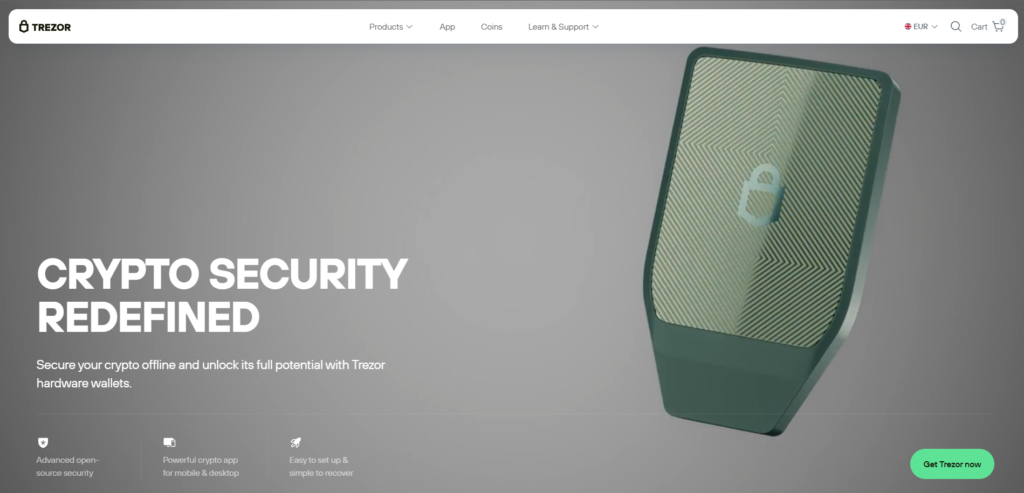
10. Trezor Model T
Trezor Model T is another top hardware wallet known for offline key security and broad coin support through the Trezor ecosystem.
Best for: security-first users who prefer Trezor’s approach and tooling.
How to Choose the Right Crypto Wallet?
Here’s a practical checklist business-like users and everyday holders can use:
Self-custody vs custodial.
If you want maximum control, choose self-custody (you manage keys).
If you prioritize convenience, custodial can be simpler, but introduces platform risk.
Security controls. Look for:
Biometric login / passcode;
Recovery phrase setup and warnings;
Optional 2FA where supported;
Clear fraud-prevention UX (address checks, network warnings).
Asset and network support. Your wallet should support the chains you actually use (BTC, ETH, TRON, Solana, etc.).
Usability. A wallet can be “secure” but still cause losses if users often choose the wrong network or copy addresses incorrectly.
Web3 and dApp connectivity. If you use DeFi or Web3, wallet connectivity (WalletConnect or a built-in browser) matters.
Backup and recovery. You should understand the recovery process before moving serious funds.
What Features Should a Good Digital Crypto Wallet Have?
A strong digital crypto wallet in 2026 is built around security + usability + multi-chain flexibility.
Security and control
Self-custody key management (you control access to funds);
Biometric login + passcode;
Encrypted local storage and secure recovery flow;
Clear transaction confirmations (network, address, fees, and amount shown before sending);
Optional: 2FA for sensitive actions, risk alerts, and withdrawal approval logic (depending on wallet type).
Multi-currency and multi-network support
Support for major assets and the networks you use (BTC, ETH, TRON, Solana, etc.);
Correct handling of token standards (ERC-20, TRC-20, SPL, etc.);
Easy visibility across assets (portfolio view, token lists, searchable coins).
Everyday usability
Simple receive/send with QR codes;
Address book, recent addresses, and copy protection to reduce mistakes;
Fast performance and stable UX (important on mobile).
Payments, swaps, and practical tools
Built-in exchange/swap or DEX aggregation (optional but useful);
Ability to buy crypto via cards and popular payment methods where supported;
Transaction history with hashes for verification and support.
Web3 and DeFi connectivity
WalletConnect support or safe dApp integration;
Clear permissions and disconnect controls for dApps.
Backup and recovery
Clear instructions for recovery phrase handling;
Easy restore process if the phone is lost or replaced.
Support and transparency
Help center / FAQ and clear guidance on common errors (wrong network, wrong memo/tag, underpayment).
Example (Walletverse fit): Walletverse is a mobile self-custody wallet built for beginners and advanced users, with multi-currency support (700+ assets), Web3/dApp access, multi-account, and passcode + biometric protection, plus payment options like Apple Pay / Google Pay and cards (depending on region and provider availability).
FAQ
Most frequent questions and answers
The best digital wallet for cryptocurrency in 2026 is the one that matches your goals: strong security, the coins and networks you use, and a simple interface. For many users, a self-custody multi-currency wallet like Walletverse is convenient because it supports 700+ cryptocurrencies, works on mobile, and includes passcode + biometric protection.
Hardware wallets are usually the safest option for long-term storage because private keys stay offline. Mobile wallets are best for everyday use, and they can be secure if they are self-custody and include encryption, biometric login, and a reliable recovery process.
A custodial wallet is controlled by a third party (the provider holds the keys). A non-custodial wallet (self-custody) means you control the keys, so only you can access funds. If you want maximum ownership and independence, non-custodial is usually preferred.
Yes. Many modern wallets are multi-currency and allow you to store Bitcoin (BTC), Ethereum (ETH), and other assets in one app. Always confirm the wallet supports the specific coin and the correct network.
A multi-chain wallet supports multiple blockchains (for example Bitcoin, Ethereum, TRON, Solana) in one interface. This helps if you hold assets across different networks and want a single place to manage them.
Use a strong passcode, enable biometric authentication, keep your phone updated, and never share your recovery phrase. Avoid unknown links and fake apps, and verify domains when using Web3 or dApps.


