


Buy Echelon Prime (PRIME) with USD, EUR and Other Fiat Currencies
Echelon Prime (PRIME) is a crypto asset connected to the Web3 gaming economy, especially the Echelon ecosystem and Parallel TCG. For users who want to buy PRIME with USD, EUR, GBP, CAD, AUD, and other fiat currencies, the easiest path is usually through a crypto wallet or exchange that supports fiat on-ramps, card payments, Apple Pay, Google Pay, or crypto swaps.
This article was prepared by ilink, a FinTech and Web3 software developer with 14 years of experience and completed projects worldwide.
The guide explains what Echelon Prime is, how PRIME works, where users can buy or store it, and how Walletverse can be used as a mobile self-custody wallet for managing crypto assets.
What is Echelon Prime (PRIME)?
Echelon Prime (PRIME) is the utility token of the Echelon ecosystem, a Web3 gaming infrastructure project focused on blockchain-based game economies, token-gated products, community participation, and in-game digital assets.
According to Echelon’s official documentation, “PRIME is the utility token for Echelon and its ecosystem of games.” The same documentation states that PRIME powers token-gated products, services, and experiences known as PRIME Sinks.
PRIME is closely connected with Parallel TCG, a sci-fi trading card game where blockchain elements are optional but can be used for digital collectibles, ownership, and win-to-earn mechanics. The official Parallel FAQ on Epic Games describes PRIME as an ERC-20 token created by the Echelon Foundation and says players can earn it through win-to-earn gameplay. PRIME can also be spent on in-game assets such as cosmetic items, playable cards, and tournament tickets.
The token has a fixed ecosystem role rather than being just a speculative asset. PRIME is used for:
- Gameplay rewards;
- Token-gated products and experiences;
- In-game purchases and digital collectibles;
- Governance participation;
- Community and ecosystem incentives.
Echelon’s documentation lists the original total supply as 111,111,111.111 PRIME and the current supply as 100,000,000 PRIME after a 10% burn from the Gameplay Pool on July 2, 2025.
PRIME is also part of a broader market trend where gaming, digital assets, and crypto wallets increasingly overlap. Newzoo estimated the global games market at $188.8 billion in 2025, with 3.6 billion players worldwide and nearly 3.9 billion expected by 2028. DappRadar reported that blockchain gaming attracted more than 4.66 million daily unique active wallets in Q3 2025 and accounted for 25% of all active wallets across the Web3 industry during that period.
This is why PRIME is often discussed as a GameFi and Web3 gaming token. Its value proposition depends on the growth of the Echelon ecosystem, user activity in games such as Parallel, demand for PRIME Sinks, and the long-term adoption of blockchain gaming.
Where Can I Buy Echelon Prime (PRIME) with Cash? 10 Best Crypto Wallets
1. Walletverse
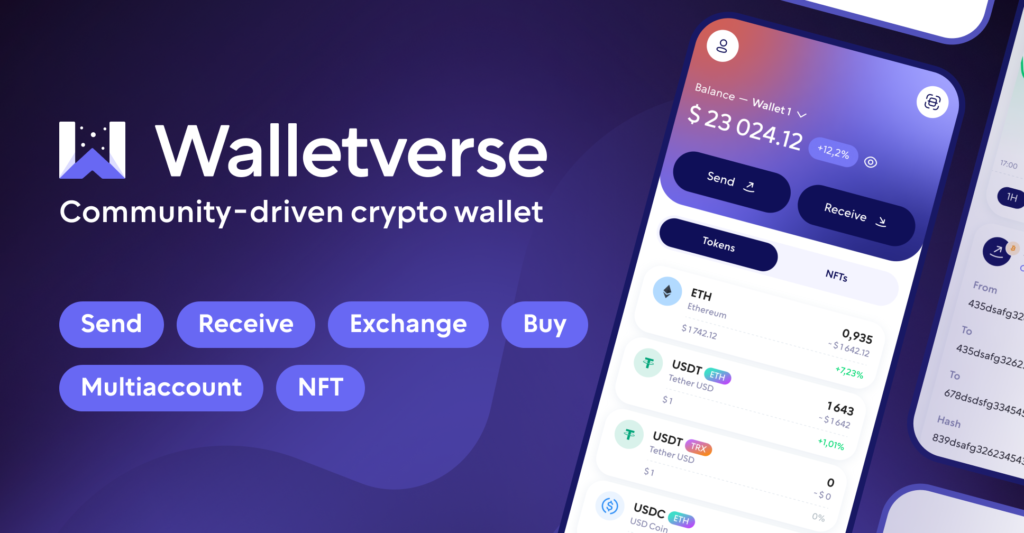
Walletverse is a mobile self-custody crypto wallet designed for buying, storing, sending, and exchanging digital assets. It supports hundreds of cryptocurrencies and tokens, Web3 access, dApps, multi-account management, and fiat payment options through integrated providers.
Walletverse is suitable for beginners who want a fast mobile wallet and for more advanced users who need DeFi and Web3 access. The app supports buying crypto with bank cards and local payment providers, while the App Store listing describes Walletverse as a free self-custodial DeFi wallet with support for BTC, ETH, USDT, BNB, XRP, DOGE, SOL, TRX, and 600+ more cryptocurrencies, tokens, and blockchains.
Walletverse is also focused on self-custody. This means users control their private keys and manage access to their own funds. Security features include passcode and biometric protection, while its GasFree USDT system helps users send USDT on TRON without needing to hold TRX for network fees.
Pros:
- User-friendly mobile interface for beginners and active crypto users;
- Self-custody model where users control their assets;
- Support for 700+ crypto assets according to Walletverse materials;
- Apple Pay, Google Pay, card, and fiat payment support through providers;
- dApps, WalletConnect, DeFi access, and multi-account functionality;
- Passcode and biometric authentication;
- GasFree USDT transfers on TRON.
Cons:
- Mobile-only experience;
- Direct PRIME availability may depend on integrated providers and liquidity;
- Users are responsible for protecting their recovery phrase.



2. MetaMask

MetaMask is one of the most widely used wallets for Ethereum and EVM-compatible networks. Since PRIME is an ERC-20 token, MetaMask can be useful for users who want to interact with Ethereum-based tokens, Uniswap, and Web3 dApps.
MetaMask is especially popular among DeFi users because it works as both a browser extension and a mobile app. It gives users strong control over networks, token imports, swaps, approvals, and dApp connections.
Pros:
- Strong Ethereum and ERC-20 token support;
- Works with Uniswap and many Web3 dApps;
- Available as a browser extension and mobile app;
- Good choice for experienced DeFi users.
Cons:
- Can be confusing for beginners;
- Requires careful network and gas fee management;
- Users must manually verify token contracts to avoid fake assets.
3. Trust Wallet

Trust Wallet is a multi-chain self-custody wallet that supports many coins, tokens, NFTs, and decentralized applications. It is often chosen by users who want a simple mobile wallet with broad asset coverage.
For PRIME users, Trust Wallet may be useful for storing Ethereum-based assets and interacting with Web3 services. As with all wallets, users should verify whether PRIME is available through the wallet’s built-in buying or swapping options before making a transaction.
Pros:
- Broad multi-chain support;
- Simple mobile-first interface;
- Good for NFTs and basic Web3 usage;
- Suitable for users who want one wallet for many assets.
Cons:
- Advanced DeFi controls may feel limited;
- In-app provider fees can vary;
- Token availability depends on providers and network support.
4. Crypto.com DeFi Wallet

Crypto.com DeFi Wallet is a non-custodial wallet connected to the broader Crypto.com ecosystem. It supports DeFi access, swaps, NFTs, and multi-chain asset management.
For PRIME users, it may be useful for those who already use Crypto.com services and want a separate self-custody wallet for Web3 assets. As always, users should check whether PRIME is supported directly or through swaps.
Pros:
- Non-custodial wallet experience;
- Works well for users already in the Crypto.com ecosystem;
- DeFi, NFT, and multi-chain support;
- Mobile-first interface.
Cons:
- Best experience may depend on Crypto.com ecosystem usage;
- Fees and availability vary by provider and region;
- Users must manage their own wallet backup.
5. SafePal

SafePal offers both software and hardware wallet options. It is suitable for users who want mobile convenience but may later want stronger cold-storage protection.
For PRIME users, SafePal can be considered by those who want to manage ERC-20 assets and keep more control over long-term storage. It may also appeal to users who want a wallet ecosystem with both hot and cold wallet options.
Pros:
- Software and hardware wallet ecosystem;
- Good for users who want stronger self-custody options;
- Supports many assets and networks;
- Useful for long-term storage planning.
Cons:
- Hardware setup requires extra care;
- Some features may feel advanced for new users;
- Buying PRIME directly may depend on external providers.
6. Binance Web3 Wallet

Binance Web3 Wallet is designed for users who already use Binance and want access to Web3 features from the same ecosystem. It can be convenient for users who buy crypto with fiat on Binance and then move into self-custody or Web3 interactions.
For PRIME buyers, Binance Web3 Wallet may be useful as part of a wider crypto management setup, especially if users first purchase ETH, USDT, or another supported asset and then swap through available routes.
Pros:
- Convenient for users already familiar with Binance;
- Web3 access inside a major exchange ecosystem;
- Supports swaps and decentralized applications;
- Good bridge between exchange and wallet usage.
Cons:
- Availability depends on region and Binance services;
- Not ideal for users who want a completely independent wallet experience;
- PRIME support should be verified before purchase.
7. Exodus

Exodus is a non-custodial wallet known for its simple interface and desktop/mobile support. It is often used by people who want a clean portfolio view and built-in exchange functionality.
For PRIME, Exodus may be suitable for users who prefer an easy wallet interface and want to manage multiple assets in one place. Token availability should always be checked in the wallet before buying or transferring.
Pros:
- Clean and beginner-friendly design;
- Available on desktop and mobile;
- Built-in portfolio tracking;
- Good for users who want a simple multi-asset wallet.
Cons:
- Not built primarily for advanced DeFi users;
- Swap fees and spreads can vary;
- Direct PRIME support may depend on availability.
8. Guarda

Guarda is a multi-platform non-custodial wallet available on web, desktop, mobile, and browser extension. It supports many assets and can be useful for users who want flexibility across devices.
For PRIME buyers, Guarda may be considered if they want to store or manage Ethereum-based tokens and access fiat purchase options through wallet partners.
Pros:
- Available across several platforms;
- Non-custodial wallet model;
- Broad asset support;
- Convenient for users who switch between desktop and mobile.
Cons:
- Fiat purchase fees depend on third-party providers;
- Interface may feel less streamlined than mobile-only wallets;
- Users should verify PRIME support before sending funds.
9. OKX Wallet

OKX Wallet is a Web3 wallet connected to the OKX ecosystem. It supports many networks, dApps, DeFi tools, NFTs, and swaps, making it suitable for users who want a wallet with strong trading and Web3 functionality.
For PRIME, OKX Wallet may be useful if the token is available through supported networks, swaps, or connected dApps. Users should check the correct token contract and network before buying or transferring.
Pros:
- Wide Web3 and DeFi functionality;
- Multi-chain support;
- Built-in swap and dApp access;
- Useful for active crypto users.
Cons:
- Interface may feel complex for beginners;
- Token availability can vary by network;
- Users need to understand self-custody and transaction approvals.
10. Coinbase Wallet

Coinbase Wallet is a self-custody wallet separate from the Coinbase exchange. It allows users to manage tokens, connect to dApps, and use Web3 services while keeping control of their private keys.
Since Echelon’s documentation lists PRIME as available on Coinbase, some users may use Coinbase for purchase access and Coinbase Wallet for self-custody or Web3 management.
Pros:
- Beginner-friendly interface;
- Strong connection to the broader Coinbase ecosystem;
- Self-custody wallet for Web3 users;
- Useful for users who want a mainstream onboarding experience.
Cons:
- Some users confuse Coinbase Wallet with the custodial Coinbase exchange;
- Fees and spreads depend on the provider or transaction route;
- Not every feature is available in every region.
Buy PRIME with Apple Pay
Buying PRIME with Apple Pay is usually done through a fiat on-ramp provider inside a crypto wallet or exchange. In Walletverse, users can buy crypto through integrated providers and supported payment methods, including card and local payment options. Walletverse materials also describe Apple Pay and Google Pay support for in-app crypto purchases where available.
The process may work in two ways. If PRIME is available directly through the provider, users can select PRIME, choose Apple Pay, and complete the purchase. If PRIME is not directly available, users can buy ETH, USDT, or another supported asset first, then swap it for PRIME through an available exchange route.
Before confirming the transaction, users should check:
- Whether PRIME is available directly;
- Which network is being used;
- The total provider fee;
- The expected exchange rate;
- Whether additional blockchain gas fees apply.
Apple Pay is convenient because it reduces manual card entry and can speed up fiat purchases. However, availability depends on country, wallet provider, payment partner, and local regulations.
Buy PRIME with Google Pay
Google Pay can also be used to buy crypto in supported wallets and regions. The buying flow is similar to Apple Pay: users choose a wallet, select a fiat currency such as USD or EUR, pick Google Pay as the payment method if available, and confirm the purchase through the provider.
In Walletverse, users can buy crypto with fiat currencies through integrated providers and then store, send, or exchange assets inside a self-custody wallet. The app’s Google Play listing says Walletverse supports crypto purchases with Visa, Mastercard, or local payment providers and supports fiat currencies including USD, EUR, GBP, CAD, AUD, AED, KZT, INR, and more.
If PRIME is not available as a direct purchase option, users can buy a more liquid asset first and then swap it for PRIME. This approach is common for tokens that are available on decentralized exchanges but not always listed directly by every fiat provider.
How to Buy The Echelon Prime (PRIME) with Fiat?
Here is a simple way to buy Echelon Prime with fiat currencies such as USD, EUR, GBP, CAD, AUD, or INR.
Step 1. Choose a crypto wallet
Select a wallet that supports self-custody, Ethereum-based assets, fiat payments, and crypto swaps. Walletverse is a strong mobile option for users who want a beginner-friendly crypto wallet with Web3 access, fiat on-ramp providers, passcode protection, biometric security, and support for hundreds of assets.
Step 2. Create and secure your wallet
Install the wallet from the official App Store or Google Play page. Create a new wallet and write down your recovery phrase offline. Do not save it in screenshots, cloud notes, or chats.
Enable security features such as:
- Passcode lock;
- Biometric authentication;
- Device-level protection;
- Small test transactions before larger transfers.
Step 3. Select fiat currency and payment method
Choose your local currency, such as USD or EUR. Depending on your region and the provider, you may be able to pay by:
- Apple Pay;
- Google Pay;
- Credit card;
- Debit card;
- Local payment method;
- Bank transfer.
Step 4. Search for PRIME
Check whether Echelon Prime (PRIME) is available directly in the wallet or through an integrated provider. Always verify the token name, ticker, network, and contract details before buying, because fake tokens can appear in Web3 markets.
Step 5. Buy PRIME directly or buy another asset first
If PRIME is available directly, enter the amount, review fees, and confirm the transaction.
If PRIME is not available directly, buy ETH, USDT, or another supported asset first. Then use a swap feature, DEX route, or exchange where PRIME is available. Echelon’s documentation lists PRIME on Uniswap and Coinbase.
Step 6. Store PRIME in your wallet
After the transaction is complete, check your balance in the wallet. If PRIME does not appear automatically, you may need to add the token manually using the correct contract details.
Step 7. Keep your funds safe
Self-custody gives users more control, but it also requires responsibility. Do not share your recovery phrase, do not approve suspicious dApp requests, and always check the receiving address before sending PRIME or any other crypto asset.
Why Walletverse Is a Convenient Wallet for Buying and Managing Crypto
Walletverse is designed for users who want a mobile-first crypto experience without giving up self-custody. It combines buying, sending, storing, exchanging, Web3 access, and DeFi features in one app.
For users interested in PRIME, Walletverse can be useful because it supports fiat purchases, crypto swaps, ERC-20 token management, WalletConnect, dApps, and multi-account usage. Its mobile interface is suitable for users who do not want to manage several separate tools for buying, storing, and exchanging crypto.
Walletverse also focuses on everyday usability. Users can buy crypto with major fiat currencies, manage assets from a smartphone, use biometric protection, and access Web3 tools without relying on a custodial exchange wallet.
Echelon Prime (PRIME): Key Things to Know Before Buying
PRIME is not the same type of asset as Bitcoin or a general payment coin. It is tied to a specific Web3 gaming ecosystem, which means buyers should understand the project before purchasing.
Important factors to consider:
- Ecosystem adoption: PRIME depends partly on the success of Echelon, Parallel, and related gaming products;
- Token utility: PRIME is used for gameplay rewards, token-gated experiences, governance, and in-game spending;
- Market risk: Like other crypto assets, PRIME can be volatile;
- Liquidity: Buying and selling conditions may vary by exchange and region;
- Wallet safety: Users must protect their recovery phrase and verify token contracts;
- Network fees: Ethereum-based transactions may include gas fees.
PRIME may appeal to users who are interested in Web3 gaming, digital collectibles, and crypto-powered game economies. However, it should be researched carefully, especially by users who are new to GameFi tokens.
Final Thoughts on Buying PRIME with Fiat
Echelon Prime (PRIME) is a Web3 gaming token with utility across the Echelon ecosystem, especially around Parallel TCG, PRIME Sinks, gameplay rewards, governance, and digital asset ownership. Its role is closely connected with the future of blockchain gaming and the demand for token-powered game economies.
For users who want to buy PRIME with USD, EUR, or other fiat currencies, the most practical route is to use a crypto wallet or exchange with fiat on-ramp support. Walletverse offers a mobile self-custody experience for buying, storing, sending, and exchanging crypto, making it a convenient option for users who want to manage digital assets from one app.
Before buying PRIME, always check token availability, network details, fees, and the correct contract. Crypto purchases involve risk, and users should only invest what they understand and can afford to lose.
Data current as of May 13, 2026.
FAQ
Most frequent questions and answers
PRIME may be interesting for users who believe in Web3 gaming, digital ownership, and the Echelon ecosystem. It has real ecosystem utility, but it is still a volatile crypto asset, so users should research the project, token use cases, liquidity, and risks before buying.
You can buy PRIME with USD by using a crypto wallet or exchange that supports fiat payments. In Walletverse, users can buy crypto with fiat through supported providers, and if PRIME is not available directly, they can buy another asset such as ETH or USDT first and then swap it for PRIME where supported.
You can use a self-custody wallet that supports Ethereum-based tokens and Web3 assets. Walletverse is a convenient mobile option because it supports self-custody, fiat purchases, crypto exchange features, dApps, multi-account management, passcode protection, and biometric authentication.
Echelon’s official documentation lists PRIME as available on Uniswap and Coinbase. Users may also access PRIME through wallets or exchanges that connect to supported swap providers, but availability can vary by country, payment method, and liquidity.
The cheapest way depends on provider fees, card fees, network gas, exchange spreads, and swap routes. In many cases, users compare direct fiat purchase fees with the cost of buying ETH or USDT first and then swapping to PRIME through an exchange or DEX route.
Yes, PRIME can be bought with EUR if the selected wallet, exchange, or fiat on-ramp provider supports EUR payments and PRIME access. If direct buying is unavailable, users can buy another supported crypto asset with EUR and then swap it for PRIME.
Walletverse supports many crypto assets and ERC-20-style token management through its multi-currency wallet features. Before sending PRIME, users should confirm in-app token support, the correct network, and the official contract details.
Yes. PRIME is connected with the Echelon ecosystem and Parallel TCG. Parallel’s official FAQ says users can earn PRIME through win-to-earn mechanics and spend it on in-game assets such as cosmetic items, playable cards, and tournament tickets.


