


Buy Opulous (OPUL) with USD, EUR and Other Fiat Currencies
Opulous (OPUL) is a crypto token connected to a music-focused blockchain project that originally aimed to connect artists, fans, music royalties, and decentralized finance. The project became known for its concept of Music Fungible Tokens, or MFTs, which were designed to bring royalty-linked music assets into Web3.
This article was prepared by ilink, a FinTech and Web3 software developer with 14 years of experience and completed projects worldwide.
In this guide, we explain what Opulous is, how OPUL works, what users should know about the current status of the project, and how to buy or manage OPUL with USD, EUR, and other fiat currencies through crypto wallets and exchanges.
What is Opulous (OPUL)?
Opulous (OPUL) is a crypto token connected to the Opulous ecosystem, a blockchain project originally built around music royalties, artist financing, and tokenized music assets. The project was launched by the team behind Ditto Music and positioned itself as a way for artists to raise funding while giving fans access to music-related blockchain products.
The main idea behind Opulous was to bring real-world music revenue into Web3. Its Music Fungible Tokens were designed to represent exposure to selected music rights and royalty flows, while OPUL acted as the ecosystem token for access, platform activity, and related features.
Earlier Opulous materials described OPUL as the native token of the ecosystem and stated that it first launched in September 2021 on Algorand. The project later expanded across several blockchain environments, including Ethereum-based and BNB Chain-based versions of OPUL.
Opulous gained attention in 2021 when Republic announced music investment offerings with artists including Lil Pump and KSHMR through security NFTs created with Opulous. The concept was built around the idea that fans could support artists while participating in music royalty-linked opportunities.
The music market context made this idea especially relevant. According to Reuters, citing IFPI’s Global Music Report, global recorded music revenues reached $31.7 billion in 2025, while streaming accounted for around 70% of recorded music income. The same report noted that paid streaming subscription accounts reached 837 million users.
Goldman Sachs Research also expects the broader global music industry to grow from $105 billion in 2024 to nearly $200 billion by 2035. Its analysts noted that the industry still has “significant scope to increase in value,” supported by streaming, video, superfans, emerging markets, and new monetization models.
At the same time, users should understand the current status of Opulous before buying OPUL. The official Opulous website states that all Opulous platform services have been shut down, including claim, staking, rewards, OVAULT, MFT, and dashboard services. The shutdown followed a Messina bridge incident that released a large amount of OPUL into the market. Opulous states that the OPUL token contract itself was not hacked, but the bridge infrastructure was exploited.
This makes OPUL a high-risk token. It may still trade on some markets, but the original Opulous platform services are offline. Users should treat OPUL as a speculative crypto asset rather than an active platform utility token.
Where Can I Buy Opulous (OPUL) with Cash? 10 Best Crypto Wallets
1. Walletverse
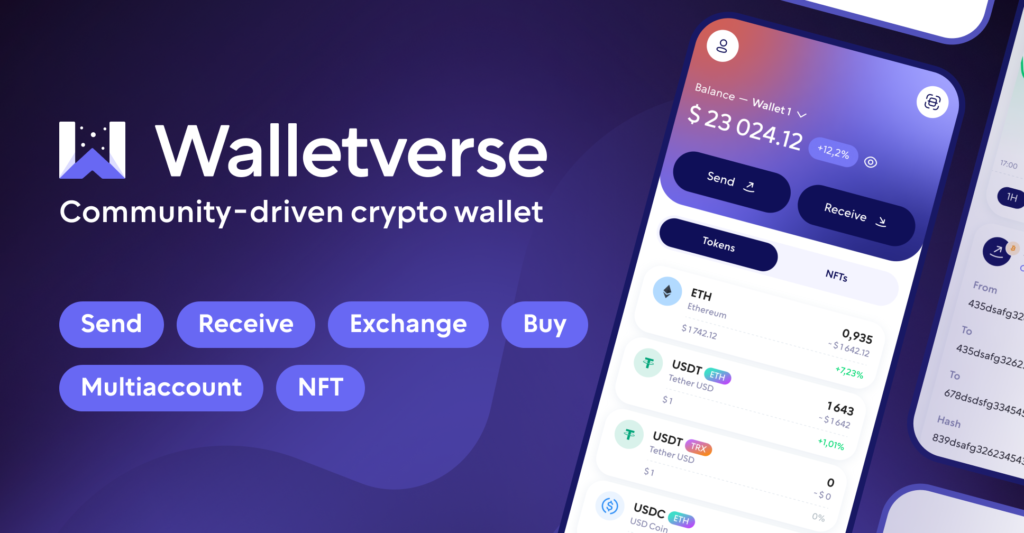
Walletverse is a mobile self-custody crypto wallet built for users who want to buy, store, send, and exchange digital assets from one app. It supports Web3, DeFi access, dApps, multi-account management, and a broad range of cryptocurrencies.
Walletverse is designed for both beginners and experienced crypto users. The app supports crypto purchases through fiat payment providers, including Apple Pay, Google Pay, cards, and multiple fiat currencies such as USD, EUR, GBP, JPY, KZT, INR, CAD, AUD, and more. Walletverse materials describe support for 700+ assets, while app store listings mention support for hundreds of cryptocurrencies, tokens, and blockchains.
Walletverse is non-custodial, so users control access to their own wallet. It also includes passcode and biometric protection. Its GasFree USDT system on TRON lets users send USDT while paying fees in USDT instead of holding TRX, which helps remove one of the common barriers for new users.
Pros:
- Mobile-first self-custody wallet for everyday crypto management;
- Support for 700+ assets according to Walletverse materials;
- Apple Pay, Google Pay, card payments, and multiple fiat currencies;
- Web3, DeFi, dApps, and multi-account support;
- Passcode and biometric authentication;
- GasFree USDT transfers on TRON;
- Google Play rating of 4.8 and App Store rating of 5.0.
Cons:
- Mobile-only format may not suit desktop-first users;
- Direct OPUL availability may depend on region, provider, and liquidity;
- Self-custody means users must protect their own recovery phrase.



2. MetaMask

MetaMask is one of the most widely used self-custody wallets for Ethereum and EVM-compatible networks. Since OPUL has traded across Ethereum-compatible environments, MetaMask can be useful for users who want to manage tokens manually, connect to decentralized exchanges, and verify token contracts themselves.
MetaMask is better suited for users who already understand gas fees, custom networks, token approvals, and decentralized exchange swaps. It gives users strong control over token management, but it also requires more attention during transactions.
Pros:
- Strong support for Ethereum and EVM-compatible tokens;
- Easy connection to decentralized exchanges and Web3 apps;
- Browser extension and mobile app available;
- Good option for experienced DeFi users.
Cons:
- Less beginner-friendly than mobile-first wallets;
- Users must manage networks, gas fees, and token approvals carefully;
- Fake tokens and wrong contract addresses are a real risk.
3. Trust Wallet

Trust Wallet is a self-custody multi-chain wallet with support for many tokens, NFTs, and Web3 applications. It is popular among users who want a mobile wallet for different blockchains, tokens, and decentralized services.
For OPUL users, Trust Wallet can be useful when managing multi-chain assets or connecting to supported swap routes. As with any wallet, users should verify whether OPUL is available directly or whether they need to add the token manually.
Pros:
- Broad multi-chain support;
- Simple mobile interface;
- NFT and Web3 dApp access;
- Suitable for users who manage many crypto assets.
Cons:
- Direct OPUL buying may not always be available;
- In-app provider fees can vary;
- Advanced DeFi users may want more manual control.
4. Crypto.com DeFi Wallet

Crypto.com DeFi Wallet is a non-custodial wallet connected with the wider Crypto.com ecosystem. It supports DeFi features, swaps, NFTs, and multi-chain assets.
For OPUL buyers, it may be useful if they already use Crypto.com products and want to move assets into a self-custody wallet environment.
Pros:
- Non-custodial wallet experience;
- DeFi and NFT support;
- Useful for Crypto.com users;
- Mobile-first interface.
Cons:
- Best experience may depend on Crypto.com ecosystem usage;
- OPUL availability should be checked manually;
- Users are responsible for wallet backup and private access.
5. SafePal

SafePal provides both software and hardware wallet options. It is often chosen by users who want a mobile wallet but may later add cold-storage protection for stronger long-term security.
For OPUL, SafePal may be suitable for users who want to manage tokens across several networks and keep long-term holdings away from centralized exchanges.
Pros:
- Software and hardware wallet options;
- Useful for stronger self-custody setups;
- Multi-chain support;
- Suitable for users who want mobile and cold-storage flexibility.
Cons:
- Hardware setup adds complexity;
- Direct OPUL purchase support may be limited;
- Users need to understand token networks before transferring funds.
6. Binance Web3 Wallet

Binance Web3 Wallet can be useful for users who already use Binance and want access to Web3 functions inside a familiar exchange ecosystem. It can help users move from fiat purchases into crypto swaps and Web3 activity.
For OPUL, users may first buy a more liquid asset, such as USDT or BNB, and then check whether OPUL is available through supported swap routes or external decentralized exchanges.
Pros:
- Convenient for existing Binance users;
- Integrated Web3 access;
- Good bridge between exchange and wallet activity;
- Supports swaps and decentralized applications.
Cons:
- Availability depends on country and Binance services;
- OPUL support should be checked before buying;
- Not ideal for users who want a fully independent wallet experience.
7. Exodus

Exodus is a non-custodial wallet known for its clean interface and portfolio management tools. It is available on desktop and mobile, making it convenient for users who prefer a visual wallet experience.
For OPUL, Exodus may be useful for users who want to manage crypto holdings in a simple interface, although direct OPUL support and swap availability should be confirmed before use.
Pros:
- Beginner-friendly design;
- Desktop and mobile apps available;
- Clear portfolio view;
- Useful for managing multiple crypto assets.
Cons:
- Not built mainly for advanced DeFi activity;
- Swap costs and spreads can vary;
- OPUL may not be available directly in all regions.
8. Guarda

Guarda is a non-custodial multi-platform wallet available on mobile, desktop, web, and browser extension. It supports many assets and gives users flexibility across devices.
For OPUL buyers, Guarda may be useful if they want to manage assets across several platforms and access fiat buying options through third-party providers.
Pros:
- Mobile, desktop, web, and extension access;
- Non-custodial wallet model;
- Broad asset support;
- Good option for users who switch between devices.
Cons:
- Third-party fiat fees can vary;
- OPUL availability should be checked before purchase;
- Interface may feel less simple than mobile-only wallets.
9. OKX Wallet

OKX Wallet is a Web3 wallet connected with the OKX ecosystem. It supports multiple networks, dApps, decentralized exchange access, NFTs, and DeFi tools.
For OPUL, OKX Wallet may be useful for users who want a trading-focused wallet with broad Web3 functionality. Users should still verify the token contract, liquidity, and network before making a swap.
Pros:
- Strong Web3 and DeFi functionality;
- Multi-chain wallet support;
- Built-in swap and dApp features;
- Suitable for active crypto users.
Cons:
- Interface can feel complex for beginners;
- Regional access and feature availability may vary;
- Token support depends on liquidity and network routes.
10. Coinbase Wallet

Coinbase Wallet is a self-custody wallet from Coinbase. It is separate from the main Coinbase exchange and allows users to manage crypto assets, connect to dApps, and store tokens under their own control.
For OPUL, Coinbase Wallet may be useful if users buy crypto on a centralized platform first and then transfer assets into self-custody. It can also help users interact with Web3 applications, although token support and regional availability should always be checked before buying.
Pros:
- Beginner-friendly self-custody wallet;
- Strong connection with the broader Coinbase ecosystem;
- Web3 and token storage features;
- Good option for users moving from exchange to wallet.
Cons:
- Not the same as the custodial Coinbase exchange account;
- Token support and buying availability can vary;
- Users still need to manage wallet backup and security.
Buy OPUL with Apple Pay
Buying OPUL with Apple Pay depends on whether the wallet, exchange, or fiat provider supports OPUL directly. In many cases, Apple Pay is used to buy a more liquid crypto asset first, such as USDT, ETH, or BNB, and then that asset is swapped for OPUL through a supported route.
Walletverse supports in-app crypto purchases through fiat providers and payment methods such as Apple Pay, Google Pay, and cards in supported regions. This makes it convenient for users who want to fund a wallet quickly and then manage crypto from a mobile device.
Before buying OPUL with Apple Pay, users should check:
- Whether OPUL is available directly through the selected provider;
- Whether they need to buy USDT, ETH, or BNB first;
- Which blockchain network is being used;
- The total fee, including provider fees and network gas;
- The correct OPUL token contract;
- Whether there is enough liquidity for the swap.
Apple Pay can make the fiat purchase step easier, but it does not remove crypto risks. OPUL requires extra caution because the Opulous platform services are no longer active.
Buy OPUL with Google Pay
Buying OPUL with Google Pay works in a similar way. Users choose a wallet or exchange that supports Google Pay, select a fiat currency such as USD or EUR, complete the purchase, and then either receive OPUL directly or buy another crypto asset before swapping.
Walletverse supports crypto purchases with payment providers, cards, and popular fiat currencies such as USD, EUR, GBP, CAD, AUD, AED, KZT, INR, and more. This helps users start with fiat and then manage assets in a mobile self-custody wallet.
A practical route may look like this:
- Buy USDT, ETH, or BNB with Google Pay.
- Keep the asset in a self-custody wallet or transfer it to a supported exchange.
- Use a supported swap route or exchange to buy OPUL.
- Verify the network and token contract before confirming.
- Store OPUL in a wallet where the token is supported.
This approach is common for tokens that are not always available for direct fiat purchase.
How to Buy The Opulous (OPUL) with Fiat?
Step 1. Choose a crypto wallet or exchange
Start with a wallet or exchange that supports fiat payments, self-custody, and token swaps. Walletverse is a useful mobile option for users who want a non-custodial wallet with fiat on-ramp options, Web3 access, dApps, multi-account support, and biometric security.
Step 2. Create your wallet and secure it
Download the wallet from the official app store page. Create a new wallet and store your recovery phrase offline. Do not save it in screenshots, cloud storage, email, or messaging apps.
Enable:
- Passcode protection;
- Biometric login;
- Device-level security;
- Small test transactions before larger transfers.
Step 3. Select your fiat currency
Choose the fiat currency you want to spend. Common options include USD, EUR, GBP, CAD, AUD, INR, JPY, and other local currencies depending on the provider.
Step 4. Pick a payment method
Select an available payment method, such as:
- Apple Pay;
- Google Pay;
- Credit card;
- Debit card;
- Bank transfer;
- Local payment provider.
Step 5. Check whether OPUL is available directly
Search for Opulous or OPUL inside the wallet, exchange, or provider interface. If OPUL is available, check the network, contract, rate, fees, and transaction details before confirming the purchase.
Step 6. Buy another crypto first if needed
If OPUL is not available for direct fiat purchase, buy a more liquid crypto asset first. Common bridge assets include USDT, ETH, or BNB. Then use a supported exchange or swap route to convert that asset into OPUL.
Step 7. Verify the token contract
Because OPUL exists across different chain environments and fake tokens can appear, always verify the official token details before sending funds or approving a swap.
Step 8. Store OPUL safely
After buying OPUL, store it in a wallet where you control access. With Walletverse and other self-custody wallets, users are responsible for keeping their recovery phrase safe and checking every transaction before approval.
Important Risks Before Buying OPUL
OPUL is no longer tied to the same active platform experience that originally made the project visible. The official Opulous site states that platform services have been shut down, including claim, staking, rewards, OVAULT, MFT, and dashboard services.
Before buying OPUL, users should consider:
- Project status: Opulous platform services are offline;
- Liquidity risk: OPUL may have low liquidity on some venues;
- Bridge incident: Opulous says the Messina bridge infrastructure was exploited;
- No active platform utility: Original staking, rewards, claim, and MFT services are no longer available;
- Token contract risk: Users must verify the correct token address and network;
- Market volatility: OPUL can move sharply because of low liquidity and market conditions.
OPUL may still be tradable, but buying it requires extra caution.
Final Thoughts on Buying OPUL with Fiat
Opulous (OPUL) was created for a Web3 music ecosystem focused on royalty-linked assets, artist financing, and fan participation. The project was part of a broader trend connecting music, blockchain, and tokenized real-world assets.
However, the current status of OPUL is very important. Opulous has officially shut down its platform services after the Messina bridge incident, and the original ecosystem features are no longer available. This does not necessarily mean OPUL cannot trade, but it does mean users should treat it as a high-risk crypto asset and verify every detail before buying.
For users who still want to buy or manage OPUL with USD, EUR, or other fiat currencies, Walletverse can be a convenient mobile self-custody wallet for buying crypto, storing assets, using Web3 tools, and managing tokens from one app. If OPUL is not available directly, users may need to buy another crypto asset first and then swap it through a supported exchange or decentralized route.
Data current as of May 13, 2026.
FAQ
Most frequent questions and answers
OPUL may be interesting to users researching music-related Web3 assets, but it is now very high risk because Opulous platform services have been shut down. Users should not evaluate OPUL only by its past concept; they should also consider current liquidity, token status, and the loss of active platform utility.
You can buy OPUL with USD through a wallet or exchange that supports fiat purchases and OPUL trading. If OPUL is not available directly, you can buy USDT, ETH, or BNB first and then swap it for OPUL through a supported exchange or decentralized route.
You can use a crypto wallet that supports the network version of OPUL you want to hold. Walletverse is a convenient mobile self-custody wallet for managing crypto because it supports fiat purchases, multi-account use, Web3 access, dApps, passcode protection, biometric authentication, and hundreds of assets.
OPUL may still be available on selected centralized or decentralized exchanges. Before buying, users should always check current liquidity, supported networks, provider availability, and the correct token contract.
The cheapest way depends on provider fees, exchange spreads, network gas fees, and liquidity. Sometimes buying USDT, ETH, or BNB with fiat and then swapping to OPUL can be cheaper than direct purchase, but users should compare the full transaction cost before confirming.
Yes, it may be possible to buy OPUL with EUR if your selected wallet, exchange, or fiat provider supports EUR payments and OPUL access. If direct OPUL buying is unavailable, you can buy another supported crypto asset with EUR and swap it for OPUL.
Walletverse supports buying and managing many crypto assets through a mobile self-custody wallet. Direct OPUL availability may depend on the provider, region, network, and liquidity, so users should check the app before buying or use a supported swap route if needed.
The OPUL token may still exist on-chain and trade on some markets, but the official Opulous site states that its platform services are now offline. Claim, staking, rewards, OVAULT, MFT, and dashboard services are no longer available.


