


Buy POND with USD, EUR and Other Fiat Currencies
Buying POND with USD, EUR, GBP, CAD, AUD, INR, and other fiat currencies is usually straightforward once you choose the right wallet and payment method. In most cases, users fund a wallet with a bank card, Apple Pay, Google Pay, or bank transfer, then either buy POND directly or swap into it afterward.
This article was prepared by ilink, a FinTech and Web3 software developer with 13 years of experience and completed projects worldwide.
What Is POND?
POND is the native token of Marlin, a Web3 infrastructure project that has evolved over time from a network-acceleration protocol into a broader verifiable computing and decentralized coprocessor ecosystem. Marlin’s current official site describes the project as a protocol for scalable decentralized compute using TEE- and ZK-based coprocessors, while Binance Academy describes Marlin as a verifiable computing protocol that lets decentralized applications outsource computations off-chain and verify results on-chain.
Older descriptions of Marlin focused more on networking and speed. Binance Research described it as a layer-0 protocol for high-performance network infrastructure in Web3, designed to improve how decentralized networks communicate. That historical context is still useful, because it explains why Marlin is often described as infrastructure rather than as a consumer-facing crypto project.
Today, POND is still actively used inside the Marlin ecosystem. Coinbase states that POND is used for running validator nodes, making and voting on governance proposals, and compensating users from an insurance fund in case of an SLA breach. Marlin’s own staking documentation also says users need to stake POND and/or MPond to join the network.
Where Can I Buy a POND with Cash? 10 Best Crypto Wallets
1. Walletverse
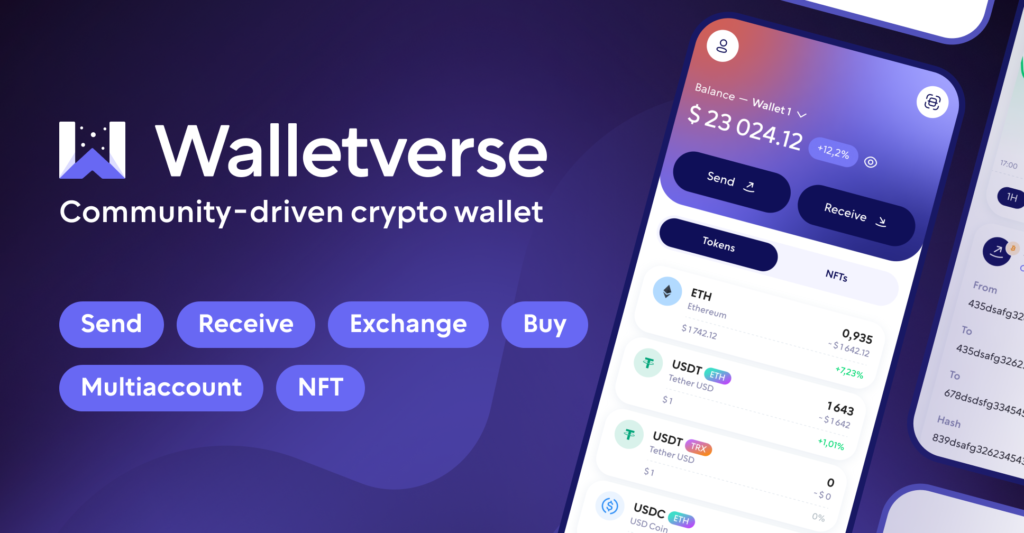
Walletverse is a mobile self-custody crypto wallet designed for users who want to buy, store, send, and exchange crypto in one app. It supports 700+ cryptocurrencies, Web3 and dApp access, multi-account use, and purchases through Apple Pay, Google Pay, credit/debit cards, and multiple fiat currencies. For POND buyers, its main strength is convenience: it works well as a mobile-first wallet for moving from fiat into crypto while keeping control of your assets.
Pros
- Mobile-first and easy to use;
- Supports Apple Pay, Google Pay, cards, and many fiat currencies;
- Non-custodial with passcode and biometric security;
- Good fit for Web3 and multi-asset portfolio management.
Cons
- Mobile-only format may not suit desktop-first users;
- Direct POND availability can depend on the provider path;
- Self-custody means backup and recovery remain the user’s responsibility.



2. MetaMask

MetaMask is one of the best-known wallets for Ethereum and EVM ecosystems. It is a practical option for users who want a wallet centered on token swaps, Web3 tools, and self-custody.
Pros
- Strong fit for Ethereum-style assets and Web3 use;
- Good for users who may also want DeFi access;
- Familiar wallet for technically engaged users.
Cons
- Less beginner-friendly than simpler wallets;
- Can feel technical for first-time buyers;
- Fiat purchase support depends on the provider and region.
3. Trust Wallet

Trust Wallet is a mainstream self-custody wallet with broad token support and a simple mobile interface. It works well for users who want a general-purpose wallet for buying crypto and later managing altcoins like POND.
Pros
- Easy mobile experience;
- Broad asset support;
- Good for general-purpose crypto management.
Cons
- Fees vary by provider;
- Direct POND support may not always be the cheapest route;
- Less specialized for advanced infrastructure-token workflows.
4. Ledger Nano X

Ledger is best suited to users who care most about long-term security. For POND, Ledger makes the most sense after purchase, especially for holders who want hardware-backed protection for altcoins.
Pros
- Strong security for long-term holding;
- Good for broader portfolios;
- Suitable for securing tokens after purchase.
Cons
- Hardware purchase adds cost;
- Less convenient for casual first-time buyers;
- Better for storage than for the easiest first buy.
5. Trezor Model T
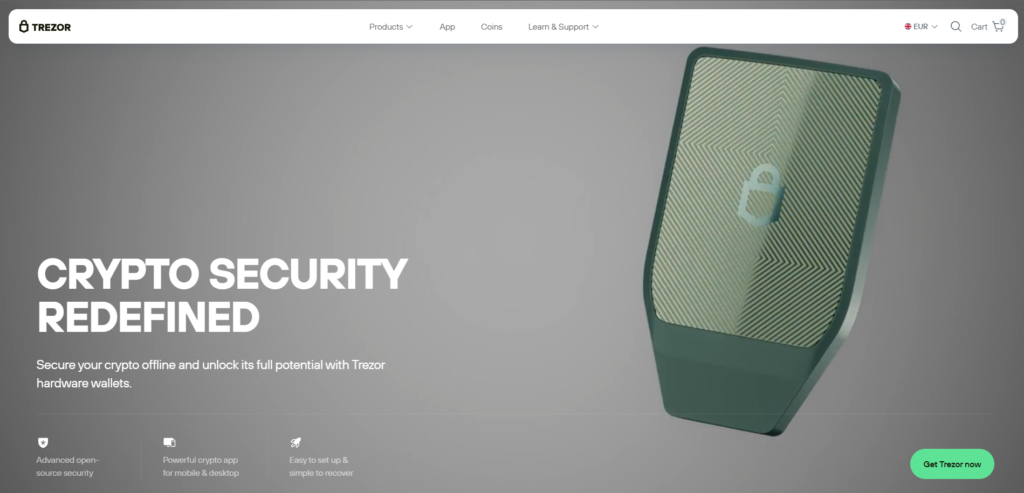
Trezor is another major hardware-wallet option focused on secure self-custody. It is a strong fit for POND holders who want long-term protection and stronger separation between daily-use wallets and core holdings.
Pros
- Strong hardware-wallet reputation;
- Good for long-term token storage;
- Useful for buyers building a larger portfolio.
Cons
- Less convenient than software wallets;
- Requires hardware setup;
- Better for holding than for quick everyday buying.
6. Coinbase Wallet

Coinbase Wallet is useful for users who want self-custody with a more familiar interface. Coinbase’s POND pages also make it easy to check current USD or EUR value before buying.
Pros
- Familiar interface for many users;
- Useful for storing and tracking POND after purchase;
- Good for users already comfortable with Coinbase products.
Cons
- Direct fiat-to-POND buying may be less straightforward;
- Less specialized for advanced Web3 use;
- Some users may want deeper built-in DeFi tools.
7. Exodus

Exodus is often chosen by users who want a simpler wallet across desktop and mobile. It is practical for funding a wallet with fiat and then using a swap route if needed.
Pros
- Clean and beginner-friendly design;
- Desktop and mobile support;
- Good for general portfolio management.
Cons
- Direct POND availability may vary;
- Less Web3-native than MetaMask;
- Pricing depends on integrated partners.
8. Guarda

Guarda is a multi-platform wallet used for buying, exchanging, and storing many assets across web, desktop, and mobile.
Pros
- Multi-platform access;
- Broad asset support;
- Good balance between accessibility and flexibility.
Cons
- Fees depend on integrated providers;
- Less specialized for advanced token workflows;
- Direct POND access may still depend on a swap route.
9. Atomic Wallet

Atomic Wallet is an all-in-one wallet built around buying, swapping, staking, and portfolio management. It is often useful for people who want one application for several smaller assets.
Pros
- Broad asset coverage;
- Buy and swap tools in one interface;
- Useful for multi-asset portfolios.
Cons
- Software-wallet security is weaker than hardware storage;
- Fees and availability depend on third-party services;
- Not always the cheapest purchase route.
10. Coinomi
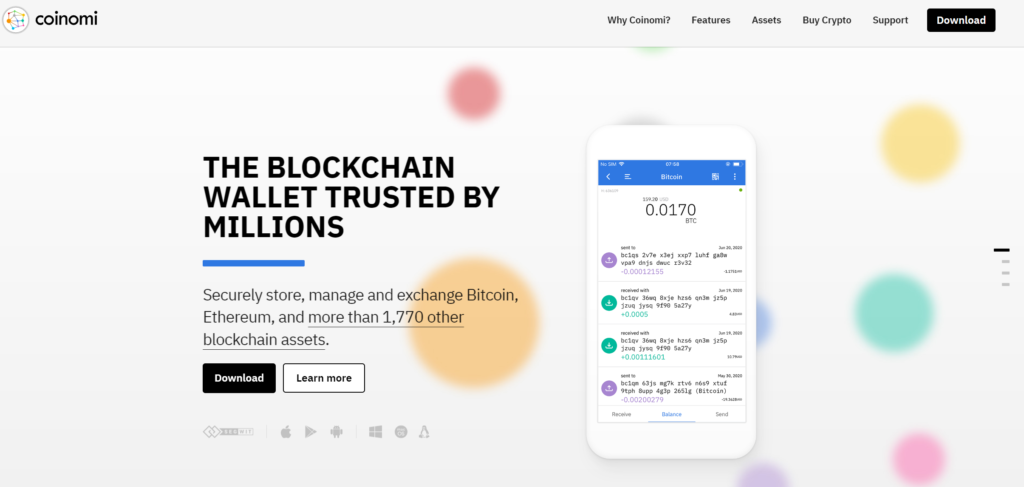
Coinomi is a long-running multi-chain wallet with broad token support. It is a practical choice for users who want one general-purpose wallet for many asset types.
Pros
- Wide asset and chain support;
- Good for all-purpose crypto management;
- Useful for buyers who want one wallet for many token types.
Cons
- Interface feels older than some newer wallets;
- Costs vary by provider;
- Not the strongest choice for deep Web3-specific usage.
Buy POND with Apple Pay
Buying POND with Apple Pay can be one of the easiest routes for mobile users.
The exact route depends on the wallet and the purchase provider. In some cases, you may be able to buy POND directly. In others, the more practical path is to buy another supported crypto first and then swap into POND.
Walletverse is especially convenient here because it is built around a mobile-first self-custody flow and supports Apple Pay alongside cards and multiple fiat currencies.
Before confirming the purchase, check:
- Whether POND itself is directly available;
- What the full fee and spread look like;
- Whether a buy-then-swap route would be cheaper.
That matters because even though POND remains actively traded, it is still a small-cap asset, so provider spreads and routes can vary more than with major coins. Coinbase’s converter pages make it easy to estimate how much POND you receive per dollar or euro before buying.
Buy POND with Google Pay
The process for buying POND with Google Pay is very similar.
A wallet that supports Google Pay makes fiat funding easier, but the best route still depends on provider spreads, direct token availability, and swap costs.
Walletverse is a strong option for Android users because it combines Google Pay, self-custody, and multi-asset management in one mobile environment.
As with Apple Pay, compare:
- Provider fee;
- Exchange rate or spread;
- Any later swap or network cost.
That extra comparison helps because small-cap tokens often have more noticeable differences between buy routes. Coinbase’s converter pages are again useful for estimating how much POND you get before purchase.
How to Buy The POND with Fiat?
Buying POND with fiat is usually simple once you choose the right wallet and funding method.
Step 1. Choose a wallet
Pick a wallet that fits your style.
Walletverse is useful if you want a mobile self-custody wallet with broad fiat support.
MetaMask is stronger for users already comfortable with Web3 and token swaps.
Exodus is a good option if you want a simpler interface across desktop and mobile.
Step 2. Complete verification if required
Most regulated fiat on-ramp providers require identity verification before allowing purchases through card, Apple Pay, Google Pay, or bank transfer.
Step 3. Check whether direct POND purchase is available
Some providers may support POND directly.
If they do not, buy a more liquid asset first and then swap into POND. Since POND is still actively quoted and traded on major platforms, both direct-buy and swap routes are realistic depending on the service you use.
Step 4. Fund the wallet with fiat
Common payment methods include:
- Credit or debit card;
- Apple Pay;
- Google Pay;
- Bank transfer;
- Local payment methods where supported.
Step 5. Buy or swap into POND
If direct POND purchase is supported, complete the order.
If not, use the wallet’s swap function or move the purchased asset to a service that supports POND trading.
Step 6. Store POND in a wallet you control
After purchase, many users prefer to keep POND in a self-custody wallet instead of leaving it on an exchange.
Walletverse, MetaMask, Trust Wallet, Exodus, Ledger, and Trezor all fit different needs depending on whether you care most about convenience, Web3 compatibility, or long-term storage.
Step 7. Review the full cost
Always compare the total fee, including:
- Provider spread;
- Card or payment fee;
- Any later swap fee;
- Any network cost.
That helps you avoid overpaying, especially on smaller altcoin purchases.
FAQ
Most frequent questions and answers
POND has more substance than many small altcoins because it is tied to an active Web3 infrastructure project with current utility in staking, governance, and network participation. It is still actively traded and still has a live product narrative around decentralized compute and verifiable off-chain execution. But it is also a small-cap altcoin, which makes it speculative and much riskier than large, liquid assets.
The simplest route is to choose a wallet with fiat support, fund it with USD, and either buy POND directly or buy another supported asset first and swap into POND. Walletverse is useful here because it supports USD and other fiat currencies in a mobile self-custody format. Coinbase’s POND/USD converter is also useful for checking approximate purchase value before buying.
Good options include Walletverse, MetaMask, Trust Wallet, Coinbase Wallet, Exodus, Ledger, Trezor, Guarda, Atomic Wallet, and Coinomi. Since POND is actively traded and works well in self-custody setups, both multi-asset wallets and Web3-capable wallets are practical starting points.
You can buy POND through exchanges and through wallets connected to fiat on-ramp providers and swap services, for example Walletverse. Because POND is still actively quoted on major platforms such as Coinbase, CoinMarketCap, and Binance, it is easier to access than many inactive niche tokens.
Yes. Walletverse is suitable for managing POND as part of a broader self-custody portfolio, especially if you want a mobile wallet with fiat support, multi-asset management, and Web3 access.


