


Ethereum Staking Mechanism
Ethereum has long been the backbone of the blockchain industry, powering decentralized applications, NFTs, and smart contracts. Since its transition from Proof of Work (PoW) to Proof of Stake (PoS), Ethereum has introduced a new era of sustainability, scalability, and passive income opportunities through staking.
The staking mechanism allows ETH holders to contribute to network security and earn consistent rewards. In this article, we’ll explore how Ethereum staking works, its process, and the best wallets to use in 2025–2026.
What Is Ethereum (ETH)
Ethereum (ETH) was launched in 2015 by Vitalik Buterin as a decentralized blockchain designed to execute smart contracts and decentralized applications (dApps). Unlike Bitcoin, which primarily serves as a digital currency, Ethereum enables programmable transactions, forming the foundation for DeFi and Web3.
Originally, Ethereum used a Proof of Work (PoW) consensus model, relying on miners to verify transactions. However, in 2022, the network underwent The Merge, a major upgrade that replaced mining with Proof of Stake (PoS). This shift drastically reduced energy consumption and made staking the primary method for securing the blockchain.
In PoS, validators lock their ETH to process transactions and maintain the network. This staking system allows participants to earn passive income, typically between 3% and 5% annually, depending on network conditions.
Ethereum Staking Process
The Ethereum staking process is designed to be inclusive, efficient, and secure. Instead of using computational power, validators rely on staked ETH to validate blocks. The process involves several steps:
- Deposit ETH. Users lock up a specific amount of ETH (traditionally 32 ETH to run a validator node) or join a staking pool for smaller contributions.
- Validator Selection. Validators are randomly chosen to propose and verify new blocks.
- Rewards Distribution. Honest validators receive ETH rewards, while those who act maliciously or stay offline may lose part of their stake (a process called slashing).
- Withdrawal. Users can unstake their ETH after a short waiting period when they wish to stop participating.
This mechanism ensures fairness, decentralization, and network reliability while rewarding participants for their contribution.
Top Crypto Wallets for Ethereum Staking 2025–2026
1. Walletverse
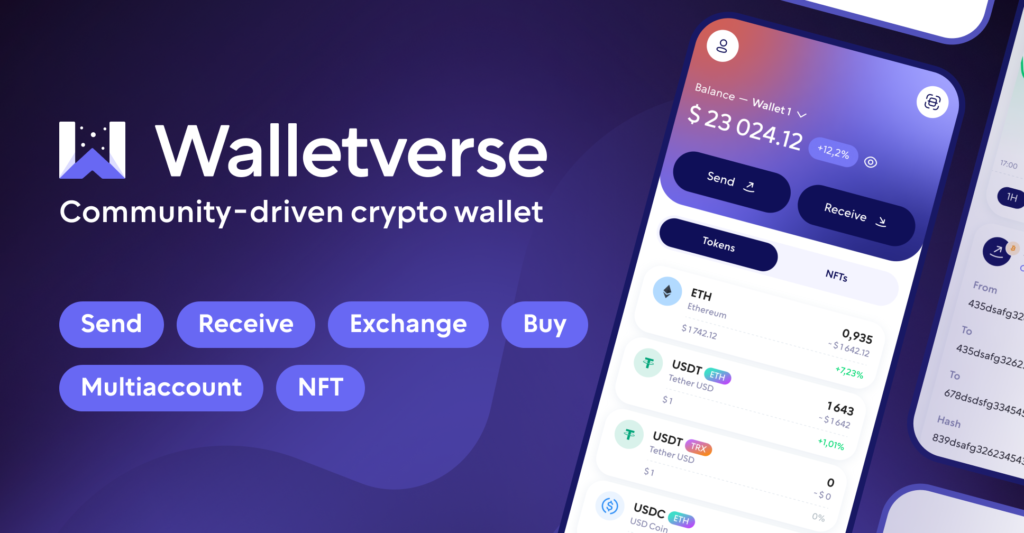
Walletverse is a next-generation multi-currency Web3 and DeFi wallet supporting over 600 cryptocurrencies, including Ethereum. It offers simple, fast, and secure ETH staking directly from your mobile device.
With 1.76% APY on Ethereum staking, Walletverse ensures a safe and user-friendly experience through self-custody, biometric authentication, and AML compliance.
Pros:
- Secure and decentralized
- Easy staking interface
- Supports 600+ assets and dApps
- Buy crypto via Apple Pay, Google Pay, or cards
Cons:
- Mobile-only wallet


2. Trust Wallet
Trust Wallet, developed by Binance, supports Ethereum staking, NFTs, and DeFi applications. It’s a mobile-first solution for on-the-go staking.
APY: Around 3%
Pros:
- Simple staking interface
- Multi-chain compatibility
- Built-in DeFi and NFT support
Cons:
- Limited validator visibility
- Custodial risk when linked to exchanges
3. Ledger Nano X
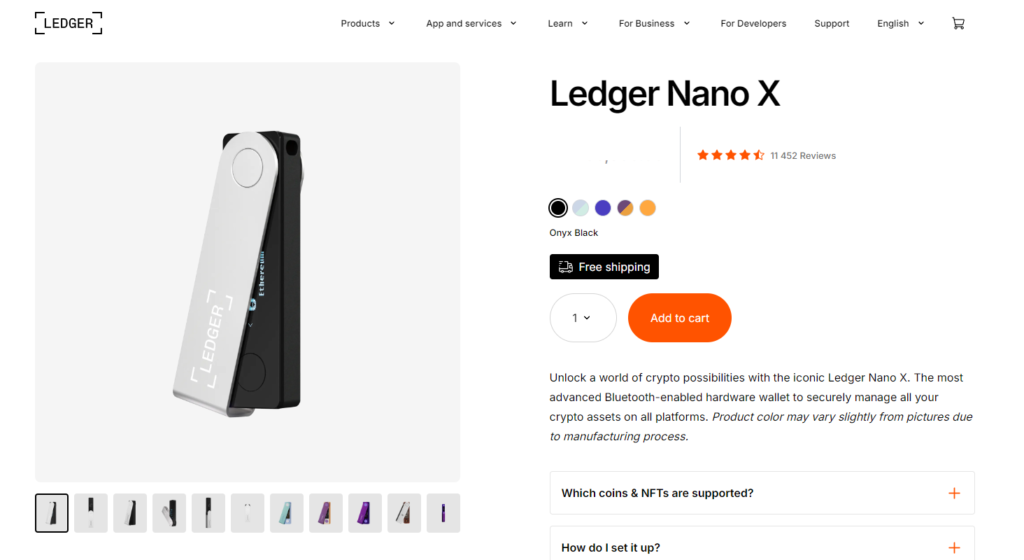
Ledger is a hardware wallet offering offline protection for Ethereum staking. It connects with apps like Lido or Kiln for secure validator delegation.
APY: Around 3%
Pros:
- Maximum security via offline storage
- Compatible with multiple staking services
- Easy hardware integration
Cons:
- Requires setup with external tools
- Hardware purchase required
4. Atomic Wallet

Atomic Wallet provides built-in staking for Ethereum and other assets. It’s suitable for users seeking simplicity without relying on external platforms.
APY: Around 4%
Pros:
- Multi-asset support
- Simple setup
- Built-in staking tools
Cons:
- Closed-source software
- Limited validator transparency
5. Lido

Lido enables liquid staking, where users can stake any amount of ETH and receive stETH tokens that continue to earn rewards while remaining tradable.
APY: Around 3%
Pros:
- Flexible liquid staking
- No minimum ETH required
- Transparent and decentralized governance
Cons:
- Smart contract vulnerabilities possible
- Some centralization among validators
6. MyEtherWallet (MEW

MyEtherWallet is one of Ethereum’s oldest wallets, offering full control of private keys and staking options through integrations with hardware devices and staking providers.
APY: Around 3%
Pros:
- Non-custodial and secure
- Compatible with Ledger and Trezor
- Trusted by long-time Ethereum users
Cons:
- More technical interface
- Requires validator connection setup
7. Binance Wallet

Binance provides direct Ethereum staking through its exchange platform. It’s ideal for users looking for convenience and steady returns.
APY: Around 3%
Pros:
- Simple to use
- Reliable and secure exchange infrastructure
- Flexible staking terms
Cons:
- Custodial. Binance controls the keys
- Regional restrictions may apply
8. MetaMask
MetaMask is one of the most popular Ethereum wallets. It supports staking through third-party integrations like Lido and Rocket Pool, making it versatile for both beginners and advanced users.
APY: Around 3%
Pros:
- Trusted and widely used wallet
- Browser and mobile compatibility
- Integrates with leading DeFi platforms
Cons:
- Requires external staking providers
- Complex for first-time users
9. Coinbase Wallet

Coinbase Wallet offers regulated Ethereum staking with an easy setup process. It’s ideal for beginners who prefer simplicity and institutional reliability.
APY: Around 3%
Pros:
- Simple and beginner-friendly
- Backed by a reputable exchange
- Automatic reward distribution
Cons:
- Custodial wallet (private keys held by Coinbase)
- Higher staking fees
10. Exodus Wallet

Exodus combines aesthetic design with practical functionality, offering built-in Ethereum staking and portfolio management tools.
APY: Around 3%
Pros:
- User-friendly interface
- Desktop and mobile support
- Integrated portfolio tracking
Cons:
- Closed-source
- Slightly higher fees
Ethereum Staking Rewards Mechanism
Ethereum rewards validators based on their performance and total ETH locked in the network. Rewards are distributed proportionally to the amount staked and the validator’s uptime.
The average reward rate ranges between 3% and 5% APY. Validators who maintain high uptime earn consistent rewards, while those acting maliciously or remaining inactive risk penalties.
Staking rewards come from:
- New ETH issuance (network inflation);
- Priority transaction fees;
- MEV (Maximal Extractable Value) earnings from validators.
This balanced structure ensures fairness and long-term stability in the Ethereum ecosystem.
How Long Does Ethereum Staking Take?
Ethereum staking rewards begin accumulating almost immediately after delegation. However, withdrawing or unstaking may take time depending on network activity.
Typically, it takes a few days for validators to process withdrawal requests. For most staking pools and wallets, unstaking periods range between 3 to 7 days.
Using platforms like Walletverse simplifies the process, users can stake, track, and manage ETH in real time through a seamless mobile interface.
Ethereum staking has transformed how users earn from blockchain participation. It’s secure, sustainable, and profitable for long-term investors who wish to support network stability while earning passive income.
Walletverse provides one of the safest and most intuitive environments for staking Ethereum. With 1.76% APY, biometric authentication, self-custody control, and AML protection, it offers a perfect balance between security, ease of use, and transparency.
FAQ
Most frequent questions and answers
Yes. Ethereum staking provides average returns between 3% and 5% annually, depending on validator performance and total network participation.
Losses are rare but can occur if validators act maliciously or remain offline. Using trusted wallets like Walletverse minimizes this risk.
By staking ETH, users help secure the network and receive rewards from transaction fees and new ETH issuance, distributed automatically to validators and delegators.


