


How to Buy Ethereum (ETH) – Best Ways 2026
Ethereum (ETH) has established itself as a leading cryptocurrency, second only to Bitcoin in market capitalization. In 2026, understanding how to buy and invest in Ethereum is crucial for both beginners and experienced investors. Whether you’re looking to make your first purchase or expand your existing portfolio, this guide will teach you the best strategies and platforms for buying Ethereum and securing your funds.
What is Ethereum (ETH)?
Ethereum is a decentralized, open-source blockchain system that allows developers to build and deploy smart contracts and decentralized applications (dApps). The native cryptocurrency of the Ethereum network is Ether (ETH), which is used to power these applications, pay transaction fees, and serve as a store of value. Unlike Bitcoin, which is often seen as digital gold, Ether has broader uses within its ecosystem. The key difference between Ethereum and Bitcoin lies in their purpose: Bitcoin is designed as a peer-to-peer currency, while Ethereum is a platform for decentralized computing. Currently, there are over 122 million Ethereum tokens in circulation – more than 10 times the number of Bitcoin in circulation, highlighting Ethereum’s expansive role within the crypto economy.
Ethereum's Popularity
Ethereum has become one of the most widely adopted cryptocurrencies in the world, with a vibrant ecosystem of developers, investors, and users. Ethereum supports many decentralized applications (dApps) across various sectors, including finance, gaming, and supply chain management. This widespread adoption has significantly increased the number of Ethereum users, with millions of wallets actively holding ETH. The versatility of the Ethereum blockchain, combined with its robust security features, has cemented its position as a critical infrastructure for the emerging Web3 economy. The ongoing upgrades to the Ethereum network, such as the transition to Ethereum 2.0, are expected further to enhance its scalability and popularity in the years to come.
How to Buy Ethereum (ETH) with Credit/Debit Cards
One of the most straightforward ways to buy Ethereum is using a credit or debit card. This method is popular because it’s fast, convenient, and widely available across many platforms.
Here’s how you can do it:
- Choose a reliable platform. Select one of the best platforms to buy Ethereum, such as Walletverse, Coinbase, or Binance. These platforms are known for their security and ease of use.
- Sign up and verify your identity. Create an account on your chosen platform and complete any required identity verification processes.
- Link your credit or debit card. Once your account is set up, link your credit or debit card. Most platforms support Visa and MasterCard, making it easy to get started.
- Make your purchase. Enter the amount of ETH you want to buy, confirm the transaction, and your secure Ethereum transactions will be completed instantly. The ETH will be deposited into your wallet on the platform.
- Transfer to a secure wallet. After purchasing, it’s a good practice to transfer your ETH to a secure Ethereum wallet where you control the private keys, ensuring your investment is safe.
Buying Ethereum (ETH) with Google Pay and Apple Pay
Buying Ethereum with Google Pay or Apple Pay offers an even more convenient option for those who prefer mobile payments. These payment methods are integrated into various crypto platforms, allowing instant Ethereum purchases directly from your mobile device.
- Select a compatible platform. Platforms like Walletverse support buying Ethereum with Google Pay and Apple Pay. Ensure that the platform you choose is reputable and supports these payment methods.
- Link your Google Pay or Apple Pay account. Once your account is set up, simply link your Google Pay or Apple Pay account to the platform.
- Purchase Ethereum. Navigate to the Ethereum purchase section, select your desired amount, and confirm the payment using your mobile wallet. The transaction is processed instantly, and the ETH is added to your wallet.
- Store your ETH safely. As with credit/debit card purchases, consider transferring your Ethereum to a secure Ethereum wallet for long-term storage.
What Are Other Ways to Buy Ethereum?
Apart from credit/debit cards and mobile payments, there are several other methods to acquire Ethereum:
- Bank transfers. Many exchanges allow you to buy Ethereum via direct bank transfers. Although this method might take longer to process, it often comes with lower fees than card payments.
- Cryptocurrency exchanges. Large exchanges like Binance, Kraken, and Coinbase offer various payment methods, including bank transfers, e-wallets, and even PayPal. These platforms are ideal for those who want access to multiple trading features and tools.
- Peer-to-peer (P2P) platforms. P2P platforms like LocalBitcoins and Paxful enable users to buy Ethereum directly from other individuals. This method provides flexibility in payment options and sometimes offers better rates, though it requires caution and trust between the parties.
- Crypto ATMs. In specific locations, you can find cryptocurrency ATMs that allow you to buy Ethereum using cash. These machines are convenient for quick purchases but may charge higher fees.
Where is the Best Place to Buy Ethereum in 2026
The best platforms to buy Ethereum in 2026 will depend on your needs and preferences:
1. Walletverse
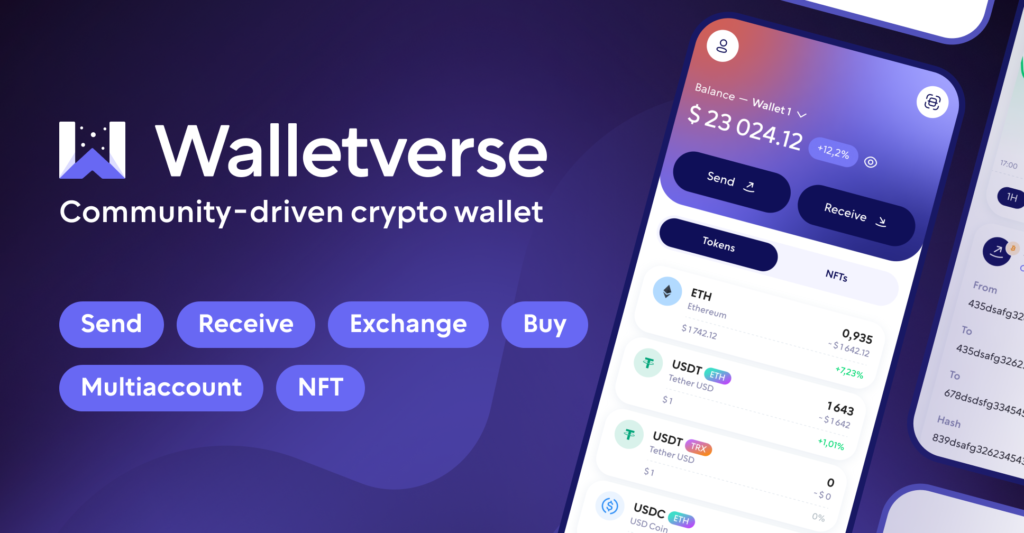
Walletverse is highly rated on Google Play with a 5.0 review score. It is a community-driven, self-custody Android crypto wallet known for its seamless management of over 600 cryptocurrencies. The wallet is decentralized, ensuring users have complete control over their assets. With Walletverse, you can buy, send, and exchange crypto easily. It also supports a vast selection of coins and offers access to numerous decentralized applications (dApps). Walletverse is known for its strong security measures, including passcode and biometric security features. This makes it one of the best Android crypto wallet apps with a high crypto wallet rating. It is secure, safe, and user friendly.
Pros:
- Supports 600+ cryptocurrencies (BTC, ETH, USDT, XRP, HMSTR soon, DOGE, SHIB and more others);
- User-friendly interface;
- High security with passcode and biometric features;
- Access to a wide range of dApps;
- Community-driven development;
- Staking;
- DEX/CEX;
- AML.
Cons:
- Only mobile crypto wallet.


2. Coinbase Wallet

Coinbase Wallet has a 4.2 review on Google Play. It offers a platform to store, exchange, buy, and sell multiple types of digital currencies. Coinbase Wallet is known for its intuitive user interface and strong security features, such as two-factor authentication. This makes it a highly rated Android crypto wallet.
Pros:
- User-friendly interface;
- Supports over 5,500 digital assets;
- Multi-signature and two-factor authentication;
- Backed by a reputable trading platform.
Cons:
- High trading commission (1.49%);
- High fees for debit/credit card deposits (almost 4%).
3. Binance

Binance wallet has a 4.5 review on Google Play. It is linked to the Binance exchange, offering custodial services and the ability to trade various cryptocurrencies directly from the wallet. Binance supports numerous cryptocurrencies and provides low trading commissions at 0.1%. It is considered by many as the best Android cryptocurrency app to use.
Pros:
- Integrated with Binance exchange;
- Low trading commissions;
- Supports many cryptocurrencies;
- Easy earning on dormant tokens.
Cons:
- Lack of transparency about cold storage;
- SAFU balances undisclosed.
4. Kraken Wallet

Kraken is one of the longest-standing and most respected cryptocurrency exchanges, founded in 2011. It offers a secure platform to buy, sell, and trade Ethereum with a simple interface for beginners and advanced tools for experienced traders through Kraken Pro. The exchange also supports ETH staking, allowing users to earn rewards directly from their holdings.
Pros:
Exceptional security track record with no major hacks since founding.
Competitive fees on Kraken Pro (0.16%/0.26%) and strong regulatory compliance.
Supports ETH staking with regular reward payouts.
Cons:
Verification process can be slower compared to other exchanges.
Simple buy/sell interface has higher fees than the Pro platform.
5. Bitget

Bitget has emerged as one of the fastest-growing crypto exchanges globally, offering a reliable platform to buy and trade Ethereum with deep liquidity and competitive fees. It provides a seamless experience for both spot and derivatives trading, along with innovative features like copy trading. Bitget also offers a dedicated Web3 wallet for users who want self-custody of their ETH after purchase.
Pros:
Competitive spot trading fees (0.10% maker/taker) with additional discounts for holding BGB token .
Deep liquidity ensures tight spreads and minimal slippage even during volatile periods .
Cons:
Not available to users in certain regulated jurisdictions like the US.
Some advanced features may be overwhelming for absolute beginners.
6. Bybit

Bybit is a derivatives-focused exchange that has expanded into spot trading, offering a high-performance platform for buying Ethereum. It is known for its fast execution, deep order books, and user-friendly interface. Bybit also offers bbETH, a liquid staking token that allows users to earn staking rewards on their ETH while maintaining liquidity within the Bybit ecosystem .
Pros:
High-performance trading infrastructure with up to 200× leverage on ETH perpetuals .
Clean, intuitive interface suitable for both beginners and advanced traders.
Cons:
Primarily known for derivatives; spot market features are newer compared to competitors.
Not available to US residents.
7.Crypto.com

Crypto.com operates a comprehensive crypto ecosystem including an exchange, DeFi wallet, and crypto Visa card. Users can buy Ethereum directly with fiat currency using various payment methods, including credit cards and bank transfers. The platform also offers competitive staking rewards for ETH holders and seamless integration with its broader suite of financial products .
Pros:
All-in-one ecosystem with exchange, wallet, and spending features.
Strong security with ISO 27001 certification and insurance coverage for assets in cold storage.
Cons:
Higher standard fees (0.25% maker / 0.50% taker) compared to some competitors .
Some features require holding CRO tokens for maximum benefits.
8. OKX Wallet

OKX is a major global exchange offering deep liquidity and advanced trading tools for Ethereum. It supports spot, margin, and futures trading, along with staking and DeFi integrations. OKX provides a robust infrastructure with competitive fee structures and regular proof-of-reserves audits to ensure transparency .
Pros:
Deep ETH order books across spot and futures markets ensure reliable pricing .
Integrated Web3 wallet for self-custody and DeFi access after purchase.
Cons:
Advanced trading interface may be complex for beginners.
Fee structure (0.20% maker / 0.35% taker) is higher than some competitors .
9. Gemini

Gemini is a regulated cryptocurrency exchange founded by the Winklevoss twins, with a strong focus on security and compliance. It offers a trusted platform for buying Ethereum with USD and other fiat currencies. Gemini holds fiduciary status in New York and maintains licenses across multiple jurisdictions, making it a preferred choice for users who prioritize regulatory oversight .
Pros:
Strong regulatory compliance with licenses across multiple jurisdictions .
Institutional-grade security including cold storage and mandatory two-factor authentication.
Cons:
Higher fees compared to global exchanges (0.20%–0.40% depending on trading pair and volume) .
Smaller selection of cryptocurrencies than Binance or Coinbase.
10. BitPay

BitPay is primarily known as a payment processor, but its self-custody wallet app allows users to buy Bitcoin and Ethereum directly within the app using Apple Pay, PayPal, credit/debit cards, or bank transfers. It supports multiple blockchains including Ethereum, Solana, Polygon, and Arbitrum, giving users full control over their private keys. BitPay also enables spending crypto at merchants and buying gift cards .
Pros:
Self-custody wallet with full control of private keys – your ETH stays with you, not on an exchange .
Multiple purchase options including Apple Pay, PayPal, and bank transfers for convenience.
Cons:
Primarily a wallet with purchase features, not a full exchange with advanced trading tools.
Available payment methods and features may vary by region.
FAQ
Most frequent questions and answers
You can buy ETH on various platforms, including Walletverse, using credit/debit cards, Google Pay, or Apple Pay. Sign up on your chosen platform, link your payment method, and complete your purchase.
To buy Ethereum instantly, use Walletverse or similar platforms that support instant Ethereum purchases with Google Pay or Apple Pay. These methods allow for quick transactions, with ETH immediately added to your wallet.
Ethereum is essential because it powers smart contracts and decentralized applications (dApps) on its blockchain. It enables developers to build decentralized systems, providing more transparency, security, and efficiency than traditional applications.
Ethereum can execute smart contracts, run dApps, and participate in decentralized finance (DeFi) activities. It’s also used for creating and trading non-fungible tokens (NFTs) and as a store of value, similar to Bitcoin.
As of 2024, Ethereum has millions of active users worldwide, with many wallets holding ETH. The network’s popularity continues to grow, especially with the increasing adoption of dApps, DeFi platforms, and NFTs built on Ethereum. The ongoing enhancements to the Ethereum network, such as the transition to Ethereum 2.0, are expected to increase user adoption and network scalability further.


