


Is Staking Solana Worth It in 2026?
For SOL holders who already plan to hold their tokens for the medium or long term, staking can be worth considering because it allows them to earn additional SOL while helping secure the Solana network.
However, staking is not risk-free and staking rewards do not guarantee a profit in fiat terms. SOL can fall in price, validator performance affects rewards, and native staking requires a waiting period when activating or deactivating stake.
The right choice depends on whether you prioritize yield, liquidity, self-custody or immediate access to your SOL.
How Does Solana Staking Work?
Solana uses Proof of Stake as part of its consensus design. SOL holders can delegate tokens to validators that participate in network consensus and help secure the blockchain.
Delegators do not need to run validator infrastructure themselves. Instead, they assign stake to a validator and may receive staking rewards based on factors such as validator performance, network participation and validator commission.
Validators can charge a commission on rewards earned by delegated stake, so two validators may produce different net returns even when the amount of SOL delegated is the same.
With native staking, users retain control of the authority over their stake account rather than transferring ownership of SOL to the validator.
How Much Can You Earn by Staking SOL?
Solana staking rewards are variable rather than fixed.
The amount earned can depend on:
- total SOL staked across the network;
- validator performance;
- validator commission;
- protocol reward issuance;
- the amount of SOL delegated;
- how long the stake remains active.
An advertised APY should therefore be treated as an estimate rather than a guaranteed return.
It is also important to distinguish SOL-denominated rewards from investment profit. For example, a user may end the year with more SOL after staking, but the fiat value of the position can still decline if the market price of SOL falls.
Walletverse users should check the current staking rate displayed in the app before delegating rather than relying on a historical APY quoted in an article.
Is Staking SOL Better Than Simply Holding It?
Staking can generate additional SOL compared with leaving the same tokens idle, but it also reduces immediate liquidity and introduces additional considerations.
Staking may make more sense when you:
- already intend to hold SOL for a longer period;
- do not need immediate access to the entire balance;
- understand validator selection;
- are comfortable with SOL price volatility.
Simply holding liquid SOL may be preferable when you:
- may need to sell or transfer quickly;
- do not want activation or deactivation delays;
- expect to use SOL actively in DeFi or payments;
- prefer maximum flexibility over staking rewards.
Neither choice protects against a fall in the market price of SOL.
What Are the Risks of Staking Solana?
Staking SOL carries several different types of risk.
SOL price risk.
Staking increases the number of SOL you hold, but it does not protect the fiat value of those tokens.
Validator performance risk.
A poorly performing validator may earn fewer rewards.
Validator commission.
Higher commission reduces the portion of rewards received by delegators.
Liquidity risk.
Native stake cannot always be withdrawn immediately because delegation and deactivation occur around Solana epochs.
Custody risk.
If staking is performed through a centralized exchange, users also depend on that platform. A self-custody solution such as Walletverse reduces this particular counterparty risk because the user controls the wallet, but it does not eliminate the other staking risks.
Liquid staking risk.
Liquid staking introduces additional smart-contract, protocol and liquidity risks.
Can You Lose SOL While Staking?
Native Solana staking does not currently use the same automatic slashing mechanism found on some other Proof-of-Stake networks.
A validator performing poorly can reduce or miss potential rewards, but ordinary validator downtime should not be described as automatically destroying a delegator’s SOL.
Nevertheless, staking is not risk-free. Users remain exposed to SOL price volatility, wallet security risks and, depending on the staking method, custody or smart-contract risks.
Self-custody through Walletverse can reduce reliance on a centralized custodian, but it cannot eliminate market, validator or blockchain risks.
How Long Is SOL Locked When Staking?
Native SOL staking does not necessarily involve a fixed lockup period, but activation and deactivation are not instantaneous.
Solana processes changes to delegated stake around epoch boundaries. An epoch is approximately two days, but activation or deactivation can sometimes require more than one epoch depending on network-wide stake activity.
After stake becomes inactive, it can be withdrawn back to the user’s available SOL balance.
This means users should not stake SOL that they may need immediately.
How to Choose a Solana Validator
Choosing a validator affects both staking performance and network decentralization.
Consider:
Validator commission. A lower commission generally leaves a larger portion of rewards for delegators.
Performance and uptime. Validators that regularly miss their duties can generate lower rewards.
Stake concentration. Delegating only to the largest validators can increase network concentration.
Track record. Review validator history rather than choosing only on the basis of advertised APY.
Walletverse users should review the validator information available in the staking interface before confirming a delegation.
How to Stake Solana with Walletverse
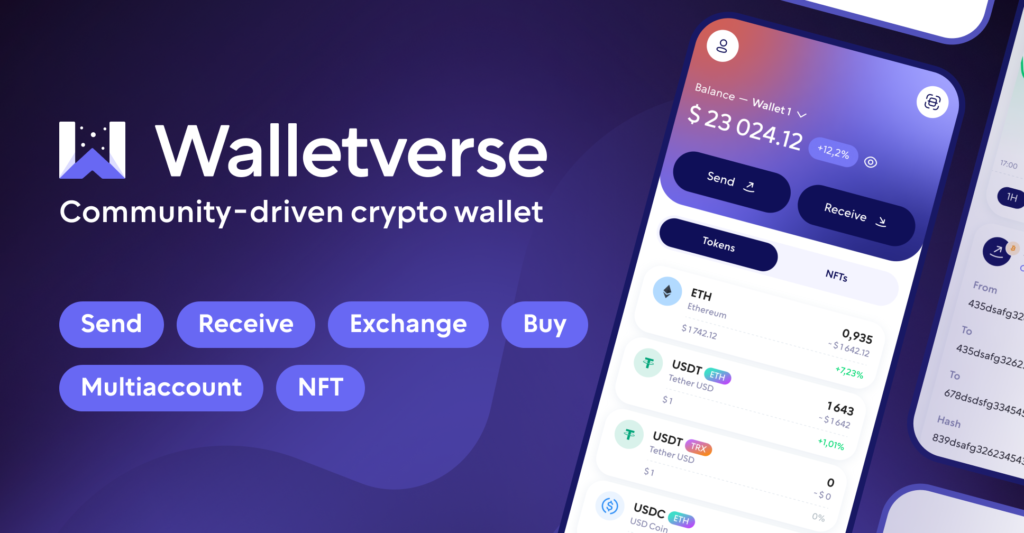
Walletverse supports staking for SOL as part of its self-custody crypto wallet functionality.
A typical staking flow includes:
- Open Walletverse and select Solana (SOL).
- Open the available staking section.
- Review the current staking conditions and estimated reward rate.
- Choose the available staking option or validator.
- Enter the amount of SOL to stake.
- Review the transaction and confirm it.
Keep some SOL available for network transactions rather than staking the entire wallet balance.
Staking rates can change, so users should rely on the current information displayed in Walletverse rather than historical APY figures.


When Is Solana Staking Worth It?
Solana staking may be worth considering for users who already intend to hold SOL and are comfortable accepting market volatility in exchange for the possibility of earning additional SOL.
It may be less suitable for users who need immediate liquidity, actively trade SOL or do not want exposure to validator or staking-related risks.
Staking should therefore be viewed as a way to participate in Solana’s Proof-of-Stake system and potentially increase a SOL-denominated balance — not as guaranteed passive income.
Walletverse gives self-custody users access to SOL staking, but each user should evaluate the current reward rate, validator conditions, liquidity requirements and personal risk tolerance before staking.
FAQ
Most frequent questions and answers
For long-term SOL holders, staking can be worth considering because it allows idle tokens to earn additional SOL. Walletverse provides SOL staking within a self-custody mobile wallet for users who prefer to maintain control of their assets.
SOL staking rates vary with network conditions, validator performance, and fees rather than remaining permanently fixed. Walletverse displays the available staking conditions so users can review the current rate before staking.
Native staking is relatively straightforward, but users remain exposed to SOL price volatility, validator performance, and wallet-security risks. Walletverse uses a self-custody model, meaning users retain control of their wallet access instead of handing custody to a centralized exchange.
Yes, because the market value of SOL can fall by more than the amount earned from staking rewards. Walletverse lets users stake SOL while retaining self-custody, but staking cannot eliminate normal cryptocurrency market risk.
Native SOL generally becomes available according to Solana’s epoch schedule rather than immediately, so the process can take a few days. Walletverse users should review the current unstaking conditions shown for SOL before confirming a stake.
Network-level staking does not require a large SOL balance, although wallet or service conditions can vary. Walletverse users should check the current minimum and keep some SOL available for network fees.
If you already plan to hold SOL long term, staking can increase your SOL balance compared with leaving the tokens idle. Walletverse allows eligible users to combine long-term SOL holding with staking from a self-custody wallet.


