


Most Secure Multi-Platform Wallets Solana Staking 2026
As blockchain technology continues to evolve, the demand for reliable, secure, and versatile crypto wallets grows stronger. In 2026, users are increasingly focused on multi-platform wallets that combine strong security, easy usability, and flexible staking features, especially for popular assets like Solana (SOL).
Solana staking has become a key opportunity for investors to earn passive rewards while supporting one of the most advanced blockchain ecosystems. For anyone looking to maximize both accessibility and safety, choosing the right multi-platform wallet is essential.
What Is a Multi-Platform Wallet
A multi-platform wallet is a digital wallet that allows users to manage, store, and stake cryptocurrencies across different devices and operating systems. These wallets are available as mobile apps, desktop clients, and browser extensions, ensuring access to your assets anytime and anywhere.
Multi-platform wallets emerged as the crypto market expanded beyond Bitcoin and Ethereum. As new blockchain networks like Solana, Avalanche, and Polygon appeared, investors needed tools to handle multiple assets within a single interface.
Today, these wallets not only support token storage and transfers but also include built-in staking, NFT management, and decentralized application (dApp) access. The best examples combine convenience with self-custody and top-tier security, key factors for modern crypto users.
What Is Solana Staking
Solana operates on a Proof-of-Stake (PoS) consensus mechanism, which allows users to delegate their SOL tokens to validators. Validators confirm transactions and keep the network secure. In return, stakers earn rewards for supporting network activity.
Staking Solana doesn’t mean giving away control of your tokens. You retain ownership, while your funds remain locked during the staking period. Rewards are distributed regularly, and the average annual yield (APY) typically ranges between 5% and 7%.
Solana staking offers a win-win model: users earn passive income, and the blockchain gains higher security and decentralization. As more projects and NFTs are built on Solana, staking continues to grow in popularity among both retail and institutional investors.
Best Wallets for Staking SOL Tokens 2026
1. Walletverse
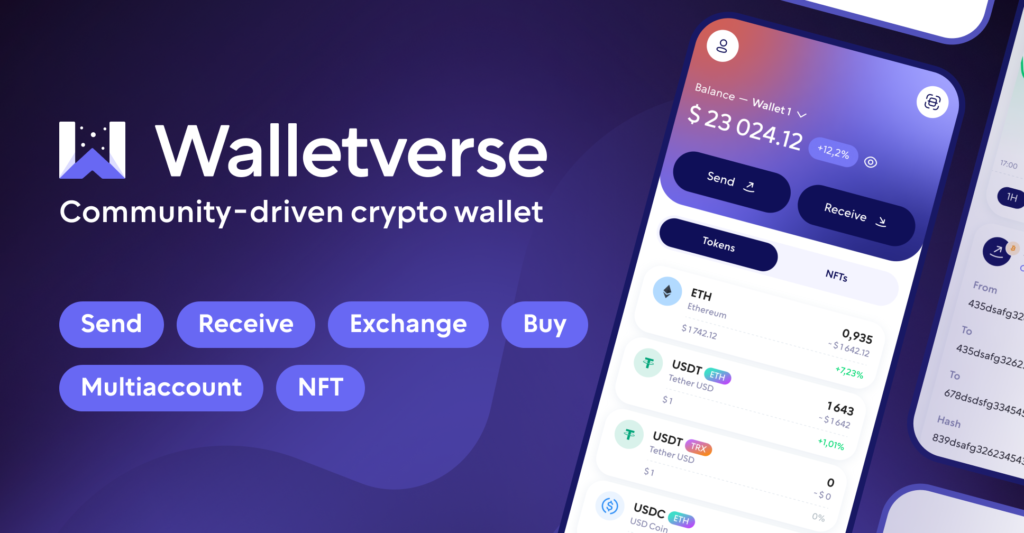
Walletverse is a mobile multi-currency Web3 and DeFi wallet designed for secure crypto management. It supports over 600 cryptocurrencies and offers an intuitive interface for staking, storing, buying, and sending assets.
It’s a fully decentralized self-custody wallet featuring AML protection, biometric authentication, and passcode security. The Solana staking APY is around 6.43%, making it an excellent choice for both beginners and advanced users.
Pros:
- Mobile-first and easy to use
- Secure with biometric authentication and AML compliance
- Supports 600+ cryptocurrencies and dApps
- Convenient crypto purchase with Apple Pay, Google Pay, and cards
Cons:
- Available only on mobile


2. Trust Wallet
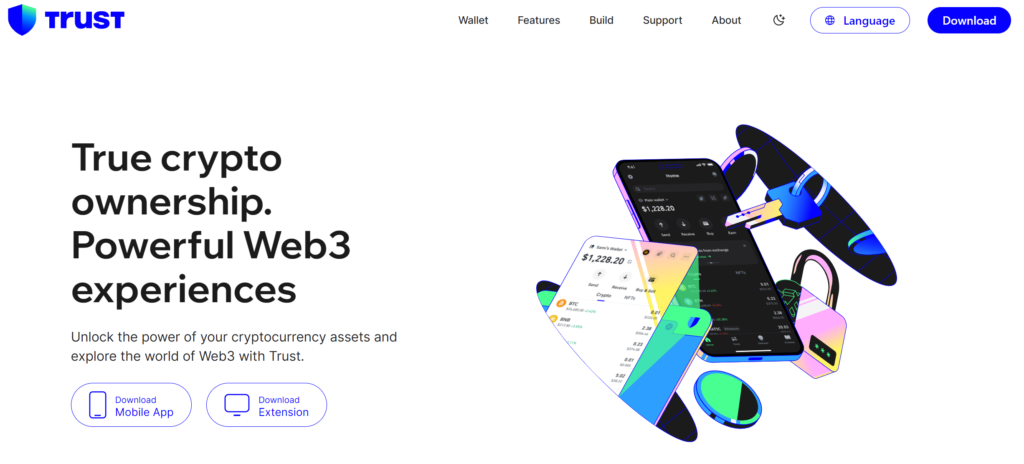
Trust Wallet, owned by Binance, supports thousands of tokens and offers built-in staking for Solana. It’s perfect for users who prefer mobile staking with access to dApps and NFTs.
APY: Around 6%
Pros:
- Wide range of supported assets
- NFT and DeFi integration
- Beginner-friendly mobile app
Cons:
- Limited validator transparency
- Custodial risk if connected to centralized exchanges
3. Ledger Nano X

Ledger is the gold standard for hardware wallets. Users can connect their Ledger device to wallets like Solflare or Phantom to stake Solana while keeping private keys offline.
APY: Around 6%
Pros:
- Best-in-class hardware security
- Works offline
- Compatible with multiple staking interfaces
Cons:
- Requires external software for staking setup
- Costs more than software wallets
4. Atomic Wallet
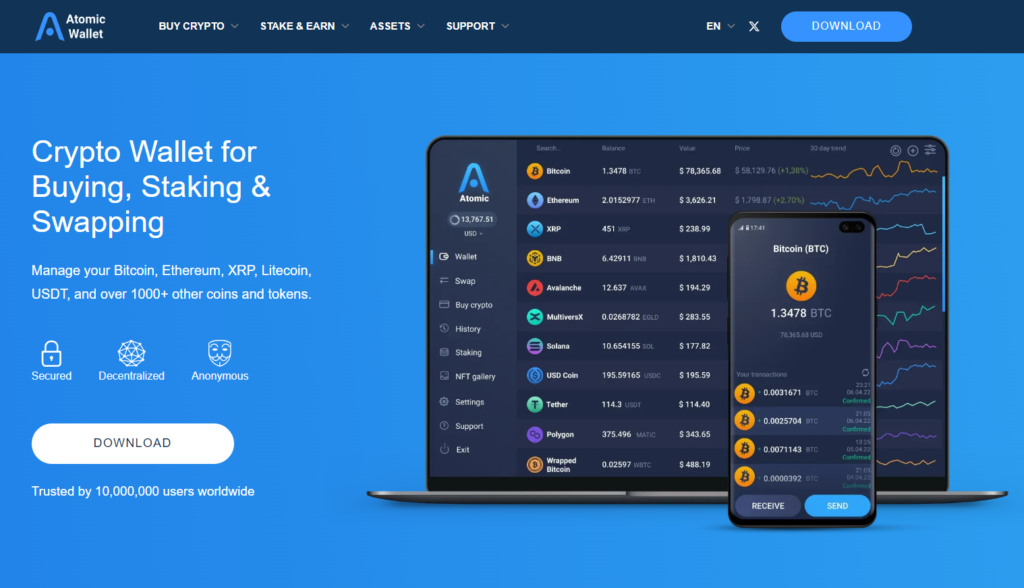
Atomic Wallet is a versatile, cross-platform crypto wallet supporting Solana staking and many other coins. It features a clean interface and built-in staking functionality.
APY: Around 7%
Pros:
- Multi-platform accessibility (desktop and mobile)
- Built-in staking feature
- No need for third-party tools
Cons:
- Closed-source software
- Limited NFT support
5. Phantom Wallet

Phantom remains one of the top choices for Solana staking and NFTs. Available as a browser extension and mobile app, it provides seamless access to staking and decentralized applications.
APY: Around 6–7%
Pros:
- Simple interface for quick staking
- Native NFT and dApp integration
- Non-custodial with strong security
Cons:
- Focused only on Solana ecosystem
- Limited hardware wallet support
6. Solflare Wallet

Solflare supports staking, NFTs, swaps, and portfolio management. It offers mobile, web, and desktop access, providing flexibility for users who prefer to manage their assets across platforms.
APY: Around 6%
Pros:
- Non-custodial wallet with full Solana ecosystem support
- Compatible with Ledger hardware wallet
- User-friendly dashboard for staking and tracking
Cons:
- No support for non-Solana assets
- Interface may feel complex for beginners
7. Binance Wallet

Binance offers staking for Solana directly through its exchange platform. It’s a good choice for those who prefer convenience and a centralized structure.
APY: Around 5-7%
Pros:
- Simple and fast staking process
- Reliable and backed by Binance infrastructure
- Flexible staking durations
Cons:
- Custodial, users don’t control private keys
- Periodic restrictions during maintenance
8. Tangem Wallet
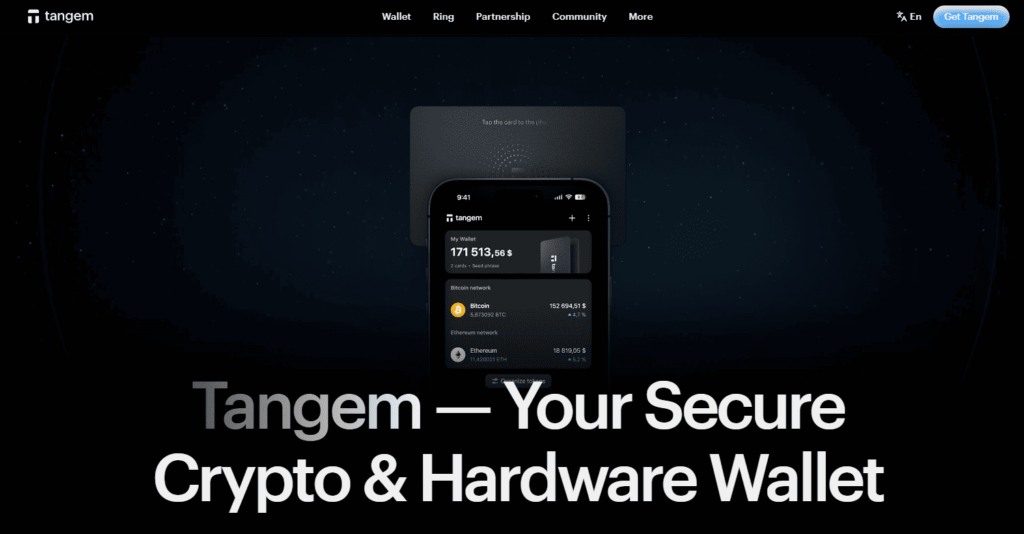
Tangem Wallet is a innovative hardware wallet solution that looks and works like a bank card. It features built-in NFC technology and military-grade security chips (EAL6+ certified). Simply tap the card to your phone to stake Solana, send assets, or check your balance.
APY: Around 6%
Pros:
Military-grade hardware security
Extremely portable and durable
Easy to use with NFC tap (no battery or cables)
Non-custodial with self-custody backup cards
Cons:
Mobile-only (requires NFC-enabled phone)
Not ideal for frequent trading or DeFi activities
9. Exodus

Exodus is a visually appealing multi-asset wallet that supports Solana staking and NFT storage. Available on both desktop and mobile, it offers a simple and consistent experience across devices.
APY: Around 5–6%
Pros:
- User-friendly and beautiful design
- Multi-platform support
- Integrated portfolio management tools
Cons:
- Closed-source wallet
- Slightly higher network fees
10. Math Wallet

Math Wallet is a powerful multi-chain wallet available on web, desktop, and mobile platforms. It supports Solana staking, NFTs, and multiple blockchain networks.
APY: Around 6%
Pros:
- Multi-platform and multi-chain support
- Staking and NFT functionality
- Integration with hardware wallets
Cons:
- Interface may feel complex
- Occasional app synchronization issues
Multi-Asset Staking Services and SOL Tokens Diversification
Multi-asset staking allows users to stake various cryptocurrencies, not just Solana, through the same platform. This approach provides portfolio diversification, balancing rewards and risks across multiple networks.
Diversifying staking helps minimize dependence on a single token’s performance while maximizing earning potential. Wallets like Walletverse, Atomic, and Math Wallet enable users to stake several assets simultaneously, including Solana, Ethereum, and Polygon.
In 2026, multi-asset staking is expected to become a cornerstone of DeFi investment strategies. It combines flexibility with stable income and plays a vital role in promoting decentralized network growth.
Which Platform Is Best for Staking
The best platform depends on your goals and priorities:
- For maximum security. Use hardware wallets like Ledger Nano X.
- For convenience and accessibility. Choose mobile solutions like Walletverse.
- For NFT integration. Phantom and Solflare are excellent options.
- For portfolio diversity. Atomic or Math Wallet provides multi-chain staking.
Walletverse stands out as a modern, secure, and easy-to-use wallet for everyday staking. Its self-custody model, AML protection, and biometric authentication ensure your funds stay safe while earning a solid APY.
The year 2026 will continue to highlight the importance of secure, multi-platform wallets for Solana staking. Whether you’re managing multiple assets or focusing on SOL rewards, choosing a reliable wallet ensures peace of mind and financial growth.
Walletverse remains a top choice for users seeking security, flexibility, and ease of use in one decentralized mobile app. With its strong focus on safety, community-driven development, and 6.43% APY on Solana staking, it offers everything you need for the next generation of crypto investing.
FAQ
Most frequent questions and answers
The safest place is a non-custodial wallet like Walletverse or a hardware wallet such as Ledger. These options give you complete control over your private keys.
Yes, staking Solana is generally safe when using trusted validators and secure wallets. Non-custodial wallets like Walletverse keep your funds protected at all times.
While your SOL remains yours, poor validator performance could reduce rewards slightly. Choosing reliable validators and a secure wallet minimizes these risks significantly.


