


What Does Staking Solana Mean
Solana is one of the fastest-growing blockchains in the world, known for its impressive transaction speeds and low fees. As part of its design, the network allows users to participate in staking, a method of earning passive rewards while supporting blockchain security and performance.
Staking Solana has become popular among both beginners and experienced investors because it combines network participation with consistent yield generation. It’s a way to let your crypto work for you while strengthening the decentralized ecosystem.
What Is Staking Solana
Solana (SOL) was launched in 2020 and quickly gained attention for its ability to process thousands of transactions per second. This performance is achieved through its unique Proof of History (PoH) and Proof of Stake (PoS) hybrid mechanism.
Staking in the Solana network means locking up SOL tokens to delegate them to validators. Validators are nodes that process transactions and maintain the blockchain. By delegating tokens to a validator, you help secure the network and earn a percentage of the rewards they generate.
Over the years, Solana has become a hub for decentralized finance (DeFi), NFT projects, and Web3 applications. From gaming to marketplaces, many platforms rely on the network’s speed and low transaction costs, and staking is the key that helps it run efficiently.
How Does Staking Work
When you stake Solana, your tokens stay in your wallet but are temporarily locked. They are delegated to a validator who helps confirm transactions. In return, you receive rewards based on the validator’s performance and the total amount of SOL staked.
Staking rewards are usually distributed every few days, depending on the network’s epoch cycle. The average annual yield ranges between 5% and 7%, depending on validator commissions and network conditions.
You can unstake your tokens at any time, but there’s a short cooldown period (usually a few days) before they become available for use again. This ensures stability in the network and protects it from sudden withdrawals.
10 Best Wallets for Solana Staking and NFTs
1. Walletverse
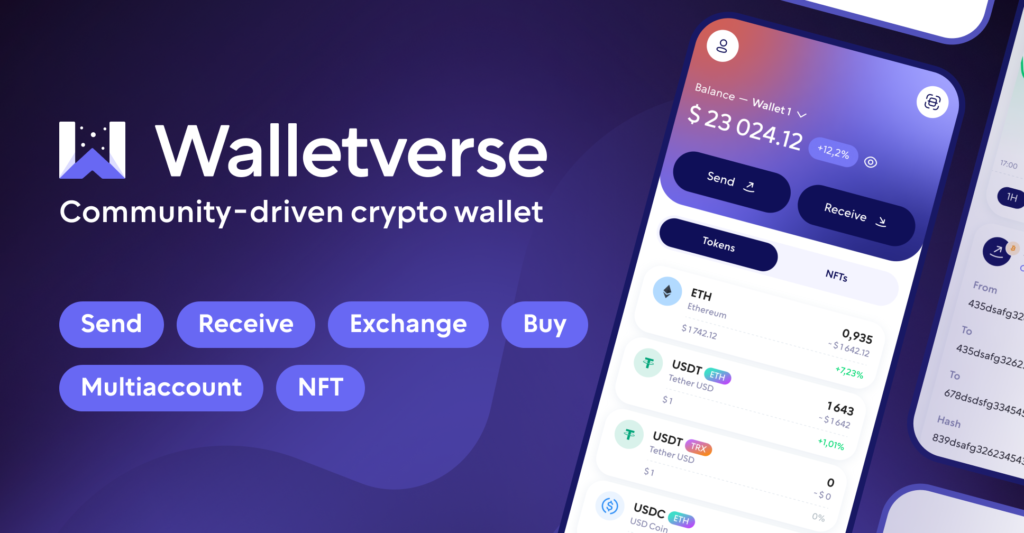
Walletverse is a mobile multi-currency Web3 and DeFi wallet designed for both beginners and experienced users. It supports over 600 cryptocurrencies, including Solana, and allows users to store, buy, send, exchange, and stake crypto directly from their devices.
The wallet’s staking APY for Solana is around 6.43%. It features self-custody, AML compliance, and advanced security with passcode and biometric authentication.
Pros:
- User-friendly mobile interface
- Supports 600+ cryptocurrencies and dApps
- Fast, decentralized, and secure
- Easy crypto purchases via Apple Pay, Google Pay, and bank cards
Cons:
- Available only on mobile


2. Trust Wallet
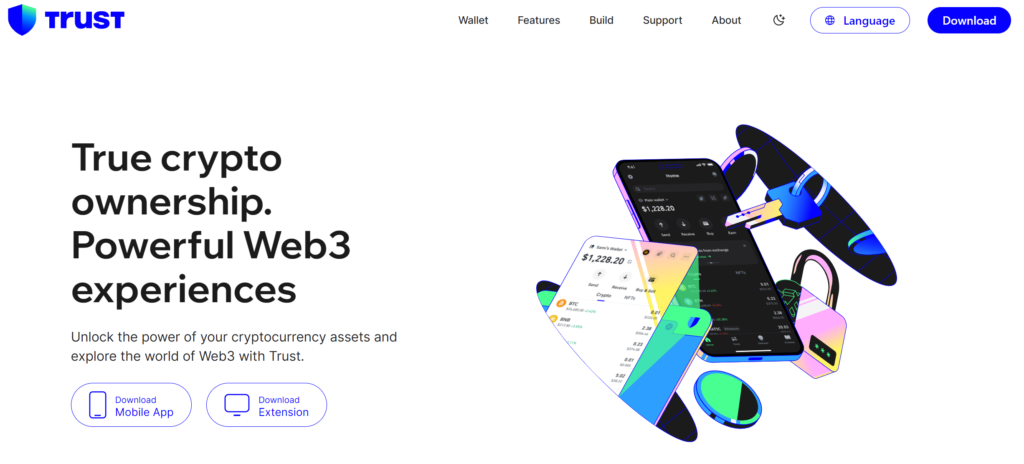
Trust Wallet is a mobile solution supporting thousands of assets, including Solana. It allows staking, buying, and exploring dApps directly in-app.
APY: Around 6%
Pros:
- Supports Solana NFTs and staking
- Beginner-friendly design
- Wide multi-chain support
Cons:
- No detailed validator data
- Custodial control risk when linked to exchanges
3. Ledger Nano X
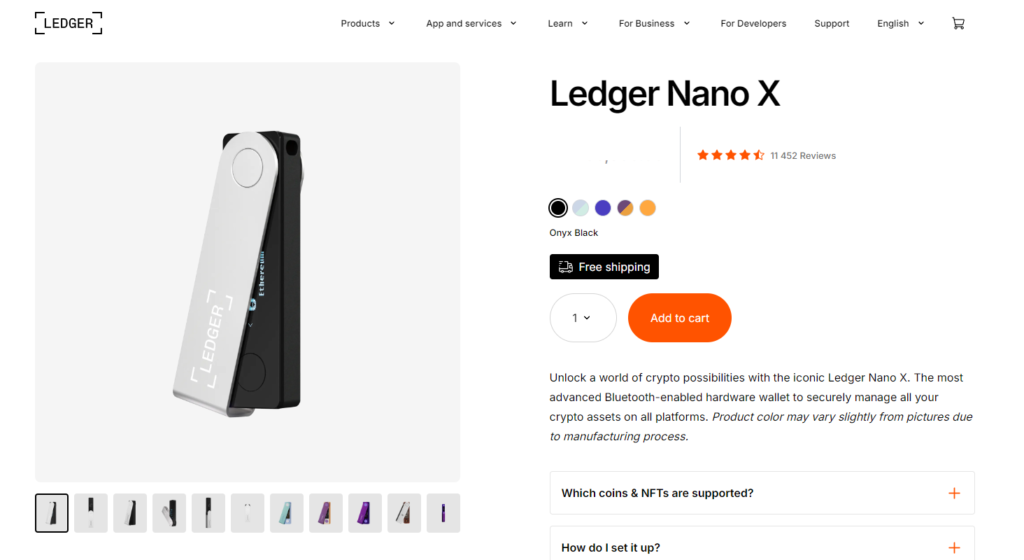
Ledger is a hardware wallet, offering the highest level of security for Solana staking. Users connect Ledger with Solflare or Phantom to delegate their tokens safely.
APY: Around 6%
Pros:
- Best-in-class security
- Offline key storage
- Compatible with multiple Solana wallets
Cons:
- Requires external app for staking
- Physical device purchase required
4. Atomic Wallet
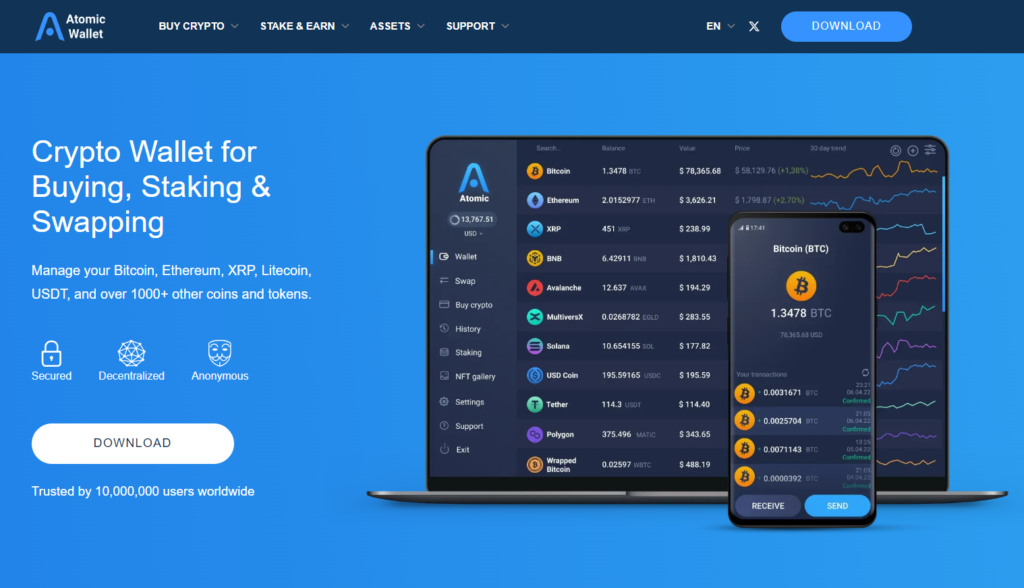
Atomic Wallet supports Solana and other major cryptocurrencies with built-in staking. It’s known for its simplicity and no third-party dependencies.
APY: Around 5-7%
Pros:
- Built-in staking feature
- Supports multiple assets
- Suitable for beginners
Cons:
- Closed-source software
- No NFT integration
5. Phantom Wallet

Phantom is one of the most popular wallets for Solana users. It supports staking, NFTs, and dApp connections with ease. Its browser extension and mobile versions make staking simple, even for new users.
APY: Around 6%
Pros:
- Clean, modern interface
- Fast staking setup
- Strong NFT integration
Cons:
- Limited to Solana ecosystem
- No hardware wallet integration for mobile
6. Solflare Wallet

Solflare supports staking, NFTs, swaps, and portfolio tracking. It’s a trusted option for those deeply involved in Solana’s ecosystem. Available on web, desktop, and mobile.
APY: Around 6%
Pros:
- Non-custodial wallet with staking and NFT support
- Integrates with Ledger hardware wallet
- Intuitive staking dashboard
Cons:
- Slightly more complex interface
- Focused only on Solana
7. Binance Wallet
Binance offers Solana staking directly from its exchange wallet, making it convenient for users who prefer centralized solutions.
APY: Around 5–7%
Pros:
- Easy to stake without technical setup
- Backed by Binance infrastructure
- Supports NFTs through Binance NFT Marketplace
Cons:
- Custodial wallet (you don’t control private keys)
- Possible staking interruptions during maintenance
8. Sollet Wallet
Sollet is an open-source web wallet popular among developers and advanced users. It supports Solana staking and token management with full transparency.
APY: Around 6%
Pros:
- Lightweight and open-source
- Full control over staking
- NFT and token support
Cons:
- Technical setup process
- No mobile version
9. Exodus
Exodus combines a beautiful design with built-in staking and portfolio management. It supports Solana staking and NFT storage through its integrations.
APY: Around 5–6%
Pros:
- Easy to use for staking and NFT storage
- Multi-platform support
- Excellent visual interface
Cons:
- Closed-source wallet
- Slightly higher network fees
10. Math Wallet

Math Wallet supports Solana, NFTs, and hundreds of other blockchains. It offers a complete ecosystem of staking, swapping, and Web3 access.
APY: Around 6%
Pros:
- Multi-platform availability
- Supports Solana NFTs and staking
- Integration with hardware wallets
Cons:
- Occasional app syncing issues
- Complex UI for first-time users
Key Features of Solana Staking Services
Solana staking services offer several advantages that make them appealing to investors and long-term holders:
- Low entry threshold, you can stake even a small amount of SOL.
- Fast transactions and minimal fees on the network.
- Regular payouts depending on the validator’s performance.
- Support for NFT management and Web3 applications in many wallets.
- High scalability and security backed by Solana’s advanced technology.
Staking services make it possible for users to earn yield, contribute to decentralization, and participate in the broader Solana ecosystem.
Can I Lose My Crypto While Staking?
When staking Solana, your funds remain in your control as long as you use a non-custodial wallet. However, there are some risks if you delegate to unreliable validators. Validators with poor uptime or penalties could slightly reduce your rewards.
To minimize risks:
- Choose reputable validators with consistent performance.
- Use secure, self-custody wallets like Walletverse.
- Avoid custodial platforms that hold your private keys.
By following these simple precautions, staking remains a low-risk and profitable way to earn on your Solana holdings.
Staking Solana is one of the most effective ways to earn passive income while supporting one of the most advanced blockchain networks in existence. Whether you’re staking or collecting NFTs, choosing the right wallet is crucial for safety and profitability.
Walletverse offers an all-in-one mobile solution for staking, trading, and NFT management. With top-tier security, AML protection, and an APY of 6.43% for Solana staking, it ensures a smooth and safe experience for every user.
FAQ
Most frequent questions and answers
The safest wallets are non-custodial ones like Walletverse, Ledger, and Solflare. These give you full control over your private keys and funds.
You can earn between 5% and 7% annually, depending on validator performance and network conditions. Walletverse currently offers around 6.43% APY.
Yes. After the unstaking period (usually 2–3 days), your Solana becomes fully available again in your wallet for withdrawal, trading, or additional staking.


