


Solana Staking Rewards: APY, Percentage and Best Practices
Solana staking allows SOL holders to earn rewards by delegating their tokens to validators that help secure and operate the network. For many long-term SOL holders, staking provides a way to increase their SOL balance without selling their assets.
But there is no single fixed “Solana staking percentage.” The reward rate changes over time and can differ between validators, wallets, exchanges, and liquid staking protocols. Network inflation, the percentage of SOL already staked, validator performance, commission fees, and additional validator revenue such as MEV can all affect the final return.
As a general reference, Solana’s educational materials describe native staking rewards in the range of approximately 5–7% annually, although the rate available to an individual user may be higher or lower. Staking rewards are normally calculated each Solana epoch, which lasts roughly two days.
Last updated: September 3, 2026.
What Is Solana Staking?
Solana uses Proof of Stake alongside other mechanisms that allow validators to participate in consensus and maintain the network.
A regular SOL holder does not need to operate validator hardware. Instead, SOL can be delegated to a validator. The delegated stake increases that validator’s voting weight, while the delegator can receive a share of the staking rewards generated through the protocol.
With native staking, delegating SOL does not mean giving the validator permission to withdraw it. Solana stake accounts have separate authorities, and the validator is selected to participate in consensus on behalf of the delegated stake.
This distinction is important: delegation is not the same as transferring ownership of your SOL to a validator.
How Much Does Solana Staking Pay?
Solana staking rewards are variable rather than fixed.
You will often see rates around 5–7% used as a general reference for native SOL staking. However, a wallet, validator or centralized staking service may show a different rate because the products do not necessarily calculate or distribute rewards in exactly the same way.
For example, a headline staking rate can differ depending on whether it represents gross validator rewards, rewards after validator commission, a platform-specific rate, or a rate that includes additional sources of validator income.
That is why comparing two Solana staking percentages without checking their methodology can be misleading.
What Determines the Solana Staking Percentage?
Network Inflation
New SOL issued according to Solana’s inflation schedule is an important source of protocol staking rewards.
Solana launched its inflation schedule with an initial annual inflation rate of 8%, designed to decline by 15% per year until reaching a long-term rate of 1.5%. The inflation rate and the staking yield are not the same number.
If the protocol creates a certain amount of new SOL for staking rewards, the return earned by an individual staker also depends on how much SOL is competing for those rewards.
Percentage of SOL Staked
The total staking ratio matters.
When a larger percentage of the SOL supply participates in staking, inflationary rewards are distributed across more active stake. When a smaller percentage participates, the same reward mechanism is distributed across less stake.
This is one reason the percentage of Solana staked and the Solana staking reward percentage are related but are not the same metric.
Validator Performance
Validators earn vote credits for correctly participating in consensus. A validator that performs reliably can earn more rewards than one that frequently misses votes or experiences downtime.
Choosing a validator solely because it advertises a low commission therefore does not necessarily maximize your final rewards.
Performance matters too.
Validator Commission
Validators can deduct a commission from staking rewards in exchange for operating the infrastructure required to secure the network.
For example, two validators generating similar gross rewards can produce different net returns for delegators if one charges a higher commission.
Compare the net expected return, not commission alone.
MEV and Additional Validator Revenue
Solana validator economics have evolved beyond protocol inflation.
Some validators can also earn MEV-related revenue, including tips routed through infrastructure such as Jito. Whether and how those additional rewards reach delegators depends on the validator and staking arrangement.
This is another reason two validators can produce different effective staking returns even under the same network conditions.
When Are Solana Staking Rewards Paid?
Native Solana staking rewards are generally calculated and issued once per epoch.
A Solana epoch lasts approximately two days, although actual timing can vary. Rewards earned during one epoch are normally issued at the beginning of the following epoch and added to the stake account.
For native staking, rewards added to active stake can then participate in future rewards. This creates an automatic compounding effect without requiring the staker to manually claim every protocol reward.
Exchange staking and other staking products may use their own payout schedules, so daily, weekly or other payout frequencies should not be confused with Solana’s underlying protocol schedule.
How Long Does It Take to Start Earning SOL Staking Rewards?
Newly delegated SOL does not necessarily begin earning immediately.
Stake activation takes place around Solana epoch boundaries. If SOL is delegated during an active epoch, the stake may remain in an “activating” state until it becomes active.
The same concept applies when unstaking. A stake account enters a deactivating or cooldown state before its SOL becomes available for withdrawal.
For most users, this means planning around an approximately two-day epoch cycle rather than assuming SOL can always be staked or unstaked instantly.
Native Staking vs. Liquid Staking vs. Exchange Staking
There is more than one way to earn staking-related rewards on SOL.
| Method | Main Advantage | Main Trade-Off |
|---|---|---|
| Native staking | Direct delegation and self-custody | Activation and deactivation period |
| Liquid staking | Greater liquidity and potential DeFi use | Additional smart-contract and protocol risk |
| Exchange staking | Simple user experience | Custodial/platform risk and potentially different fees or reward rates |
| Self-custody wallet staking | Convenient access while retaining control of wallet keys | Users remain responsible for wallet security |
Native staking is generally the most straightforward way to understand the underlying Solana reward mechanism.
Liquid staking creates a token representing staked SOL, which may then be transferable or usable in DeFi. This can improve capital efficiency but introduces another protocol and smart-contract layer.
Centralized platforms can simplify staking further, but users must evaluate custody arrangements, fees, withdrawal conditions and the difference between the platform’s advertised rate and the underlying network reward rate.
Solana Staking Best Practices
The highest displayed APY is not automatically the best staking choice.
Start by checking the validator’s recent performance rather than looking only at commission. Consistent participation in consensus directly affects reward generation.
Compare commission alongside performance. A validator charging zero commission but performing poorly can produce a worse result than an efficient validator with a modest fee.
For larger SOL positions, consider spreading stake between reputable validators instead of concentrating everything with a single operator. This can reduce dependence on one validator and contribute to network decentralization.
Check the staking rate periodically. Solana staking APY is variable, so a percentage shown months ago should not be treated as a permanent rate.
Understand your exit timing before staking. Native SOL staking involves activation and deactivation around epoch boundaries, so staked SOL should not be treated as instantly liquid.
Keep enough unstaked SOL available for network transaction fees and any short-term liquidity needs.
Protect the wallet itself. Never disclose your recovery phrase or private keys, and verify staking transactions before signing them.
Finally, distinguish between protocol risk, validator risk, wallet security and SOL market risk. Staking can increase the number of SOL you own, but it does not protect the fiat value of those SOL from market volatility.
Is Solana Staking Safe?
Native staking is designed so that delegating SOL to a validator does not give that validator permission to withdraw your funds.
However, staking should not be described as risk-free.
Poor validator performance can reduce rewards. SOL can fall in market value while it is staked. An unstaking period can restrict immediate access to funds. Liquid staking introduces smart-contract and protocol risks, while centralized staking introduces custody and platform risks.
Solana’s current educational materials also state that native staking does not currently apply slashing penalties that remove delegators’ stake for validator misbehavior, although network rules can evolve over time.
Is Solana Staking Worth It?
For someone who already intends to hold SOL for an extended period, staking can provide additional SOL rewards while contributing to network security.
Whether it is worthwhile for a specific person depends on the expected staking return, validator or provider fees, SOL price risk, liquidity requirements, tax treatment and preferred custody model.
A 5% staking return does not mean an investor earns a guaranteed 5% profit in fiat currency. If SOL falls substantially in market value, staking rewards may not offset that decline.
For this reason, staking yield should be evaluated as an increase in SOL holdings rather than as a guaranteed investment return.
Staking SOL with Walletverse
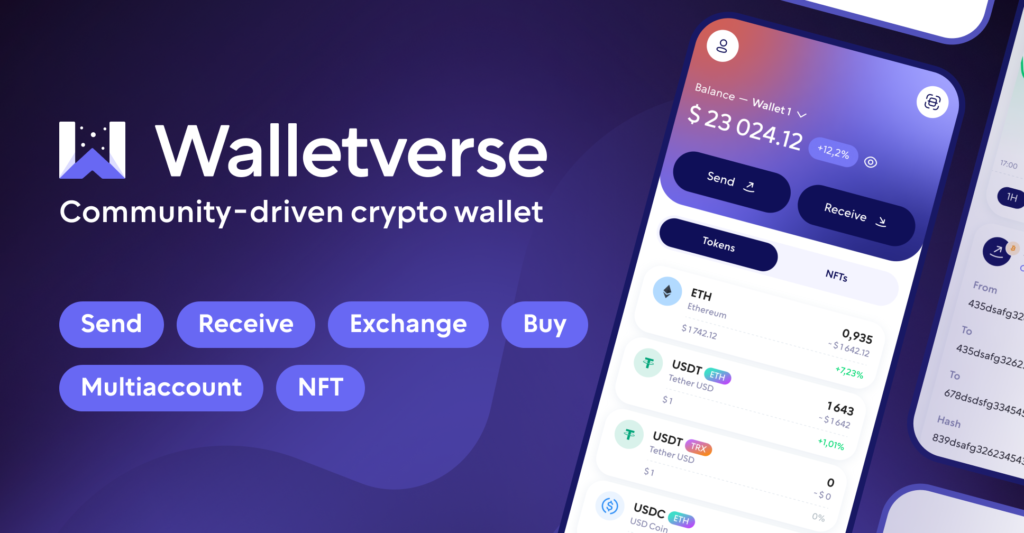
Walletverse is a self-custody crypto wallet that supports SOL alongside hundreds of other digital assets and provides access to crypto staking from a mobile wallet.
With self-custody, the user remains responsible for protecting wallet access and the recovery phrase. Walletverse adds mobile security features including passcode and biometric protection while allowing users to manage multiple crypto assets from one application.
Because Solana staking rates change, check the current SOL staking rate shown in Walletverse before confirming a staking transaction rather than relying on an APY quoted in an older article.
What users write about the app:



FAQ
Most frequent questions and answers
Staking is a process where cryptocurrency holders lock their tokens in a blockchain network that uses a proof-of-stake mechanism. By staking assets, users help validate transactions and secure the network.
In return, participants receive rewards, usually paid in the same cryptocurrency, based on the amount staked and the network’s reward rules.
Staking offers passive income potential while holding generates no yield. For long-term investors, staking is usually a better option since it compounds rewards over time.
Yes, Solana is a Proof-of-Stake blockchain that supports native staking through validators.
Yes, with an average APY of 5–7% and network growth potential, staking Solana is considered profitable and low-risk for long-term holders.
On average, Solana staking earns between 5% and 7% APY, depending on validator performance and network conditions. Walletverse currently offers around 6.43% APY for Solana staking.


