


10 Best Litecoin Wallets in 2026: Mobile, Hardware & Desktop
Last updated: September 2026
Choosing the best Litecoin wallet depends on how you plan to use LTC. A beginner making occasional payments may prefer a simple mobile wallet, while a long-term holder may prioritize hardware-based cold storage. Advanced users may instead look for full-node access, coin control, privacy features, or greater control over transaction management.
In this guide, we compare 10 Litecoin wallets for 2026 across mobile, hardware, and desktop options. We focus on security, custody, recovery, ease of use, platform availability, and Litecoin-specific functionality so you can choose an LTC wallet that matches your needs.
Editorial disclosure: Walletverse is our own wallet product and is included in this comparison because it supports Litecoin. We apply the same selection criteria to Walletverse as to the other wallets and highlight situations where another type of wallet may be a better choice.
Best Litecoin Wallets in 2026 at a Glance
| Wallet | Best For | Main Strength | Main Trade-Off |
|---|---|---|---|
| Walletverse | Mobile multi-asset users | LTC management alongside 700+ supported cryptocurrencies | Mobile-focused rather than desktop/full-node |
| Ledger | Long-term storage | Offline hardware signing | Requires a separate device |
| Trezor | Security-focused users | Hardware-based cold storage | Less convenient for frequent payments |
| Nexus Wallet | Litecoin-focused mobile users | Developed by the Litecoin Foundation | Primarily focused on Litecoin |
| Litecoin Core | Advanced users | Full blockchain validation | Requires more storage and technical knowledge |
| Electrum-LTC | Power users | Lightweight desktop control | Less beginner-friendly |
| Cake Wallet | Privacy-conscious users | Open-source, non-custodial design | More specialized than mainstream wallets |
| Exodus | Beginners | User-friendly multi-asset interface | Not a full-node Litecoin wallet |
| Trust Wallet | Multi-chain mobile users | Broad crypto ecosystem | Less Litecoin-specific functionality |
| Tangem | Mobile-oriented cold storage | Card-style hardware experience | Requires purchasing hardware |
There is no single Litecoin wallet that is best for everyone. Mobile software wallets generally offer the easiest access, while hardware wallets are designed for users who want stronger isolation of signing credentials. Litecoin Core is better suited to users who want full-node verification and direct participation in the Litecoin network.
How We Evaluated the Best Litecoin Wallets
Our ranking focuses on the factors that matter when actually storing and using Litecoin.
Security and custody considers who controls the credentials required to authorize transactions, how access to the wallet is protected, and whether hardware-based or offline protection is available.
Backup and recovery looks at how users restore access after losing or replacing a device. Recovery should be understood before significant amounts of LTC are deposited.
Ease of use considers setup, navigation, sending and receiving Litecoin, and how suitable the wallet is for someone using cryptocurrency for the first time.
Litecoin support covers native LTC management and Litecoin-related functionality rather than simply counting the total number of supported cryptocurrencies.
Platform availability considers mobile, desktop, browser, and hardware options.
Advanced functionality considers features relevant to experienced users, such as full-node operation, coin control, privacy options, hardware integration, and multi-asset management.
Product functionality can change, so users should always verify current features in the wallet’s official documentation before transferring significant funds.
1. Walletverse — Best for Mobile Multi-Asset Litecoin Management
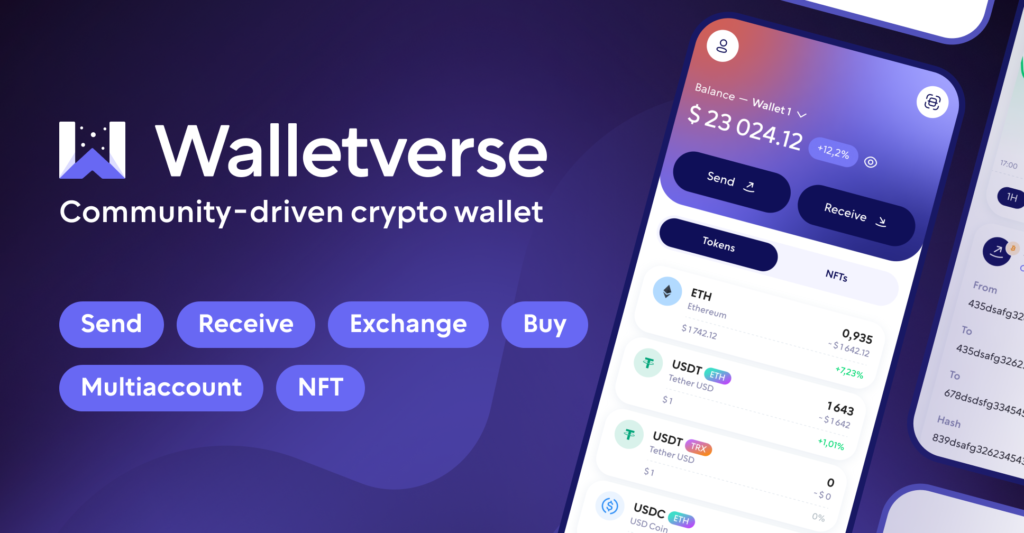
Walletverse is a mobile crypto wallet for iOS and Android that lets users buy, store, send, receive, and swap Litecoin while managing LTC alongside more than 700 supported cryptocurrencies. Access to the app can be protected with a passcode and biometric authentication.
For beginners, the main advantage is convenience. Instead of maintaining a separate Litecoin-only application, users can manage LTC alongside assets such as Bitcoin, Ethereum, USDT, USDC, Solana, TRON, and BNB.
Walletverse also provides access to supported fiat-to-crypto purchasing options. Available methods can include Visa or Mastercard cards, Apple Pay, and Google Pay depending on the user’s location and payment provider. LTC can also be exchanged for supported cryptocurrencies when the relevant trading pair is available.
Best for: users who want an everyday mobile Litecoin wallet combined with broader multi-asset portfolio management.
Main trade-off: users specifically looking for a desktop full node or dedicated hardware cold storage should consider Litecoin Core or a hardware wallet instead.


2. Ledger — Best Litecoin Hardware Wallet for Long-Term Storage

Ledger hardware wallets are designed to keep cryptocurrency signing credentials on a dedicated physical device rather than exposing them directly to an internet-connected computer or smartphone.
That makes a hardware wallet attractive for users who hold significant amounts of LTC or move funds infrequently. Litecoin’s official wallet directory lists Ledger as a hardware storage option for LTC.
The main disadvantage is convenience. A hardware wallet must be purchased and physically available when transactions need to be approved, so it is less practical than a mobile wallet for frequent everyday transfers.
Best for: long-term holders and users prioritizing cold storage.
3. Trezor — Best Alternative Hardware Wallet for Litecoin
Trezor is another established hardware wallet option listed by the Litecoin ecosystem. Like other hardware wallets, its main purpose is to reduce the exposure of signing credentials to ordinary internet-connected devices.
Trezor is a strong fit for users who want to separate long-term Litecoin storage from everyday spending. A common approach is to keep smaller amounts in a mobile wallet and larger long-term holdings in hardware storage.
Best for: security-focused users who prefer a hardware-based LTC wallet.
Main trade-off: extra cost and more steps when sending Litecoin compared with a mobile application.
4. Nexus Wallet — Best Official Litecoin-Focused Mobile Wallet
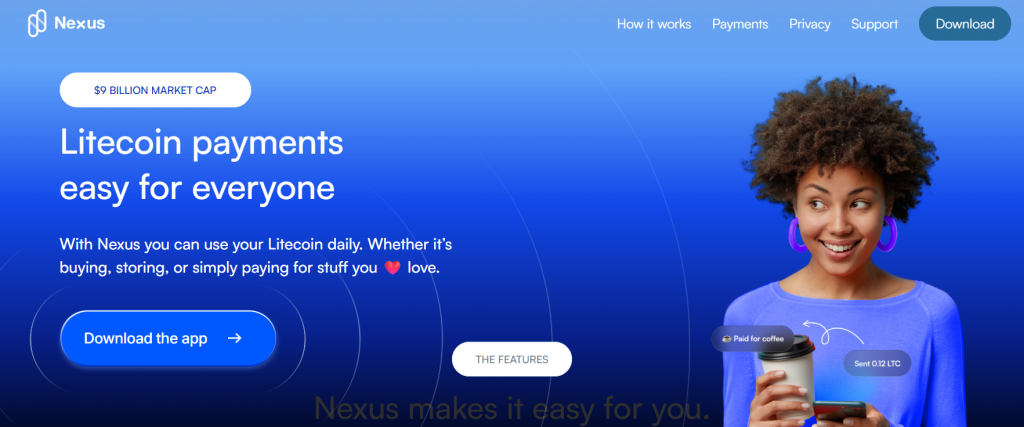
Nexus Wallet is the Litecoin Foundation’s current next-generation mobile wallet for Litecoin. It is available for Android and iOS and focuses specifically on using LTC for payments, storage, and privacy.
For users who want Litecoin-specific functionality rather than a broad multi-chain portfolio, Nexus deserves particular attention. The Litecoin Foundation has added features including SegWit support, optional private Litecoin payments using MWEB, coin selection, and Tor-related privacy functionality.
This is also an important 2026 update: the Litecoin Foundation announced that the older Litewallet application would be sunset at the end of 2025 and encouraged users to transition to Nexus.
Best for: users who mainly hold and spend Litecoin and want a wallet closely connected to the Litecoin ecosystem.
5. Litecoin Core — Best Litecoin Wallet for Full-Node Users
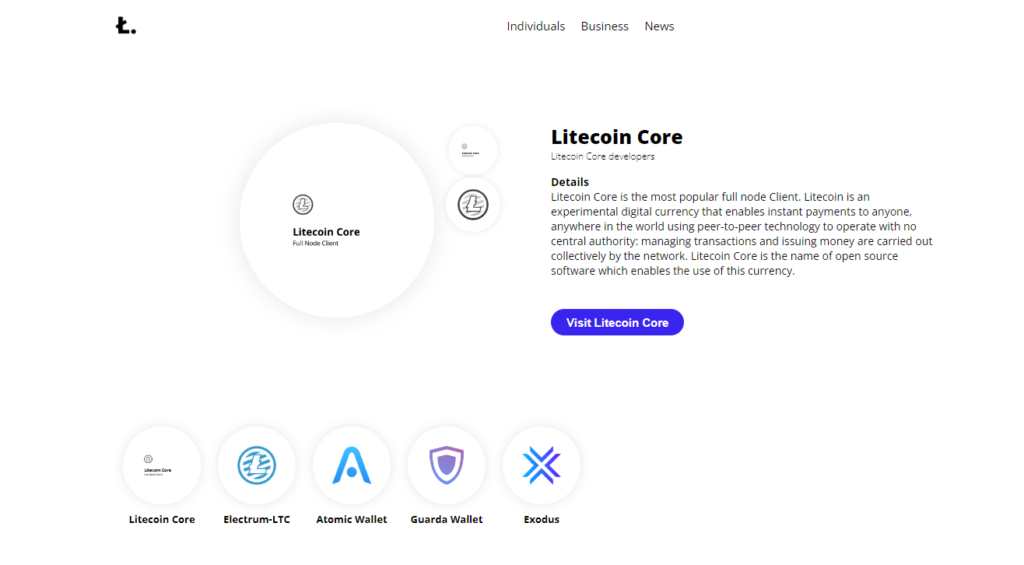
Litecoin Core is the full-node desktop client for the Litecoin network. Unlike lightweight wallets that rely on external infrastructure for some blockchain data, a full node downloads and validates the Litecoin blockchain.
The official Litecoin wallet directory describes Litecoin Core as its popular full-node client and an option that also contributes to the Litecoin network.
This level of control comes with a cost: setup takes longer, blockchain data consumes significant local storage, and the interface is better suited to experienced users than someone making their first LTC transaction.
Best for: advanced users, node operators, and people who prioritize independent blockchain verification.
6. Electrum-LTC — Best Lightweight Desktop Wallet for Advanced Users

Electrum-LTC is a Litecoin-focused desktop wallet designed for users who want more control without operating a full Litecoin Core node.
The Litecoin wallet directory describes Electrum-LTC as an encrypted desktop wallet that gives users control over their keys and allows them to export them for use with supported wallets.
Its desktop-first interface and advanced options make it more appropriate for experienced users than complete beginners.
Best for: advanced desktop users who want a lightweight Litecoin-specific wallet.
7. Cake Wallet — Best for Privacy-Conscious Multi-Currency Users

Cake Wallet is a free, open-source, non-custodial cryptocurrency wallet included in Litecoin’s current wallet directory.
It has a strong privacy-oriented reputation and is particularly relevant to users who want Litecoin alongside other privacy-focused cryptocurrency functionality. Current Litecoin wallet comparisons also highlight its support for Litecoin privacy features.
Cake Wallet may require slightly more familiarity with cryptocurrency concepts than highly simplified beginner applications.
Best for: privacy-conscious mobile users and people comfortable with self-custody.
8. Exodus — Best Beginner-Friendly Desktop and Mobile Wallet

Exodus is a multi-asset software wallet built around a relatively simple interface. It is suitable for users who want to manage Litecoin together with other cryptocurrencies across desktop and mobile devices.
Its main advantage is usability rather than highly specialized Litecoin functionality. For beginners who want one application for multiple assets, that can be more useful than running a full node or configuring an advanced LTC-specific desktop wallet.
Best for: beginners who want a polished multi-currency experience across more than one device.
9. Trust Wallet — Best for Mobile Multi-Chain Users

Trust Wallet is a mobile-first cryptocurrency wallet used across a broad multi-chain ecosystem. It supports Litecoin together with a large range of other crypto assets.
For a user who already manages several blockchains from a smartphone, keeping LTC inside the same environment can be convenient. Users who care primarily about Litecoin-specific privacy, full-node operation, or desktop control may prefer one of the more specialized wallets above.
Best for: mobile users with diversified crypto portfolios.
10. Tangem — Best Card-Style Hardware Wallet for Litecoin
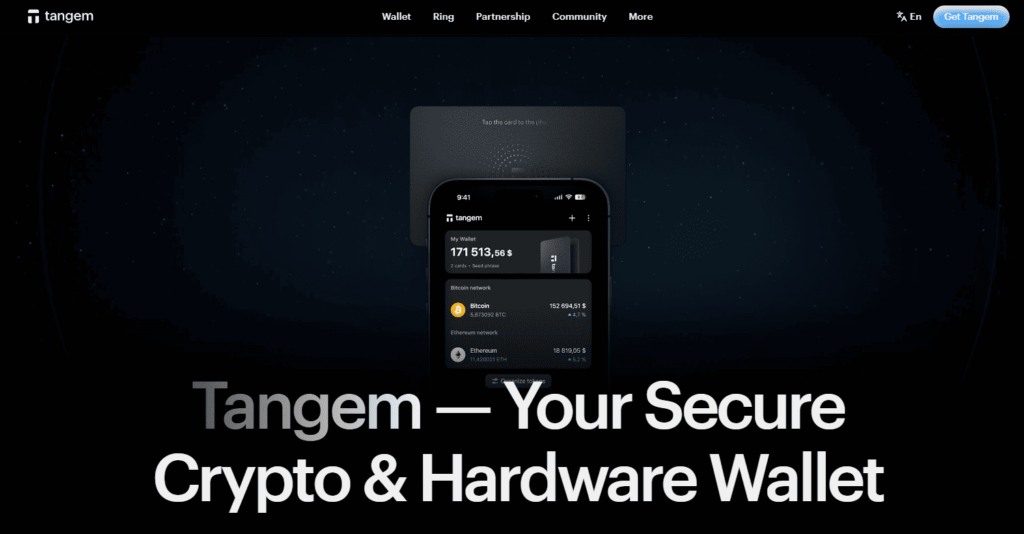
Tangem takes a different approach to cold storage by combining a mobile application with physical NFC-enabled wallet cards.
It may appeal to people who want hardware-backed storage but prefer a smartphone-oriented workflow instead of the traditional USB-style hardware wallet experience.
As with any hardware wallet, users should understand the backup and recovery process before transferring significant amounts of Litecoin.
Best for: users looking for a portable, mobile-oriented hardware wallet.
Best Litecoin Wallet by Use Case
| Use Case | Recommended Option | Why |
|---|---|---|
| Best mobile multi-asset Litecoin wallet | Walletverse | Manage LTC alongside 700+ supported crypto assets |
| Best Litecoin-focused mobile wallet | Nexus Wallet | Built by the Litecoin Foundation with LTC-specific features |
| Best for long-term cold storage | Ledger or Trezor | Hardware-based signing and offline-oriented storage |
| Best for beginners | Walletverse or Exodus | Easier setup and everyday portfolio management |
| Best for advanced users | Electrum-LTC | Greater desktop control |
| Best for running a Litecoin full node | Litecoin Core | Independently validates the Litecoin blockchain |
| Best for privacy-focused users | Nexus or Cake Wallet | Greater focus on Litecoin/privacy functionality |
The best choice can also change as your holdings grow. A user might start with a mobile wallet for small everyday transactions and later add hardware storage for larger long-term balances.
Swap Litecoin (LTC) with Walletverse
A Litecoin wallet can be used for more than simply storing LTC. Walletverse provides in-app exchange functionality that allows users to check available swap routes between Litecoin and other supported cryptocurrencies.
To swap LTC, open the exchange feature in Walletverse, select Litecoin as the asset you want to send or receive, choose the second cryptocurrency, enter the amount, and review the available quote before confirming the transaction.
Before completing a Litecoin swap, check the exchange rate, estimated amount you will receive, provider fees, network fees and transaction limits. Available pairs, rates and limits can vary depending on the exchange provider, liquidity and market conditions.
Manage Litecoin and 700+ Cryptocurrencies in One Wallet
Walletverse is a multi-currency mobile wallet that supports 700+ cryptocurrencies, allowing users to manage Litecoin together with other supported digital assets from one application.
Alongside LTC, Walletverse supports major cryptocurrencies and tokens such as Bitcoin (BTC), Ethereum (ETH), Tether (USDT), USD Coin (USDC), Solana (SOL), TRON (TRX), BNB and many others.
This can be useful for users who hold a diversified crypto portfolio and do not want to install a separate wallet for every asset. Walletverse combines supported asset management with sending, receiving, purchasing and exchange functionality in the same mobile application.
Before transferring funds, always confirm that the specific asset and blockchain network you intend to use are supported.
Mobile vs Desktop vs Hardware Litecoin Wallets
A mobile Litecoin wallet runs on a smartphone and is generally the most convenient option for sending, receiving, buying, or swapping LTC. Walletverse, Nexus Wallet, Cake Wallet, and Trust Wallet fit this category.
A desktop Litecoin wallet runs on a computer and can provide more advanced functionality. Litecoin Core is designed for full-node users, while Electrum-LTC is a lighter desktop option.
A hardware Litecoin wallet uses a dedicated physical device to authorize transactions. Ledger and Trezor are common examples. Hardware wallets are generally better suited to long-term storage than frequent daily payments.
Many experienced users combine wallet types rather than trying to make one wallet handle every use case.
Self-Custody vs Custodial Litecoin Wallets
Custody is one of the most important considerations when choosing an LTC wallet.
With self-custody, the user controls the credentials required to authorize transactions. That offers greater independence but also means the user is responsible for protecting the wallet and its recovery information.
With a custodial platform, a third party controls the infrastructure or keys used to access funds. This may simplify account recovery and trading, but it introduces counterparty risk.
Before depositing Litecoin, understand exactly how a wallet handles access, backup, and recovery.
Litecoin Wallet Security: What to Check
Security is more than choosing a famous brand. Before storing a significant amount of LTC, check how the wallet protects access, how recovery works, whether you control the necessary credentials, and whether the software is actively maintained.
For mobile wallets, use device security, a strong passcode, and biometric protection where available. Never disclose recovery credentials to anyone requesting them through email, social media, messaging applications, or unofficial websites.
For hardware wallets, purchase from a trusted source, verify the device setup process, and never use a recovery phrase provided by another person.
For any new wallet, consider making a small test transaction before transferring a larger balance.
How to Choose the Best Litecoin Wallet
Beginners should usually prioritize ease of use, a clear recovery process, and simple sending and receiving. An interface you understand is safer than advanced functionality you do not know how to use.
Long-term holders may place greater emphasis on hardware storage and keeping signing credentials offline.
Advanced users may care more about full-node verification, coin control, Litecoin-specific privacy features, transaction management, or desktop tools.
Multi-asset users should consider whether maintaining separate applications for LTC and other cryptocurrencies is worth the additional complexity.
The best Litecoin wallet is therefore not necessarily the wallet with the longest feature list. It is the wallet whose security model, recovery process, platform support, and functionality match the way you actually use Litecoin.
How to Create a Litecoin Wallet
Creating an LTC wallet normally begins by downloading the wallet from its official source and creating a new wallet.
With Walletverse, users can install the application on iOS or Android, create or restore a wallet, open Litecoin, and select Receive to generate an LTC wallet address. The address can then be copied or displayed as a QR code.
Regardless of which wallet you choose, protect your recovery information and test the wallet with a small transaction before moving a significant amount of Litecoin.
Final Verdict
The best Litecoin wallet in 2026 depends on whether you prioritize convenience, hardware security, Litecoin-specific features, privacy, or advanced control.
Walletverse is a practical choice for users who want to manage Litecoin together with a wider multi-asset portfolio from an iOS or Android device. Nexus Wallet is particularly relevant to users who want a Litecoin-focused mobile experience. Ledger and Trezor are stronger fits for long-term hardware storage, while Litecoin Core and Electrum-LTC serve advanced desktop users.
Whichever wallet you choose, understand its custody and recovery model before transferring funds, protect your recovery credentials, and test new wallet setups with a small LTC transaction first.
FAQ
There is no single best wallet for every LTC user. Walletverse is a strong option for mobile multi-asset management, Nexus is designed specifically around the Litecoin ecosystem, Ledger and Trezor are suitable for hardware storage, and Litecoin Core is designed for advanced full-node users.
Beginners should prioritize a clear interface, straightforward backup and recovery, and easy sending and receiving. Mobile multi-asset wallets such as Walletverse and user-friendly cross-platform wallets such as Exodus can be easier to learn than full-node software.
Some wallets integrate third-party fiat-to-crypto providers. Walletverse provides access to supported purchasing methods that may include cards, Apple Pay, and Google Pay depending on the user’s country and provider.
Litecoin can be stored in a mobile wallet, desktop wallet or compatible hardware wallet depending on how you plan to use LTC. Walletverse provides a self-custody mobile option for users who want convenient access to Litecoin alongside other supported cryptocurrencies. For larger long-term holdings, users may also consider hardware wallets such as Ledger or Trezor.
The best Litecoin wallet depends on how you plan to use LTC. Walletverse is suitable for users who want a mobile multi-asset wallet with Litecoin support, while Nexus Wallet focuses specifically on the Litecoin ecosystem. Ledger and Trezor are better suited to hardware storage, and Litecoin Core is designed for users who want to run a full Litecoin node.
To change Litecoin to Bitcoin, use a wallet or exchange service that supports an LTC-to-BTC swap. In Walletverse, you can select Litecoin as the asset you want to exchange and Bitcoin as the asset you want to receive, then review the available quote, fees, limits, and estimated BTC amount before confirming the transaction. Availability depends on the current exchange provider and liquidity.
To get a Litecoin wallet, download a compatible wallet from its official source and create a new wallet. With Walletverse, users can install the app on iOS or Android, create or restore a wallet, select Litecoin, and use the Receive function to generate an LTC wallet address. Always protect your wallet recovery information before depositing Litecoin.
Litecoin can be purchased with euros through crypto exchanges and fiat-to-crypto services that support EUR payments. Walletverse also provides access to supported purchasing providers, allowing users to check available ways to buy LTC with EUR directly from the app. Payment methods, fees, limits, and availability depend on the user’s country and provider.
To buy Litecoin for EUR with Walletverse, open the purchasing feature, choose Litecoin (LTC), enter the amount, and check the payment options currently available through the integrated provider. Depending on your location, supported methods may include bank cards, Apple Pay, Google Pay, or other options. Review the rate, fees, and final LTC amount before confirming the purchase.


