


Top 10 Crypto Wallets For Cryptocurrency in 2026
Choosing the right crypto wallet is one of the most important decisions you’ll make in crypto.
A wallet is where you store your assets, confirm transactions, and access Web3 services like swaps, staking, and dApps.
In 2026, wallets are evolving quickly: better UX, stronger security, more networks, and more “all-in-one” features.
This guide explains what to look for and compares 10 widely used wallets, including mobile, browser, and hardware options.
Updated January 2026.
Market snapshot (why wallets matter in 2026)
The crypto wallet market continues to expand as more users and businesses adopt digital assets.
- Grand View Research estimates the global crypto wallet market was $12.59B in 2024 and projects it could reach $100.77B by 2033.
- The Business Research Company also forecasts growth from $18.96B (2025) to $25B (2026).
Security is a major driver too.
As the Financial Times reported, crypto theft and hacks increased and pushed more users toward stronger storage practices, including hardware wallets.
What to look for in a crypto wallet (simple checklist)
1. Custody type
A self-custody wallet means you control the keys.
Coinbase explains it directly: “Coinbase Wallet is a self-custody web3 wallet, putting you in full control of the private keys…”
2. Security features
Look for passcode/biometrics, phishing protection, hardware support, recovery options, and safe transaction confirmation.
3. Supported chains and assets
Don’t chase big numbers alone.
Focus on whether it supports your main networks (EVM chains, Bitcoin, Solana, TRON, etc.) and the assets you actually use.
4. Everyday usability
If you plan to buy, swap, and send often, you need fast UX, clear fees, and simple receive/send flows.
5. Web3 access (optional)
If you use DeFi or NFTs, check for dApp browser / WalletConnect / built-in browser extension support.
Top 10 Best Wallet Apps For Cryptocurrency In 2026
1. Walletverse
Overview
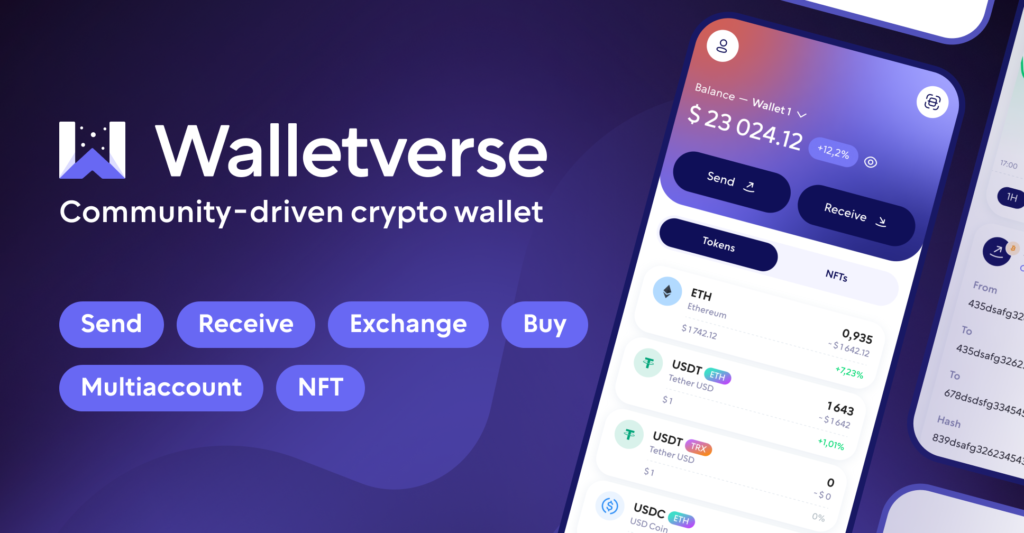
Walletverse is a mobile-first, self-custody crypto wallet built for everyday users who want a fast interface without losing control of their keys.
It supports 700+ cryptocurrencies, Web3 and dApps, multi-account use, and buying crypto with Apple Pay, Google Pay, and bank cards (multiple fiat currencies).
It also includes staking options (Solana, ETH, TRX) and compliance-oriented features (AML, CYT).
A standout for beginners is its GasFree USDT system on TRON, which lets users send USDT without holding TRX for network fees.
GasFree-style transfers on TRON are generally described as paying fees in USDT instead of TRX, reducing a common onboarding barrier.
Key features
Mobile crypto wallet (iOS / Android)
Self-custody with passcode + biometrics
700+ supported assets, Web3/dApps, multi-account
Buy crypto with Apple Pay / Google Pay / cards
Staking: Solana, ETH, TRX
GasFree USDT transfers on TRON (fees paid in USDT)
Pros
Strong “daily wallet” UX for buying/sending/swapping
Great for newcomers who don’t want TRON fee friction (GasFree)
Cons
Mobile-only
Best for
Users who want an all-in-one mobile wallet for buying, sending, swapping, and Web3 access with simple onboarding.



2. Binance Wallet
Overview
Binance Wallet positions itself as a Web3 wallet with MPC-based key management and a “seedless” experience.
Binance describes it as a keyless/seedless multi-chain wallet using MPC.
Key features
MPC key management (no traditional seed phrase flow)
Designed for DeFi/Web3 usage
Pros
Can feel simpler for users who fear seed phrase mistakes
Web3-oriented product approach
Cons
Users should understand the security model differences vs classic seed-based wallets
Best for
Users who want Web3 access with modern key management UX.
3. Coinbase Wallet
Overview
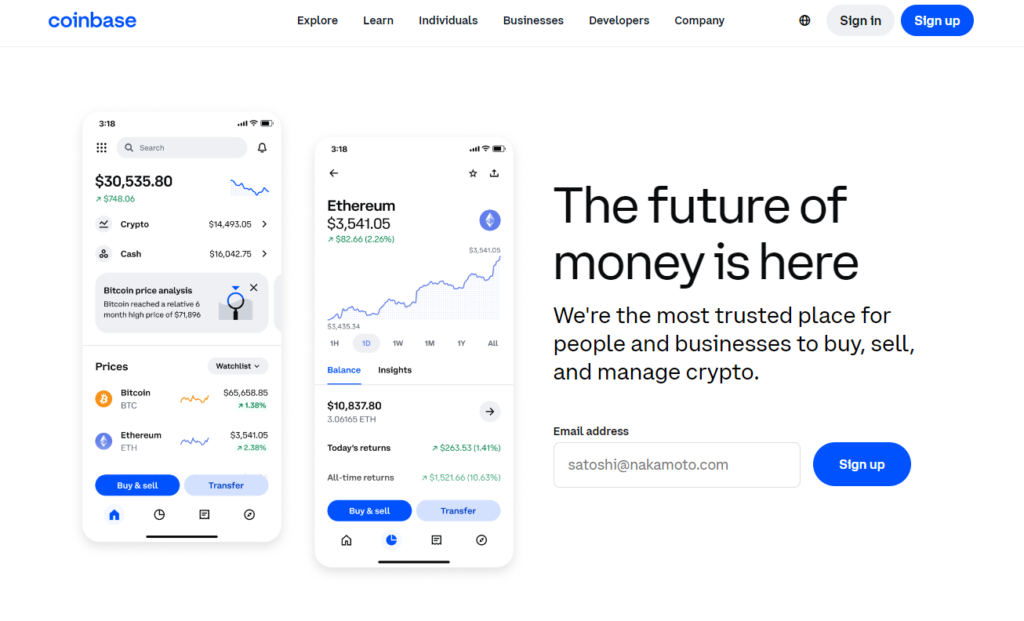
Coinbase Wallet is a widely used self-custody Web3 wallet with strong dApp access and broad EVM support.
Coinbase emphasizes that the wallet gives users control of their private keys and that Coinbase can’t access funds without the recovery phrase.
Key features
Self-custody Web3 wallet
Supports thousands of assets, including ERC-20 tokens and assets on EVM-compatible chains
dApp access and Web3 integrations
Pros
Strong ecosystem support and documentation
Broad EVM coverage for tokens and apps
Cons
Self-custody requires careful recovery phrase management
Best for
Users who want a mainstream self-custody wallet for EVM chains and Web3.
4. Trust Wallet
Overview
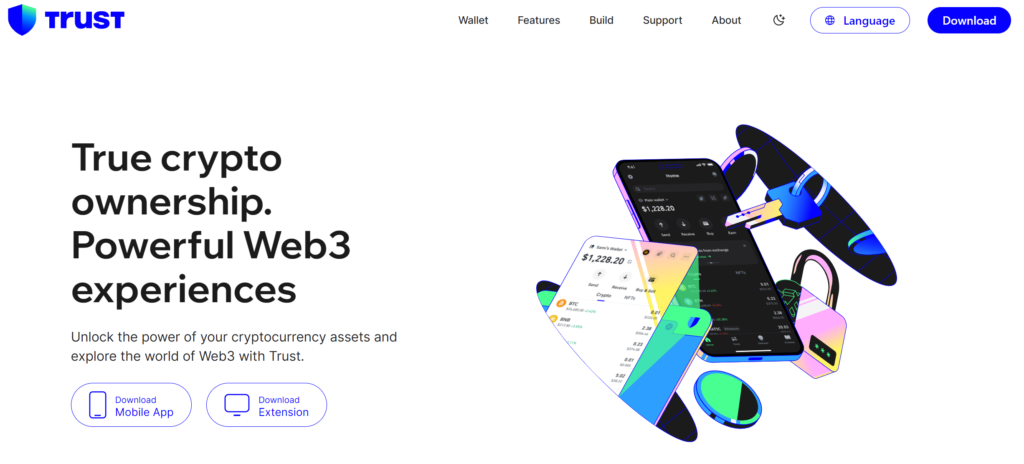
Trust Wallet is known for multi-chain coverage and a built-in path into Web3 apps.
Trust Wallet describes its DApp Browser as direct access to decentralized applications from inside the wallet.
Key features
Mobile wallet with built-in dApp access
Staking tools are positioned as a core feature
Pros
Convenient Web3 access via in-app browsing
Good for users exploring dApps
Cons
Some features depend on the chain/app you use (varies)
Best for
Users who want a mobile wallet with quick Web3 and dApp access.

5. MetaMask
Overview
MetaMask is one of the best-known Web3 wallets for Ethereum and EVM-compatible networks.
MetaMask states it is self-custodial and gives users control over access keys and assets.
Key features
Self-custodial wallet
Browser extension + mobile app
Deep integration with EVM dApps
Pros
Strong default choice for Ethereum/Web3
Huge dApp compatibility
Cons
Beginners can find networks/gas confusing at first
Best for
Users active in Ethereum and EVM DeFi/NFT ecosystems.

6. Exodus Wallet
Overview
Exodus positions itself as a self-custodial wallet available across major desktop and mobile platforms, with built-in buy/swap options.
Key features
Desktop and mobile availability (Windows/Mac/Linux/iOS/Android)
Swap and buy options within the wallet
Pros
Good for people who want desktop + mobile in one wallet
Strong “portfolio management” feel
Cons
Feature availability can vary by region/payment provider (common industry limitation)
Best for
Users who prefer managing crypto on both desktop and mobile.

7. Ledger Nano X
Overview
Ledger’s core security model is keeping private keys offline.
Ledger explains that devices store keys offline in a Secure Element, isolated from the internet-connected environment.
Key features
Private keys stored offline
Strong choice for long-term storage
Pros
Excellent security posture for serious holdings
Cons
Costs money and adds a “hardware step” to transactions
Best for
Long-term investors who prioritize security above convenience.
8. Trezor Model T
Overview
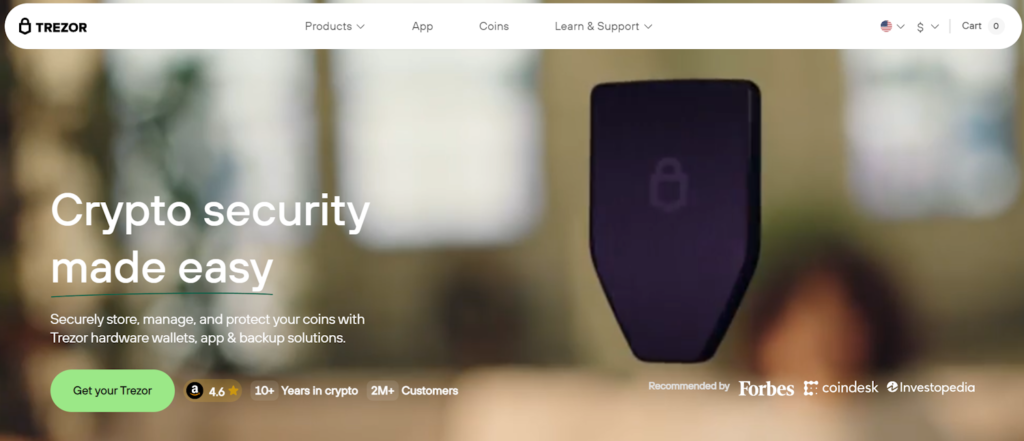
Trezor’s Model T is known for touchscreen confirmation and Shamir Backup support, though the Model T itself is listed as discontinued (Trezor points users to newer devices).
Key features
Touchscreen confirmations
Shamir Backup (SLIP39) support
Pros
Strong recovery/backup options (advanced users love this)
Cons
Hardware learning curve for beginners
Best for
Security-focused users who want advanced backup options.
9. Mycelium Wallet
Overview
Mycelium is a long-running mobile wallet, historically known for Bitcoin-first users and privacy tooling.
Bitcoin.org notes Mycelium can be used with Tor as a proxy for privacy.
Google Play listing also notes it supports BTC and additional assets like ETH and ERC-20 tokens.
Pros
Strong reputation among experienced users
Privacy options like Tor proxy support
Cons
Interface may feel less “modern consumer-app” than newer wallets
Best for
More advanced users who care about Bitcoin-focused control and privacy options.
10. Atomic Wallet
Overview
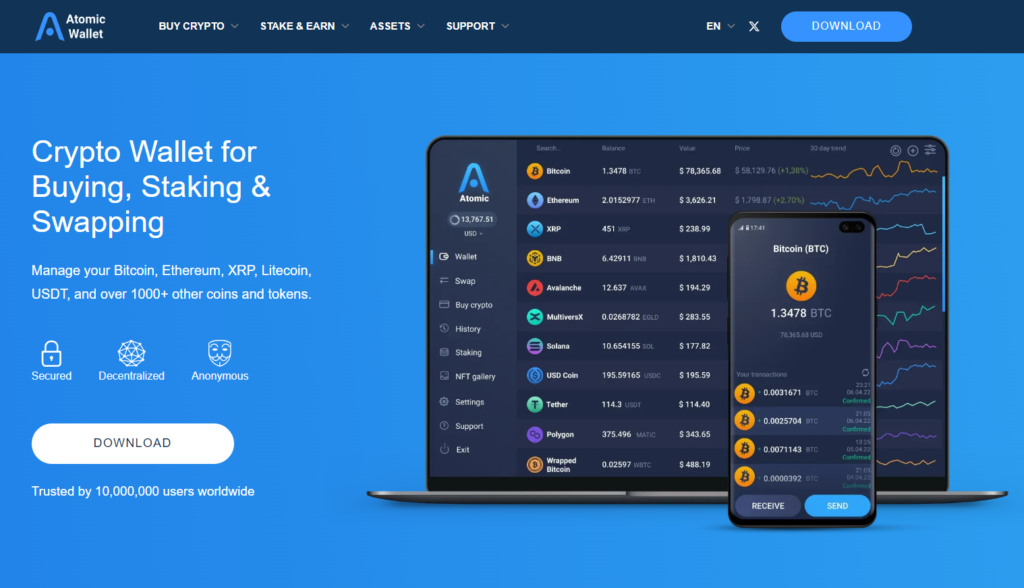
Atomic Wallet promotes non-custodial storage and buying crypto with bank cards.
Key features
Buy crypto with bank card
Non-custodial positioning
Pros
Convenient for users who want “buy + manage” in one app
Cons
Always evaluate security practices and operational history before choosing any wallet
Best for
Users who want a straightforward wallet with built-in purchase options.
Quick comparison: which wallet type should you choose?
If you want maximum security for long-term holding
Ledger, Trezor.
If you want a daily mobile wallet for buying/sending/swapping
Walletverse (mobile-first, 700+ assets, GasFree USDT on TRON for simpler USDT transfers).
If you mostly use Web3 dApps
Walletverse, MetaMask, Coinbase Wallet, Trust Wallet.
Crypto wallets in 2026 are more powerful than ever, but the “best wallet” depends on how you use crypto.
If you trade and use Web3 daily, prioritize UX, network support, and safety features.
If you hold long-term, prioritize hardware-grade security and strong backup practices.
FAQ
Most frequent questions and answers
A practical checklist:
Consider your needs. Think about how often you transact, which coins you use (BTC, ETH, USDT, etc.), whether you use DeFi/dApps, and whether you need buying with Apple Pay/Google Pay or a bank card.
Evaluate wallet types.
Hot wallets (mobile/desktop/browser) are convenient for everyday use.
Cold wallets (hardware) are better for long-term storage and larger balances.
Check security features. Look for passcode + biometrics, phishing protection, secure recovery, and (if possible) hardware wallet support.
Check extra features only if you’ll use them. Staking, swaps, dApp browser, multi-account, and stablecoin tools can be valuable — but only if they match your routine.
Use a strong passcode (not “1234” or birthdays).
Enable biometric authentication if available (Face ID / fingerprint).
Keep your phone OS and wallet app updated.
Store your recovery phrase safely offline (never in screenshots or cloud notes).
Don’t share your seed phrase or private keys — no support team should ever ask for them.
An e-wallet is a digital tool that helps you store and manage money-related information.
It can be used for payments and transfers, and in the crypto world it also helps you store, send, receive, and manage digital assets from one place.
Mobile crypto wallets are generally secure when:
the wallet has strong protections (encryption, biometric login, secure recovery)
the user follows basic safety practices (updates, device security, careful with links)
For example, Walletverse includes passcode and biometric authentication and is designed as a self-custody wallet, meaning only the user controls access.
Yes.
Your phone can work as a crypto wallet if you install a trusted mobile wallet app.
A mobile wallet like Walletverse lets you store, buy, send, and exchange crypto directly from your smartphone, and also access Web3 features like dApps.
There isn’t one “safest” wallet for everyone, it depends on how you use crypto.
For maximum long-term security, many users prefer hardware wallets because private keys stay offline.
For daily use, a secure self-custody mobile wallet with encryption and biometric authentication can be a strong option.
Walletverse is positioned as a secure mobile self-custody wallet with passcode + biometrics and additional safety features for everyday crypto management.


