


Top 10 Crypto Wallets For Cryptocurrency in 2026
As cryptocurrency evolves, selecting the right crypto wallet has never been more crucial. In 2026, the market offers many options, each catering to different needs and preferences. Whether you’re a seasoned investor or a newcomer, having a secure crypto wallet is essential for managing your digital assets effectively. This article will guide you through the top 10 crypto wallets in 2026, highlighting their features, strengths, and unique selling points to help you make an informed decision.
How to Choose The Best Crypto Wallet
Choosing the best crypto wallet involves considering several key factors aligning with your needs and preferences. Here’s a detailed guide to help you make the right choice:
- Determine your primary use case.
- Daily Transactions: If you need a wallet for frequent transactions, focus on wallets that offer quick access, ease of use, and seamless integration with your device.
- Long-Term Storage: For long-term storage, prioritize wallets that offer enhanced security features and offline storage options to protect your assets over time.
- Evaluate security features.
- Prioritize wallets with strong security measures such as two-factor authentication (2FA), encryption, and biometric verification. Security is paramount, so ensure the wallet you choose offers robust protection for your digital assets.
- Decide between custodial and non-custodial wallets. Custodial wallets manage your private keys, while non-custodial wallets give you complete control over your keys and assets.
- Check supported cryptocurrencies.
- If you have a diverse portfolio, look for wallets supporting multiple cryptocurrencies. Ensure the wallet can handle all the digital assets you intend to manage.
- Consider additional features.
- Explore wallets that offer extra features such as staking, built-in exchanges, and compatibility with decentralized applications (dApps). These features can enhance your experience and provide additional utility beyond storing assets.
- Assess user experience.
- Choose a wallet with an intuitive and user-friendly interface, especially if you are new to cryptocurrencies. A well-designed wallet will make managing your assets and navigating the various features easier.
- Cross-platform availability.
- Consider whether the wallet is available on multiple platforms (mobile, desktop, browser). Access to your wallet across different devices can add convenience and flexibility to your crypto management.
- Reputation and reviews.
- Research the wallet’s reputation and read user reviews. Look for wallets with a strong track record, positive feedback from users, and regular developer updates.
Top 10 The Best Crypto Wallets in 2026
1. Walletverse
Overview
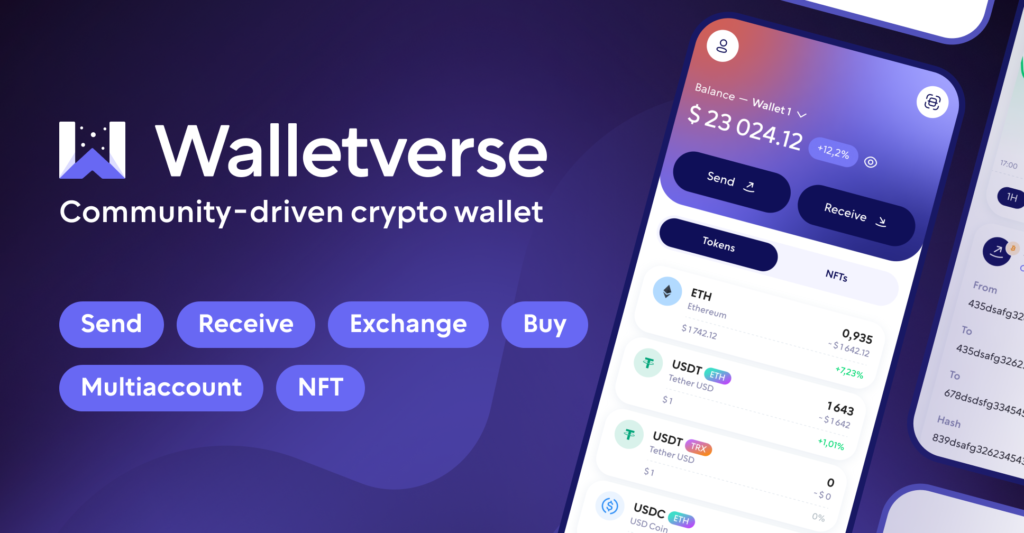
Walletverse stands out as a versatile and comprehensive crypto wallet solution. Designed with security, diversity, and usability, it supports over 600 cryptocurrencies and offers advanced features like trading and staking (coming soon).
Key features
- Supports 600+ cryptocurrencies
- Intuitive interface for easy navigation
- Upcoming staking options with potential returns
- Integrated dApp gateway for seamless access to decentralized applications
- Fortress-like security with encryption and biometric verification
Pros and cons
- Pros: Extensive coin support, robust security, user-friendly design, staking.
- Cons: Only mobile app.
Best for
Users seek a secure and versatile crypto wallet focusing on future staking rewards.


2. Binance Wallet

Overview
Binance Wallet is a top choice for those who frequently trade on the Binance exchange. It offers low trading commissions and seamless integration with the platform, making it ideal for active traders.
Key features
- Integrated with Binance exchange
- Low trading fees
- Supports a wide range of cryptocurrencies
Pros and cons
- Pros: Low fees, broad cryptocurrency support, easy integration with Binance
- Cons: Lack of transparency in storage practices
Best for
Active traders who prioritize low fees and direct exchange integration.
3. Coinbase Wallet

Overview
Coinbase Wallet is well-regarded for its user-friendly interface and strong security features. It supports many digital assets, making it popular among beginners and experienced users.
Key features
- Supports over 5,500 digital assets
- Features like multi-signature and two-factor authentication
- Backed by the reputable Coinbase platform
Pros and cons
- Pros: Extensive asset support, strong security features, easy to use
- Cons: High fees for trading and deposits
Best for
Users looking for a reliable crypto wallet with comprehensive security and asset support.
4. Trust Wallet

Overview
Trust Wallet is a versatile option that integrates well with the Web 3.0 economy. It supports a broad range of digital assets and NFTs, making it a favorite among users involved in decentralized finance (DeFi) and blockchain-based gaming.
Key features
- Supports a wide array of assets and NFTs
- Integration with Web 3.0 applications
- No fees for wallet-to-wallet transfers
Pros and cons
- Pros: Extensive asset support, no transfer fees, Web 3.0 integration
- Cons: High fees for card transactions, limited support options
Best for
Users interested in a wallet that offers extensive support for digital assets and dApp integration.
5. MetaMask

Overview
MetaMask is a widely used Ethereum wallet, and it is trendy for its browser extension that allows seamless interaction with the Ethereum blockchain. It’s ideal for users engaged with decentralized applications.
Key features
- Free to use
- Supports a wide range of ERC20 tokens
- Available as a mobile app and browser extension
Pros and cons
- Pros: Free, widely supported in the Ethereum ecosystem, accessible on multiple platforms
- Cons: Limited to Ethereum and ERC20 tokens, can be complex for beginners
Best for
Users deeply involved in the Ethereum ecosystem need a wallet that integrates easily with dApps.
6. Ledger Live
Overview
Ledger Live is the companion app for Ledger’s hardware wallets, offering the gold standard in crypto security. It allows users to manage their assets, stake cryptocurrencies, and buy crypto while keeping private keys offline on a secure hardware device.
Key features
Works with Ledger Nano X, S, and Stax hardware wallets
Supports 5,500+ cryptocurrencies and tokens
Bluetooth connectivity for mobile use (Nano X)
Integrated staking for multiple assets
Buy crypto through partners like Coinify and Wyre
Pros and cons
Pros: Maximum security with hardware isolation, extensive asset support, user-friendly interface, institutional-grade protection
Cons: Requires purchasing hardware device, higher upfront cost, less convenient for frequent transactions
Best for
Security-conscious users with significant holdings who prioritize asset protection above all else.
7. Phantom Wallet

Overview
Phantom Wallet has evolved from a Solana-only wallet to a multi-chain solution supporting Solana, Ethereum, Polygon, and Bitcoin. It offers a beautiful, intuitive interface and seamless integration with NFTs and DeFi applications, making it a favorite in the Solana ecosystem.
Key features
Multi-chain support (Solana, Ethereum, Bitcoin, Polygon)
Built-in staking with validator selection
NFT gallery and marketplace integration
Browser extension and mobile app
Swap functionality across chains
Pros and cons
Pros: Beautiful UI/UX, excellent for Solana ecosystem, strong NFT support, multi-chain functionality
Cons: Primarily focused on Solana, limited hardware wallet support on mobile
Best for
Users deeply invested in the Solana ecosystem who also want access to Ethereum and Bitcoin, particularly NFT collectors and DeFi users.
8. Exodus

Overview
Exodus is a multi-platform wallet known for its stunning design and beginner-friendly interface. It supports multiple cryptocurrencies and offers built-in exchange functionality, making it easy for users to manage and trade their assets across desktop and mobile devices.
Key features
Available on desktop and mobile with sync capability
Supports 260+ cryptocurrencies
Built-in exchange with multiple partners
Staking options for select assets
Portfolio tracking and management tools
24/7 live chat support
Pros and cons
Pros: Beautiful, intuitive design, multi-platform support, excellent for beginners, responsive customer support
Cons: Closed-source software, higher fees than some competitors, limited DeFi functionality
Best for
Beginners and design-conscious users who want a beautiful, easy-to-use wallet across all their devices.
9. Atomic Wallet

Overview
Atomic Wallet is a decentralized multi-currency wallet that supports over 300 cryptocurrencies. It offers built-in staking, Atomic Swaps, and a clean interface for managing digital assets without requiring KYC verification.
Key features
Supports 300+ cryptocurrencies
Built-in staking with competitive APY (up to 7%)
Atomic Swaps for peer-to-peer trading
Available on desktop and mobile
No KYC required for basic functions
Pros and cons
Pros: Decentralized, no KYC, built-in staking, cross-platform availability
Cons: Closed-source software, limited customer support, lacks hardware wallet security
Best for
Users who value privacy and want an all-in-one solution for managing and staking multiple cryptocurrencies without KYC requirements.
10. Kraken Wallet

Overview
Kraken Wallet is a self-custodial wallet from the reputable Kraken exchange. It offers top-tier security with privacy-focused features, including no IP tracking. The wallet supports multiple blockchains and provides a clean, professional interface for managing crypto assets.
Key features
Self-custodial with full control over private keys
Supports 2,000+ cryptocurrencies across multiple chains
Privacy-focused with no IP tracking
Built-in staking options
Integration with Kraken exchange for easy transfers
Pros and cons
Pros: Strong security track record, privacy-focused, supports many assets, backed by reputable exchange
Cons: Higher fees than some competitors, limited customer support, no built-in tax tools
Best for
Security-conscious users who value privacy and want a self-custodial wallet backed by one of the most trusted names in crypto.
Comparison of crypto wallets
Security features. When it comes to security, Walletverse and Coinbase Wallet lead the pack, offering top-tier features like encryption, biometric authentication, and multi-signature options. Binance Wallet provides a secure environment but lacks transparency in its cold storage practices, which could be a concern for some users.
User experience. Walletverse and Exodus Wallet are praised for their user-friendly interfaces, ensuring that managing digital assets is straightforward for users of all levels. MetaMask offers a streamlined experience for Ethereum users, while Trust Wallet’s integration with Web 3.0 applications enhances the user experience for those engaged in the decentralized web.
Supported cryptocurrencies. Walletverse supports over 300 cryptocurrencies, providing a broad selection for users. Coinbase Wallet, with its support for over 5,500 digital assets, offers the most extensive variety. Trust Wallet and MetaMask also provide robust support for their respective ecosystems, with Trust Wallet excelling in NFT and DeFi integration.
Unique features. Each wallet brings something unique to the table. Walletverse’s upcoming staking feature is a highlight, promising future returns for users. Binance Wallet’s integration with the exchange makes it a top choice for traders, while MetaMask’s seamless dApp integration is a significant advantage for Ethereum users.
In 2026, the crypto wallet market will offer diverse options tailored to different needs. Whether you’re looking for a wallet with extensive asset support, advanced security, or seamless dApp integration, there’s a solution. Walletverse stands out for its comprehensive features and robust security, making it an excellent choice for users who want to securely manage a wide range of cryptocurrencies. However, the best wallet for you will depend on your specific needs and preferences. Consider all factors and try out multiple wallets to find the one that suits you best.
FAQ
To secure your wallet, use strong, unique passwords, enable biometric authentication, keep your recovery phrase safe, and ensure your software is always up to date.
You can use your phone as a crypto wallet by downloading a mobile wallet app like Walletverse. This lets you store, manage, and trade cryptocurrencies directly from your smartphone.
Walletverse is one of the safest crypto wallets, with advanced security features like encryption, biometric verification, and a secure recovery system.
Many modern wallets, like Walletverse, support multiple cryptocurrencies, allowing you to manage various digital assets from a single wallet.
To purchase crypto, link your bank account or use a credit/debit card within the Walletverse app. Once your payment method is set up, you can select from over 300 supported cryptocurrencies and make a purchase instantly. The process is secure, and your purchased assets will be available in your Walletverse account immediately.


