


What Is TRON Staking? A Complete Guide to Staking TRX
TRON staking is the process of locking TRX on the TRON network to receive network resources and voting power. Under TRON’s current Stake 2.0 system, staking TRX gives you either Energy or Bandwidth, as well as TRON Power that can be used to vote for Super Representatives. By voting, TRX holders can participate in network governance and become eligible for staking rewards.
Unlike traditional Proof-of-Work mining, staking TRX does not require specialized mining hardware. It is built directly into TRON’s Delegated Proof-of-Stake (DPoS) model and combines three functions: network participation, governance, and access to resources that can reduce transaction costs.
How Does TRON Staking Work?
TRON uses a Delegated Proof-of-Stake consensus model. Instead of thousands of miners competing to produce blocks, TRX holders vote for Super Representatives, or SRs, that participate in the operation and governance of the network.
The current staking mechanism is called Stake 2.0. It has been the standard mechanism for new TRON staking since April 2023. When you stake TRX, two things happen at the same time:
You receive either Energy or Bandwidth, depending on the resource you select.
You receive TRON Power (TP) for voting in TRON governance.
One TRX staked generates one TRON Power. TRON Power can then be allocated to Super Representatives. Voting is an important part of earning native TRON staking rewards: simply holding unused TRON Power does not generate voting rewards.
What Is Stake 2.0?
Stake 2.0 is TRON’s current staking framework. It separates staking, resource delegation, voting, and unstaking into a more flexible system.
Under Stake 2.0, users can stake TRX for either Energy or Bandwidth while receiving TRON Power at the same time. Resources can also be delegated to another TRON account without transferring ownership of the underlying TRX.
The minimum amount for an individual Stake 2.0 staking operation is currently 1 TRX.
Stake 2.0 is important for anyone researching TRX staking because guides based only on the older Stake 1.0 system may contain outdated information about freezing, resource management, and unstaking.
What Are TRON Power, Energy, and Bandwidth?
Staking TRX can provide three important benefits within the TRON ecosystem: TRON Power, Energy, and Bandwidth.
TRON Power
TRON Power, usually abbreviated as TP, represents voting power.
For every 1 TRX staked, the account receives 1 TRON Power. TP can be used to vote for Super Representatives and participate in TRON’s governance system.
The active Super Representatives are responsible for producing blocks and helping maintain the network. Voting for an SR can also make the voter eligible to receive a share of rewards according to the TRON protocol and the selected SR’s reward policy.
Bandwidth
Bandwidth is a TRON network resource used to process transaction data.
Regular on-chain operations consume Bandwidth. Accounts receive a limited free Bandwidth allowance, while additional Bandwidth can be obtained by staking TRX.
If you make TRON transactions regularly, staking for Bandwidth may help reduce the amount of TRX that would otherwise be used to cover resource costs.
Energy
Energy is the resource used for smart contract execution.
This is particularly relevant for people who interact with TRC-20 tokens, decentralized applications, DeFi protocols, swaps, and other smart-contract-based services on TRON.
For example, interacting with USDT on the TRON network involves smart contracts and therefore consumes Energy in addition to the transaction’s Bandwidth requirements.
When an account does not have sufficient network resources, TRON can use TRX to cover the resource shortfall. This is why staking TRX for Energy or Bandwidth can have practical value beyond staking rewards.
Why Stake TRX?
There are several reasons a TRX holder may decide to stake.
The first is staking rewards. By obtaining TRON Power and voting for Super Representatives, holders can participate in the network’s reward system.
The second is lower transaction resource costs. Staking can provide Energy or Bandwidth that is consumed when using the TRON blockchain and gradually recovers over time.
The third is governance. TRON Power gives TRX holders a direct way to vote for Super Representatives and participate in the network’s Delegated Proof-of-Stake model.
For active TRON users, the value of staking can therefore be a combination of voting rewards and network resources rather than APY alone.
How Do TRON Staking Rewards Work?
TRON staking rewards are closely connected to voting.
After staking TRX, a user receives TRON Power. That TRON Power can be allocated to Super Representatives. The TRON protocol generates block-production and voter rewards, while Super Representatives have brokerage settings that affect how rewards are shared with voters.
As a result, there is no single permanent TRON staking APY that applies to everyone.
Your effective TRX staking return may depend on factors such as:
the Super Representative you vote for;
its reward-sharing or brokerage policy;
the number of votes participating in the network;
changes to TRON network parameters;
fees or terms applied by a staking provider;
whether rewards are claimed or reinvested.
For this reason, a current APR or APY should always be checked at the time you stake instead of relying on an old percentage quoted in an article.
APR vs APY for TRON Staking
APR and APY are often used interchangeably on crypto staking websites, but they are not exactly the same.
APR, or annual percentage rate, generally describes an annualized reward rate without assuming compound growth.
APY, or annual percentage yield, generally represents an annualized return that assumes some form of compounding.
Whether rewards actually compound depends on the staking method or service. Native voting rewards do not automatically become additional staked TRX unless they are subsequently staked again.
When comparing TRON staking platforms, check not only the displayed percentage but also how rewards are calculated, distributed, claimed, and potentially compounded.
How to Stake TRX
The exact interface depends on the wallet or staking service you use, but native TRON staking generally follows the same process.
Hold TRX in a wallet that supports TRON staking.
Open the staking or resource management section.
Select the amount of TRX you want to stake.
Choose whether to receive Energy or Bandwidth.
Confirm the staking transaction.
Use the TRON Power you receive to vote for one or more Super Representatives.
Monitor and claim eligible TRX rewards according to the wallet and SR reward rules.
Always review the transaction before signing it and keep enough liquid TRX available for operations that may require network resources or fees.
Is TRON Staking Safe?
TRON staking can be performed without transferring custody of your private keys when using a self-custody wallet. However, staking still involves risks.
The first is market risk. Even if the number of TRX you hold increases through rewards, the market price of TRX can rise or fall.
The second is liquidity risk. Native Stake 2.0 unstaking involves a 14-day waiting period before the TRX can be withdrawn to a liquid balance.
The third is custody risk. If you stake through a centralized service, the service may control the private keys or impose its own withdrawal conditions. A self-custody wallet allows you to retain control of the keys used to authorize transactions.
The fourth is operational risk. Seed phrases, private keys, malicious websites, fake wallet applications, and fraudulent signing requests remain major security considerations.
It is also important not to automatically apply assumptions from other Proof-of-Stake networks to TRON. Current TRON documentation states that the protocol does not use built-in stake slashing for missed or equivocating blocks; poorly performing Super Representatives primarily lose rewards and potentially lose voter support.
How to Stake TRX with Walletverse
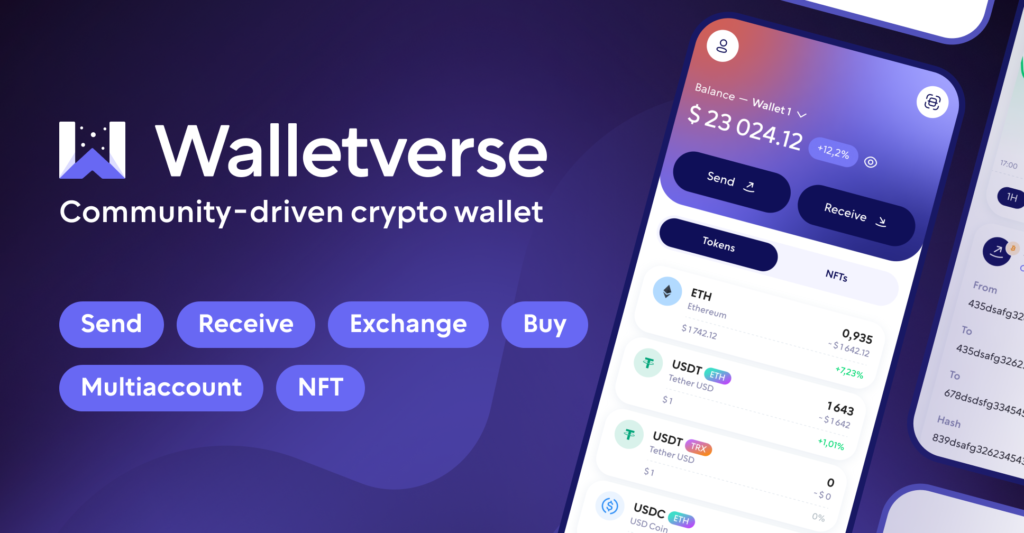
Walletverse is a self-custody crypto wallet that supports TRX alongside hundreds of other cryptocurrencies and provides staking functionality for supported assets.
With a self-custody wallet, users control the credentials that authorize access to their assets instead of handing those credentials to a centralized exchange.
To stake TRX with Walletverse, open your TRX account and access the available staking functionality. Review the amount, current reward information, staking terms, and any applicable unstaking conditions before confirming the transaction.
Because staking rates can change, check the current TRX staking rate displayed by Walletverse rather than relying on a historical APY from an older article.
Walletverse also supports broader TRON ecosystem activity, making it possible to manage TRX and other supported assets from the same mobile wallet.


Is TRON Staking Worth It?
Whether staking TRX makes sense depends on how you use TRON and how long you intend to hold your assets.
For long-term TRX holders, staking can provide voting rewards while putting otherwise idle tokens to use.
For active TRON users, Energy or Bandwidth can add another benefit by reducing the need to spend TRX on network resources.
However, staking may be less suitable if you need immediate access to your entire TRX balance because native Stake 2.0 includes the 14-day unstaking period.
FAQ
Most frequent questions and answers
Walletverse provides one of the safest and most transparent staking environments, combining 3.4% APY returns with advanced security and self-custody features.
TRON staking means locking TRX under the network’s staking mechanism to receive Energy or Bandwidth and TRON Power. TRON Power can be used to vote for Super Representatives and participate in voting rewards.
The protocol-level minimum for an individual Stake 2.0 staking operation is currently 1 TRX.
TRON staking can generate TRX rewards, but there is no permanently fixed return. Actual returns depend on network conditions, voting, the chosen Super Representative or staking provider, applicable fees, and reward policies.
Bandwidth is the network resource associated with transaction data. Staking TRX for Bandwidth increases the resources available to an account for transactions.


