


Best Solana Wallets in 2026
Selecting the right wallet for Solana can significantly influence your experience in managing and trading SOL tokens. With numerous options available, it’s crucial to choose a wallet that offers robust security, user-friendly features, and compatibility with Solana’s ecosystem. Rather than following trends, focus on finding a wallet that aligns with your specific needs and preferences.
What is Solana
Solana is a high-performance blockchain platform designed for fast, scalable, and secure decentralized applications (dApps) and cryptocurrencies. Launched in 2020, Solana features a unique Proof of History (PoH) consensus mechanism that enhances transaction speed and reduces costs. It supports a wide range of applications, including decentralized finance (DeFi) and non-fungible tokens (NFTs), making it a popular choice for developers and users seeking efficient blockchain solutions.
A Brief History of Solana
Solana was founded in 2017 by Anatoly Yakovenko and his team, aiming to address the scalability issues faced by many blockchain networks. The project’s development was driven by the desire to create a high-performance blockchain capable of handling thousands of transactions per second without sacrificing decentralization.
In March 2020, Solana launched its mainnet beta, marking its transition from a development phase to a live network. The platform quickly gained attention for its innovative Proof of History (PoH) consensus mechanism, which enhances transaction speed and efficiency by creating a historical record that proves that an event has occurred.
Since its launch, Solana has achieved significant milestones, including attracting a diverse range of decentralized applications (dApps) and projects to its ecosystem. Its rapid transaction speeds and low fees have made it a popular choice for developers and users seeking a scalable blockchain solution. By 2021, Solana had established itself as a leading blockchain platform, boasting a growing number of users and integrations within the decentralized finance (DeFi) and non-fungible token (NFT) spaces.
Today, Solana continues to expand its capabilities and ecosystem, solidifying its position as a major player in the blockchain industry.
Types of Crypto Wallets to Manage Solana
When managing Solana assets, you can choose from several types of crypto wallets, each offering different features and levels of security:
- Software Wallets.
- Mobile Wallets. Apps for smartphones that provide easy access and management of your Solana tokens.
- Desktop Wallets. Applications for PCs that offer robust features and enhanced security.
- Hardware Wallets.
- Physical Devices. Secure offline devices that store your private keys and protect against online threats.
- Web Wallets.
- Browser Extensions. Wallets integrated into your browser for convenient access and interaction with Solana dApps.
- Paper Wallets.
- Physical Printouts. Offline storage of private keys on paper, providing high security but requiring careful handling to avoid loss or damage. Although less common, paper wallets are a basic option for long-term storage.
- Multi-Currency Wallets.
- Versatile Wallets. Support for multiple cryptocurrencies, including Solana. Walletverse is an example that offers comprehensive management for various digital assets.
How to Choose the Best Wallet for Solana
Whether you prioritize security, ease of use, or advanced functionalities, choosing a wallet that fits your requirements will ensure a smooth and efficient handling of your Solana assets. Consider factors such as compatibility, supported features, and user experience to make an informed decision and maximize the benefits of your chosen wallet.
- Security features. Ensure the wallet provides strong encryption and biometric authentication. Look for additional security measures, such as multi-signature support, to protect your assets.
- User experience. The wallet should offer an intuitive interface that caters to both novice and experienced users. Features such as ease of navigation and transaction simplicity can enhance your overall experience.
- Device compatibility. Confirm that the wallet is compatible with your devices, including mobile phones, tablets, and computers. Compatibility with various operating systems like iOS, Android, Windows, and macOS is also important.
- Functionality and features. Consider wallets that offer additional functionalities such as integration with decentralized applications (dApps), staking options, or multi-currency support. These features can provide added convenience and versatility.
- Fees and costs. Be aware of any fees associated with transactions and wallet usage. Understanding the fee structure helps in managing costs effectively and ensures transparency.
Top 10 The Best Solana Wallets
1. Walletverse
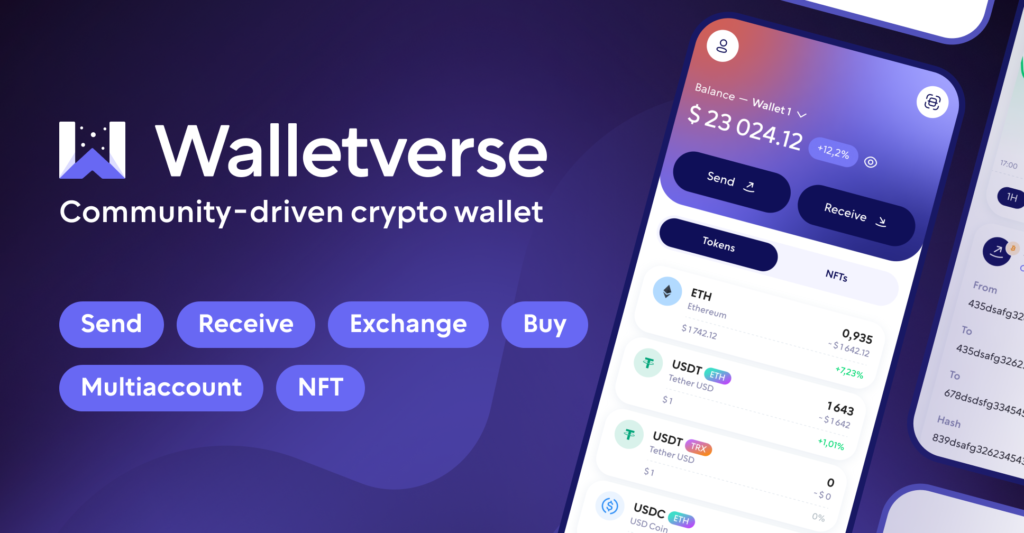
Walletverse is an innovative self-custodial DeFi wallet that is revolutionizing the management of Solana and other cryptocurrencies, with comprehensive crypto management with support for over 600 cryptocurrencies, an integrated DEX aggregator, robust security features including passcode and biometric authentication, and automatic backups. It also supports staking and offers seamless fiat-to-crypto transactions through partnerships with providers like Changelly.


2. Phantom Wallet

Phantom Wallet is widely recognized as a leading choice for managing Solana assets due to its seamless user experience and robust feature set.
- Pros: User-friendly interface, integration with Solana dApps, supports Solana-based NFTs.
- Cons: Limited to Solana ecosystem, needs more hardware wallet support.
3. Solflare

Solflare is the most powerful wallet on Solana, managing over $15 billion in crypto assets and trusted by more than 3 million active users . It offers comprehensive features including staking, swaps, and NFT management, with support for over 4 million tokens and meme coins. Solflare integrates with hardware wallets like Ledger and Keystone for enhanced security and provides 24/7 live human support .
Pros: Supports Solana staking with detailed validator selection, integrates with hardware wallets, user-friendly design, around-the-clock support , anti-phishing features.
Cons: Some advanced features may be overwhelming for beginners.
3. Solflare
Solflare is the most powerful wallet on Solana, managing over $15 billion in crypto assets and trusted by more than 3 million active users . It offers comprehensive features including staking, swaps, and NFT management, with support for over 4 million tokens and meme coins. Solflare integrates with hardware wallets like Ledger and Keystone for enhanced security and provides 24/7 live human support .
Pros: Supports Solana staking with detailed validator selection, integrates with hardware wallets, user-friendly design, around-the-clock support , anti-phishing features.
Cons: Some advanced features may be overwhelming for beginners.
4. Ledger Nano X

For those seeking hardware wallet security, the Ledger Nano X provides a reliable solution for managing Solana and other cryptocurrencies. It stores private keys offline in a CC EAL5+ certified secure element chip, making it virtually immune to online hacks . Through Ledger Live, users can stake SOL directly from the hardware wallet, combining maximum security with passive income opportunities .
Pros: High security with offline cold storage, supports a wide range of cryptocurrencies, Bluetooth connectivity for mobile management.
Cons: Higher upfront cost, less convenient for frequent transactions compared to software wallets.
5. Exodus

Exodus Wallet offers a comprehensive solution for managing Solana alongside other cryptocurrencies, with a focus on ease of use and integrated exchange features. It supports over 280 cryptocurrencies and 50 blockchain networks, with a beautiful, intuitive interface available on desktop, mobile, and as a browser extension . Exodus integrates with Trezor hardware wallets for added security and offers built-in staking for Solana with around 6-7% APY .
Pros: Multi-currency support, built-in exchange, intuitive interface, cross-device sync, 24/7 customer support .
Cons: Less specialized for Solana than dedicated wallets, higher fees for in-app swaps, closed-source code .
6. OneKey App

OneKey App is a rapidly growing multi-chain wallet that offers industry-leading security features specifically valuable for Solana users. It supports over 100 networks and 30,000+ tokens, with native Solana support and staking capabilities. Its standout feature is SignGuard technology, which provides clear transaction signing and real-time scam detection, protecting users from phishing attacks and “blind signing” risks . The app is available on iOS, Android, and desktop.
Pros: SignGuard anti-phishing protection, supports 100+ networks, clear transaction previews, open-source code, competitive swap fees (0.25%).
Cons: Newer to Western markets, smaller user base than Phantom.
7. Bitget Wallet

Bitget Wallet (formerly BitKeep) is a feature-rich multi-chain wallet that supports over 90 mainnets and thousands of dApps. It allows users to buy crypto with fiat, swap across chains, and participate in NFT markets directly from the wallet. The wallet integrates with the Bitget exchange while maintaining self-custody, making it ideal for users who want both DeFi access and exchange connectivity. It supports native Solana staking and seamless interaction with Solana dApps.
Pros: Multi-chain support with powerful cross-chain swap aggregator, integrated fiat purchase options, direct access to exchange features while maintaining self-custody.
Cons: Relatively newer compared to some competitors in Western markets, some advanced features may require familiarity with DeFi.
8. Atomic Wallet

Atomic Wallet is a decentralized multi-currency wallet that supports over 500 cryptocurrencies, including Solana. It gives users complete control over their private keys and features built-in atomic swaps for peer-to-peer trading without intermediaries. The wallet offers staking for Solana and other PoS assets, with competitive APY rates, and is available on Windows, macOS, Linux, iOS, and Android.
Pros: Decentralized with full user control over private keys, built-in atomic swaps and staking features, supports a large number of cryptocurrencies, user-friendly interface.
Cons: Customer support can be slow to respond, not as specialized for Solana as dedicated wallets.
9. Zengo

Zengo takes a completely different approach to wallet security by eliminating the seed phrase entirely. Instead, it uses Multi-Party Computation (MPC) technology with biometric recovery – your wallet is secured by your face scan, email, and device. It supports Solana alongside major cryptocurrencies and features a built-in Web3 firewall that blocks shady dApps and phishing links before they can cause damage.
Pros: No seed phrase to lose or steal, built-in Web3 firewall, live customer support, easy setup, supports Solana staking.
Cons: Supports fewer blockchains than some competitors, swap fees may be higher than using DEX directly.
10. Gate Wallet

Gate Wallet is a multi-chain Web3 wallet from the leading exchange Gate.io, supporting over 100 mainstream blockchains including Solana . It enables users to manage SOL, Solana-based tokens, and NFTs in a single interface, with integrated cross-chain DEX aggregation and dApp connectivity. The wallet is non-custodial, meaning private keys are fully controlled by users, and it offers seamless interaction with the broader Solana ecosystem .
Pros: Multi-chain support with integrated cross-chain DEX aggregation, non-custodial with full private key control, seamless dApp interaction, backed by established exchange.
Cons: Newer to the wallet space compared to dedicated Solana wallets, some advanced features may require familiarity with DeFi.
Can I make money on Solana?
Yes, you can make money on Solana through several avenues:
- Staking. Earn rewards by staking your SOL tokens to support network operations and security.
- Trading. Profit from buying and selling SOL and other Solana-based assets on exchanges.
- DeFi. Participate in decentralized finance (DeFi) activities, such as lending, borrowing, and yield farming, on Solana’s platform.
- NFTs. Invest in or create non-fungible tokens (NFTs) on the Solana blockchain, potentially earning through sales and trades.
FAQ
- Open your wallet. Launch the wallet app or access it through your browser.
- Navigate to the buy feature. Locate the buy or purchase section within the wallet.
- Select SOL. Choose Solana from the list of supported cryptocurrencies.
- Choose a payment method. Select your payment method, which could include a bank transfer or credit/debit card, if available.
- Enter purchase details. Input the amount of SOL you wish to buy and review the transaction details.
- Complete the purchase. Confirm and finalize the transaction. SOL will be added to your wallet once processed.
- Verify your balance. Check your wallet to ensure the SOL has been credited successfully.
Secure your Solana wallet by:
- Using strong passwords. Create a robust password to prevent unauthorized access.
- Enabling biometric authentication. Add an extra layer of security with biometric options.
- Backing up your wallet. Regularly backup your wallet and store recovery phrases in a safe location.
- Updating your software. Keep your wallet software up to date to protect against vulnerabilities.
- Being cautious of phishing scams. Avoid suspicious links and only use official wallet channels.
Many Solana wallets, such as Walletverse, support multiple cryptocurrencies, allowing you to manage assets beyond just Solana. Check the wallet’s supported assets to ensure it meets your needs.
To transfer Solana (SOL) between wallets, open the sending wallet, initiate a transfer, and enter the recipient wallet address. Confirm the transaction details and authorize the transfer. Ensure that you have the correct address to avoid loss of funds.
Use portfolio tracking tools or apps that integrate with your Solana wallet to monitor performance. Some wallets, like Walletverse, may offer built-in tracking features.


