


How to Swap LTC to XMR
Swapping Litecoin (LTC) to Monero (XMR) means exchanging the native cryptocurrency of the Litecoin network for Monero, a cryptocurrency designed with privacy features enabled by default.
The two assets operate on separate blockchains, so an LTC-to-XMR transaction is a cross-chain exchange rather than a regular transfer between wallet addresses.
Before making a swap, check the LTC/XMR exchange rate, provider fees, minimum exchange amount, expected processing time and the Monero address where the XMR will be received.
Walletverse provides access to cryptocurrency exchange functionality through third-party providers. However, the availability of a specific LTC-to-XMR route should always be confirmed in the app before sending funds.
Best Way to Simply Exchange LTC to XMR
There are a few straightforward ways to swap Litecoin for Monero:
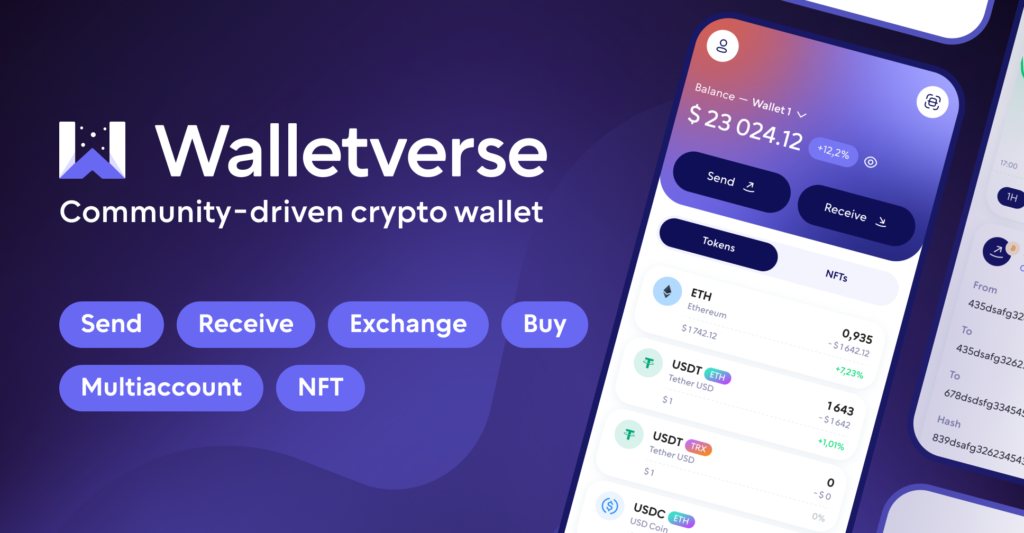
- Crypto wallets with built-in swaps. Walletverse allows you to exchange LTC to XMR directly in the app without giving up control of your funds.
- Centralized exchanges. Platforms like Binance or KuCoin provide LTC/XMR pairs but require identity verification and custodial storage.
- Instant swap services. Providers such as Changelly or SimpleSwap let you quickly exchange coins, though fees can be higher.
For users prioritizing security and simplicity, non-custodial wallets are often the best choice.
Why Swap Litecoin (LTC) to Monero (XMR)?
Litecoin and Monero are both cryptocurrencies designed for peer-to-peer value transfers, but their blockchain characteristics are different.
Standard Litecoin transactions are recorded on a publicly visible blockchain. Monero, by contrast, is designed to obscure transaction details such as the sender, recipient and transferred amount.
A user may therefore choose to exchange LTC for XMR because they want to hold Monero, use an application or service that accepts XMR, diversify their crypto holdings, or make use of Monero’s privacy-oriented transaction model.
An exchange does not make the original Litecoin transaction disappear from the Litecoin blockchain. Users should also remember that an exchange provider may retain information about the transaction according to its own policies and legal requirements.
How to Swap LTC to XMR Step by Step
The exact interface depends on the exchange provider, but an LTC-to-XMR swap generally follows the same process.
Step 1: Select Litecoin as the asset you send
Choose LTC and make sure that the sending network is the native Litecoin network.
Step 2: Select Monero as the asset you receive
Choose XMR and check that the provider currently supports the LTC-to-XMR exchange route.
Step 3: Enter the amount of LTC
Enter how much Litecoin you want to exchange. The service should display an estimated amount of XMR you will receive.
Step 4: Enter a Monero receiving address
Copy the XMR address from a wallet that currently supports native Monero. Check the address carefully before continuing.
Step 5: Review the quote
Check the LTC/XMR rate, estimated XMR payout, provider fee, network fees, minimum or maximum limits and any rate conditions.
Step 6: Send the LTC
Send the required Litecoin amount to the deposit address provided for the exchange. Do not send another cryptocurrency or use an incompatible network.
Step 7: Wait for the XMR payout
After the required Litecoin confirmations and provider processing, the exchange service sends XMR to the Monero address you supplied.
If Walletverse displays an LTC-to-XMR route through one of its integrated providers, users should follow the quote and transaction instructions shown in the app. If the pair is unavailable, do not assume that sending LTC manually will result in XMR being returned.
LTC to XMR Exchange Rate: How Does It Work?
The LTC-to-XMR exchange rate shows how much Monero you can receive for a specified amount of Litecoin.
Because both LTC and XMR have market prices that change continuously, the exchange rate can move between the moment a quote is displayed and the moment a transaction is processed.
Some exchange providers offer a floating rate, where the final amount is based on the market rate when the transaction is processed. Others may offer a fixed rate, where a quoted rate is reserved for a limited period under the provider’s conditions.
Before confirming a swap, compare the estimated XMR amount rather than looking only at the headline exchange rate. Provider fees, network costs and rate adjustments can affect the final amount received.
Walletverse users should rely on the current quote displayed by the available exchange provider rather than a static LTC-to-XMR rate published in an article.
What Fees Apply When Swapping LTC to XMR?
The total cost of an LTC-to-XMR swap can include several components.
The sending transaction may require a Litecoin network fee. The exchange provider may also charge a service or exchange fee, while the XMR payout can involve a Monero network fee or other provider costs.
Some services include these costs in the displayed exchange rate, while others show them separately.
For this reason, the most useful figure to compare is the estimated amount of XMR you will actually receive after the applicable charges.
Walletverse does not control every fee charged by a third-party exchange provider. Review the complete quote before confirming a supported LTC-to-XMR exchange.
How Long Does an LTC to XMR Swap Take?
There is no universal processing time for an LTC-to-XMR exchange.
The transaction usually has several stages: Litecoin must first be sent and receive the number of blockchain confirmations required by the provider; the exchange service must then process the order; finally, the XMR payout must be broadcast to the Monero network.
Processing time can therefore vary according to blockchain conditions, the exchange provider, liquidity, the number of confirmations required and whether additional transaction checks are necessary.
Walletverse users should follow the transaction status provided by the exchange service rather than assuming that every LTC-to-XMR swap will complete within a fixed number of minutes.
Litecoin vs Monero: What Changes After the Swap?
Litecoin and Monero use different blockchains and are designed with different transaction models.
Litecoin (LTC) is a peer-to-peer cryptocurrency launched in 2011. Transactions are recorded on the Litecoin blockchain, and LTC is commonly used for transfers and payments.
Monero (XMR) is a privacy-focused cryptocurrency launched in 2014. Its protocol is designed to protect transaction information rather than exposing all transaction details publicly by default.
When you exchange LTC for XMR, you are not converting Litecoin into a token on the Litecoin network. You receive a different native cryptocurrency on the Monero blockchain.
This means you need a wallet that genuinely supports native Monero to receive the XMR payout. A wallet’s support for Litecoin or other cryptocurrencies does not automatically mean that it supports Monero.
Which Monero Address Should You Use?
Before starting an LTC-to-XMR exchange, prepare a valid Monero receiving address from a compatible XMR wallet.
Monero supports several address types, including standard addresses and subaddresses. The official Monero documentation recommends subaddresses for receiving payments in most situations.
Copy the receiving address directly from your Monero wallet and verify it before submitting the exchange. Avoid manually typing a long cryptocurrency address.
Do not enter a Litecoin address, an address from another blockchain or an address from a wallet that does not support native XMR.
Walletverse users should only select Walletverse as the XMR destination if native Monero support is currently confirmed in the application.
Common Mistakes When Swapping LTC to XMR
A cross-chain exchange cannot usually be corrected as easily as an ordinary payment error, so transaction details should be checked before funds are sent.
One common mistake is using an incompatible XMR receiving wallet. Another is sending a different cryptocurrency to the Litecoin deposit address or sending the wrong amount when the provider requires an exact deposit.
Users should also avoid relying on an expired exchange quote, overlooking minimum exchange amounts, or assuming that a transaction is stuck simply because it has not completed immediately.
Another important mistake is choosing a wallet based on an outdated article. Cryptocurrency support changes over time. For example, Exodus ended Monero support in August 2025, so older lists that recommend Exodus as an active XMR wallet are no longer accurate.
Before starting an exchange through Walletverse or another service, verify the currently supported assets, networks and exchange route.


FAQ
Most frequent questions and answers
Yes, LTC can be exchanged for XMR using wallets, exchanges, or swap services.
Walletverse is one of the best apps, combining self-custody, advanced security, and simple in-app swaps for LTC to XMR.
Monero can be purchased on exchanges or directly swapped for other assets using non-custodial wallets like Walletverse.
Select Litecoin as the sending asset and Monero as the receiving asset, enter the amount, provide a valid XMR address and review the exchange quote. If Walletverse currently offers the pair through an integrated provider, follow the transaction instructions displayed in Walletverse before sending LTC.
Fees depend on the exchange route and may include Litecoin network costs, provider fees and costs associated with the XMR payout. Walletverse users should check the complete quote from the current exchange provider rather than assuming a fixed fee applies to every swap.


