


Benefits of Staking Ethereum
Ethereum remains one of the most influential cryptocurrencies, driving innovation across decentralized finance, NFTs, and smart contract applications. With the network’s transition to Proof of Stake (PoS), staking has become a core feature of its ecosystem.
By staking Ethereum, users not only support network security and stability but also earn steady passive rewards. This new model has made Ethereum more energy-efficient, inclusive, and financially rewarding for participants worldwide.
Benefits of ETH Ethereum
Ethereum was launched in 2015 by Vitalik Buterin with the goal of expanding blockchain capabilities beyond simple transactions. Its introduction of smart contracts enabled decentralized applications (dApps), DeFi projects, and NFT platforms that now form a global Web3 ecosystem.
In 2022, Ethereum completed its long-awaited transition from Proof of Work (PoW) to Proof of Stake (PoS), an upgrade known as “The Merge.” This eliminated the need for energy-intensive mining and introduced a more sustainable method for maintaining the blockchain.
Under PoS, validators are chosen to confirm transactions based on the amount of ETH they stake. In return, they receive rewards for contributing to the network’s efficiency and security.
Key benefits of Ethereum include:
- Reduced energy consumption compared to mining;
- Increased scalability and transaction speed;
- Passive income opportunities through staking;
- Greater decentralization and lower entry barriers.
This combination makes Ethereum both a powerful investment asset and a driver of blockchain innovation.
What Is the Benefit of Staking?
Staking allows users to earn rewards by locking up their cryptocurrency to support blockchain operations. Instead of using computing power to mine blocks, participants delegate their tokens to validators who confirm transactions.
In Ethereum’s case, staking provides multiple advantages beyond just earning yield:
- Passive income. Users earn consistent rewards ranging from 3% to 5% annually.
- Network contribution. Stakers help maintain and secure the blockchain.
- Eco-friendly validation. Proof of Stake consumes far less energy than mining.
- No need for expensive hardware. Anyone can participate using a wallet or staking pool.
For many investors, staking Ethereum is a way to make their assets productive without trading. It’s a stable, long-term strategy that benefits both individual holders and the Ethereum network as a whole.
Top 10 Best Crypto Wallets for Ethereum Staking
1. Walletverse
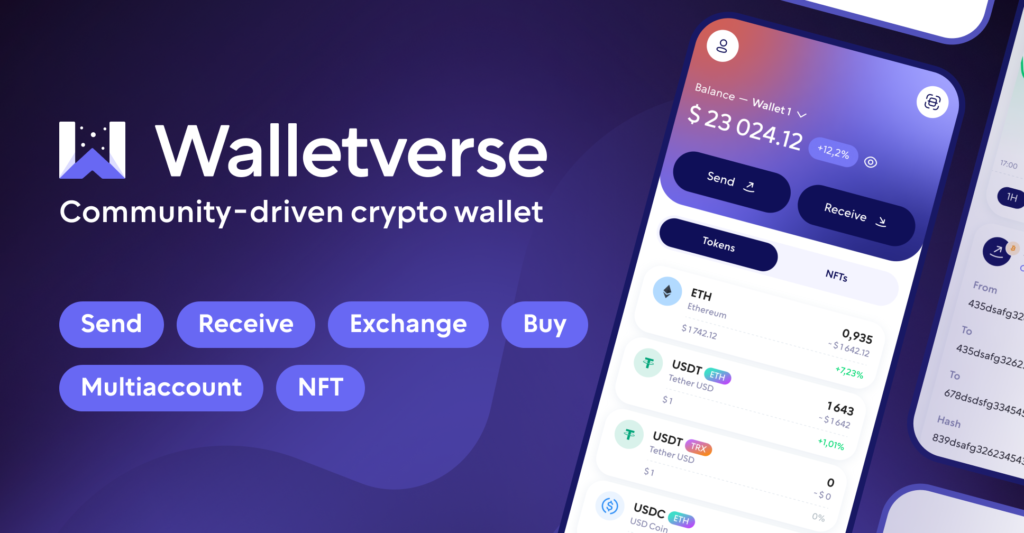
Walletverse is a mobile multi-currency Web3 and DeFi wallet built for simplicity and security. It supports over 600 cryptocurrencies and enables users to buy, store, send, and stake crypto directly from their phones.
The Ethereum staking APY reaches 1.76%, with built-in AML protection, passcode, and biometric authentication. Walletverse is fully decentralized and ensures that only users have access to their assets.
Pros:
- Secure self-custody wallet
- Supports 600+ cryptocurrencies and dApps
- Fast mobile app for easy staking
- Buy crypto with Apple Pay, Google Pay, or credit cards
Cons:
- Mobile-only platform


2. Trust Wallet
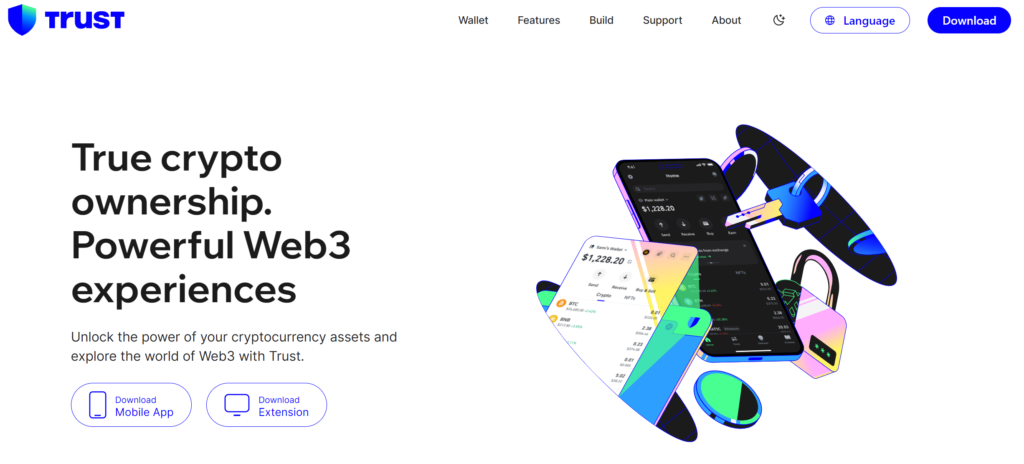
Trust Wallet, owned by Binance, is one of the most convenient mobile wallets for staking Ethereum. It combines staking, NFT storage, and DeFi exploration in a single app.
Pros:
- Easy staking setup
- Supports NFTs and dApps
- Wide crypto compatibility
Cons:
- Limited transparency on validators
- Custodial risk if linked to exchanges
3. Ledger Nano X
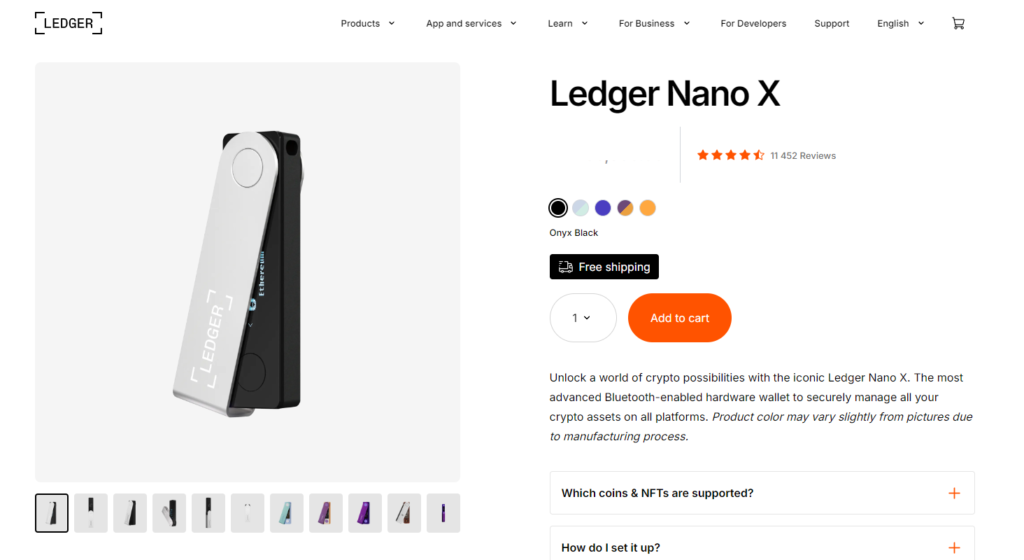
Ledger is a hardware wallet known for top-tier security. Users can stake ETH through third-party apps like Lido or Kiln while keeping private keys offline.
Pros:
- Maximum offline security
- Supports multiple staking integrations
- Works with Ledger Live app
Cons:
- Requires external setup for staking
- Higher cost than software wallets
4. Atomic Wallet
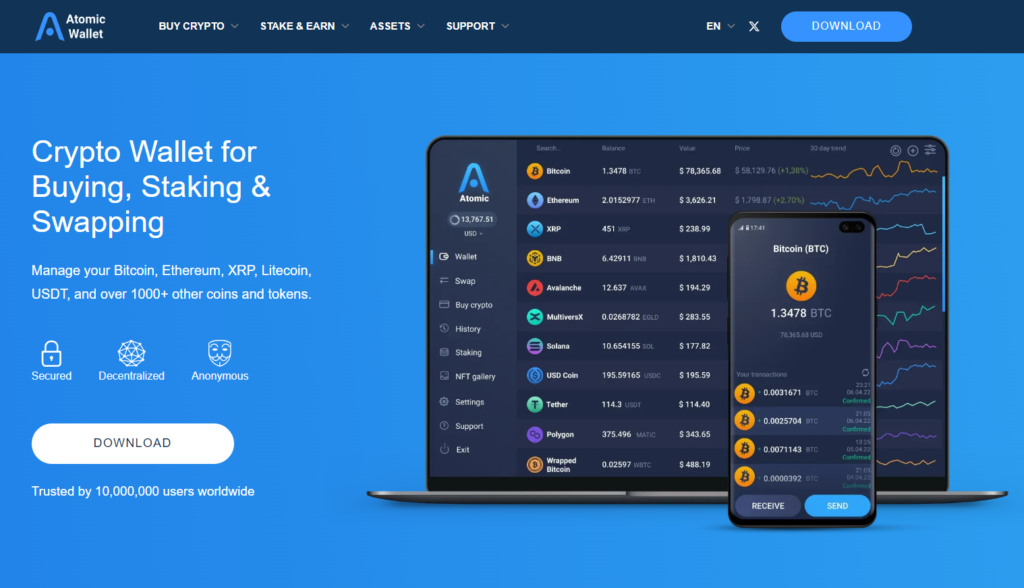
Atomic Wallet is a secure multi-asset wallet with built-in staking for Ethereum and other cryptocurrencies. It’s ideal for beginners who want simplicity.
Pros:
- Built-in staking feature
- User-friendly setup
- Supports multiple coins
Cons:
- Closed-source
- Limited validator choice
5. MetaMask
MetaMask is one of the most widely used Ethereum wallets, compatible with browsers and mobile devices. It supports staking through partners like Lido and Rocket Pool.
Pros:
- Widely recognized and trusted wallet
- Integrates with major DeFi apps
- Easy browser access
Cons:
- Requires third-party staking integration
- Interface can be confusing for new users
6. Lido

Lido is a decentralized staking service that enables liquid staking, users receive stETH tokens that represent their staked ETH. These tokens can be traded or used in DeFi while still earning rewards.
Pros:
- No minimum staking amount
- Liquidity via stETH tokens
- Transparent and decentralized
Cons:
- Dependent on smart contracts
- Centralization among validators is still debated
7. Binance Wallet
Binance provides direct Ethereum staking with flexible lock periods. It’s suitable for users who prefer centralized platforms and fast reward access.
Pros:
- Simple staking process
- Reliable infrastructure
- Flexible terms
Cons:
- Custodial wallet (no control over private keys)
- Limited to Binance’s platform availability
8. Coinbase Wallet
Coinbase Wallet is a trusted option for beginners who prefer simplicity and regulated environments. Staking can be done directly within the Coinbase app or through the connected wallet.
Pros:
- Beginner-friendly interface
- Backed by a well-known exchange
- Automated staking setup
Cons:
- Custodial wallet (private keys not user-held)
- Staking fees can reduce returns
9. Exodus
Exodus is known for its beautiful design and ease of use. It supports Ethereum staking with built-in tools for managing and tracking rewards.
Pros:
- Great visual interface
- Multi-platform (desktop and mobile)
- Built-in portfolio tracking
Cons:
- Closed-source wallet
- Slightly higher network fees
10. MyEtherWallet (MEW)

MyEtherWallet has been part of the Ethereum ecosystem since its early days. It supports staking through integrations with hardware devices and staking providers.
Pros:
- Established Ethereum wallet
- Non-custodial control of assets
- Compatible with Ledger and Trezor
Cons:
- Technical interface for beginners
- Requires external staking connection
What Other Benefits Does Staking Offer?
Besides financial rewards, Ethereum staking provides several key benefits that strengthen both the blockchain and investors’ positions:
- Network security. Each staker contributes to Ethereum’s decentralized security model.
- Long-term growth. Holding and staking ETH promotes a stable, predictable investment approach.
- Reduced volatility exposure. Stakers earn steady rewards even during price fluctuations.
- Support for decentralization. The more validators join, the safer and more distributed the network becomes.
Staking encourages users to think long-term, turning ETH into a yield-generating digital asset rather than a speculative token.
Is Staking Ethereum a Good Idea?
Yes. For most long-term holders, staking Ethereum is a smart and sustainable way to earn while contributing to blockchain progress.
With relatively low risks and consistent returns, staking provides a balance between safety and growth potential. Platforms like Walletverse make it even easier, offering self-custody staking with high security, transparency, and an APY of 1.76% for Ethereum.
Staking Ethereum offers clear advantages: passive income, enhanced security, and participation in one of the most advanced blockchain ecosystems. As the network continues to evolve, staking becomes an increasingly vital part of the crypto economy.
Walletverse provides the ideal environment for staking ETH securely. With its user-friendly mobile app, multi-currency support, biometric protection, and self-custody structure, Walletverse empowers users to stake confidently and manage their digital assets with peace of mind.
FAQ
Most frequent questions and answers
Yes. While staking provides reward earnings, the value of ETH can also increase with market demand. You earn both staking yields and potential price appreciation.
Unstaking is possible, but the process depends on the platform. Walletverse allows flexible staking with full user control. Some networks may impose a short withdrawal period.
If you’re using liquid staking services, you can trade your staked ETH tokens (like stETH) even while earning rewards. In Walletverse, users can manage and withdraw their assets securely at any time.


